Press release: Flood defences put to the test in Northwich

A selection of temporary and permanent flood barriers, which would be deployed in emergencies, have been put to the test in Northwich.

100 metres of demountable defences were erected and 14 flood gates were closed as part of a live training exercise by the Environment Agency throughout the town centre on Thursday 20th July.

The exercise is the first time the full set of defences, which can be deployed within three hours, have been tested since the launch of the new Northwich flood alleviation scheme last month.

Over the course of the exercise, Environment Agency teams installed and took down demountable defences to practice their emergency plan for the town and ensured the rapid deployment of the additional flood barriers were in good working order.

The operation gave the agency workers valuable experience on the deployment of the equipment and significantly tested its response to future flooding.

Flood Manager at the Environment Agency, Christian Wilcox said:

The £7 million Northwich flood alleviation scheme reduces the flood risk to around 400 homes and businesses throughout the town. Therefore, it was fantastic to see the full set of demountable defences brought into effective action for the first time.

This was a major test of our operational equipment and allowed us to train up the teams who will work on deploying these defences.

Part of the flooding that Northwich has previously experienced has come directly from the River Dane and we were pleased to see that our road closure at Dane Bridge, during the test of the defences, worked extremely well and would provide a good level of signage and a viable alternative route when we need to deploy the defences in earnest.

Overall, it was great to see our practical strategies for flood protection put into action, via our joint working with the Cheshire West and Chester Council who organised the road closure. I hope such collaborative emergency response plans will give reassurance to residents in Northwich but, it is important to remember that we can never fully protect against flooding.

Residents should always prepare in advance for this by going online at www.gov.uk and signing up for free flood warnings. Alternatively, they can telephone the Environment Agency Floodline on 0845 988 1188 and find out what they can do to protect themselves and their property when flooding hits.
Press release: Schoolkids spruce up flood defences in Westy, Warrington

Flood defences in Warrington have been brought to life thanks to a group of budding Picassos from Cardinal Newman Catholic High School in Westy.

Year 7 pupils, aged between 11 and 12, were challenged by the Environment Agency to put their brush skills to the test and design images of wildlife to decorate walls that make up part of a new flood alleviation scheme.

The designs will face the pavement and be visible to passers-by along Mersey Walk in Westy.

They form part of a £34 million flood risk management scheme throughout Warrington which aims to reduce the risk of flooding to both people and property. The new flood walls are a major aspect of the defences and will cover a total of 7.2km by the time the scheme is completed in autumn 2017.

To spruce up the solid concrete of the walls, pupils took inspiration from some of the local species that live along the River Mersey including fish, amphibians and mammals such as mallards.

The regal kingfisher has also been a key feature with the colourful bird taking pride of place in an earlier phase of the scheme along Knutsford Road.

Speaking about the colourful artwork, Chris Stone of the Environment Agency said:

These lovely features will bring a little of the Mersey wildlife to the new defences, which will provide much greater protection from the risk of flooding to about 2,000 homes and businesses in the Warrington area.

It’s our priority to do everything we can to protect people from flooding. We are spending more than £2.5 billion to build flood schemes around the country, which will better protect 300,000 homes by 2021.

The River Mersey Warrington Flood Risk Management Scheme, which is now in its final phase, will enhance flood defence infrastructure, blend in with the local natural and built environment and most importantly, provide best protection to people and property in the town of Warrington. We are grateful to all the pupils from Cardinal Newman Catholic High School who got involved. Their fantastic artwork has really helped us add another point of interest to this very important project.


Press release: Official opening of £3million North East flood scheme

The multi-million pound Lustrum Beck Flood Alleviation Scheme has been officially opened.

The Environment Agency and Stockton-on-Tees Borough Council have worked together on the £3million award-winning scheme, which included replacing Londonderry Bridge and building new flood walls along the beck.

The scheme reduces the risk of flooding to over 150 homes in the town.

An official opening event on 26 July marked the completion of the first phase of the project, while residents were invited to a community drop-in event and walking tour of the defences to find out how they are better protected from flooding.

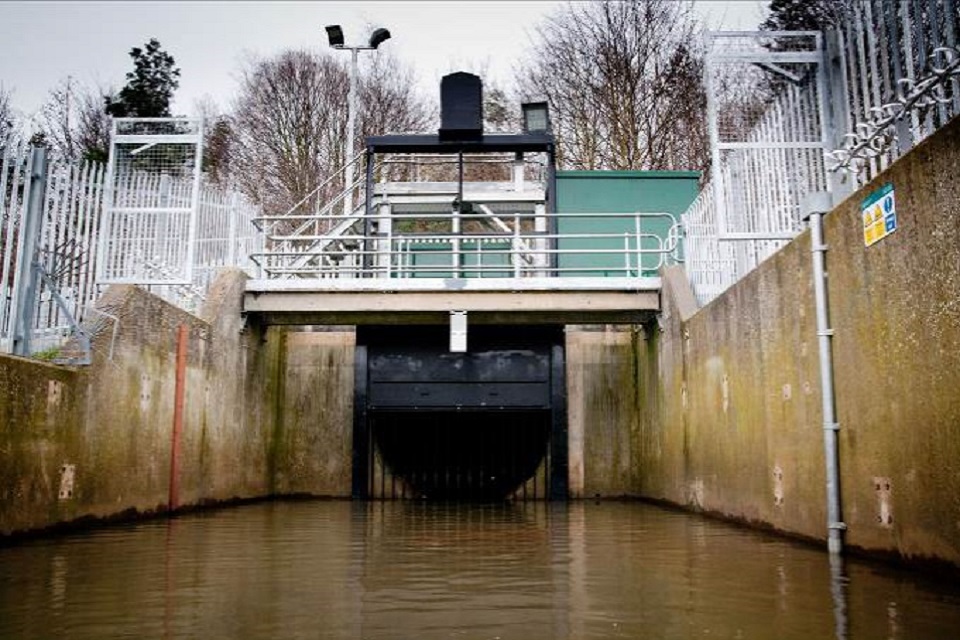
Image hsows Primrose Hill lifting screen
The lifting screen at Primrose Hill

New flood defences

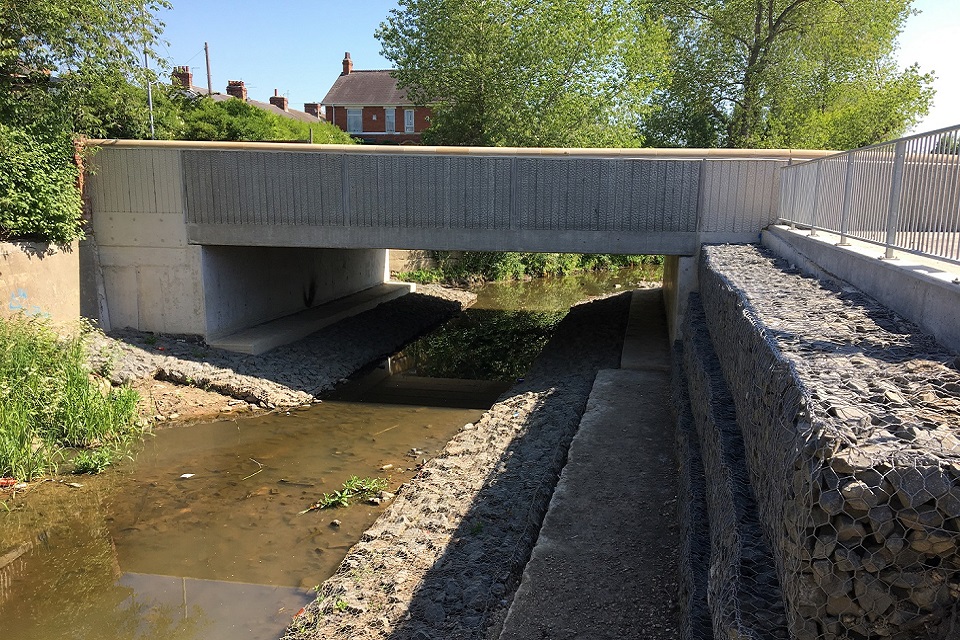
Stockton-on-Tees Borough Council replaced Londonderry Bridge, on Durham Road, as part of the project. This was completed in December 2016.

The Environment Agency has built new flood walls along the beck at Bedford Street and Duddon Walk, which tie in with a raised embankment at Newtown. Work to tie in the new defences with the new bridge was completed earlier this year.

The Environment Agency also installed a new lifting screen at the culvert at Primrose Hill and had previously built a new flood wall along Bishopton Road.

Environment Agency Area Director Oliver Harmar said:

This is a fantastic project with some unique features which has increased flood protection to over 150 properties.

We’ve worked closely with Stockton-on-Tees Borough Council throughout which has enabled us to provide Stockton with an excellent scheme with a high level of protection.

And we’re not finished yet. The next phase involves looking at storing flood water further upstream at Coatham Woods, as well as creating new habitat.

This makes Lustrum Beck a great project which will see us combine traditional engineering solutions with natural flood management.

Image shows the new Londonderry brudge
The new Londonderry Bridge

Natural flood management

The Environment Agency is looking at options to store flood water further upstream of Stockton at Coatham Woods, and is working with Newcastle University and the Forestry Commission to explore designs.

And it’s also exploring opportunities to create up to 30 hectares of water dependent habitat, including improved habitat at Sixfields.

Construction of these features is expected to start later this year and will take approximately three years.

Councillor Mike Smith, the Council’s Cabinet Member for Environment and Transport, added:

The replacement of Londonderry Bridge was an essential part of the broader scheme to help reduce the flood risk to homes.

“The old bridge was a major contributor to serious flooding because its arches obstructed the beck’s flow. Replacing it with a new, single span bridge has reduced the risk of the kind of devastating flooding we’ve seen in recent years.

We’d like to thank local people for their patience and understanding throughout this project, and it’s good to give them this opportunity to find out how the new flood protection measures all work.

The Lustrum Beck flood scheme has won a number of awards, including the Sustainability award at Constructing Excellence North East 2017, it scooped the top award for Partnership Project of the Year at the Flood and Coast Project Excellence Awards, and was highly commended at the Robert Stephenson Awards run by the Institution of Civil Engineers.

It’s important residents understand their flood risk and know what to do during a flood. Find out more about how to prepare for flooding


Press release: Fish stocks boost for north east rivers

The Environment Agency has released 12,000 young grayling to give fish stocks a boost in north east rivers.

The fish were released this week into the rivers Deerness, Browney, Blyth and Skerne as well as Langley Beck at Staindrop and Aldbrough Beck near Darlington.

It’s part of the Environment Agency’s ongoing plans to develop and restore rivers in the region, targeting those which have been affected by pollution or where barriers affect fish passage.

The fish were reared at the Environment Agency’s fish farm near Calverton, Nottinghamshire, using funding from rod licence sales.

Help the process of natural recovery

Fisheries Officer Paul Frear was out releasing some of the grayling in the south of the region on Tuesday (1 August). He said:

We’re pleased we can provide these fish for restocking as part of our commitment to rod licence paying anglers and to help the process of natural recovery in waters which have been impacted by pollution or suffered poor water quality.

While it’s a really important aspect of our work, it’s one of many things we do together with our partners to develop fisheries, including reducing the effects of pollution, improving habitat and removing barriers to fish migration.

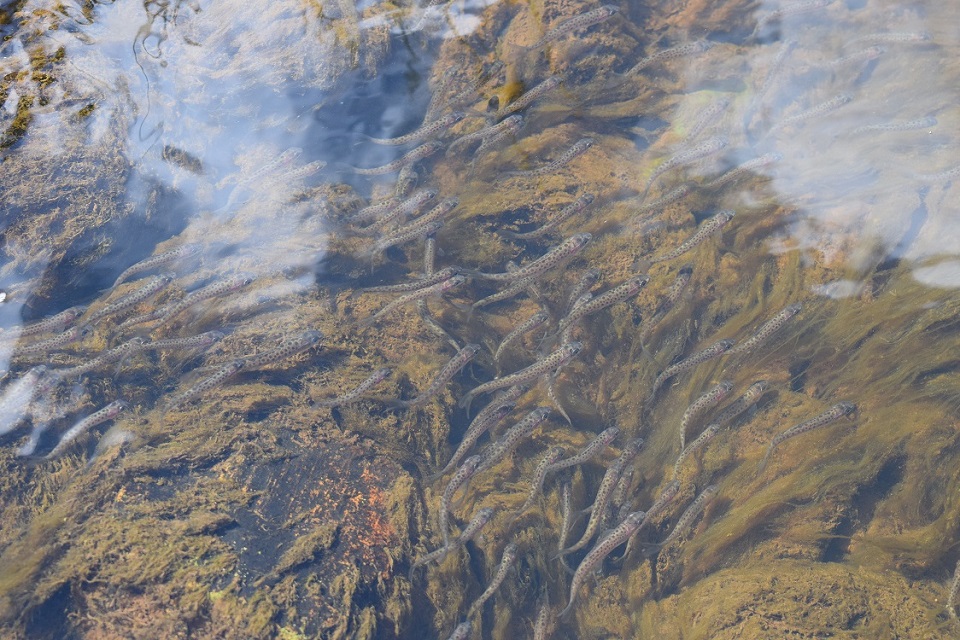
Image shows grayling in the Langley Beck
Grayling released into Langley Beck

Improved water quality

The Environment Agency releases fish into our waterways regularly. Fisheries officers target fish stocking activity in response to impacts on local rivers and using data from national fish surveys to identify where there are problems with poor breeding and survival.

Many of our industrialised rivers have improved dramatically in water quality in the last 30 years and targeted and appropriate restocking has helped the restoration of natural fish stocks and viable fisheries.

Angling is a great way for everyone to keep healthy and enjoy the natural environment. All rod licence income is used to fund work to protect and improve fish stocks and fisheries.

Anyone who wants to go fishing needs to buy a fishing licence. A full annual licence costs £30 (short term and some concessionary licences are also available) and are available online.


Press release: Anglers urged to report pink salmon catches

Recently a non-native pink salmon was caught in the River Tyne at Wylam and around 100 are believed to have been caught in waters off the North East and Yorkshire coast in recent months.

Further afield, anglers have confirmed catches in a number of rivers in Scotland and in western Ireland.

The Environment Agency is collecting vital data about sightings so officers can monitor the situation to determine any impact on the local environment and species. Data collected will help the Environment Agency, fisheries researchers and other organisations with an interest in fisheries management in the United Kingdom, Ireland and Scandinavia, better understand how to manage the arrival of pink salmon in the UK .

Unusual find

Jonathan Shelley from the Environment said:

It is quite unusual to find pink salmon in our waters and we’re keen anglers know we’re aware of the sightings and we’re investigating.

I’d urge anglers to contact us if they see any non-native salmon in the waters, with a date, location and if possible a photograph, which would really help us identify them and build up a picture of where they are.

We are monitoring the situation and early indications is that there is no major impact on wild fish stocks at this point in time.

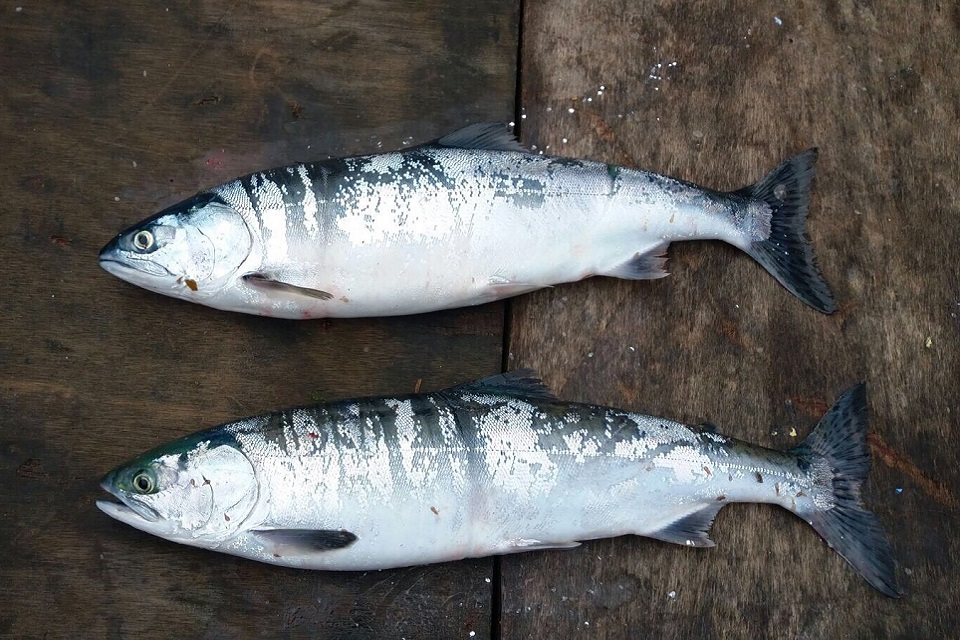
The non-native pink salmon
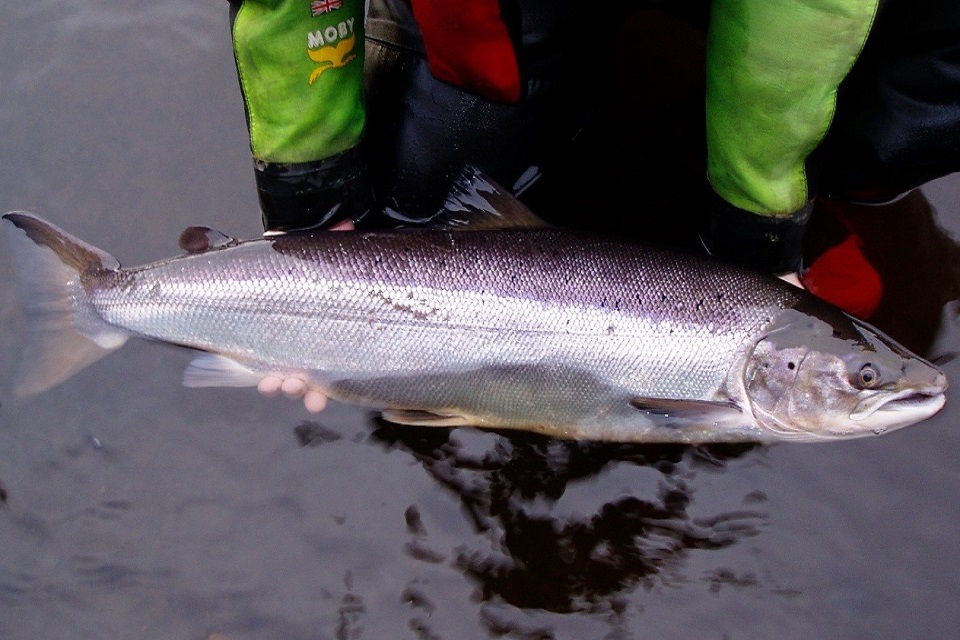
The native Atlantic salmon

Advice for anglers

Anglers holding a salmon licence who catch pink salmon are asked not to return the fish to the water. Instead they are asked to dispatch of them humanely and, if possible, make the fish available to the Environment Agency for inspection and further analysis.

If this is not possible, they are asked to send a sample of the scales. Trout and coarse anglers are asked to call the Environment Agency on 0800 80 70 60, if unsuccessful please return the salmon.

Pink salmon (Onchorhyncus gorbuscha), also known as humpback salmon, originate from the northern Pacific Ocean.

Millions were stocked in the White Sea region of north Russia from the 1950’s until 2003 to develop a net fishery. As a result, some have established self-sustaining populations in rivers in Russia, Finland and northern Norway. This is the most likely origin of the pink salmon recently caught in the UK and Ireland.

Anyone with information is asked to contact the North East environmental monitoring team on 0800 807060 or email jonathan.shelley@environment-agency.gov.uk

How to identify a pink salmon:

  • Large black oval spots on the tail
  • Bluish back, silver flanks and white belly
  • Much smaller scales than an Atlantic salmon of the same size
  • Very dark mouth and tongue
  • 40-60cm in length
  • Breeding males develop a distinctive hump

In contrast, the native Atlantic salmon typically:

  • Have no spots on the tail
  • Usually larger (up 110cm in length)
  • Pale mouth and tongue
  • Larger scales
  • One or two black spots on the gill cover
  • Spots on the back above the lateral line
  • Thicker base of tail than a pink salmon