Press release: Significant milestone reached on Newhaven flood defence project

These works will reduce flood risk to 244 homes, 88 commercial properties and vital infrastructure.

The Newhaven flood alleviation scheme has been developed in partnership with Lewes District Council, East Sussex County Council, the Coast to Capital Local Enterprise Partnership (LEP) and South East LEP. Construction work started on 3 January 2017 following consultation with the local community.

JacksonHyder are designing and building the scheme. Construction has initially focussed on the west bank of the River Ouse, where defences will protect mainly residential properties. Work here has varied from minor measures to plug gaps in existing defences, to sizable sections of new concrete flood wall and earth embankment.

This has included:

  • Building a 150-metre-long bund north of Cantell’s Boatyard.
  • Building a 130-metre wall built along the edge of the footpath either side of Denton Island Bridge.
  • Realigning and raising the flood defence bund at the rear of Huggett’s Green, plus constructing various concrete walls in this area for seating and to support a new floodgate.
  • Building a 140-metre-long reinforced concrete wall which runs from near the Swing Bridge to just north of the Ark Pub with access to fishermen’s jetties.
  • Raising 20 metres of flood defence bund in West Quay.

With just a few finishing touches to be done on the west bank, focus now shifts to the east bank. Work here has recently started, and the whole scheme is expected to be completed by 2019. Once finished, it will reduce flood risk to approximately 430 homes and 390 commercial properties and vital infrastructure, as well as bringing significant economic benefits to the coastal East Sussex town.

The whole scheme will cost around £18 million, with the majority of funding coming from government in the form of Flood and Coastal Risk Management Grant in Aid (GIA). The ‘Coast to Capital’ and ‘South East’ Local Enterprise Partnerships (LEPs), are each contributing £1.5 million as part of their wider commitment to the regeneration of Newhaven. This partnership approach will both significantly reduce flood risk to the local community, and provide confidence for developers to contribute to the regeneration of Newhaven.

In December 2013 the south coast of England was hit by a storm surge coming down from the North Sea. The storm saw hurricane-force winds and the highest tide in some places for almost 60 years. The tidal surge in the Newhaven area badly affected between 50 and 60 properties in the Railway Road area, as well as closing the railway line between Lewes and Seaford.

Gordon Wilson, Environment Agency Area Flood and Coastal Risk Manager, said:

I am delighted that works have been completed on the west bank at Newhaven, and that residents and businesses will now benefit from a significantly reduced flood risk. I would like to take this opportunity to thank the Newhaven community for their support and encouragement throughout the construction period and ask for their continued forbearance, as there will inevitably by some disruption whilst this essential work is completed.

When the flood alleviation scheme is completed in 2019, it will reduce the tidal flood risk to hundreds of homes and a significant number of commercial properties in the area, as well as protecting important local infrastructure such as the road network, railway tracks and the train station. We believe that it will also contribute to the wider regeneration of Newhaven, helping to bring new investment, jobs and homes to the town, and the surrounding area.

Jonathan Sharrock, Chief Executive at Coast to Capital, said:

With the impact of adverse weather being felt across the world and the UK, improving flood defence resilience is of huge importance. We are thrilled to have contributed to a project which will not only protect the economic, social and environmental assets of Newhaven but will also have a direct impact on enhancing regional growth.

Councillor Isabelle Linington, Cabinet Portfolio Holder for Environmental Impact, said:

I am very pleased that work is now completed on the west bank which takes us one step further to completion of this scheme that is so vital for local residents, businesses and community.

Further information on the scheme is available by calling 03708 506506, by emailing newhavenfas@environment-agency.gov.uk or by writing to:

SSD Enquiries,

Environment Agency,

Guildbourne House,

Chatsworth Road,

Worthing,

BN11 1LD

Check you are at risk of flooding for information on how to prepare for flooding and the latest flood warnings in your area or ring Floodline on 0345 9881188.

For all media enquiries please contact 0800 141 2743 or email southeastpressoffice1@environment-agency.gov.uk.


Press release: Nottingham man faces hefty fine for fishing without a licence

The Environment Agency is reminding anglers of the importance of having a rod licence, after a Nottingham man was ordered to pay a fine of £346 plus costs after being found guilty of fishing without a licence.
Wayne Dickens of The Square, Bestwood Village was fined by the court to a total penalty of £1,393 after being found in breach of the Salmon and Freshwater Fisheries Act (1975) in June 2017.

The case heard at Wellingborough Magistrates Court on 9 November 2017 was brought by the Environment Agency following the discovery of the offender in Strawberry Fields, Lincoln in June 2017.

Following the verdict, Steve Powell, Enforcement Team Manager for the Environment Agency said:

It’s important that all anglers understand how seriously the courts take these offences and we hope it will provide as a deterrent for any angler thinking of fishing without a licence. All the money raised from rod licence sales is used to protect and improve fish stocks and fisheries, benefitting anglers and those cheating the system will be prosecuted.

Every year across the country, thousands of anglers are prosecuted for not having a fishing licence. As well as swindling other anglers, fishing illegally can carry a hefty penalty. Getting caught without a licence could land you with a fine of up to £2,500.

Any angler aged 12 or over, fishing on a river, canal or still water needs a licence. An annual licence costs from just £30 (concessions available) and is available from GOV.UK or by calling the Environment Agency on 0344 800 5386 between 8am and 6pm, Monday to Friday.

Anyone with information about illegal fishing activities can contact the Environment Agency Incident Hotline on 0800 80 70 60 or anonymously to Crimestoppers on 0800 555 111.


Press release: North east man sentenced for waste fire

A Cleveland farmer has been ordered to pay £4,899.44 after illegally storing and setting fire to controlled waste on his land.

The blaze, which was filmed by a National Police Air Service (NPAS) helicopter crew, took place at Holdensfield Farm, Yarm, in December 2016.

Charles Roderick Pickering, aged 71, of Holdensfield Farm, was charged with two waste offences when he appeared before Teesside Magistrates’ Court on Friday, 10 November.

He admitted both allegations brought by the Environment Agency and was handed a £3,000 fine with £1,729.44 costs and £170 victim surcharge.

The court heard how the NPAS helicopter crew observed the fire, which was giving off a large plume of black smoke. Footage shows the fire was unattended and included materials such as uPVC door and window frames, wood, wheelie bins, a fridge and shower trays over an area of 50 metres square.

The fire was 200m away from a large housing estate to the north, 200m from HMP Kirklevington Grange to the west, 200m from two busy A roads servicing Yarm and immediately adjacent to a golf driving range.

Burned waste

When Environment Agency Officers attended the site on 19 December 2016 they found the burned and partially burned waste also included televisions, carpet, mattresses, kitchen units and garden waste. There was also an area of unburnt waste consisting of various packaging materials, paint tins and wooden pallets.

Pickering explained that he had allowed a man, whom he only knew by first name, to bring on some of the waste at no charge, with the rest being from his own farm. He admitted he had started the fire, stating he had done it when he considered the wind conditions suitable.

On 26 January 2017, Pickering was interviewed under caution. He produced an invoice and waste transfer notes showing that some of the burnt materials had been removed from the farm.

Mr Brown, of Hewitts Solicitor’s mitigating on Mr Pickering’s behalf, said Mr Pickering accepted responsibility for his wrong doing and had only burnt waste when the wind blew away from local housing and prison. He had now removed the waste at his expense.

Ignorance is ‘no excuse’

Speaking after the court case, Environment Agency spokesperson Rachael Caldwell said:

Ignorance is not an excuse for flouting environmental laws. Not only did Pickering unlawfully accept controlled waste onto his farm, he put the health of the local community and environment in danger by setting fire to it, producing a flume of smoke and fumes.

This case demonstrates the need for everyone to take their environmental responsibilities seriously. Failure to do so can have an immediate impact on people around you and pollute the environment for future generations.


Press release: Thousands of fish released into rivers

The Environment Agency has released 8,000 young fish to give fish stocks a boost in north east rivers.

The chub and dace were released on Thursday, 9 November into the River Tees at Low Coniscliffe and River Wear at Maiden Castle.

It’s part of the Environment Agency’s ongoing plan to develop and restore rivers in the region, targeting those which have been affected by pollution or where barriers affect fish passage.

Fisheries experts will release a total of 30,000 fish over the next two weeks in rivers and Stillwater fisheries in the north east. As well as the Tees and Wear, fish will be released into the Skerne near Darlington and the Team at Gateshead.

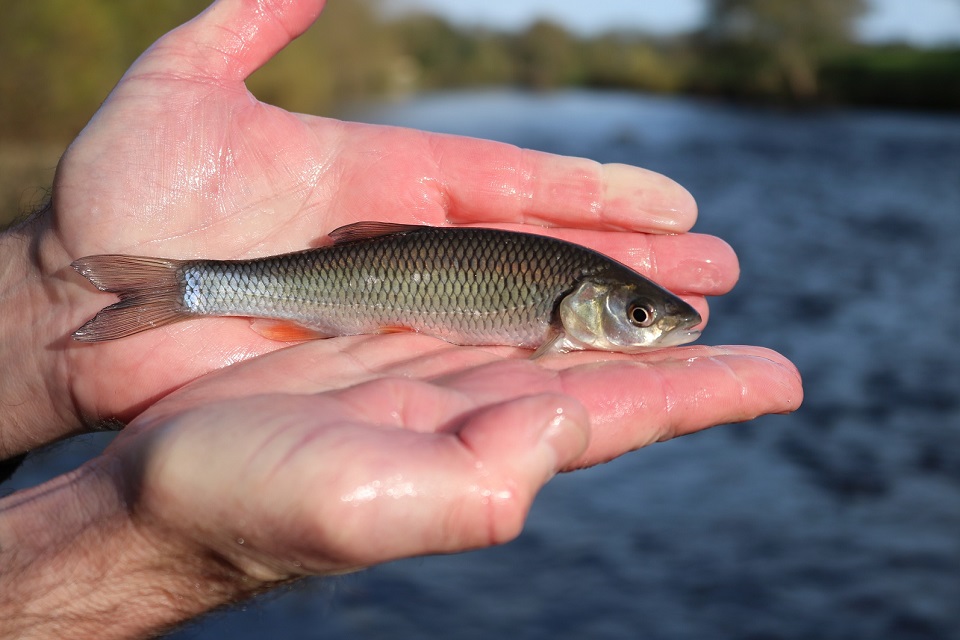
The fish – chub, dace, roach, bream, tench, rudd and crucian carp – were all reared at the Environment Agency’s fish farm near Calverton, Nottinghamshire, using funding from rod licence sales.

The image shows a young chub

Commitment to anglers

Alice Fitch, Fisheries Team leader for the Environment Agency in the north east, said: “We are pleased that we can provide these fish for stocking as part of our commitment to rod licence paying anglers. Restoration and the creation of new fisheries for all people to enjoy is a very important aspect of our work.”

The Environment Agency releases fish into our waterways annually. Fisheries officers target fish stocking activity using data from national fish surveys to identify where there are problems with poor breeding and survival. Releasing fish helps the process of natural recovery in waters which have been impacted by pollution or suffered poor water quality.

Alice added: “Restocking is one of many things we do together with our partners to develop fisheries, including reducing the effects of pollution, improving habitat and removing barriers to fish migration.”

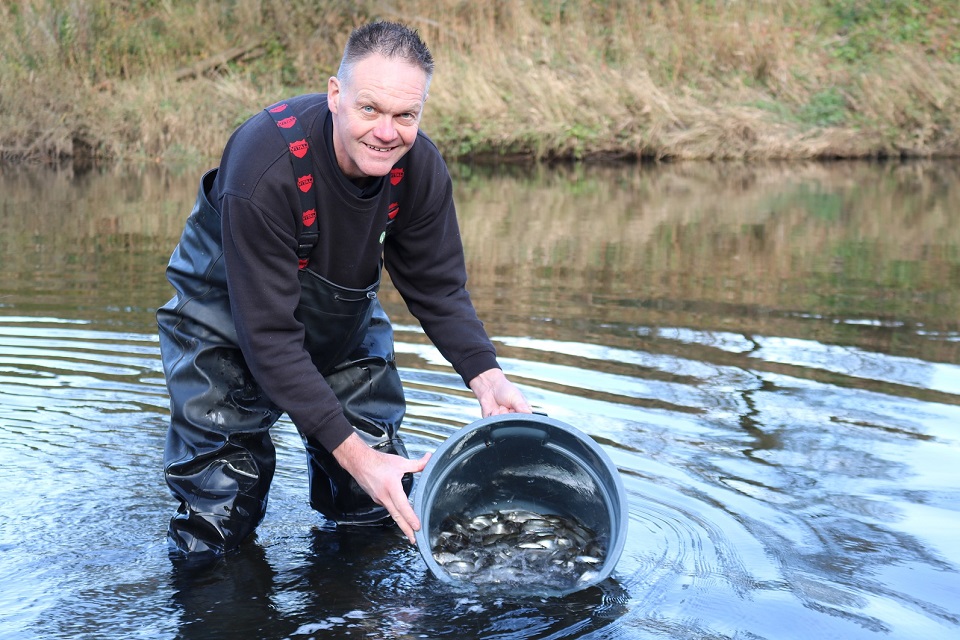
Image shows Paul Frear releasing fish into the Wear
Fisheries officer Paul Frear releases dace into the River Wear.

Improved water quality

Many of our industrialised rivers have improved dramatically in water quality in the last 30 years and targeted and appropriate restocking has helped the restoration of natural fish stocks and viable fisheries.

Angling is a great way for everyone to keep healthy and enjoy the natural environment. All rod licence income is used to find work to protect and improve fish stocks and fisheries.

Anyone who wants to go fishing needs to buy a rod licence. A full annual licence costs £30 (short term and some concessionary licences are also available) and are available online

Fish stocks boost for north east rivers


Press release: £2 million flood scheme for Much Wenlock

The scheme has seen the construction of 2 ponds which catch and store water that could otherwise flood properties, businesses and roads in the town. One pond is on the Sytche Brook to the north west of the town and the other is on the Shylte Brook to the south west.

The ponds, which will usually be empty, will fill during times of heavy rain. The collected water will then be released in a controlled manner so that flood risk downstream is reduced. The ponds, which are now fully operational, will drain down sufficiently quickly so that repeat rainfall events can be stored in a similar manner.

The scheme also includes the restoration of Westwood Quarry on Stretton Road.

The flood scheme was supported by the Environment Agency and funded through Flood Defence Grant in Aid by the Severn and Wye Regional Flood and Coastal Committee, local developer contributions and Shropshire Council. Work was carried out by the contractor Griffiths.

Dave Edwards, Senior Adviser at the Environment Agency, said:

The Much Wenlock flood alleviation scheme is a fantastic example of what can be achieved through partnership working. Much Wenlock has a long history of flooding so it’s great to see the finished project protecting properties, businesses and roads in the town. We’ll continue to work closely with both the council and the community in the future.

Steve Davenport, Shropshire Council’s Cabinet member for highways and transport, said:

I’m delighted that work on this important scheme has now been completed, and that dozens of homes and businesses in Much Wenlock are now at far less risk from flooding than they have been in the past.

Between 2015 to 2021, Government is investing £2.5 billion in flood and coastal erosion risk management projects which will reduce the risk of flooding from rivers, the sea, groundwater and surface water for at least 300,000 homes.