Press release: Climate change means more frequent flooding, warns Environment Agency

Intense bouts of flooding are set to become more frequent, the Environment Agency has warned today (Friday 16 February).

The warning follows a pattern of severe flooding over the past 10 years linked to an increase in extreme weather events as the country’s climate changes. Met Office records show that since 1910 there have been 17 record breaking rainfall months or seasons – with 9 of them since 2000. As intense storms are becoming more frequent, sea levels are also rising because of climate change.

The Environment Agency has today launched its Flood Action Campaign, targeting younger people through social media and online advertising to encourage them to check their flood risk at GOV.UK, sign up for free warnings and be prepared to take action when flooding hits. Research shows that 18 to 34 year olds are least likely to perceive flood risk to their area, know how to protect their homes or where to go for information. They are also at highest risk of fatality as they are less likely to perceive their personal risk.

Sir James Bevan, Chief Executive of the Environment Agency, said:

Climate change is likely to mean more frequent and intense flooding. Floods destroy – lives, livelihoods, and property.

Our flood defences reduce the risk of flooding, and our flood warnings help keep communities safe when it threatens. But we can never entirely eliminate the risk of flooding. Checking your flood risk is the first step to protecting yourself, your loved ones and your home.

In summer 2012, the lengthy period of drought the country had experienced came to an abrupt end when prolonged and intense rainfall increased the risk of flooding from rivers and surface water for long periods. Almost 8,000 homes and businesses were flooded across the country, particularly in the south west.

The winter of 2013 to 2014 started with a coastal surge and record sea levels on the north and east coasts. This was followed by 12 storms in succession and became the wettest winter for 250 years – 11,000 homes were flooded.

Winter 2015 to 2016 brought widespread flooding to 17,000 properties across the north of England, with named storms Desmond, Eva and Frank causing December 2015 to be the wettest month ever recorded.

The threat of flooding is real and increasing – as is also demonstrated by its listing as one of the nation’s major threats.

Last year, the Met Office published new innovative research which found that for England and Wales there is a 1 in 3 chance of a new monthly rainfall record in at least one region each winter.

By their very nature extreme events are rare and a novel research method was needed to quantify the risk of extreme rainfall within the current climate.

Professor Adam Scaife, who leads this area of research at the Met Office, said:

“The Met Office supercomputer was used to simulate thousands of possible winters, some of them much more extreme than we’ve yet witnessed. This gave many more extreme events than have happened in the real world, helping us work out how severe things could get.”


Press release: Pupils help their schools prepare for flooding

Community Engagement Officer Taryn Al-Mashgari has helped youngsters develop flood plans and ‘grab bags’ so they are prepared in the event of a flood.

The series of themed weeks – which have so far involved 1,200 primary school children – kicked off at North Fawdon Primary School in Newcastle in January, before moving to South Tyneside ahead of the start of Monkton flood alleviation scheme.

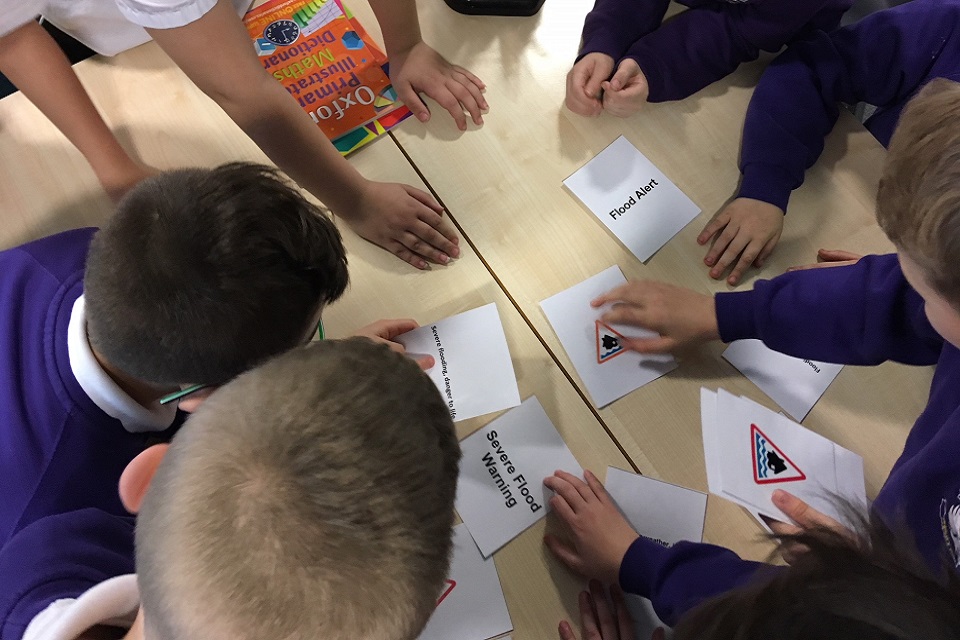
Taryn works with the children in all year groups to help them understand different types of flooding and how it happens. They learn what to do before and during a flood, and learn what the flood warning symbols used by the Environment Agency mean.

They then record mock radio broadcasts about flooding in their community.

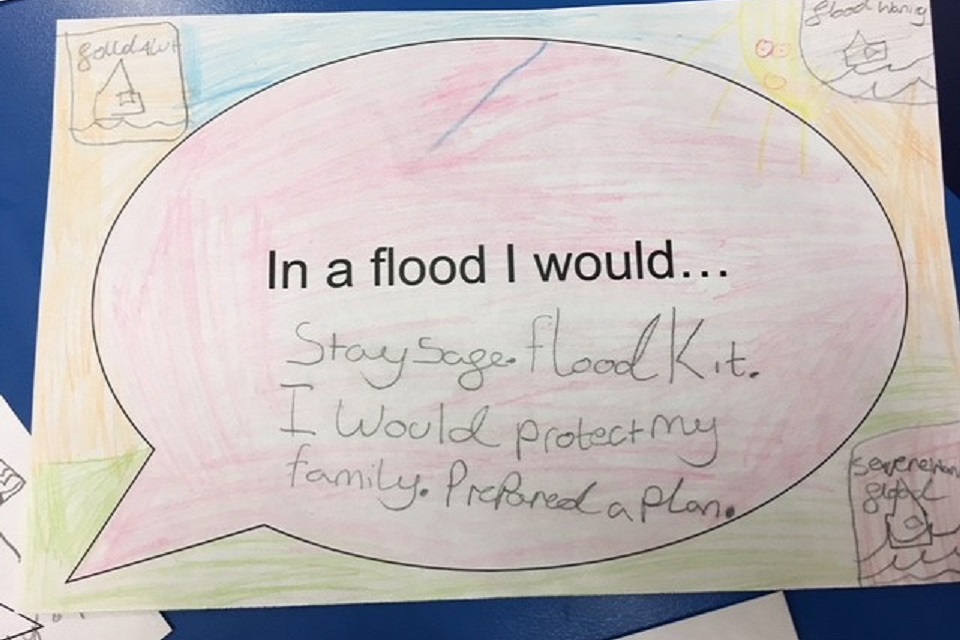
Image hsows content from one of the school events

Important to understand flooding

Each week ends with a community event attended by parents, Northumbrian Water and Northern Powergrid where children launch the flood plan they’ve created for their own school.

At schools in South Tyneside – St James’ RC Primary School and Hebburn Lakes Primary School – Monkton flood scheme project manager Tom Pitman, working for South Tyneside Council and the Environment Agency – and partners at the Tyne Rivers Trust attended to give parents an overview of the project. Taryn said:

It’s important that younger people understand what flooding is, how it happens and what the different organisations that deal with flooding do.

We also teach them how to prepare for and what to do during a flood in a series of interactive sessions. It leads to them being able to create a flood plan for their own school, and in turn their parents having a greater understanding.

We know it is absolutely devastating to be flooded and that’s why we work closely with our partners to develop schemes to reduce the risk of flooding – such as the project due to start at Monkton.

But we can never completely eliminate the risk and that’s why we work hard to educate people and our future generations about what they can do to keep themselves and their valuables safe.

Image shows one of the school events

Prepare, Act, Survive

Taryn will visit Toner Avenue Primary School in Hebburn before moving on to Washington with flood weeks at Springwell Village and Albany Village Primary Schools.

She has also developed a teaching pack which will be delivered by secondary schools across the region as part of Personal, Social, Health and Economic (PSHE) curriculum.

The Environment Agency is urging people to ‘Prepare, Act, Survive’ by visiting the Floods Destroy website and do three things to prepare for flooding.

  • check your postcode and find out if you are at risk of flooding
  • sign-up for free flood warnings if you are at risk
  • view and save the 3-point flood plan so you know how to ‘Prepare, Act, Survive’ in a flood


Press release: Dallyn’s Dairy stream ‘thick with cattle dung’ near Barnstaple

The owners of a dairy farm have been ordered to pay £14,252 in fines and costs for polluting a stream with effluent. The case was brought by the Environment Agency.

The agency received a report of pollution in the Colam Stream near Muddiford, Barnstaple on 24 May 2016. The pollution was traced to nearby Collacott Farm where Richard Dallyn, director of Dallyn’s Dairy Ltd, admitted there had been spillages the previous day.

Effluent from a dirty water lagoon had been pumped into a field channel instead of being dispersed on the land by sprayer. Described as ‘thick with cattle dung,’ the dirty water was then allowed to flow downhill and into the stream.

Officers also saw a slurry umbilical pipe across the stream. There were signs a ‘significant discharge’ of effluent had occurred. Slurry was visible on the riverbank, rocks and surrounding bushes suggesting a coupling on the pipe had failed. There was also heavy algal growth and sewage fungus in the stream that indicated a source of long term pollution was present.

Further checks revealed pollution was also coming from one of a series of settlement ponds on the farm that had overflowed and was sending poor quality water into the Colam Stream. As a precaution, the Environment Agency alerted the owners of two fish farms downstream of Collacott Farm.

A clean river capable of supporting trout and salmon would be expected to have an ammonia reading of approximately 0.25mg/litre. The ammonia level downstream of the illegal discharge was 20.2mg/litre.

More than 600 metres of the stream was affected by a ‘chronic and continuing’ pollution. In places the watercourse was ‘running grey’ with large amount of silt and residue. Large colonies of ‘blood worms’, an indicator of poor water quality, also were present.

A court heard there had been a history of pollution incidents at Collacott Farm involving silage, slurry and dirty water run-off that had resulted in warning letters and a caution from the Environment Agency.

Sean McKay for the Environment Agency said: “The Environment Agency works closely with farmers to ensure that they understand their responsibilities towards the environment and that they comply with the relevant regulations.

“It will not hesitate to take action against farmers who take risks and fail to put appropriate pollution prevention measures in place.”

Dallyn’s Dairy Ltd was fined £6,666 and ordered to pay £7,416 costs by Barnstaple magistrates after pleading guilty to polluting the Colam Stream, an offence under the Environmental Permitting (England and Wales) Regulations. The company was also ordered to pay a victim surcharge of £170. The case was heard on January 30, 2018.


Press release: Nationwide waste crime investigation: two arrested in London

In a joint operation by the Environment Agency, the Metropolitan Police Service (MPS) and Government Agency Intelligence Network (GAIN), a 29-year-old man and a 46-year-old man were arrested for questioning in relation to waste crime, fraud and money laundering offences across the country.

The pair are believed to be involved in organised crime across the country, including in Lancashire, Middlesborough, Lincolnshire, Cambridgeshire and Kent.

Organised crime

Both men were arrested at their homes in Chelsea and Hampstead Heath. The properties were also searched as part of the investigation.

Environment Agency team leader Mark Rumble said:

These arrests are part of extremely serious organised crime activity, which involves the dumping of illegal waste, fraud and money laundering across the country. We are working closely with partners to share intelligence on illegal waste activity to ensure the culprits are brought to justice.

We need everyone to play their part in the fight against waste crime – an issue that blights communities and drains valuable resources. Property and landowners are encouraged to be vigilant and report suspicious illegal activity to the Environment Agency.

Multiple agencies involved

The London GAIN co-ordinator said:

Working in partnership, sharing intelligence lawfully and efficiently, the GAIN aims to ensure that government agencies along with law enforcement will help reduce serious and organised crime, in the most cost effective way. This action is an excellent example of adopting a multi-agency approach.

Detective inspector Tim Court, Metropolitan Police Organised Crime Command, said:

Organised crime has many forms but always exploits and undermines individuals, businesses and society for financial gain. It is critical that different parts of the government work together to tackle organised crime, holding offenders to account and removing the financial incentive for their offending. Today’s activity has proven that the MPS and organised crime advisors will take action against those involved in any organised criminal activity in order to protect London.

To report illegal waste activity, please call the Environment Agency’s incident hotline on 0800 80 70 60 or anonymously to Crimestoppers on 0800 555 111.

Advice to land and property owners

  • Check any empty land and property regularly, and make sure it is secure.
  • Carry out rigorous checks on prospective and new tenants. Land and property owners have a responsibility to ensure anyone leasing their land/property complies with regulations. They may be committing an offence by allowing waste to be stored on land or property without the relevant permissions, leaving them liable to prosecution.
  • Be vigilant and report any unusual behaviour.


Press release: Anglers caught illegally fishing to pay £1,700

On 12 February 2018, at Guildford Magistrates court, Lee Grant, 38, of Eton Road, Southsea, and James Black, 29, of Heathyfields Road, Farnham were each fined £660 for fishing without a fishing licence, with costs of £127 and a victim surcharge of £66 imposed after a prosecution by the Environment Agency. The total penalty was £853 each.

Magistrates heard that on 23 September 2017, an Environment Agency enforcement officer found Lee and James fishing at Badshot Lea Ponds, Badshot Lea. A valid fishing licence is required to fish all waters in England. Neither were able to produce a valid fishing licence and were reported for that offence.
James and Lee were each convicted in their absence.

David Brain, of the Environment Agency said

The majority of anglers fish legally and purchase a fishing licence. We invest the money from fishing licences back into fisheries improvements, fish stocks and fishing, this is essential for the future of the sport.

The minority of anglers that fail to buy a fishing licence are cheating their fellow anglers and the future of the sport. In addition fishing licence cheats risk a criminal conviction, a significant fine and could lose their fishing equipment.

During 2015-16 the Environment Agency checked more than 62,000 fishing licences and prosecuted more than 1,900 anglers for rod and line offences resulting in fines and costs in excess of £500,000.

Anyone witnessing illegal fishing incidents in progress can report it directly to the Environment Agency hotline, 0800 80 70 60. Information on illegal fishing and environmental crime can also be reported anonymously to Crime stoppers on 0800 555 111.

You need a valid Environment Agency Fishing Licence if you are aged 12 or over and fish for salmon, trout, freshwater fish, smelt or eel in England.

Junior fishing licences (aged 12-16) are now free, but you must still get a fishing licence online at www.gov.uk/get-a-fishing-licence.

Notes:

Try fishing. There are lots of events for spring and summer 2018 listed at www.getfishing.org.uk.

All media enquiries: 0800 141 2743.
Please ask for the duty press officer.

Follow us on Twitter @EnvAgencySE