Linguistics at the Library – Episode 8

PhD placement students, Andrew Booth and Rowan Campbell write: Have you ever wondered how linguistic researchers find people to interview? In this final episode, Andrew and Rowan discuss the methods they use to carry out their research on the Isle of Man and Cardiff, and how these are different to…


Finland: EIB continues healthcare financing – loan for new Kainuu hospital

Kainuu Central Hospital

Kainuu Central Hospital

An artist’s impression of the new facility in Kajaani in 2021

26/04/2018

Kainua-alianssi / Sweco Architects

[Kajaani, Finland]

  • EUR 78 million loan to replace current outdated facilities.
  • Hospital to serve regional population and provide primary healthcare in Kajaani city area.

The European Investment Bank (EIB) has signed a EUR 78 million loan to Kainuu Social and Health Care Joint Authority (“Kainuun sote”) in North-Eastern Finland. The loan will support the construction of the new hospital in the city of Kajaani, to replace the current outdated facilities. As the existing facilities are no longer fit for purpose, the new construction will allow the hospital to provide more efficient healthcare services.

The hospital will provide all major healthcare specialties for the regional population, as well as primary healthcare functions in Kajaani city area. The new building will be designed and equipped with a strong emphasis on the integration between primary and specialised care, as well as social services. The layout of the building is also expected to lower the workload of resident staff compared to the current, outdated facilities.

Vice-President Alexander Stubb, responsible for EIB-lending in Northern Europe, said: “After other recent care-related loans, I think this further operation clearly underlines the EIB’s intent to support the Finnish healthcare sector. It is necessary to provide top class healthcare all over Finland, also in very sparsely populated areas like the Kainuu region. I think we can only be proud to support this project.”

Director of Kainuu Social and Health Care Joint Authority, the patron of Kainuu new hospital project, Maire Ahopelto, emphasises the opportunities opened up by the new central hospital to develop digitalised services in a large scale: ”The new central hospital will be a modern example of an intelligent hospital reaching its operations far beyond its walls. This kind of opportunities are even more important here than in big cities.”


The Quiggs at the Wighton

From Sheena Wellington :

Wighton Heritage Centre, Central Library – Saturday 28th April – 11am (doors open 10.30am) 

Cappuccino Concert with The Quiggs

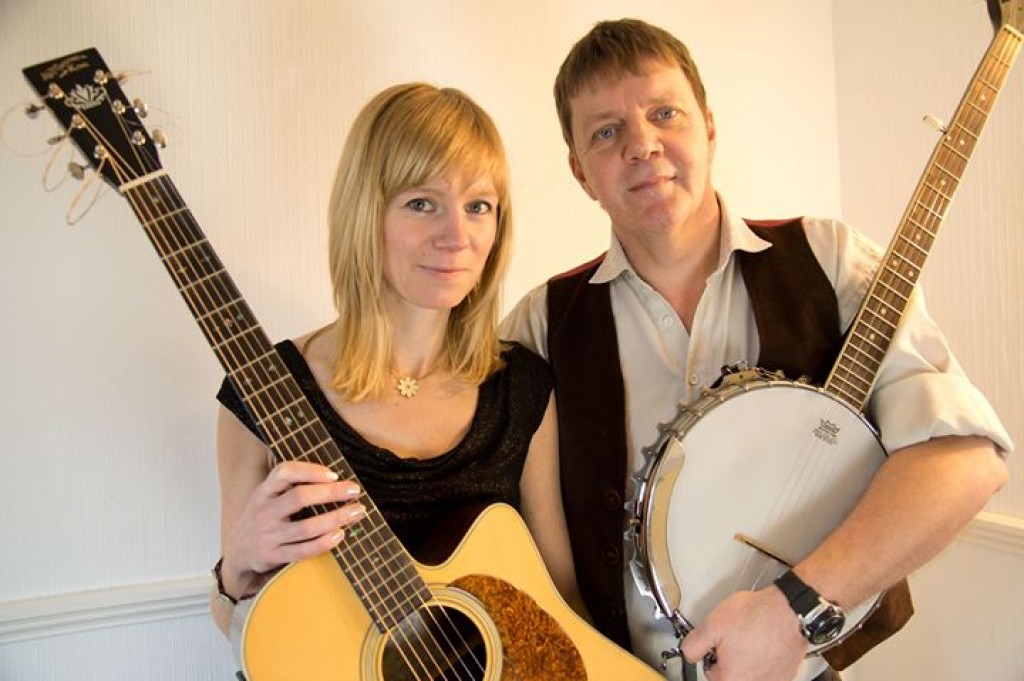
“The Quiggs” is a Scottish/Danish duo consisting of husband and wife, Stephen and Pernille Quigg. Stephen Quigg is a long established folksinger and former member of the legendary band “The McCalmans” and Pernille Quigg, originally from Denmark, is a folksinger and songwriter.

Together they comprise “The Quiggs”. Stephen and Pernille share a common feeling for the tradition of folksong and both know a good song when they hear it. The combination of the two voices in close harmony in songs whether traditional or contemporary  interspersed with anecdotes and a touch of humour has received much praise from both audiences and organisers. They have toured together in Denmark, Germany and The Netherlands with great success. A concert with The Quiggs is a chance to hear folksong in its original form – simple, yet highly expressive, beautiful harmonies and songs that seek the audience’s participation.

The duo has previously released the album “River of Time” in 2015, which received fine reviews and airplay on several programmes in BBC and other European radio stations. In March 2017 “The Quiggs” released their new CD „Seeds I Didn’t Sow”, which recently featured as album of the week on Celtic Music Radio and was described by Folkradio.uk’s Mike Davies as, “Unquestionably one of the best folk albums of the year.”

Indeed the year ahead looks like a busy one for “The Quiggs” with concert and festival bookings in Scotland and across Europe.

Stephen Quigg, former member of the legendary folk group The McCalmans, has performed as a folksinger for 40 years. Stephen was part of the McCalmans for 10 years during that time, he performed at festivals and concerts big and small both in Scotland and abroad. He continued to work solo alongside his career in the group and has toured the length and breadth of Scotland  during most of his life. Stephen’s repertoire ranges from traditional ballads to footstomping songs of battle well mixed with a certain amount of humour. Stephen blends contemporary and traditional material with ease, which ensures a varied evening. Stephen accompanies himself on guitar, bodhran and banjo and with an outstanding voice you can watch him capture the attention of any audience.

Pernille Quigg is of Danish origin but has been living on the west coast of Scotland for the past 12 years. As the surname reveals, she married into the Scottish folk scene after which she herself became part of that scene. Pernille, though, was no stranger to the music and has been singing folk songs for many years, she is now also being noted as a gifted songwriter. Pernille plays guitar and sings in a voice often described as crystal clear. Her repertoire extends from traditional to contemporary to original songs – the common denominator though is, that they all have a story to tell. Pernille released her debut album “Driftwood” in 2012, which received fine reviews in print and was also aired on both Danish Radio and on BBC’s Radio Scotland amongst others.  

Arrive at 10.30am to grab a coffee and a newspaper, then sit back and relax from 11am-12 noon to enjoy the concert! 

£5 tickets on the door, and a suggested donation of £1 for coffee and newspaper.


The Commons tries to undermine the government’s negotiating position

Yesterday was another Groundhog day when we are asked once again to debate the customs union. Twice we have had major debates and decisive votes on this issue, and twice the Commons has voted to leave the Customs Union when we leave the EU. One was on an amendment to the Queen’s Speech, and one was on an amendment to the EU Withdrawal Bill.  That’s as well, as the EU is not offering us free membership of the Customs Union when we leave anyway!

Yesterday the Conservative party did not vote on the motion. The motion was not to embed this approach in law, so the government decided it was not   binding.  Another possible binding vote on this issue will be held again if Labour wishes to change its former position in the Commons when the EU Withdrawal Bill returns from the Lords, if the Lords have passed  an amendment to that bill which  Labour now likes. Labour abstained on the two important votes held so far on the two rebel Labour proposals to stay in the customs union.

The problem with all these motions and amendments to draft legislation, binding or not, is they are requiring something which is not in the gift or control of the UK government. Were the government to give in and accept we should belong to the Customs Union after leaving, or  want a customs union look alike on departure, that would require an offer and consent from the EU. I do not think the EU would give us such membership without also demanding we accept freedom of movement, budget contributions and obedience to many of their laws, as if we were still in the EU.

I have often made the case why many of us prefer not to  be in a customs union anyway. I think we will  be better off out.  Yesterday there was a tired old rehash of the Remain arguments from before the vote. Most of those contributing have clearly never run a complex supply chain in their lives and have no idea how modern business works. Their speeches were peppered with words like “paperwork” and “form filling”, conjuring images of queues of lorries at borders as staff tried to work out what the lorry had on board, how much customs dues it should pay and how each product conformed or not with rules of origin. There was no talk of electronic manifests, filing in advance, electronic debits for customs dues as for VAT and Excise at the moment, no mention of Authorized Economic operators with rapid transit at  borders, no mention of TIR and all the other ways that have already been developed to ensure the free flow of goods. In modern  complex industrial supply chains  each item is recorded in detail so its past can be traced, and this is  recorded on electronic manifests which can be made available to the authorities to settle any issues and money owing without needing to do that at a  border post. There is today complete  electronic visibility of goods in transit by all Authorized Economic operators.  Nor in the debate was there any acknowledgement let alone understanding of the WTO’s wide ranging Trade Facilitation Agreement which binds both us and the EU, nor of how the rules of origin are currently policed without  border hitches.

There was a concerted effort to try once again to undermine the UK’s negotiating position. Sending a loud hint that the government might be forced to change its mind on customs union membership was obviously designed to weaken the UK’s position and give the EU more reason to delay serious talks in the mistaken belief that the UK position on that matter might alter. There is clearly no point in negotiating a free  trade agreement between  the EU and the UK if the UK is going to stay in the customs union after all. Instead we would just face dictation of terms, as an EU that could not believe its luck would set about recreating all features of our membership of the EU as the price for such a concession, rightly claiming that you cannot be in a customs union unless you go along with much of the rest of their project.


European political parties: revised funding rules adopted

On 26 April 2018, the Council adopted revised rules on the funding of European political parties and foundations.

The new rules target certain abusive practices such as the creation of spurious entities for the purpose of receiving EU funding. Some of the changes will facilitate access to EU funds; others will help tackle fraud. Transparency will be increased.

This reform is important and timely. It will ensure that EU funds go to European political parties with a distinct political agenda, corresponding to the European citizens’ needs and expectations. It also includes tougher measures against misspending and abuse. I very much hope that, with elections to the European Parliament coming up next year, there will also be much greater public awareness of the links between political life at the European level and in member states.

Monika Panayotova, Deputy Minister for the Bulgarian Presidency of the EU Council

The main changes are the following:

  • Stricter requirements for forming a European political party: in future only parties – and no longer individuals – will be able to sponsor the creation of a European party. Cross-party membership will be prohibited;
  • More proportional distribution of funding: the fixed amount each party receives from the EU budget will be reduced from 15% to 10%. This leaves a larger share of the budget (90%) which will be allocated in proportion to the number of members of the European Parliament in each party;
  • Easier access to funds: the co-financing requirement will decrease from 15% to 10% for European political parties and to 5% for European political foundations, making it easier for them to reach the required level of own resources;
  • Stronger enforcement: the new rules allow in certain cases for the recovery of money from individuals who are responsible for the misuse of EU funds. De-registration of parties which have provided false information will also become simpler;
  • Increased transparency: European political parties will in future only be able to receive funds if their EU member parties display the logo and programme of the European party on their websites.

The formal adoption of the new rules by the Council today concludes the legislative process. They are expected to be signed on 3 May. They will then be published in the EU Official Journal and enter into force the following day.

The funding for the current financial year (2018) will not be affected. However, in order to receive EU funds for 2019, the parties and foundations will have to comply with the new rules.

In some cases, such as for the display of logos and programmes, transitional arrangements will apply to ensure a smooth introduction of the new rules.