Press release: Holmwood drilling site consultation extended and new date for drop-in event

Updated: New date for drop-in event in Holmwood.

The Environment Agency invites residents living near the Holmwood oil and gas exploratory site in Dorking, Surrey, to a re-scheduled ‘drop-in’ event as part of its consultation on a permit application.

The public information event (cancelled last week due to safety concerns caused by the bad weather) will take place between 2.00pm and 7.30pm, Thursday 15 March 2018 at:

Dorking Halls (Martineau Hall)

Reigate Road

Dorking

RH4 1SG

Visitors will be able to discuss the application and the process being followed to determine it, and talk to Environment Agency representatives about how they regulate oil and gas activities.

The consultation period has also been extended by 2 weeks with a new closing date of 29 March 2018 (formerly 15 March). Consultation is on the application by Europa Oil & Gas Limited for a bespoke environmental permit, which is currently being considered by the Environment Agency.

Further information on the applications, a copy of our draft decision document and details of how to comment can be found online.

An Environment Agency spokesperson said:

We were disappointed to have to postpone the event last week, due to bad weather. Our aim is to give everyone a chance to understand the proposed activity and to be able to attend, but without putting themselves at risk through travelling in hazardous conditions. This is an opportunity for local people to find out more about the operations at Holmwood and how we regulate these activities.

An environmental permit sets out stringent conditions that a site must adhere to. We will not issue an environmental permit for a site if we consider that activities taking place will cause significant pollution to the environment or harm to human health.

Although we are minded to approve the applications for the bespoke and standard rules permit, we are still in the determination process and a final decision has not yet been made. We want to hear from the public and understand people’s views on the application. Everybody has the chance to see what the permits may look like and to raise any additional concerns before we make any final decision.


A hat-trick of Liberal Democrat by-election gains!

Last night, in a bumper crop of by-elections the Liberal Democrats made a hat-trick of gains and huge increases in the vote in a brace of others:

Go to Source
Author:


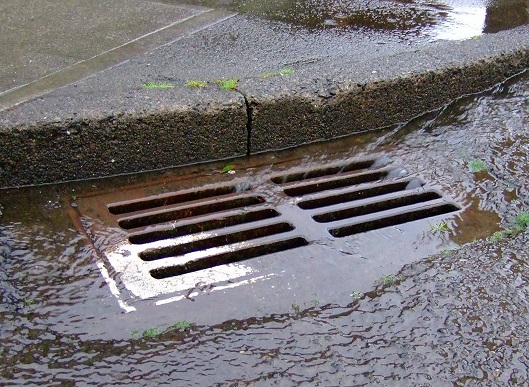
Getting things done – street drains on Perth Road #dundeewestend

I have received complaints about blocked street drains on Perth Road west of Harris Academy.

As one constituent recently said :

“… the drain grating at bus stop on Perth Road (north side) just east of Arnhall Drive is completely blocked so water backs up in the roadway when it rains heavily.   Last time I checked most of the gratings between there and West Park Road were also part/all blocked by gunge.”

I raised this with the council’s Roads Maintenance Partnership and have been advised :

“The Road Maintenance Partnership inspector has asked the gully machine to inspect and clear as required.”


The benefits of Brexit

Next Tuesday I have been invited to give a lecture in the Speaker’s House at Westminster on the opportunities Brexit affords the UK. I have plenty of ideas of what can be better, and believe the UK can both be freer and more prosperous once we are out of the EU. That was why I campaigned and voted for just such an outcome. I will share more of the details with you on this site next week.

My vision will include discussing how to spend all the money we save from our contributions, which will boost both our growth rate and our balance of payments. It will look at opportunities to remove taxes we do not agree with but have to impose as part of our membership. It will examine the scope for a fishing and farming policy which is better for our farmers and fishermen, and will cut our dependence on imports. It will consider what a new migration and borders policy ought to look like, and set out how we can pursue a free trade agenda that will be good for jobs in the UK. There is a longer list than this, but these are some of the highlights.

I would be interested to hear from readers what they think we can do after Brexit that will improve our lives and government, given the freedoms we will gain to vary our laws and spend our own money. We have had months and months of being told by a small group of contributors here – and another small group of contributors to the national media – what they think the downsides will be. Most of these will prove as incorrect as the forecast of a recession immediately after the referendum vote.


Press release: Climate change means more frequent flooding, warns Environment Agency

Intense bouts of flooding are set to become more frequent, the Environment Agency has warned today (Friday 16 February).

The warning follows a pattern of severe flooding over the past 10 years linked to an increase in extreme weather events as the country’s climate changes. Met Office records show that since 1910 there have been 17 record breaking rainfall months or seasons – with 9 of them since 2000. As intense storms are becoming more frequent, sea levels are also rising because of climate change.

The Environment Agency has today launched its Flood Action Campaign, targeting younger people through social media and online advertising to encourage them to check their flood risk at GOV.UK, sign up for free warnings and be prepared to take action when flooding hits. Research shows that 18 to 34 year olds are least likely to perceive flood risk to their area, know how to protect their homes or where to go for information. They are also at highest risk of fatality as they are less likely to perceive their personal risk.

Sir James Bevan, Chief Executive of the Environment Agency, said:

Climate change is likely to mean more frequent and intense flooding. Floods destroy – lives, livelihoods, and property.

Our flood defences reduce the risk of flooding, and our flood warnings help keep communities safe when it threatens. But we can never entirely eliminate the risk of flooding. Checking your flood risk is the first step to protecting yourself, your loved ones and your home.

In summer 2012, the lengthy period of drought the country had experienced came to an abrupt end when prolonged and intense rainfall increased the risk of flooding from rivers and surface water for long periods. Almost 8,000 homes and businesses were flooded across the country, particularly in the south west.

The winter of 2013 to 2014 started with a coastal surge and record sea levels on the north and east coasts. This was followed by 12 storms in succession and became the wettest winter for 250 years – 11,000 homes were flooded.

Winter 2015 to 2016 brought widespread flooding to 17,000 properties across the north of England, with named storms Desmond, Eva and Frank causing December 2015 to be the wettest month ever recorded.

The threat of flooding is real and increasing – as is also demonstrated by its listing as one of the nation’s major threats.

Last year, the Met Office published new innovative research which found that for England and Wales there is a 1 in 3 chance of a new monthly rainfall record in at least one region each winter.

By their very nature extreme events are rare and a novel research method was needed to quantify the risk of extreme rainfall within the current climate.

Professor Adam Scaife, who leads this area of research at the Met Office, said:

“The Met Office supercomputer was used to simulate thousands of possible winters, some of them much more extreme than we’ve yet witnessed. This gave many more extreme events than have happened in the real world, helping us work out how severe things could get.”