Press release: Employment remains at near-record high

Today’s figures also show that groups across society are accessing new job opportunities:

  • nearly 500,000 more people from a black and minority ethnic background (BAME) have started working since 2015
  • the gender employment rate gap is at a near-record low, just 8.9%
  • every region across the UK has seen employment increase since 2010
  • youth unemployment has fallen by over 40% since 2010
  • there are a record breaking number of workers aged 50 plus in work, reaching 10 million
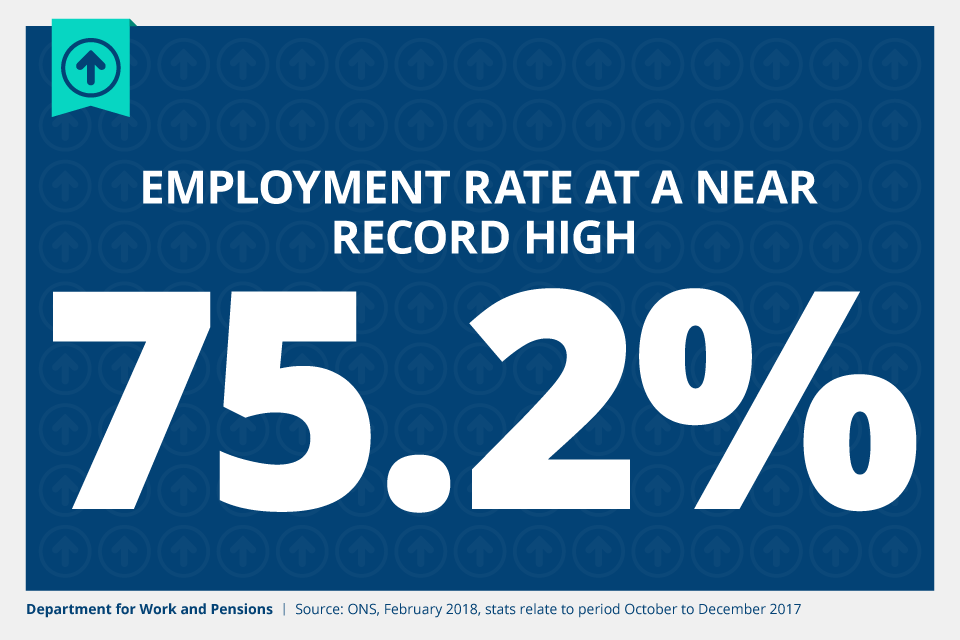
The employment rate is at a near record high of 75.2% (February 2018).

Minister for Employment Alok Sharma said:

High employment rates are a reliable feature of today’s economy – and this is an incredible achievement. It is equally important that across society everyone has the opportunity to get a good job and get on in life.

Today’s figures show that this government is building a fairer economy that supports people from all backgrounds to get into work. We are closing the BAME and gender employment gaps, and people across the country are accessing new opportunities.

Separate figures out today showed that 730,000 people are now on Universal Credit. Of these, 40% were in employment (290,000).

Read the Labour Market Statistics – February 2017 from the Office for National Statistics.

Contact Press Office

Press Office

Caxton House

Tothill Street

London
SW1H 9NA

Follow DWP on:


Press release: January 2018 Transaction Data

In January:

  • HM Land Registry completed more than 1,782,080 applications to change or query the Land Register
  • the South East topped the table of regional applications with 403,526

The transaction data shows HM Land Registry completed 1,782,088 applications in January compared with 1,266,641 in December and 1,563,358 last January, of which:

  • 462,352 were applications to update existing titles compared with 319,721 in December

  • 825,613 were applications to obtain an official copy of a register compared with 551,427 in December

  • 211,393 were official searches compared with 197,327 in December

  • 26,002 were postal applications from non-account holders, compared with 26,377 in December

Applications by region and country

Region and country November applications December applications January applications
South East 408,756 287,649 403,526
Greater London 339,086 250,636 339,286
North West 200,475 139,168 222,150
South West 173,351 124,681 173,058
West Midlands 152,816 107,079 150,292
Yorkshire and the Humber 135,373 98,017 139,207
East Midlands 125,846 90,239 122,812
Wales 82,646 58,854 80,315
North 81,197 56,648 77,912
East Anglia 74,499 53,549 73,345
Isles of Scilly 92 79 110
England and Wales (not assigned) 86 42 75
Total 1,774,223 1,266,641 1,782,088

Top 5 local authority areas

Top 5 local authority areas November applications Top 5 local authority areas December applications Top 5 local authority areas January applications
Birmingham 27,715 Birmingham 19,714 Birmingham 27,561
City of Westminster 23,565 City of Westminster 17,977 City of Westminster 25,488
Leeds 20,137 Leeds 14,262 Leeds 20,256
Cornwall 18,823 Manchester 13,384 Manchester 19,350
Manchester 18,542 Cornwall 13,332 Cornwall 18,367

Top 5 customers

Top 5 customers November applications Top 5 customers December applications Top 5 customers January applications
Enact 49,360 Enact 36,313 Enact 50,327
Optima Legal Services 25,532 Optima Legal Services 19,826 Nationwide Building Society 31,589
O’Neill Patient 24,260 O’Neill Patient 19,764 Optima Legal Services 27,284
TM Group (UK) Ltd 19,701 HBOS PLC 16,649 O’Neill Patient 26,073
HBOS PLC 19,315 TM Group (UK) Ltd 16,444 My Home Move Limited 19,103

Access the full dataset on data.gov.uk.

Notes to editors

  1. Transaction Data is published on the 15th working day of each month. The February Transaction Data will be published at 11 am on Wednesday 21 March 2018 at HM Land Registry Monthly Property Transaction Data.

  2. The monthly Transaction Data showing how many applications for new titles, leases, splitting titles, updating existing titles, official copies of the register and searches were received, reflects the volume of applications lodged by customers using an HM Land Registry account number on their application form.

  3. Completed applications in England and Wales, shown by region and by local authority include postal applications as well as those sent electronically.

  4. Transaction Data excludes pending applications, bankruptcy applications, bulk applications and discharge applications (to remove a charge, for example, a mortgage, from the register).

  5. Transactions for value are applications lodged involving a transfer of ownership for value. For an explanation of other terms used, see abbreviations used in the transaction data.

  6. Most searches carried out by a solicitor or conveyancer are to protect the purchase and/or mortgage. For example, a search will give the buyer priority for an application to HM Land Registry to register the purchase of the property. This can give an indication of market activity.

  7. Reasonable skill and care are used in the provision of the data. We strive to ensure that the data is as accurate as possible but cannot guarantee that it is free from error. We cannot guarantee our data is fit for your intended purpose or use.

  8. Transaction Data is available free of charge for use and re-use under the Open Government Licence (OGL). The licence allows public bodies to make their data available for re-use.

  9. If you use or publish the Transaction Data, you must add the following attribution statement:
    Contains HM Land Registry data © Crown copyright and database right 2017. This data is licensed under the Open Government Licence v3.0.

  10. HM Land Registry’s mission is to guarantee and protect property rights in England and Wales.

  11. HM Land Registry is a government department created in 1862. It operates as an executive agency and a trading fund and its running costs are covered by the fees paid by the users of its services. Its ambition is to become the world’s leading land registry for speed, simplicity and an open approach to data.

  12. HM Land Registry safeguards land and property ownership worth in excess of £4 trillion, including around £1 trillion of mortgages. The Land Register contains more than 25 million titles showing evidence of ownership for some 85% of the land mass of England and Wales.

  13. For further information about HM Land Registry visit www.gov.uk/land-registry.

  14. Follow us on: Twitter @HMLandRegistry, our blog, LinkedIn and Facebook.

Contact

Senior Press Officer

Marion Shelley
Head Office

Trafalgar House

1 Bedford Park
Croydon
CR0 2AQ

Press Officer

Paula Dorman
Head Office

Trafalgar House

1 Bedford Park

Croydon
CR0 2AQ


The EU letter

I see a letter written by John Penrose to the PM about Brexit and supported by others has been leaked to the press. I am asked why I do not comment on it.

The letter was intended to be private, and is a small part of the many daily dealings MPs have with Ministers. I do not myself report private conversations or private letters sent to Ministers, and certainly not those written by others. I set out here my views clearly, which will be reflected in what I say and write to Ministers and what I support that others propose. I  put here details of meetings or letters I have initiated  where appropriate.


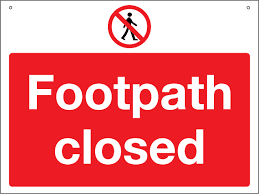
Update on closed path #dundeewestend

Residents have asked when the public pathway to the west side of Harris Academy down to Riverside – currently closed for railway bridge works – will re-open.

The City Council has updated me as follows :

“The works are due to be completed by the 23rd of February. 

This delay is because much of the work requires night time possessions and access is granted conditionally by Network Rail. 

We have also been restricted somewhat by inclement weather.”


The argument that the EU stops wars

I find it worrying that some advocates of the UK staying in the EU claim that we need the EU to stop a future European war. This I think is a most unfair aspersion to cast on our continental allies, that somehow they would be launching aggressive military actions against each other or against us if there was no EU.

Modern Germany is a country transformed, compared to the Germany of Hitler. Since the defeat Germany has followed the democratic path, upholding civil liberties and the rule of law, and turning against racism and genocide. The western allies worked with the West German state to rebuild it after the huge damage done by the war, and welcomed Germany back into the family of western nations. Most commentary has concentrated on blaming the Nazis for the horrors of the holocaust and the general brutality of the Hitler regime.

All that has been helpful in ensuring a peaceful history in western Europe  after the end of the 2 nd World War, something a more penal peace did not achieve after the 1st World War. The fact that all the main western countries became democracies was crucial to a prolonged peace, as was the presence of US forces as guarantors  of the security of western Europe. There is now a strong habit of co-operation between France and Germany which removed the relationship that caused most tension and war in the past.  It is important to remember, however, that whilst many Germans may not have known of the full horrors of the genocide, all Germans did know that their government was unleashing violent forces against all the neighbouring nations of Europe with a view to conquest and occupation, and knew that the regime was removing Jews from their homes. The absence of any effective or wide ranging opposition to Hitler, and his strong showing in a couple of elections before he closed down the Parliament and governed as an autocrat, is part of the record.  So is the coercion used by the Hitler government to suppress criticism from those who were affronted by what happened. This makes the change to German attitudes even more welcome and important since 1945.

I found when I was Single Market Minister making frequent trips to the continent to negotiate ever more laws with fellow member states of the EU that some of my fellow Ministers from smaller countries on the continent had a difficult relationship with Germany. I was content to have a professional and friendly approach to the German delegation, and sometimes found the UK was in agreement with them. Quite often other countries would approach me and ask me to oppose the German position as it did not suit them. I told them to oppose it themselves, but they would say they did not feel able to do so. They saw that the UK was willing to make a case it believed in, whichever country of countries agreed or disagreed. We were not afraid to oppose the consensus, or to oppose the Franco-German common position which usually had been agreed before the rest of us met, and was frequently expected to go through by the Commission and some of the other parties. When France and Germany disagreed there was more scope for change and productive exchanges.

The issue of Germany’s leadership of the EU has become a much more central one since the unification of East and West Germany made Germany comfortably the largest and richest economy on the continent. The completion of the Euro has made Germany’s role even larger and more contentious with other Euro members. Some think Germany should share more of her surplus with the poorer countries. Some think Germany should relax the austerity policies that have characterised the Euro since its  birth. The UK has been more observer than participant in this debate as a  non Euro member. One of the main reasons I think the UK leaving the EU will be helpful to them as well as to us is it removes the different UK perspective from the Euro issues which matter greatly to the zone. All the time the Eurozone shares a budget with the rest of the EU, and faces a UK wanting a smaller EU budget, it distorts the debate about how big a budget and how many transfers a successful single currency needs. Germany may lose an ally for smaller EU  budgets, but it is Germany who has to answer the fundamental question how much money do you need to transfer round a currency zone so that it can work fairly and well.