Press release: Minister for Middle East’s statement on planned Israeli settlement

Minister Burt said:

The UK strongly condemns the Israeli government’s decision to ‘legalise’ the Netiv Ha’avot outpost in the West Bank. The international community has repeatedly stated that settlements are illegal under international law and undermine the physical viability of the two-state solution.

Further information

Media enquiries

For journalists


LegCo committees’ joint visit to West Kowloon Station of Hong Kong Section of Guangzhou-Shenzhen-Hong Kong Express Rail Link (with photos)

The following is issued on behalf of the Legislative Council Secretariat:
 
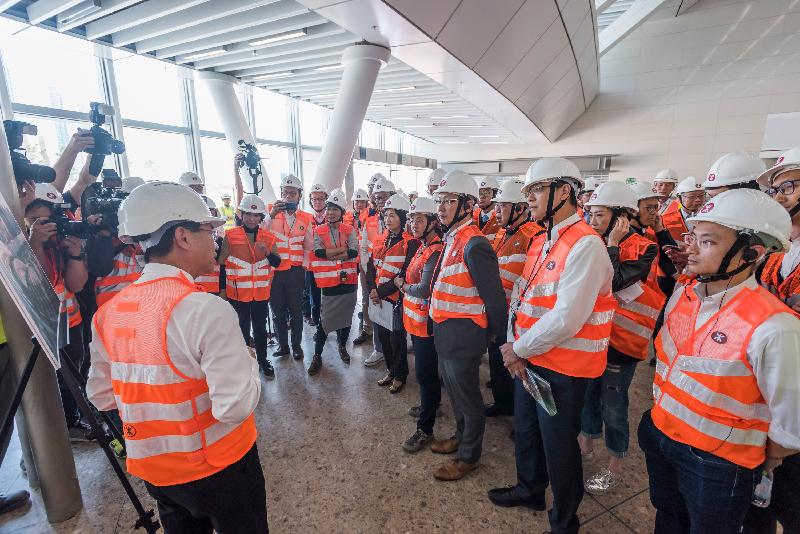
     The Legislative Council (LegCo) Bills Committee on Guangzhou-Shenzhen-Hong Kong Express Rail Link (Co-location) Bill and the Subcommittee on Matters Relating to Railways conducted a joint visit today (February 27) to the West Kowloon Station of the Hong Kong Section of the Guangzhou-Shenzhen-Hong Kong Express Rail Link so as to better understand the facilities of the station and the co-location arrangement before its commissioning.
 
     Accompanied by the Secretary for Justice, Ms Teresa Cheng, SC, the Secretary for Security, Mr John Lee, the Secretary for Transport and Housing, Mr Frank Chan Fan, and representatives of the MTR Corporation Limited (MTRCL), Members visited the Hong Kong Port Area and the Mainland Port Area of the station, as well as touring along the departing and arriving passengers’ routes to learn more about the co-location arrangement.  
 
     Members also visited the facilities and received briefings by representatives of the Government and MTRCL on the latest works progress of the station.
 
     Members who participated in the visit were the Chairman of the Bills Committee on Guangzhou-Shenzhen-Hong Kong Express Rail Link (Co-location) Bill, Mrs Regina Ip, the Deputy Chairman, Mr Cheung Kwok-kwan; the Chairman of the Subcommittee on Matters Relating to Railways, Mr Michael Tien, the Deputy Chairman, Mr Chan Han-pan; Committee members Mr Wong Ting-kwong, Dr Priscilla Leung, Ms Claudia Mo, Mr Wu Chi-wai, Mr Yiu Si-wing, Mr Chan Chi-chuen, Mr Kenneth Leung, Mr Dennis Kwok, Dr Fernando Cheung, Dr Helena Wong, Mr Ip Kin-yuen, Dr Elizabeth Quat, Dr Chaing Lai-wan, Dr Lo Wai-kwok, Mr Chu Hoi-dick, Mr Jimmy Ng, Dr Junius Ho, Mr Wilson Or, Dr Pierre Chan, Mr Chan Chun-ying, Ms Tanya Chan, Mr Luk Chung-hung and Dr Cheng Chung-tai.
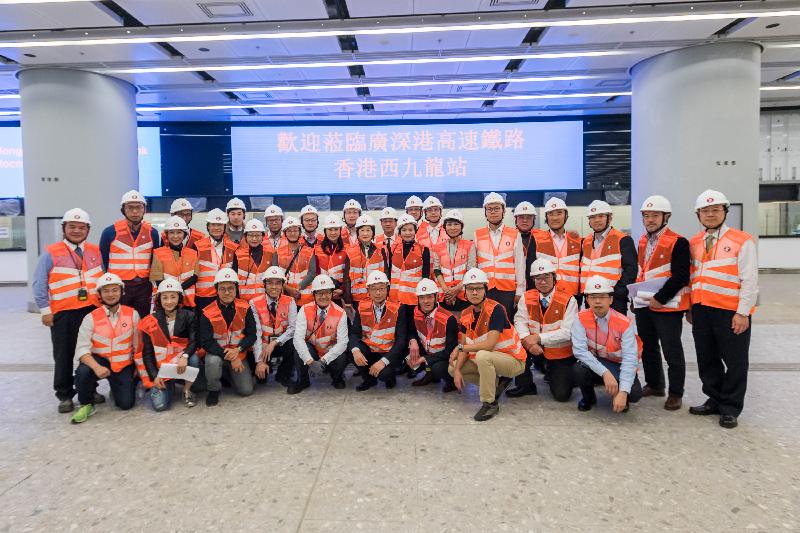
Photo  Photo  Photo  


21/2018 : 27 February 2018 – Judgment of the Court of Justice in Case C-266/16

Download PDF


Declaration by the High Representative on behalf of the EU on the alignment of certain third countries concerning restrictive measures directed against certain persons and entities in view of the situation in Tunisia

On 29 January 2018, the Council adopted Decision (CFSP) 2018/141[1].

The Council Decision renews the existing restrictive measures for a further twelve months, until 31 January 2019.

The Candidate Countries the former Yugoslav Republic of Macedonia*, Montenegro*, Serbia* and Albania*, the country of the Stabilisation and Association Process and potential candidate Bosnia and Herzegovina, and the EFTA countries Iceland, Liechtenstein and Norway, members of the European Economic Area, as well as the Republic of Moldova, Armenia and Georgia, align themselves with this Council Decision.

They will ensure that their national policies conform to this Council Decision.

The European Union takes note of this commitment and welcomes it. 


[1] Published on 30.01.2018 in the Official Journal of the European Union no. L 25, p.38.

*The former Yugoslav Republic of Macedonia, Montenegro, Serbia and Albania continue to be part of the Stabilisation and Association Process.


EU Emissions Trading System reform: Council approves new rules for the period 2021 to 2030

The EU is reforming its emissions trading system (ETS). How does it work?

On 27 February 2018 the Council formally approved the reform of the EU emissions trading system (ETS) for the period after 2020.

The revised ETS directive is a significant step towards the EU reaching its target of cutting greenhouse gas emissions by at least 40% by 2030, as agreed under the EU’s 2030 climate and energy framework, and fulfilling its commitments under the Paris Agreement.

As Presidency we will work towards retaining the EU’s leading role in the negotiations on the conclusion of the implementation rules of the Paris Agreement. Reducing greenhouse gas emissions will not only contribute to the fight against climate change but it will also positively impact the improvement of the air quality. Protecting the environment and the health of European citizens is one of the priorities of the Bulgarian Presidency.

Neno Dimov, Bulgarian Minister of Environment and Water

The emissions trading system is reformed by introducing the following elements:

  • The cap on the total volume of emissions will be reduced annually by 2.2% (linear reduction factor).
  • The number of allowances to be placed in the market stability reserve will be doubled temporarily until the end of 2023 (feeding rate).
  • A new mechanism to limit the validity of allowances in the market stability reserve above a certain level will become operational in 2023.

The revised ETS directive also contains a number of new provisions to protect industry against the risk of carbon leakage and the risk of application of a cross-sectoral correction factor:

  • The share of allowances to be auctioned will be 57%, with a conditional lowering of the auction share by 3% if the cross-sectoral correction factor is applied. If triggered, it will be applied consistently across the sectors.
  • Revised free allocation rules will enable better alignment with the actual production levels of companies, and the benchmark values used to determine free allocation will be updated.
  • The sectors at highest risk of relocating their production outside the EU will receive full free allocation. The free allocation rate for sectors less exposed to carbon leakage will amount to 30%. A gradual phase-out of that free allocation for the less exposed sectors will start after 2026, with the exception of the district heating sector.
  • The new entrants’ reserve will initially contain unused allowances from the current 2013-2020 period and 200 million allowances from the market stability reserve. Up to 200 million allowances will be returned to the market stability reserve if not used during the period 2021-2030.
  • Member states can continue to provide compensation for indirect carbon costs in line with state aid rules. Reporting and transparency provisions are also enhanced.

The EU emissions trading system sets a cap on how much CO2 heavy industry and power stations can emit. The total volume of allowed emissions is distributed to companies as permits which can be traded. ETS is a cornerstone of the EU’s policy to combat climate change and its key tool for reducing greenhouse gas emissions cost-effectively. Set up in 2005, it is the world’s first major carbon market and remains the biggest one. It operates in all 28 EU countries plus Iceland, Liechtenstein and Norway. ETS limits emissions from more than 11.000 heavy energy-using installations (power stations and industrial plants) and airlines operating between these countries. It covers around 45% of the EU’s greenhouse gas emissions. Putting a price on carbon and trading it delivers concrete results for the environment: In 2020, emissions from sectors covered by the system will be 21% lower than in 2005.

The formal approval at the Council today is the final step in the legislative process. The new directive will enter into force on the 20th day following its publication in the official journal.