News story: Christine Middlemiss begins as UK Chief Veterinary Officer
Christine Middlemiss has today taken up post as UK Chief Veterinary Officer (CVO) taking over from Nigel Gibbens who has stepped down after 10 successful years in the role.
Christine has a wealth of experience and joins Defra after serving as the CVO for New South Wales, Australia. She took up that role in August 2016 and during her tenure she led major improvements to biosecurity across many farming sectors including implementation of new outcome focused and risk based biosecurity legislation; online animal certification processes and improving evidence and risk based disease control approaches.
She comes from a farming family in the south of Scotland, with a background in beef cattle and sheep. Prior to moving to Australia Christine was an experienced veterinarian who worked for a number of years in private practice in Scotland and the north of England with specific interest in research, meat processing and livestock genetics. She then joined the Animal Health agency (now part of the Animal and Plant Health Agency) in 2008 as a Divisional Veterinary Manager in Scotland. She also led Defra’s Animal Traceability and Public Health policy team detecting and responding to new and emerging diseases such as Schmallenberg and Porcine Epidemic Diarrhoea.
She re-joins the department at a time when animal welfare is a top priority for the Government, demonstrated by a number of recent announcements including legislation making CCTV cameras mandatory in slaughterhouses, the call for evidence on a ban on third party puppy sales and the draft animal welfare bill. The Government is also committed to the very highest standards on animal welfare. As the prime Minister has set out, we will make the United Kingdom a world leader in the care and protection of animals as we leave the EU.
Speaking about her appointment, Christine Middlemiss said:
I am delighted to have been appointed. It is a privilege to take over from Nigel and lead my veterinary colleagues to support our farming and food industry on the UK reputation for high health and welfare of our animals.
I am very much looking forward to working again with the team at Defra, its agencies, the devolved administrations and all the individuals and groups who will contribute to meet future challenges.
Our Secretary of State has confirmed he wants to cement the UK’s place as a world-leader on animal health and welfare as the UK leaves the European Union, and I’m delighted to have an opportunity to play a part in that.
News story: Lift-off: Satellite launched into space on RAF mission
The RAF has been working with the MOD’s Chief Scientific Advisor, Defence Science and Technology Laboratory and UK industry on the programme to deliver high-quality imagery and 3D video footage from space. The first satellite of its kind, the Carbonite-2 has completed its initial checks and is now supplying detailed imagery and footage.
The ambitious programme could eventually see high-tech satellites beaming video directly into the cockpit of fighter jets, improving the situational awareness of UK pilots by giving them the very best imagery and information anywhere on Earth in real-time.
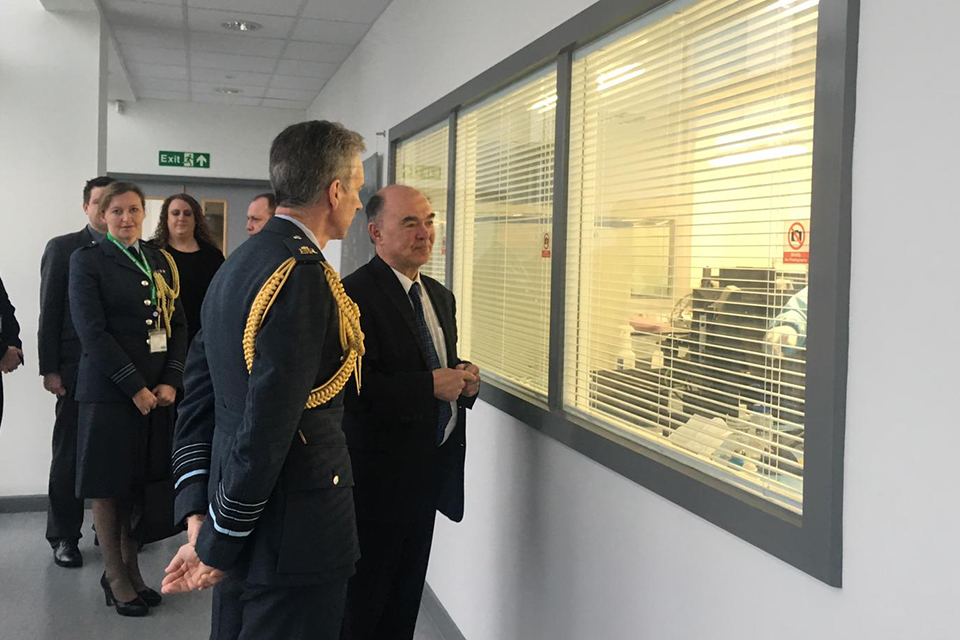
Chief of the Air Staff, Air Chief Marshal Sir Stephen Hillier made the announcement at Surrey Satellite Technology Limited in Guildford, the company behind the technology, to mark the successful launch and operation of the satellite.
Speaking at the launch event, Chief of the Air Staff, Air Chief Marshal Sir Stephen Hillier said:
It’s entirely fitting that we have launched this highly capable satellite in the centenary year of the Royal Air Force. We have always been at the leading edge of technology, constantly innovating and expanding our horizons. This satellite will not only expand further the RAF’s growing Air and Space capabilities, it will I hope also be an inspiration to those young people looking towards technology as a way to realise their potential.
The Chief of the Air Staff today announced the RAF’s role in the launch and operation of a demonstrator satellite. Crown copyright.
Welcoming the news, Defence Minister Guto Bebb said:
The success of this satellite shows we are looking far beyond the skies when it comes to defending our country. We live in an increasingly dangerous world and satellite technology like this give our Armed Forces the extra advantage of quick video surveillance to keep us safe from a range of future threats, whether that’s an airborne terror attack or a troop of tanks closing in on a foreign border. Investing millions into Britain’s most innovative companies is helping us propel the UK forward in the space domain.
The Carbonite-2 will play a crucial role in the MOD’s understanding the potential for and shaping the RAF’s vision of an international constellation for the future. This could unlock new opportunities using a range of sensors and ground stations, which has the potential to support emerging crises and combat intensifying threats, giving the UK the opportunity to lead in the area with several close allies having already shown interest in the concept.
The MOD invested £4.5m into the programme with Surrey Satellite Technology just eight months ago, and the satellite was successfully launched from Sriharikhota in India. The 100kg spacecraft, roughly the size of an average household washing machine, carries an off-the-shelf telescope and HD video camera, both of which have been adapted for a space environment and integrated into a custom-built framework. The imaging system is designed to deliver high-resolution images and colour HD video clips with a swath width of 5km.
MOD’s Chief Scientific Advisor, Professor Hugh Durrant-Whyte said:
MOD’s science community is one of the driving forces of the UK’s space revolution; and this is an excellent example of defence science and technology working with industry and the Royal Air Force to deliver affordable and pioneering space technology quickly for our Armed Forces.
The historic moment comes as the RAF celebrates 100 years since its formation, and demonstrates how the service is not only commemorating its history but also celebrating current success and looking forward to inspire future generations. To maximise the benefit of the experience and build expertise the RAF has placed a secondee with SSTL.
As set out in the Government’s Industrial Strategy, the UK Space Agency is also working together with industry to capture a 10% share of the global space market.
The UK Space Agency’s Director of Growth, Catherine Mealing-Jones said:
Space has applications across every part of our economy and is a vital part of our national capability. British companies like SSTL are the best in the world at what they do, making them a fitting partner for the RAF.
The MOD already has a world-leading role in satellite technology, with Skynet 5 delivering a resilient, sovereign capability until 2025, supporting secure communications for troops, command centres and cutting-edge unmanned vehicles. Beyond that, the MOD is fully committed to launching Skynet 6a and is looking to change defence structures to bring better operational coherence to activities for the future.
News story: Learner drivers on motorways from 4 June 2018
Updated: Added the date (Monday 4 June 2018) that the law will change, advice about driving near learner drivers on the motorway, and added a Welsh translation of the news story.
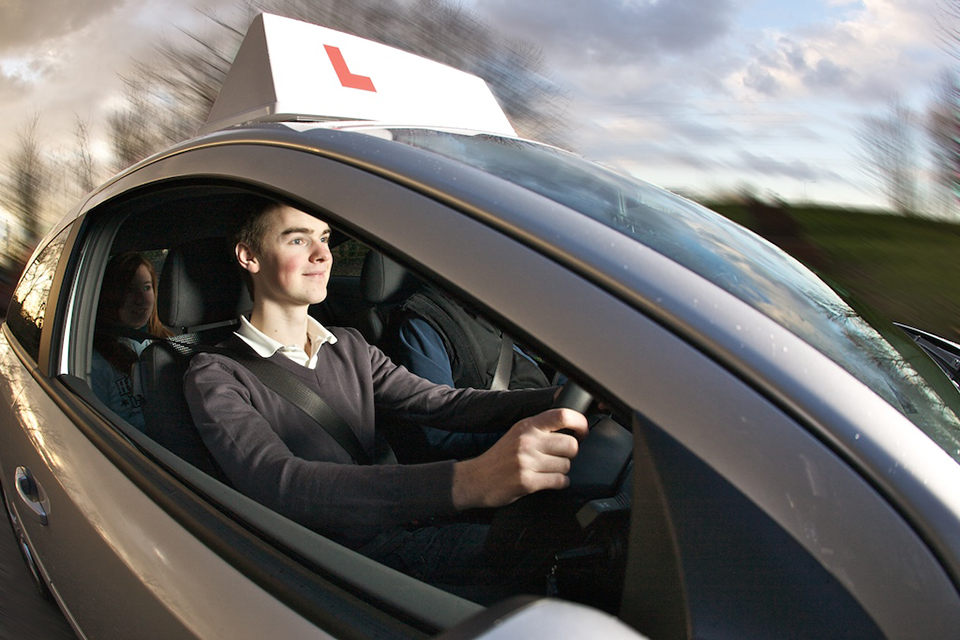
From Monday 4 June 2018, learner drivers will be able to take driving lessons on motorways in England, Scotland and Wales.
This will help to make sure more drivers know how to use motorways safely.
At the moment, you can only have motorway lessons after you’ve passed your driving test. Some newly-qualified drivers take lessons through the voluntary Pass Plus scheme.
How the change will work
Learner drivers will need to be:
accompanied by an approved driving instructor
driving a car fitted with dual controls
Any motorways lessons will be voluntary. It will be up to the driving instructor to decide when the learner driver is competent enough for them.
Until the law changes, it’s still illegal for a learner driver to drive on a motorway.
The change only applies to learner drivers of cars. Learner motorcyclists won’t be allowed on motorways.
Trainee driving instructors won’t be allowed to take learner drivers on the motorway.
Motorway driving isn’t being introduced to the driving test as part of this change.
Making sure road users are ready for the change
The change is being well-publicised so that:
driving instructors and learner drivers are prepared