WeChat data reveals Chinese passion with monetary gift

Giving monetary gift through WeChat, China’s major instant messaging app, has become a popular holiday custom, with people born in the 1980’s being the most active group, according to latest data of WeChat.

On Friday alone, the eve of 2017 lunar new year, a record of some 14.2 billion electronic hongbaos, or red packets containing gift money, were given and received, according to WeChat, which is operated by Tencent.

Those who were born in the 1980s have sent and received the most red packets last year compared to those born in the 1990s and 1970s.

WeChat data also showed that men tend to give out more hongbaos than women. Geographically, people in Guangdong, Jiangsu, Zhejiang and Hunan lead in giving and receiving red packets.

It is a tradition of Chinese to give hongbao to friends and relatives during Spring Festival. Nowadays, Valentine’s Day, Father’s Day and other local festivals are also the peak times for red packets.

This year, new forms of red packets such as “face-to-face and AR red packets” were adopted. Lin Yuwen, a Beijing resident, said he distributed red packets totaling 1,200 yuan (175 U.S. dollars) on Friday, almost double the amount last year.

Analysts say the electronic red packets are used by Internet giants to expand their shares in the mobile payment market.


Theresa May would be failing the British people if she does not postpone the state visit and condemn Trump’s actions – Jeremy Corbyn

Jeremy Corbyn MP, Leader of the Labour Party, commenting on President Trump’s potential state visit to the UK, said:

“Donald Trump should not be welcomed to Britain while he abuses our shared values with his shameful Muslim ban and attacks on refugees’ and women’s rights.

"Theresa May would be failing the British people if she does not postpone the state visit and condemn Trump’s actions in the clearest terms. That’s what Britain expects and deserves.”


Man killed in tiger attack in east China zoo

A man has died in hospital after he was attacked by a tiger in a zoo in the eastern Chinese city of Ningbo on Sunday afternoon.

The attack occurred around 2 p.m. at the Tiger Hill enclosure in Ningbo Youngor Zoo, according to the administrative committee of Dongqian Lake Tourist and Holiday Resort in the city, where the zoo is located.

The tiger was shot dead by the police. The surveillance footage is currently being reviewed.


China unveils top names for Mars spacecraft

China has released a short list of eight names for the country’s first Mars spacecraft, which is scheduled to launch by 2020.

The eight names– “Fenghuang” (phoenix), “Tianwen” (questions for heaven), “Huoxing” (Mars), “Tenglong” (soaring dragon), “Qilin” (Kylin), “Zhuque” (rose finch), “Zhuimeng” (chasing dreams) and “Fengxiang” (flying phoenix), were the top names chosen from over 14,500 choices submitted through more than 35,900 proposals entered by people worldwide.

China plans to launch its first Mars spacecraft by 2020, which will orbit, land and explore the Red Planet.

Proposals were accepted from August last year.

The eight names were selected via a jury review and online polls.

The final choice will be announced around Space Day, April 24, according to a moon probe and space program center under the State Administration of Science, Technology and Industry for National Defence, which solicited the proposals.


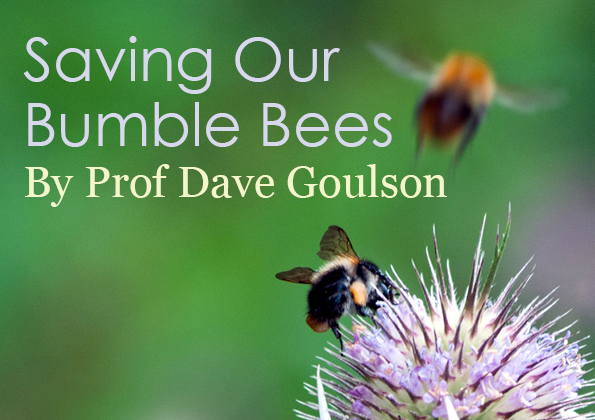
Saving our Bumblebees

Lecture on Tuesday 31st January at the Dalhousie Building Lecture Theatre 1, University of Dundee  :

Bumblebees are amongst the most important of wild pollinators; many wildflowers would not set seed without them, and they are the main pollinators of crops such as tomatoes, blueberries and raspberries. Concerningly, many bumblebees are in decline, with 3 species now extinct in the UK and the first global extinction recently occurring in USA.

Dave Goulson, Professor Of Biology (Evolution, Behaviour and Environment) at the University of Sussex, will discuss the drivers of these declines, and the many things we can all do to halt and reverse them, at the Biochemical Society sponsored lecture.

Dave has published over 200 scientific articles on the ecology of bees and other insects, and is author of ‘Bumblebees; their behaviour, ecology and conservation’ (2010, Oxford University Press) and ‘A Sting in the Tale’ (2013, Jonathan Cape), a popular science book about bumblebees.

He is a Fellow of the Royal Entomological Society, and a Fellow of the Royal Society of Edinburgh.  

In 2010 he was BBSRC “Social Innovator of the Year” and in 2013 he won the Marsh Award for Conservation Biology from the Zoological Society of London.

The lecture will be followed by a drinks reception from 5-6pm, giving the opportunity to meet with Dave in a more informal setting.

Tickets are free but should be booked in advance here.