Recording of the week: John Blackwood McEwen

This week's selection comes from Jonathan Summers, Curator of Classical Music Recordings.

Scottish composer Sir John Blackwood McEwen (1868-1948) had a distinguished career producing a large amount of music, little of which is heard today. He was Principal of the Royal Academy of Music from 1924-1936 and was knighted in 1931. His String Quartet No. 6, 'Biscay', written in 1913 (and confusingly published as No. 8), consists of three movements. The second and third were recorded in 1916 by the London String Quartet and a live recording from 1951 of the complete work exists from the Library of Congress. Here is the delightful third movement, La racleuse (The Oyster-Raker) from 1916.

String Quartet No. 6 (Biscay)_La racleuse

Portrait_of_Sir_John_Blackwood_McEwenPortrait of Sir John Blackwood McEwan by Reginald Grenville Eves (Royal College of Music, CC BY-SA 4.0) via Wikimedia Commons

Visit Chamber Music on British Library Sounds to listen to more performances by the London String Quartet.

Follow @BL_Classical and @soundarchive for all the latest news


Rooftop aisle surrounding Bird’s Nest opens to public


Participants of a running race pose for photos in the newly renovated walkways on the roof of the National Stadium, also known as the Bird’s Nest, in Beijing on Saturday, February 11, 2017. [Photo: people.cn] 

A walkway extending 1,000-meter-long on top of National Stadium, known as the Bird’s Nest, opened to the public for the first time following an amateur winter sports program hosted on Feb. 11.

Nearly 100 contenders joining in skiing and Kirnu competitions in the stadium as the first group of visitors to the rooftop causeway were treated to a bird’s eye view 60 meters above the ground.

According to Beijing Youth Daily, the new walkway was built on the 230-meter-long original corridor, where the route now is connected with 600-meter and 100-meter causeways on the top and medium parts of the stadium.

According to staff working in the stadium, two observation towers soaring 69 meters into the air have been opened to visitors.

Platforms at the north, south and west wings are established for visitors to take breaks, and a deck on an east to west axis surrounded with 2-meter-high glass screens is designed to protect visitors from falling while presenting them with scenery through the transparent wall.

The walkway costs 80 yuan (US$11.62) per visit.


The established media peddle plenty of alternative facts

It is fascinating to see the traditional media wrestling with other ways of looking at the world. They dont seem to like competitive opinions. It is high time some of their own alternative facts were exposed to criticism.

The media regularly tells us that the Conservatives in government cut public spending. If you look at the figures you find that it climbed in real terms from £249bn to £292 bn under Mr heath, from £326 bn to £437 bn under Mrs Thatcher and Sir John Major, and has risen again under Mr Cameron. (2011-12 constant price basis). The OBR forecasts further real growth this Parliament. The media instead usually takes a figure about the proportion of National Income, so that if the private sector grows faster than the state sector they can call this a cut! They never use the cash figures because these have surged.

The media also regularly tells us Sir John Major’s government fell because the party was split on Europe. If you look at the polls you see the Conservative ratings plunged when the economic damage of the European Exchange Mechanism became clear when we were forced to abandon that crazy policy and never picked up. All the rows over Maastricht and the Euro made no difference to the poll ratings.

The media often present Treasury and Other consensus economic forecasts as if they were reality. They rarely ask why these bodies failed to forecast the Exchange Rate Mechanism recession, the Banking Crash recession or the Euro crisis. Now they should ask why these bodies did forecast a 2016-17 recession for the UK which visibly is not happening.

The media love running Big business threatens to pull out stories about their presence in the UK if we resist features of the EU. They ran these stories when we decided to stay out of the Euro and were wrong then. Now they run them about leaving the EU, and were wrong about the short term impact and will doubtless be wrong about the long term as well.


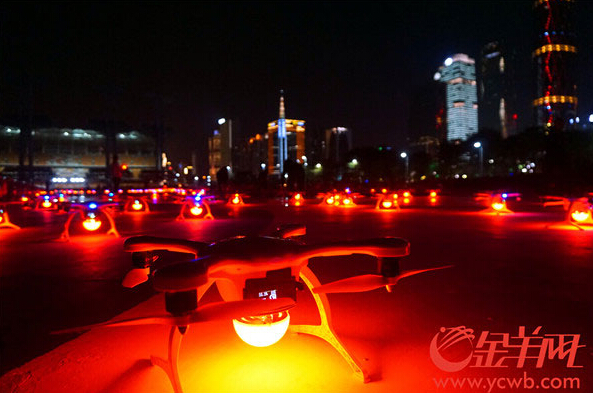
1,000 drones perform spectacular formations in Guangzhou

Drones get ready to take off for a performance in Guangzhou, capital city of south China’s Guangdong Province, on Saturday, Feb. 11, 2017. [Photo: ycwb.com]

A record number of 1,000 Chinese drones performed stunning formations in Guangzhou of south China’s Guangdong Province on Saturday night to celebrate the Lantern Festival, the last day of the Chinese New Year holiday.

According to local news portal ycwb.com, the drones formed six different formations during a 15-minute performance against the night sky near Guangzhou’s landmark Canton Tower. The performance was held concurrently with a concert.

All the drones were made by Chinese producer EHang and controlled by only one computer.


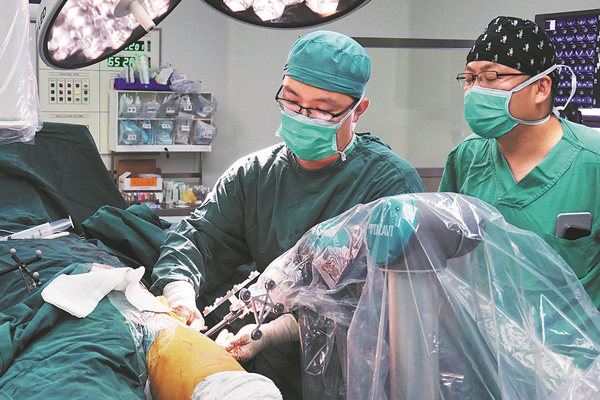
China’s medical robots take on foreign rivals

A doctor uses Phecda, a surgical robot developed by Tinavi, to do orthopedic surgery in Beijing Jishuitan Hospital in 2016. [Provided to China DAily]

Surgeon Tian Wei came across one of the most challenging orthopedic surgeries in his 30-year career in 2015. A 43-year-old patient had complained of progressive numbness in the limbs on his right side for 14 months, caused by a deformity in his upper cervical vertebrae.

The patient was in dire need of surgery to implant a screw to help support his neck bone, but the operation was risky. Any minor mistake could lead to paralysis or a life-threatening hemorrhage. Many hospitals were unwilling to treat him.

But Tian, who also is president of Beijing Jishuitan Hospital, decided to do the surgery — with a little help from another “surgeon”.

The operation was completed in an hour with help from Phecda, a surgery robot with a 3-D high-definition visual system that can “see” the internal orthopedic structure and a “hand” that can guide medical tools to the proper location within 0.8 millimeters.

Developed by Beijing Tinavi Medical Technology Co with the help of Jishuitan Hospital, Phecda is part of the broad effort by Chinese companies to outcompete foreign rivals just as the country’s use of medical robots is set to take off, thanks in part to an aging population.

Medical robots are highlighted in the country’s Made in China 2025 strategy, which was designed to promote high-end manufacturing.

“That was the world’s first robot-assisted surgery on upper cervical vertebrae,” Tian said, describing the 2015 clinical trial. “Phecda is more precise than foreign products and its cost is lower.”

Phecda, which is the third-generation surgery robot developed by Tinavi, is ready to be commercialized this year after obtaining approval from the China Food and Drug Administration in July.

Chinese medical robot-makers like Tinavi are working hard to outshine foreign companies in both price and quality as they benefit from ample demand, strong policy support and manufacturing prowess, company executives and experts said.

By 2050, more than 400 million Chinese will be over 60 years old, accounting for more than 30 percent of the population, up from about 11 percent now, official data show.

“The growing number of senior citizens will offer a sizable quantity of clinical cases, and enterprises can leverage a huge database to accelerate research and development,” said Zhang Songgen, chairman of Tinavi.

In April, China unveiled its plan to sell more than 30 billion yuan ($4.4 billion) worth of domestic service robots by 2020. Medical robots are an important part of the ambitious goal, Zhang said.