Beijing bans higher emission vehicles from road

Beijing will ban high-emission vehicles from its urban areas starting Wednesday, authorities said Monday.

Starting from Feb. 15, light-duty gasoline-powered cars that fail to meet the National Emission Standard III will be banned from entering Beijing’s fifth ring on weekdays.

Violators will be fined 100 yuan (US$14.50) for every four hours that they drive on the road. Substandard cars will also be taken off the road through annual inspections or spot checks.

The Chinese capital currently requires new cars to comply with the “Beijing VI” emission standard, which is higher than the widely-used National Emission Standard V and equivalent to the Euro VI standard, the strictest in China.

The National Emission Standard I was introduced in 1999 and the National Emission Standard II followed in 2004.

“After weeding out yellow-labeled cars [outdated and heavy-polluting vehicles], vehicles consistent with the National Emission Standards II and III release most of the pollutants on the roads,” said Yu Jianhua, chief engineer of the Beijing Municipal Environmental Protection Bureau.

Higher-polluting gasoline vehicles account for less than 10 percent of vehicles on the road, but discharge over 30 percent of nitrogen oxide and 25 percent of volatile organic compounds, according to Yu.

Beijing’s 5.7 million vehicles produce 500,000 tonnes of various pollutants annually and account for 31 percent of locally-generated PM 2.5, a particulate matter associated with hazardous smog, making it the prime source of PM2.5, according to the environmental authority.

Plagued by smog over the past decade, the capital city has initiated a series of regulations to improve its air quality.

It has moved out high-polluting industries, pulled outdated cars off the road, continued to improve the public transportation system and rolled out policies to support new energy vehicles.

Average density of PM 2.5 in the capital was 73 micrograms per cubic meter in 2016, down 9.9 percent from the previous year, according to the Beijing Municipal Reform and Development Commission.


Xi orders leading officials to fight special privilege

President Xi Jinping on Monday told leading officials to practice strict self-discipline and eliminate special privileges.

Xi made the remarks when addressing the opening session of a workshop on the Sixth Plenary Session of the 18th Communist Party of China (CPC) Central Committee. The workshop at the Party School of the CPC Central Committee was attended by senior provincial and ministerial officials.

The opening session was presided over by Premier Li Keqiang. Other leaders including Zhang Dejiang, Yu Zhengsheng, Liu Yunshan, Wang Qishan and Zhang Gaoli were also present.

Xi, who is also general secretary of the CPC Central Committee and chairman of the Central Military Commission, said implementing the decisions of the plenum would have far-reaching and profound significance for both the Party and socialism with Chinese characteristics.

Xi urged leading cadres to “build a fence” against special privileges to prevent themselves and those around them from abusing power.


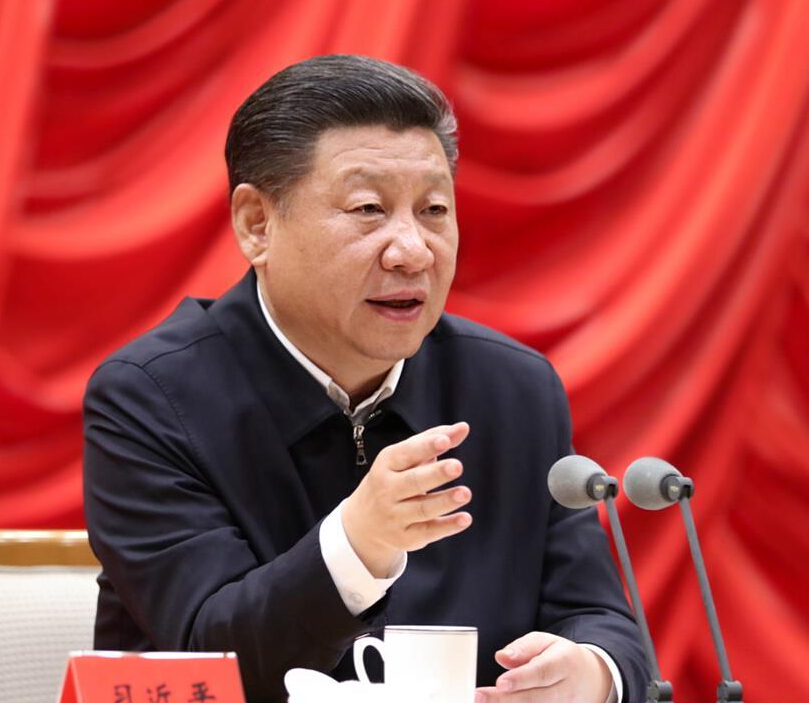
Chinese President Xi Jinping makes remarks when addressing the opening session of a workshop on the 6th Plenary Session of the 18th Communist Party of China (CPC) Central Committee, attended by senior provincial and ministerial officials, at the Party School of the CPC Central Committee, Feb. 13, 2017. [Xinhua/Xie Huanchi]

Leading officials should use their power “impartially, cautiously and legally,” Xi said in his speech.

The CPC Central Committee held the workshop to help senior provincial and ministerial officials understand two documents, one on the norms of political life within the Party in the new era, and a regulation on intra-Party supervision, which were approved by last year’s plenum.

“Leading officials should strengthen their political capability, firm their political ideals, uphold political direction, be steadfast in their stance and strictly observe political rules,” Xi said, stressing they should enrich their political experience and match their political capability with the positions they were holding.

Xi said upholding the authority of the CPC Central Committee with strict observance of orders and rules was related to the future and fate of the Party and the nation as well as the fundamental interests of all people across the nation.

Xi called on all Party members to become more aware of the need to uphold political integrity, keep in mind the bigger picture, follow the CPC as the core of the Chinese leadership, and act consistently with CPC Central Committee policy.

Safeguarding the authority of the CPC Central Committee and the centralized and unified leadership chimed with democratic centralism, Xi stressed.

The Party sets great store by intra-Party democracy, as all major decisions follow strict processes, and are informed by wide opinions and suggestions, Xi said.

Strengthening and regulating political life within the Party requires the correct political direction, and advancing with the times, said Xi, who also stressed principles of political life and its spirit of holding firmly to the truth and rectifying errors.

Self-development is the most distinctive characteristic of the Party, and its biggest advantage, because the CPC has no interests of its own except for the interests of the country, the nation and the people, according to Xi.

Xi said leading officials, especially those in senior roles, must strengthen their self-discipline, be discreet when being alone and on small matters. They should ensure their words and deeds are in line with the Party constitution, and embody the Party spirit in all that they do.

Xi called for thorough study of the two documents adopted at the key CPC session, which were designed to address outstanding contradictions and problems within the Party.

While addressing the workshop, Xi stressed that Party organizations at all levels must improve inspections and ensure accountability. He also underscored that high-raking cadres should take the lead in complying with the Party’s code of conduct.

Li Keqiang called on leading officials to uphold the authority of the CPC Central Committee, improve intra-Party political life and work to build a cleaner political environment.

Li said leading cadres must unite closely around the CPC Central Committee with Comrade Xi Jinping as the core, boost reform and development, work hard, and greet the 19th National Congress of the CPC with achievements across the board.


Press release: Restoring fifty hectares of rare and threatened habitats in Doncaster to benefit all

Almost 50 hectares of nationally-important habitat is being restored in Doncaster as part of an Environment Agency-led project benefiting communities and wildlife.

The work across seven woodland areas, including two Sites of Special Scientific Interest (SSSI), will help improve water quality, reduce flood risk, and enhance natural habitats for protected species.

Beginning in September last year, the Inspiring Water Action in the Torne project is creating, restoring and improving up to 46.5 hectares of wet-woodland priority habitats – and involving local communities in doing so.

The 46.5 hectares represents 11 per cent of the Environment Agency’s national target for habitat creation.

Measures include selectively thinning the woodland, re-wetting areas that have dried out, improving access for visitors, and sowing native plants that will help filter pollutants from the environment.

As well as providing for one of the nation’s most threatened bird species – the Willow Tit – the restored wet-woodland will act as a natural aid to reducing flood risk by creating more room for water.

The estimated 4,000 cubic metres of extra storage space will help naturally interrupt and soak up the flow of rising waters, reducing the risk to around 1,000 nearby properties, as well as to agricultural land.

This will lessen the reliance on the Keadby Pumping Station, bringing down the carbon and financial costs of using it to artificially drain excess water from the River Torne into the River Trent.

David Newborough, Environment Agency catchment co-ordinator, said:

Our role is to create better places for people and wildlife. This project is a perfect example of how we can achieve that through simple measures that deliver many benefits.

By restoring wet woodland to a state that’s closer to how nature intended, we’re protecting vital habitat, providing for threatened species, creating spaces that everyone can enjoy, and reducing the risk of flooding, all in one go.

Communities across the area are involved in making the project a success, with volunteers and school children taking active roles.

Around 600 children and young people across seven schools, each linked with one of the woodland sites, are using the project to learn first-hand about flood risk, water quality and management, and ecology.

David continued:

Working with school children is one of the most exciting and rewarding aspects of this project.

They are directly involved in understanding and protecting our natural environment, which is essential for its future. And their enthusiasm for the difference they can make is great to see.

Some of the work is being carried out by volunteers, who are learning new skills in the management of woodland habitats. These skills will help them maintain the improvements into the future.

The £100,000 project, which includes work at Potteric Carr Nature Reserve SSSI, Holmes Carr Wood, Tickhill Low Common, Bog Wood, Bessacarr Bank, Sandall Beat Wood SSSI and Rossington Brick Pond, is expected to bring benefits valued at around £1m.

Inspiring Water Action in the Torne is a Torne Catchment Partnership project led by the Environment Agency and involving Yorkshire Wildlife Trust, Doncaster Metropolitan Borough Council, Natural England and local communities.


Government must not hide behind talk of a wealthy older generation whilst inequality remains – Abrahams

Debbie Abrahams
MP, Shadow Work and Pensions Secretary
, commenting on the findings of the
Intergenerational Commission report, said: 

“We welcome the
news that pensioners are now much less likely to be in poverty, continuing the
trend put in place by the last Labour Government which saw a huge decline in
poverty among older people.

“Nevertheless,
this report recognises the ‘high level of inequality’ among pensioners. We
cannot allow this Government to hide behind talk of a wealthy older generation,
while these inequalities remain.

“Unlike the
divisive Tories, we will not trade one generation off against the others by
claiming that an improved social security settlement for older people must come
at the expense of working families.

“That’s why
Labour has committed to extending the triple lock and protecting social
security for older people until 2025, and reversing cuts to Universal Credit
Work Allowances supporting people in low paid work.”

ENDS


John McDonnell responds to the independent Kerslake Review into the Treasury

John
McDonnell MP, Labour’s Shadow Chancellor
, welcoming the publication of Labour’s
independent Kerslake Review into the Treasury this morning, said:

“I
welcome this report, which has been produced by some of the leading experts in
our country who have worked closely with the Treasury. And Labour will be
responding in full in the coming weeks to the review.

“Labour
asked Sir Bob Kerslake to head up a review into the Treasury because we needed
to have a serious and thorough examination of one of the most important pillars
of government, and the cornerstone of economic policy making in our country.

"The
Treasury is our most important economic policymaking institution, but one that
has been criticised by some for its approach and attitudes.

“This
review will help shape Labour’s economic policy, as well as being an first
important step in setting a new direction for the Treasury in the 21st Century.
As the views of the former head of the Civil Service are ones that should be
taken on board right across the economic and political spectrum in our country.

"As
Sir Bob has made clear, we need the Treasury in the 21st century to be not only
able to meet the big challenges of the day such as Brexit, but also one that
focuses on all corners of our country, so that no one and no community is left
behind. Therefore, I am deeply concerned that the review has raised this as
areas which need reform.

“Given
the severe challenges that our economy and our country face in the coming
years, it is vital that we have a Treasury that is up-to-speed and is able to
match them. The next Labour government will need to deal with many of these
challenges, with what by then could potentially have been 10 years of Tory
economic failure, and it will fall to us to ensure that the Treasury is ready
and properly equipped for the 21st century.

“I
am are deeply grateful for the contribution from all the independent members of
the review’s panel, who represented many different fields of expertise, and who
gave up a considerable amount of their time to take part. And I would also like
thank Sir Bob Kerslake for his time, energy and expertise in producing this
report for Labour.”

Lord
Kerslake, former head of the Civil Service
, who headed up the review, said:

“The
Treasury is a small but very powerful department. To make the most of its very
capable staff, it needs to fundamentally change both what it does and how it
does it. It should  focus on its core economic and financial roles and
work in a much more open and collaborative way. The impact of Brexit reinforces
this need for change”.

Ends