The future of the High Street

The changes to rates has once again highlighted the rapid changes on UK High Streets. Large centres with numerous coffee shops, restaurants, boutiques and the main multiples are usually trading successfully. The Metro Centre, Oxford Street, Bicester Village, Meadowhall and the other well established shopping centres are flourishing. People want a good range of shops, good brands, and the capacity to make a half day or a day of it with stops for food and drink. Big new shopping centres like Westfield are still being added, with the redevelopment of Birmingham Bullring and other leading City retail destinations.

In contrast many of the smaller High Streets are suffering from the attack of internet shopping offering keener prices, and destination shopping offering more choice. Many a small butcher, baker, fishmonger and green grocer has given up the struggle to compete with the volumes, prices and freshness of the leading supermarkets. In their turn the large supermarkets are under strong competitive pressure from the discounters, who target a narrower range of popular products so they can use their dominant volume in these items to command great prices from suppliers.

The advent of new or expanded and revamped destination shopping centres, and more space for the main discounters has intensified the bricks and mortar shopping competition. The large food retailers have added to the complexity of their tasks by opening a range of local smaller stores, seeking to tap into the narrow range essentials that many people buy daily or several times a week at a convenience store near their homes.

The changes to rate valuations seek to mirror the changing fortunes, but some think they throw up anomalies. The aim is to reduce or remove business rates from small independents, to cut the tax on those many shopping centres with falling revenues or weaker margins, whilst boosting the tax on the successful destination shopping areas. We will find out how successful this has been in the debate that has been unleashed by the new rating schedules.


Nanluoguxiang reopens to visitors

Nanluoguxiang, a popular pedestrian street in central Beijing known for its tradional culture. [Photo/Xinhua]

Some shops in Nanluoguxiang, a popular pedestrian street in central Beijing known for its traditional culture, reopened to visitors on Saturday after a two-month renovation project.

The total number of shops on the street has been reduced to 154 from 235, while programs for public interest such as a folk cultural center have been set up.

On May Day this year, the whole Nanluoguxiang will open to the public with a new look.

Nanluoguxiang is a narrow alley that is approximately 800m long, running from East Gulou Street in the north to Ping’an Street in the south. Built in the Yuan Dynasty, it is one of Beijing’s oldest streets with a history of over 740 years.

At the beginning of last year, Nanluoguxiang was disqualified as a 3A level scenic spot. Its main street has been closed for construction from October 28. The renovated Nanluoguxiang features blue bricks, gray tiles and wooden doors, and embraces more shops with cultural elements to preserve the street’s cultural charm.


Beijing plans to ease traffic

An undated photo shows traffic on a road in Beijing. [Photo/China.org.cn] 

Beijing will boost green commuting this year to make it account for up to 72 percent of the way citizens travel, with the length of rail transit increasing by over 30 kilometers.

Beijing’s 16 district governments and 22 departments have been instructed to cap the number of motor vehicles at 6 million, and keep the road network traffic index in the central area within a mild range.

Beijing will conduct a trial run of Line S1, Line Xi Jiao and Line Yan Fang in sections, making the length of rail transit in the city surpass 600 kilometers. Another 40 kilometers will be open exclusively to buses. Moreover, the city will roll out and optimize 40 bus lines on the basis of road conditions and public needs.

The city will also designate 600 kilometers for bicycle lanes alongside landscape construction. Main walkways inside the 3rd Ring Road will be equipped with bike rental booths.

Beijing-Qinhuangdao Highway will be built within the year. Once completed, there will be three direct routes connecting the Beijing-Tianjin-Hebei region.

Additionally, six districts will choose five regions to relieve parking difficulties by providing more designated areas, setting up mechanical parking facilities among other measures. At the same time, a financial subsidy policy will be set up to manage public parking.


China continues blue alert for cold front

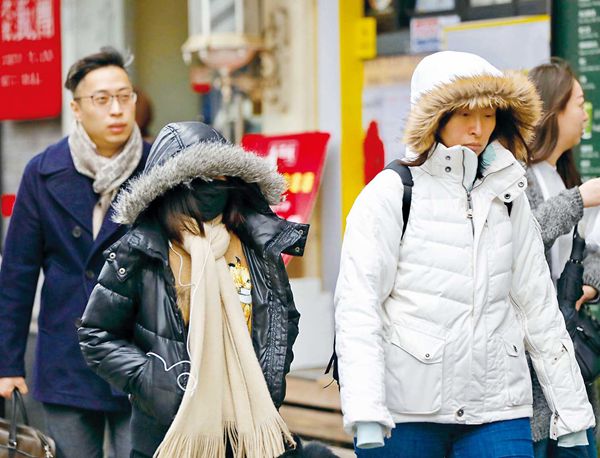
Pedestrians in downtown Shanghai are bundled up in heavy clothes Monday. Two cold fronts from the north will drag the temperature down to single digits. [Shanghai Daily] 

The National Meteorological Center (NMC) renewed its blue alert for a cold front on Tuesday, forecasting low temperatures in the country’s northern and western regions.

From Tuesday to Thursday, a cold front will hit northern and western China, bringing strong gales and low temperatures, according to the NMC.

Inner Mongolia Autonomous Region, Sichuan, Guizhou and Yunnan provinces will see temperatures drop by up to 12 degrees Celsius, as well as high winds, the NMC said.

Sand and dust will accompany the cold front and sweep parts of Xinjiang Uygur Autonomous Region, Gansu Province and Inner Mongolia.

China has a four-color warning system for severe weather, with red being the most serious, followed by orange, yellow and blue.


Second child brings happiness, survey finds

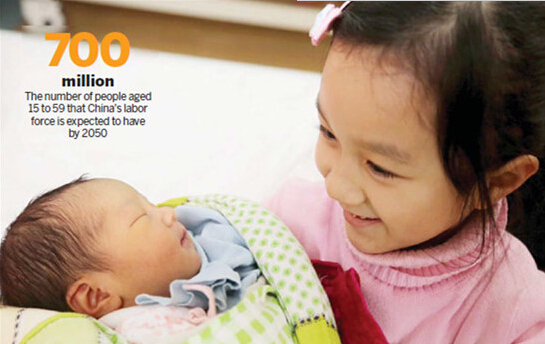
Xue yaqing, 6, holds her brother on New Year’s Day at No 1 Hospital in Xiangyang, Hubei province. The newborn is the second child of a couple from the city in Central China. [Photo: Xinhua]

Most mothers in China feel they are happier after having a second child, according to a survey report released a year after the country relaxed its family planning policy.

The report, released on Sunday, was based on an online survey of about 4,200 mothers with two children. The survey found that about 63 percent of the respondents said they were happier after the birth of their second child, and 67 percent said they did not regret having another baby.

The survey of parents conducted this month was led by mama.cn, a website for Chinese mothers, and Muruai, a voluntary group based in Guangzhou, Guangdong province, that promotes breast-feeding. Of the 4,182 respondents, 4,151 were mothers.

The major reasons given for the increase in happiness after a second child included seeing their children play together and the fact that some couples now had both a boy and a girl, according to the report.

Nearly half of the mothers also said their husbands were more willing to help take care of the children after the second child, according to the report.

The survey also found some factors that caused unhappiness after a second child, such as the economic burden and the extra pressure resulting from the need to devote more time and energy.

About 72 percent of those surveyed said they may face heavier burdens to take care of their parents while having to raise two children, while less than 7 percent of mothers with a second child felt they had better career opportunities after having a second child.

More than 70 percent said they would not consider having a third child, even if they are allowed to do so in the future.

It was generally believed that many people would not choose to have another baby due to the increased expenditure, said Zhu Yuzi, who worked on the survey for Muruai.

“But the result of the survey shows that the spiritual joy brought by having a second child can greatly offset the increased economic burdens for many Chinese,” she said. “That is why so many people feel happier after having a second child, even with more economic burdens.”

Cai Lina, content supervisor at mama.cn, said that while bringing joy, having a second child can also bring many problems for couples.

“We expect more supportive measures, such as reducing taxes for families with a second child, so the second-child policy can be better carried out.”

Yang Jun, a 36-year-old media employee in Beijing who already has a child, said he will not consider having a second child even if it might bring him more joy.

“Both my wife and I are very busy, so who will take care of the second child if I have one? Besides, having a second child means we have to buy a bigger apartment, which is so expensive in Beijing,” he said.

China adopted the second-child policy at the beginning of last year, encouraging all couples to have two children. The number of newborns in China reached 18.7 million last year, an increase of 11 percent over 2015, and about 45 percent of them were a second child, according to the National Health and Family Planning Commission.