Some smart phones are neither smart nor good phones

I have usually been an early and enthusiastic adopter of new technology. I liked the arrival of the mobile phone, thought the internet amazing and welcomed the sat nav. I automated business processes where this could take drudge work out and improve the quality of the product and the quality of work people were asked to do.

I don’t have the same enthusiasm for my so called smart phone. I’m not talking about a particular model or make. The faults of mine are likely to be faults of others.

My main need from a mobile phone is to be able to make and receive phone calls when on the move. I have good internet connections at home and in the office, with  a large screen computer, good keyboard for typing, and landline phones that work. I have no wish to use a small screen mobile with variable reception in these circumstances. I need my phone travelling by  car (hands free using when parked), walking or on public transport. I take an ipad for  computing at my destination or on a train  if travelling to a temporary location away from home and work.

The mobile phone has several disadvantages. Because it operates by means of a small screen if there is bright sunlight you cannot read it at all. Even not so bright daylight makes it difficult to read. Because you need to instruct it by touch it becomes finger printed, and  often your touch is taken as a different instruction from the one you intended.  Trying to type a message is difficult at speed because the letter pad is so small for any given letter. In addition, when the phone rings I need first to scroll the page, and then hit the receive bar on the second frame to appear. All this can take too long so the caller rings off. Quite often my touch does not register in time with the phone.  It means a lot of lost calls when out and about. It does not have a long battery life, so on a busy day you have to remember to take a recharger with you and plug it in somewhere.

It is not that reliable on a train and of course cuts out on the tube. Bluetooth links to the car do not always work, unlike the old mobiles which you plugged into the car system by cable which always worked.

It is true it can receive messages, offer me a moving map, provides a modest quality camera and doubtless other things I have not asked it to do. What I can’t accept is that is a smart phone. The truth is its a dumb phone,  a not very good one. I just lose more calls with it. The old  phones just required you to press one button to receive a call, and plugged into the car which also recharged them.


China to raise 2017 defense budget by around 7 pct: spokesperson

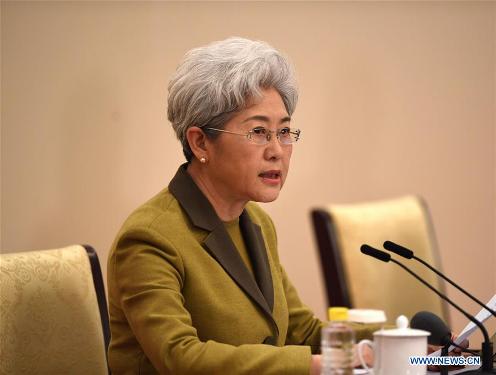
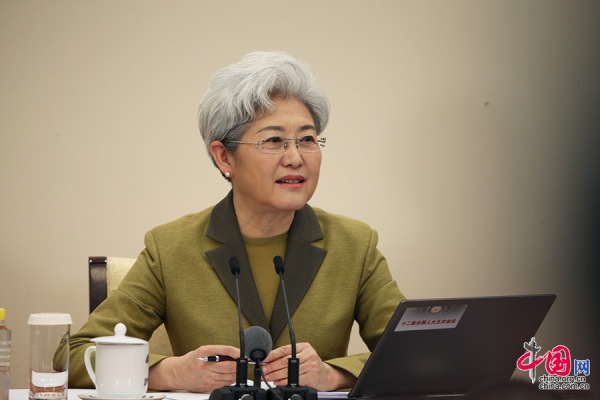
Fu Ying, spokesperson for the fifth session of China’s 12th National People’s Congress (NPC), speaks during a press conference on the session at the Great Hall of the People in Beijing, capital of China, March 4, 2017. The fifth session of the 12th NPC is scheduled to open in Beijing on March 5.

China’s 2017 defense budget will expand by around 7 percent, a spokesperson for the annual session of the country’s top legislature said Saturday.

Fu Ying, spokesperson for the 12th National People’s Congress (NPC) annual session, said the increase is in line with China’s economic development and defense needs.

The country’s defense budget rose by 7.6 percent in 2016.

The fresh raise could be the country’s slowest defense budget rise in more than a decade, and mark the second time that defense budget dip to single-digit increase since 2010. In 2009, the figure was about 15 percent.

U.S. President Donald Trump last month pledged to further strengthen his country’s armed forces.

In his first address to Congress after taking office, Trump proposed a huge 54-billion-U.S.-dollar surge in the country’s military spending, up 10 percent from the previous year.

Fu, meanwhile, noted that China’s defense spending accounts for about only 1.3 percent of the country’s gross domestic product, as compared with NATO members’ pledge to dedicate at least 2 percent of GDP to defense.

“You should ask them what their intentions are,” Fu told reporters.


China’s top legislature to open annual session Sunday

Fu Ying, spokesperson for the fifth session of China’s 12th National People’s Congress (NPC), speaks during a press conference on the session at the Great Hall of the People in Beijing, capital of China, March 4, 2017.

The annual session of China’s top legislature, the National People’s Congress (NPC), is scheduled to open Sunday morning in Beijing, a spokesperson told a press conference Saturday.

The fifth session of the 12th NPC will conclude on March 15, said Fu Ying, spokeswoman for the session.

A 169-member presidium for the session has been elected at a preparatory meeting. The presidium convened its first meeting Saturday morning and adopted the session’s agenda, she said.

National lawmakers will deliberate six reports including the government work report, draft general provisions of civil law, and three bills concerning the election of deputies to the 13th NPC, according to Fu.


China’s 1st cargo spacecraft to make three rendezvous with Tiangong-2

China’s first cargo spacecraft Tianzhou-1 is expected to dock with the orbiting Tiangong-2 space lab three times after its planned launch in April, sources said Saturday.

Tianzhou-1 will be sent into space from the Wenchang Space Launch Center in south China’s Hainan Province aboard a Long March-7 Y2 carrier rocket, according to a spokesperson of China’s manned space program.

It is scheduled to refuel Tiangong-2 three times and carry out experiments and tests.

During the journey, Tianzhou-1 will orbit on its own for about three months and together with Tiangong-2 for about two months after their rendezvous.

At the end of the mission, Tianzhou-1 will leave the orbit and fall back to earth while Tiangong-2 will remain in orbit and continue its experiments.

The Tianzhou-1 mission will complete the second phase of the country’s manned space program.

It will be crucial for China in achieving the final step of establishing a space station around 2022.


Beijing spends US$2.3 bln in cleaning waterways

Beijing’s Tongzhou district, the capital city’s subcenter under construction, plans to spend 16 billion yuan (2.3 billion U.S. dollars) treating polluted waterways.

The investment will cover landscaping, pipelines, treatment of polluted creeks and wetlands, according to Tongzhou Water Authority on Friday.

About 90 percent of the funds will be raised through the public private partnership model and the rest directly comes from the government.

To address overcrowding and congestion, Beijing is building the subcenter in Tongzhou where the municipal government will move. Beijing has a population of nearly 22 million.

“The city subcenter faces big tasks in treatment of sewage, small and medium riverways,” said Jin Shudong, head of the Beijing Water Authority.

Tongzhou will address the pollution of 16 rivers upstream which flow into the district and step up efforts to improve the overall water environment, he said.

This year, Tongzhou will start construction of 80 sewage treatment plants or stations and complete cleaning 53 polluted waterway stretches.

By 2020, more than 95 percent of sewage in Tongzhou will undergo treatment.

Meanwhile, Tongzhou will cover 3,466 hectares of land with grass or trees this year. In the future, the subcenter will build more than 30 parks to realize there are green belts or parks within a radius of 500 meters.