NPC deputy: Second child families should enjoy subsidies
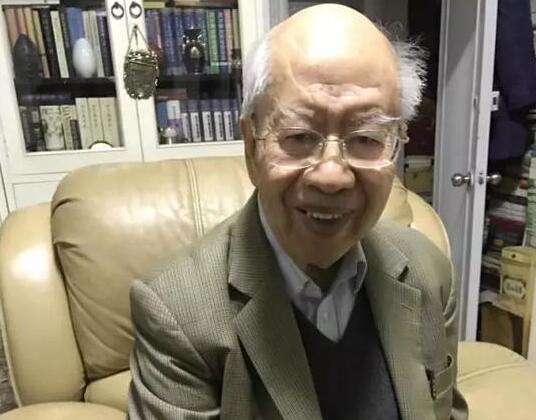
Ye Tingfang 

Families with a second child should enjoy subsidies, tax free or rebated individual income tax, Sun Xiaomei, professor from China Women’s University and a deputy of the National People’s Congress (NPC) recently proposed.

Sun submitted the proposition during the ongoing two sessions, namely, the NPC and the Chinese People’s Political Consultative Conference (CPPCC) which opened at the beginning of March.

Families with a second child need subsidies and preferential policies to alleviate the economic costs, Sun explained.

She advised the country to prioritize the rights of second-child families by securing their privileged access to low-rent houses or low-costs housing, extra medical reimbursements and insurance, the exemption of children’s tuition in universities and preferential maternity leave to relieve the mothers from extra working hours.

Initiated 10 years ago by Ye Tingfang, a translator as well as a former CPPCC member, out of concern for China’s diminishing demographic dividends, the right to have a second child won an overwhelming mandate in 2016, putting an end to the decades-long one-child family-planning policy.

The average birth rate in China per couple was 1.2 from 2010 to 2015, indicating a sharp decline of 36 percent in birth of every generation. The demographic aging draws considerable concern among the deputies and members in the two sessions.

Huang Xihua, a NPC deputy, advised the country to lower the minimum legal marriage age from 21 for females and 22 for males, to 18.

“It is not an advocacy for early marriage, but a move to protect the rights of young people,” Huang said.


Records broken at ocean’s lowest depth

Records broken at ocean’s lowest depth [File photo/Xinhua] 

Amid deputies attending the annual meetings of the top legislature and the top political advisory body, Chinese scientists have broken two world records at the ocean’s lowest depth – the Mariana Trench, a scythe-shaped clef in the western Pacific Ocean seafloor that plunges nearly 11 kilometers deep.

China became the first country to collect the artificial seismic stratigraphy of the Challenger Deep, the deepest section of the trench measured at more than 10 kilometers, the Chinese Academy of Sciences’ Institute of Geology and Geophysics said on Friday. The stratigraphy is used to study the Earth’s movement, layers and geologic history.

China also set a new world diving record for underwater gliders at 6,329 meters with Hai Yi, a glider designed by the academy’s Institute of Automation in Shenyang, Liaoning province, the academy said on Sunday. The previous recorder holder was a US glider at 6,000 meters.

“These experiments prove that China’s deep-sea exploration technologies have reached an advanced level,” the academy said in a statement.

“Data collected from these experiments are invaluable to the study of continental movement and its transformation,” said Qiu Xuelin, a researcher at the academy’s South China Sea Institute of Oceanology.

Both experiments were carried out by Chinese scientists onboard the academy’s Explorer-I TS03 scientific surveying ship. They departed Sanya, Hainan province, en route to the Mariana Trench on Jan 15.

Upon arrival, they deployed 60 ocean-bottom seismometers to collect data for the stratigraphy on Jan 25. Some seismometers had sunk to 10,027 meters, the academy said, which is enough to submerge Qomolangma (8,850 meters), known as Mount Everest in the West.

These instruments can capture sound waves generated by earthquakes or human activities. These waves, combined with the motions of the Earth, can provide details about the geometry of the Earth’s structure, said Wang Yuan, an engineer at the academy’s Institute of Geology and Geophysics.

The glider is an autonomous underwater vehicle designed to survey marine conditions, such as temperature, salinity and currents, across large bodies of water.

Apart from breaking the world record, Hai Yi also completed 12 observation missions across 130 kilometers of water. The data it collected from the abyssal sea is “valuable for oceanologists studying the region”, the academy said.

It took Chinese scientists 13 years to design and build the Hai Yi and its variants, it said, adding that there are more than two-dozen types, covering use in shallow sea, deep sea and abyssal sea.


China’s defense budget transparent: Finance Minister

Chinese Finance Minister Xiao Jie Tuesday shrugged off concerns over China’s military transparency, saying there was no opacity in the country’s defense budget. “Let me be very clear, there is no such thing as opacity in China’s military spending,” Xiao told a press conference on the sidelines of the country’s annual parliamentary session.

China’s defense budgets used to be included in a report on the draft central and local budgets submitted to lawmakers for review and approval during the National People’s Congress (NPC) session.

This year, however, the report available to media made no mention of the exact figure.

“We made some new changes in the way we compiled the files,” Xiao said.

The minister explained that the defense budget, along with the budgets for foreign affairs and public security, was included in a draft budget submitted to lawmakers.

A finance ministry official told Xinhua Monday that the defense budget this year would stand at 1.04 trillion yuan (about 152 billion U.S. dollars), up 7 percent year on year.


How could the Chancellor help raise productivity?

The budget is billed as helping drive productivity higher. That would be a good idea. If we work smarter as a country then each person can earn more. The government seems to have in mind labour productivity in its plans, though making productive use of capital, energy and other inputs also matters and can help make a country richer if done well.

The way to encourage smarter working and higher earnings must begin with fair taxation with low rates of tax on enterprise and effort. Politicians of all parties regard work as a good, yet all agree it must be taxed. Given the volume of public service we want as a country, it is true there has to be some tax on work. It is also true that if you tax work too highly you send it abroad, you persuade higher earning people to value leisure time more, you encourage early retirement. I trust the leaks about higher National Insurance for the self employed are just Treasury officials greedy for revenue and not inspired briefing. Starting a productivity drive with a big increase in taxes on some of the most productive people in the economy is not a great idea. Small and new business offers us scope for major adjustments in our economy and improvements in its performance. It is the new fast moving smaller businesses that often pioneer the modern more productive techniques and technologies, offer the new goods and services, and use labour well.  Cutting marginal rates of tax on enterprise, employment and business success will encourage more of what we need.

In both manufacturing and clerical work providing more machine power and computer power at the elbow of each employee raises productivity. UK productivity in factories in recent years has surged as elsewhere in the advanced world. What was done by hand and arm power in a sixties factory is now often done by robot or mechanical power. What was done in an office by people on typewriters, calculators and adding machines is now done by computers and electronic programmes with less human intervention. The full internet revolution has further to run to automate and take more of the routine out of office and factory working. The new jobs will be in machine minding, programming, managing and reviewing the output, and in designing and selling.

The waves of change that are often ascribed to imports and foreign competition also have been driven by automation. A more productive economy has to welcome these waves of technical progress and adopt more machine power to compete. It is then equally important that those who have lost their jobs as a result ar helped and trained to undertake the many new roles a machine driven culture produce. What can a  Chancellor do to bring this about?

He can and should concentrate on helping the public sector to adopt the new ways of doing things that will be smarter, higher quality and more efficient by using computer power. Productivity performance has been disappointing in the public sector this century.  He can and should  with the rest of government to do more to ensure the casualties of such changes are also winners, by backing retraining and recruitment into the new more productive jobs investment can spawn.


China to develop satellite-delivery rockets released from airplanes

China will develop a new generation of rockets launched from aircraft that can put satellites into space, according to Li Tongyu, the head of carrier rocket development at the China Academy of Launch Vehicle Technology.

Air-launched rockets can rapidly replace dysfunctional satellites or, in cases of disaster relief, quickly send up Earth observation satellites to assist in the effort, Li said.

Designers at the academy, which is the main developer of Chinese carrier rockets, have designed a model capable of sending a payload of about 100 kilograms into low Earth orbit and are ready to produce one if the government asks, he said. They plan to design a larger rocket that could carry 200 kg into orbit.

“The Y-20 strategic transport plane will be the carrier of these rockets. The jet will hold a rocket within its fuselage and release it at a certain altitude. The rocket will be ignited after it leaves the plane,” Li said.

Large satellites will still have to be put into orbit with conventional rockets, experts said.

Delivery of the Y-20 to the Chinese Air Force began in July. It is China’s first domestically developed heavy-lift transport plane and has a maximum takeoff weight of more than 200 metric tons and a maximum payload of about 66 tons, aviation experts said.

Solid-fuel rockets can be launched from planes much faster than land-based, liquid-fueled rockets, where preparation can take days, weeks or longer, in part because it takes so much time to pump in the fuel, experts said.

Each mission involving a solid-fuel rocket launched by a Y-20 would take only 12 hours of preparation to place a 200 kg satellite into a sun-synchronous orbit 700 km above Earth, according to estimates by Long Lehao, an academician of the Chinese Academy of Engineering, and other researchers at the China Academy of Launch Vehicle Technology. The estimates were in an article published in October in the Journal of Deep-Space Exploration.

Other advantages of such rockets are that they are flexible in deployment and use and do not need ground infrastructure, said Pang Zhihao, executive editor-in-chief of Space International magazine. They also are less susceptible to bad weather and launch costs are lower than those of ground-launched rockets, he added.

The United States undertook the world’s first air-launched space mission in 1990, in which a Pegasus rocket developed by the former Orbital Sciences Corp was launched from a refitted B-52 strategic bomber to send two small satellites into orbit. Since then, 43 Pegasus missions have been carried out, with the most recent in December.

Several US space companies, including Virgin Galactic and Generation Orbit Launch Services, are developing air-launched rockets.

Chinese designers have been quietly working on the concept for years. China Aerospace Science and Technology Corp, parent of Li’s academy, displayed a scale model of a winged, solid-propellant, air-launched rocket in 2006 at the Sixth China International Aviation and Aerospace Exhibition in Zhuhai, Guangdong province.