Another election?

I have seen no need for another election any time soon. The Conservative party has the endorsement of the electorate from 2015 for its Manifesto for a Parliament. All the time Mrs May is happy with that Manifesto, which she supported at the time, there is no lack of mandate. The government also has a major mandate from the referendum to get on with Brexit. There would be little  benefit from fighting the referendum again by proxy in a General Election, where  the polling shows the pro Brexit Conservative party is likely to win. If the Election simply confirms the referendum it  adds little. Were parties against Brexit to do better it creates difficulties in implementing the wishes from the referendum. Anti Brexit forces would claim the public had modified their mind on Brexit. The pro Brexit forces would say the election result was mainly about non Brexit matters. It may  not  be clear in a multi issue election.  Many people in the public just want their government to get and do the things that need doing, without any short term need for a new public discussion and vote about the direction of the country. There is plenty to do, and the government has plenty of ideas and Manifesto/referendum  commitments to carry through.

Some of those who wish Brexit ill favour an early election. It might slow things down a bit, create new uncertainties. Some who favour Brexit want an early election, thinking it would lead to a good win by the pro Brexit forces, making it easier to pilot through the Repeal or Continuity of laws Bill which the House must take up as soon as the Article 50 letter has gone. The government’s critics delight in pointing out a favourable comment about the single market in the last Conservative Manifesto. That was of course superseded by the decision of the people in the referendum. Both sides in that campaign said leaving the EU meant leaving the single market, which electors then voted to do.

The case for an early election would have to rest on  an inability for the government to get through this Parliament what it needs to get through to carry out the wishes of electors from 2015 and from the referendum. Alternatively Mrs May could seek a new mandate if she wished to make material changes to the 2015 Manifesto. I would be interested in your views.



Chinese archeologists discover underwater treasure

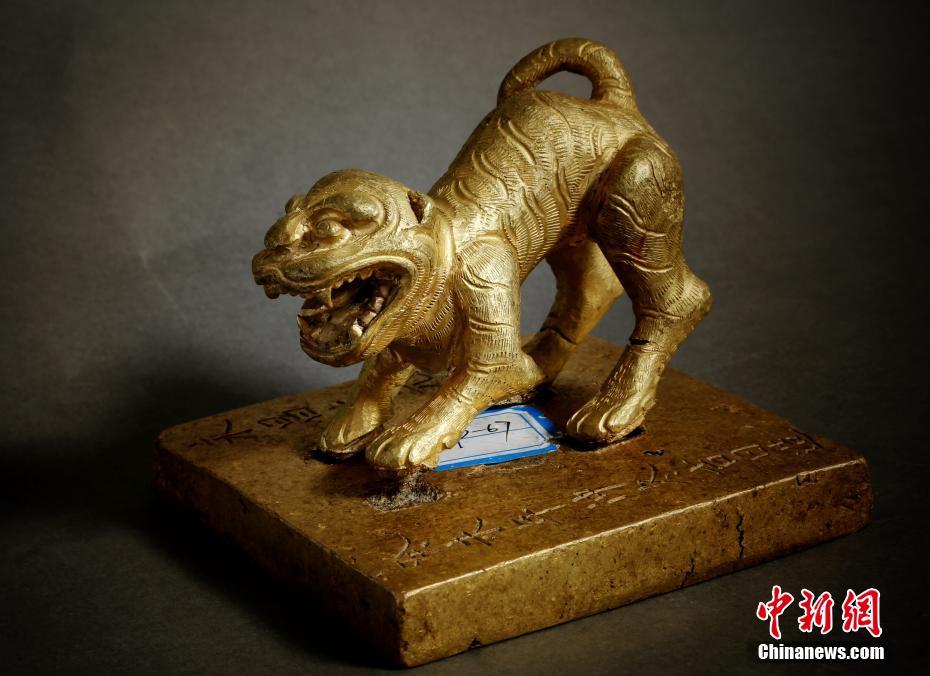
A gold seal of Zhang Xianzhong, peasant uprising leader in Ming Dynasty. [File photo: China News Service] 

More than 10,000 gold and silver items that sank to the bottom of a river in southwest China’s Sichuan Province over 300 years ago have been recovered, archeologists said Monday.

The items included a large amount of gold, silver and bronze coins and jewelry as well as iron weapons such as swords, knifes and spears, said Gao Dalun, director of Sichuan Provincial Cultural Relics and Archeology Research Institute.

The characters carved in the gold and silver utensils are still clear and the embossed patterns on the jewelry show exquisite craftsmanship, archeologists said.

The treasure site, located in the intersection of Minjiang River and its branch Jinjiang River, is 50 kilometers away south of Chengdu, capital of Sichuan Province.

It is said that in 1646, peasant uprising leader Zhang Xianzhong was defeated in the area by Ming Dynasty (1368-1644) soldiers while attempting to transfer his treasure to the south. About 1,000 boats loaded with money and valuables sank during the skirmish.

“The objects have helped identify the area where the battle was fought and are direct evidence of this historical event,” said Wang Wei, a Chinese archaeologist.

Sichuan launched the exploration project in January when the dry season arrived. Several water pumps were used to drain water away day and night. Hundreds of meters of the river bed appeared after archaeologists dug five meters down, where they found the relics.

“The items are extremely valuable to science, history and art. They are of great significance for research into the political,economic, military and social lives of the Ming Dynasty,” said Li Boqian,an archaeologist from Peking University.

Archaeologists said the excavation will last until April and the team expects to unearth more items.


Park puts up shutters as pandas look like mating

With female giant panda Ying Ying and male giant panda Le Le thought to be about to mate, Hong Kong Ocean Park has closed its Giant Panda Adventure section until further notice.

Park spokeswoman Suzanne Gendron said both pandas had shown signs of being ready to mate, such as water play and vocalizations by Ying Ying and Le Le’s increased interest in sniffing of Ying Ying’s scent.

In terms of physical and hormonal changes, the park’s veterinary team and experts from the China Conservation and Research Center for the Giant Panda in Wolong confirmed that the two giant pandas are entering this year’s breeding season, which, Gendron said, is considered an appropriate timing for experts to prepare for Ying Ying’s and Le Le’s breeding season and temporarily close the section.

This year, the closure period of the area where Ying Ying and Le Le live will be longer than previous years so that expert teams from Ocean Park and Wolong will be able to closely manage and monitor the pair’s breeding behavior from the moment they exhibit early signs of breeding to the time they hit the peak of their breeding cycle.

The gestation period for giant pandas can last from 72 to 324 days and pregnancy confirmation can only be detected by an ultrasound scan some 14 days before birth at the earliest.

Ying Ying and Le Le, who experienced their first mating season in 2011, will be turning 12 years old this August.

The Giant Panda Adventure section will be reopened to the public after Ying Ying successfully gives birth to a panda cub, or after it is confirmed she is not pregnant, the park said.

Ocean Park, which was founded in 1977, has gained widespread recognition for its animal husbandry, research and its relationship with the community.


Face detector rations toilet paper in Beijing park

The automatic paper dispensers are set up considering male and female height difference in every toilet within the park. [Photo: Beijing Evening News and The Beijing News]

Automatic toilet paper dispensers using face detection technique are being trialed in Beijing’s Temple of Heaven Park with the aim of reducing paper use.

The park is one of the most popular tourism sites in Beijing, and has provided free paper in its public toilets for ten years but has reported seriously excessive use.

Six face detector paper dispensers have been installed in the hope of stopping the overuse.

To receive paper, you have to stand in the facial detection area and be scanned for a few seconds. The machine dispenses paper of a certain length but to get more, users have to wait for nine minutes to use the scanner again.

Personnel have been stationed to show people how to use the new system, however it still takes about half minute for each person to receive paper, way longer than using a normal dispenser.

It’s reported the machines in one of the busiest toilets are no longer in operation after people kept complaining about how long they had to wait to get paper. One staff member said the dispensers need to be adjusted to provide a better service.

It’s understood the machines will be trialed for about two weeks before going into official service depending on how they perform.

Toilet paper overuse

Paper use at the Temple of Heaven had already been decreased by 8% and 14% relatively in the last two years despite growing numbers of tourists over the same period.

However, it’s claimed, some people still lack paper use manners. According to a toilet cleaner at the Temple of Heaven, some people take much more paper than needed and sometimes even take a whole roll away with them; sometimes paper is used up in only twenty minutes.

The manager of the Temple of Heaven Park said the paper has been overused mainly by residents who live around the neighborhood instead of tourists; some people intentionally take paper here for their daily use because it’s free of charge.

Face detection dispensers are being used in the hope of preventing such a phenomenon.

Some other parks in Beijing have installed automatic toilet paper dispensers and held promotional campaigns in an effort to save paper. Taoranting Park, for example has seen paper use drop from approximately 30,000 rolls per year in 2011 to around 20,000 rolls per year today.


Experts in TCM help battle drug resistance

China has recruited a team of specialists in traditional Chinese medicine, including China’s first Nobel laureate in medicine, Tu Youyou, to help find solutions to the rising threat of antimicrobial resistance.

AMR happens when microbes evolve to become resistant to previously effective medicines. Studies show the growth in resistance could be responsible for 10 million deaths a year worldwide by 2050, according to the Review on AMR, a global report commissioned by the British government.

Antimicrobials are medicines active against a range of infections, such as those caused by bacteria (antibiotics), viruses (antivirals), fungi (antifungals) and parasites (including antimalarials), the report explains.

Western medicine is struggling to combat the problem, while the overuse of antibiotics and other antimicrobials is worsening the situation, said Cao Hongxin, head of science and technology at the State Administration of Traditional Chinese Medicine.

He said the Chinese team, led by Wang Guoqiang, vice-minister of the National Health and Family Planning Commission, will look into how TCM can be used as part of a comprehensive and dynamic approach to halt the progress of AMR.

“Traditional Chinese remedies are free from drug resistance and could provide alternative solutions,” Cao said, adding that TCM works to kill harmful microbes, reduce their replication, as well as to enhance immunity.

Tu Youyou, the pharmacologist who won the Nobel Prize in 2015, discovered artemisinin, an antimalarial drug derived from sweet wormwood, which has been used in TCM since ancient times. She has worked with China’s top TCM research institute for decades.

Huang Liuyu, director of the People’s Liberation Army’s Institute for Disease Prevention and Control, praised the efforts to develop more TCM remedies that work on infections. “TCM substitutes can lower the use of antibiotics and thereby delay the development of antibiotic-resistant microorganisms,” he said.

Traditional treatments are more complicated in terms of ingredients and are less likely to develop drug resistance, he said, although he added, “It’s usually antibiotics from Western medicine that work stronger and faster in curbing bacteria without drug resistance.”

Huang said AMR occurs naturally over the time through genetic mutations but overuse of antimicrobials speeds up the process.

Half of the antibiotics used worldwide each year are used in China, with 52 percent of that used to treat livestock, according to the Review on AMR.