New drug price markups show positive results

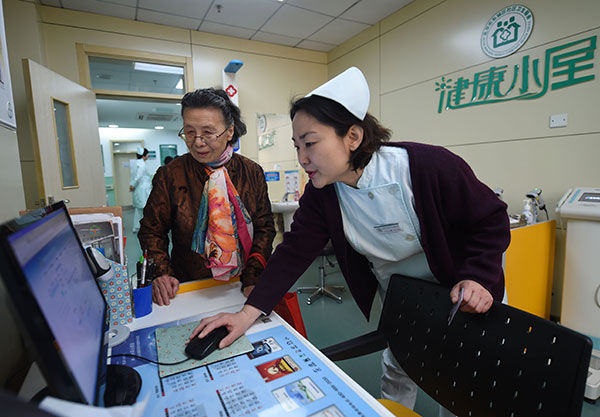
A patient is given her physical checkup results at a community medical service center in Beijing in April, after a comprehensive medical reform started in the capital. [Photo/China Daily]

A move to scrap drug price markups has shown early signs of success in optimizing medical resources-particularly the work of specialists-and in lowering the costs of medicine for most patients, according to the Beijing health authority.

As part of the general healthcare reform, measures introduced on April 8 aimed at ending the markup on drugs prescribed at public hospitals and modifying the prices for registration, consultation and treatments.

The average drug cost for each outpatient visit during the past month has decreased by 9.6 percent compared with March, the Beijing Health and Family Planning Commission said.

For inpatient care, the average drug cost for each hospitalization has fallen by nearly 18 percent, while the entire cost dropped by 4.1 percent compared with March.

Fang Laiying, head of the commission, said the latest measures worked well to provide better and more rational treatment at more affordable prices.

Under a hierarchical medical system, he said, patients with minor diseases visit community clinics. Only the seriously ill go to large hospitals for specialist care.

But with no price difference, patients tend to swarm into already crowded large hospitals, even those suffering from a common cold, experts said. Meanwhile, community clinics are underused, resulting in a waste of medical resources.

After modifying the prices for registration, consultation and treatment in the latest reform, more residents, particularly those suffering chronic diseases, began to visit community clinics, Fang said.

Total outpatient visits in community clinics increased by 3.4 percent during the past month over March, according to official data, while visits at large top-level hospitals dropped by 15 percent.

All 3,600 medical institutions in the city, under the new reform, were required to purchase drugs directly from pharmaceutical manufacturers through an open public bidding platform to further reduce prices, he added.

That has helped the capital save 420 million yuan ($60.8 million) in the past month, according to the latest figures available.

Starting in the 1950s, a system to add an average 15 percent to drug prices was implemented at all public hospitals in China to help subsidize hospital operations.

But that led to hospitals prescribing too many medications, and more expensive ones, which contributed to soaring healthcare costs.



Li highlights craftsmanship, innovation in vocational education

Chinese Vice Premier Liu Yandong (C front) launches the 2017 National Vocational Students Skills Competition in north China’s Tianjin Municipality, May 8, 2017. [Photo/Xinhua]

Chinese Premier Li Keqiang had called for craftsmanship and innovation in developing vocational education.

Vocational schools should cultivate craftsmanship and encourage students to start businesses, said Li in a written instruction delivered to a competition of vocational students which started on Monday.

Vocational education is crucial to the transformation and upgrading of the real economy, in terms of strengthening the country’s advantages in human resources, the premier said.

Vice Premier Liu Yandong, at the opening ceremony in Tianjin, called for vocational education to play a greater role in poverty reduction and offering more opportunities for youth.

Liu suggested vocational schools cover socialist core values throughout their curriculum.

The National Vocational Students Skills Competition has been held annually since 2008.


Shanghai’s rail mileage now ranks first in the world

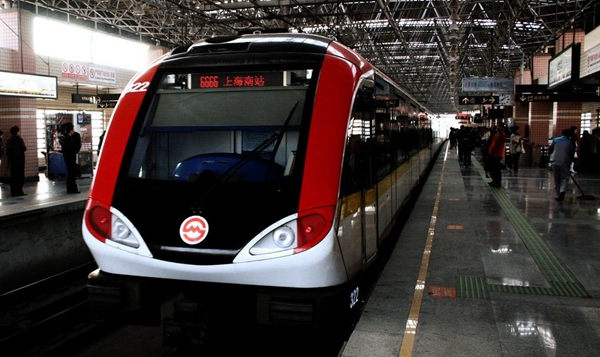
Shanghai subway [File Photo]

The length of Shanghai metro system is now the longest in the world, surpassing the size of networks in other world cities, including New York and Paris.

Shanghai Party Secretary Han Zheng said on Monday that infrastructure transportation within the city is now an important part of the development between urban and rural areas of Shanghai.

Han added that Shanghai strengthened its position as global port city, with the transport of containers leading the world the past 7 years. Freight transport out of Shanghai’s main airports ranks the third in the world. Air passenger volumes have reached 100 million, which tops China.

In the next five years, more efforts will be made in the transportation integration of Yangtze River Delta, with plans to make every city within the Yangtze River Delta region reachable within 90 minutes of one another.

Additionally, Shanghai will work on increasing its so-called ‘last one kilometer’ transportation, and make public transport the most convenient way of transportation for citizens. ‘Last kilometer’ transportation refers to modes of transport which don’t involve buses or trains, but get you to your final destination, such as bike sharing.


Green Party reacts with anger to latest BBC breach of duty of impartiality

8 May 2017

*Co-leader Jonathan Bartley: “This is getting beyond a joke. The BBC’s love affair with UKIP is getting embarrassing” 

The Green Party has reacted with anger to an announcement today (May 8) that the BBC will feature the leader of UKIP in two dedicated election programmes but will not extend the same invitation to the Green Party. 

Today’s announcement came just days after the BBC breached its own guidelines [1] by giving disproportionate coverage to UKIP when reporting the results of local elections last Thursday. The Green Party has already lodged a formal complaint over the BBC’s failure to give the Green Party coverage “proportionate to the larger parties” and “more than those parties with less evidence of past or current electoral support or fewer candidates”.

Today the BBC announced [3] that Paul Nuttall will be interviewed by Andrew Neil in one of a series of prime time programmes each evening at 7pm throughout the week of 22 May. In addition Mr Nuttall will also be the subject of an ‘Election Questions’ programme on BBC1 on 4 June. 

Jonathan Bartley, Green Party co-leader, said:

“This is getting beyond a joke. The BBC’s love affair with UKIP is getting embarrassing” and it is time it recognised that the Green Party is entitled to a fair hearing in its election programming.”

“As the local election results, in which 150,000 people voted Green compared with less than 100,000 for UKIP [3], demonstrated, when people see what we stand for, they support the Green Party. It’s time the BBC recognised the strength of the Green movement and the widespread support for our positive vision for Britain as a confident and caring country. It is time to stop giving so much air time to UKIP.”

Notes:

1. http://downloads.bbc.co.uk/guidelines/editorialguidelines/pdfs/2017localelectionguidelines.pdf

2. http://www.bbc.co.uk/mediacentre/latestnews/2017/general-election?ns_mchannel=social&ns_campaign=bbc_press_office&ns_source=twitter&ns_linkname=corporate

3. http://britainelects.com/results/may2017/

Back to main news page

Let’s block ads! (Why?)


EU tax rules are not currently prepared for the digital economy

EESC debate on taxation of the digital economy and the sharing economy

European tax rules are not currently prepared for the digital economy. They need to be adapted to reality in order to offer the people of Europe a more prosperous future. This was the main message of the European Economic and Social Committee (EESC) debate on Taxation of the Digital Economy held on 5th May.

The digital economy is no longer just a part of the economy, but is becoming the actual economy itself”, stated the keynote speaker, Rita de la Feria, professor of Tax Law, University of Leeds, and renowned tax expert – “Global Tax 50” in 2015 and 2016. She outlined that consumption has changed – an increasing part of consumption is done online and a large part of this is on mobile phones.

Opening the debate, the President of the EESC’s ECO Section, Joost van Iersel invited the experts participating to explore how the new models of business, work, and consumption in the sharing economy can be taxed appropriately. He reminded that the EESC considers proposals for appropriate taxation of the digital economy vitally important. Within its wider work on fair taxation, the EESC is preparing an opinion on the taxation of the sharing economy. The debate hosted an exchange with taxation experts and economists, including EESC members Giuseppe Guerini and Krister Andersson, co-rapporteurs of this opinion that the EESC is preparing at the request of the upcoming Estonian Presidency of the Council of the EU.

Digitalization of the economy is not reversible; neither is globalization. All the technological development cannot be undone,” Ms de la Feria stated. “Either we continue to fit reality in our law, patch measures, or try to adapt our rules and laws especially in areas of fraud – and offer prosperity to our people.” Fraud has costs beyond revenue loss, and is thus about much more than revenue, according to her. When only focusing on revenue maximization, the applied measures that increase it do nothing to address other causes – such as distortions to competition.           

“Current taxation rules risk killing the sharing economy – which is actually good for increased productivity. They are also especially tough on small companies”, stated EESC member Krister Andersson. “Mobility is not a problem, but a benefit which we should cherish. Instead, we need to adjust our tax rules accordingly in order to face the challenges and ensure that we realise all potential opportunities”, he added.

We need a more united taxation system in Europe. Our economy is not united to our territory, so we should treat it with one united European approach”, said Giuseppe Guerini, EESC rapporteur of Taxation of sharing economy

Ms de la Feria’s presentation detailed the other costs of tax fraud, including subsidies to organised crime and perceived unfairness by taxpayers. She also discussed tax competition, declaring that until incentives are removed, the symptoms will just reappear despite any anti tax-avoidance measures.