Radio interview with Eddie McGuire and Luke Darcy, Triple M Melbourne

PRIME MINISTER:

Good morning.

EDDIE MCGUIRE:

Prime Minister – a couple of things – we want to get through the budget and also might want at the end to ask you a little question about how you went last week in the United States.

But first off, can I say to you your budget to me comes across from a political side of things as a beauty in the way that you’ve fixed up, probably, Bill Shorten in some of the elements of it and also you’ve washed out Tony Abbott and his influence in his budgets over the last few years. Is this the resetting of your Government going forward and the setting up of the finances of Australia?

PRIME MINISTER:

It’s definitely setting up the finances of Australia Eddie. What it’s also doing is guaranteeing Medicare, it is guaranteeing that the National Disability Insurance Scheme is fully funded and it is also ensuring that school funding, right across Australia, is transparent, consistent needs-based.

Fair, above all, this is a really fair budget and it sets us up for the future.

$75 billion dollars invested in infrastructure. It is a budget for the future, bringing it back into balance, ensuring that we don’t fling a mountain of debt onto the shoulders of our children and grandchildren.

It’s a much stronger budget in terms of budget repair, than the previous one because we’ve recognised there are some savings measures that we can’t get through the Senate. We’ve tried, we can’t do that. We’re raising some additional revenue. As you’ve mentioned, well as others have mentioned, obviously the bank levy and increasing the Medicare levy in 2019 and what that does it set us up for the future with security, opportunity and fairness.

LUKE DARCY:

Prime Minister is it a fair budget for Victoria though? This show broadcasts exclusively to Victoria and Melbourne. We are Melbourne and Melbourne only. And you’ve guaranteed another $5.3 billion for a second airport in Sydney and another rail link. If I’m in Sydney now you’ve got my vote-

PRIME MINISTER:

You’ve already got a second airport of course.

LUKE DARCY:

But we’ve also got a lot of projects here Prime Minister that are underfunded compared to the deal on asset recycling. There’s $1.46 billion that is underfunded that hasn’t been addressed in this budget. We’ve taken a lot of calls this morning saying where’s Victoria’s share? Why does Victoria get dudded compared to Sydney? 

PRIME MINISTER:

No, Victoria – we’re delivering into Victoria an additional $1 billion, additional $1 billion in infrastructure funding including the $500 million Regional Rail Package, $30 million to plan for the Melbourne Airport Rail Link, and the Regional Rail Package includes $100 million to upgrade the rail line out to Warn Ponds on the Geelong line which I’ve often caught and a $100 million to upgrade the North East rail line and we are also tipping in another $20 million for the upgrade of the Murray Basin Rail which we funded last year.

So there’s a lot underway in Victoria.

We’ve got $500 million at work towards the Monash Freeway upgrade. Another $500 million for the M80 Ring Road. And you know there is the other opportunity for an additional substantial injection of infrastructure money into Victoria if we reach agreement, which I am confident we will, to acquire Victoria’s share of Snowy Hydro. I was talking to Daniel Andrews about that yesterday and we’ve actually discussed it prior to that. So we are open to acquiring Victoria’s share that would be a substantial amount and part of the deal would be as Daniel and I have discussed the proceeds would go into priority infrastructure.

EDDIE MCGUIRE:

We love the, Prime Minister, we love the-

PRIME MINISTER:

Sorry?

EDDIE MCGUIRE:

No, I was going to say love the idea of the Snowy mountains, I think that’s just been a wonderful idea and as it gets executed, sensational, big tick for that one.

Victoria will say though and with good reason that you’re giving the $5 billion for the New South Wales airport and then they get their bit.

What we’re getting is you will sell off an asset and get the money that we own anyway and we’re only getting 10 per cent of infrastructure funding compared to our population of 25 per cent of the country.

PRIME MINISTER:

Well can I say to you though, Eddie, it’s very important to have the projects you see – we are looking at this, we’re putting the money into examine the Melbourne to Tullamarine rail project and if that stacks up that would be ideal for us to invest. We’ve got $10 billion National Rail Fund, we’ve identified, we’ve guaranteed or delivered $1 billion initially of that to Victoria. We can do more in Victoria but what we’ve got to do is find the projects.

I mean the Melbourne Metro you may remember the Victorian Government said they didn’t need our money they had it all fully funded. So it’s identifying the project and you will always find that as big projects come and go as they’re identified, as they’re planned, as they’re built – funding will differ from one state to another. But what we need in Victoria is some great projects where we can play a leading role and ideally take an investment. As you know I prefer us to invest in economic infrastructure rather than just being a dumb ATM.

EDDIE MCGUIRE:

Yep, na, it’s a good point well-made. Prime Minister I think the frustration that comes to Victorians at the moment is that it just seems like Canberra always is telling Victoria what they want and the State Government of Victoria who has been elected by Victorians, as opposed to the Federal Government has been elected by Australians, is never getting, we’re not on the same page. The Victorian Government have a mandate to do things, Federal Government want to do things but want to do it their way. Surely you and Daniel Andrews, two smart intelligent guys who could get this done need to sit down and drive these ideas rather than always be at cross swords with each other?

PRIME MINISTER:

Well I’d be very open to doing that. I mean he obviously had a big difference on the East-West Link but you’ve got to remember that was the policy, the contracted project of a duly elected Victorian government – it’s just that they lost the election and the new government came in and decided to cancel it and spent over $1 billion in doing so.

EDDIE MCGUIRE:

Yeah but that’s past history, we’re moving forward.

PRIME MINISTER:

Eddie, look, my approach is practical and pragmatic. I’m not interested in ideology or partisanship for partisanship sake. We are always ready to work with state governments whether they’re Labor or Liberal to achieve a great outcome for the people of any state.

EDDIE MCGUIRE:

Prime Minister I know you’ve got to do – one quick one – what was your response or your reaction to Donald Trump and being in American last week? We see he’s knocked over the FBI Director, James B Comey this morning.

PRIME MINISTER:

Yes, yes I’ve seen that. Look the meeting – he could not have been – he and Melania Trump, the First Lady could not have been warmer. It was as I said it was more family than formal. They were very generous and hospitable. We got on very, very well as I think people could see. It was a great first meeting and I have to say also it was inspiring to be in the presence of those veterans, the old guys in their 90’s who as teenagers had turned the tide of war in the Pacific in the Battle of the Coral Sea.

LUKE DARCY:

Prime Minister – it’s a big morning for you. We appreciate you taking some time out for us here on Triple M’s Hot Breakfast and good luck with the rest of the day.

EDDIE MCGUIRE:

And a lot to like about it.

PRIME MINISTER:

Thank you.

[ENDS]


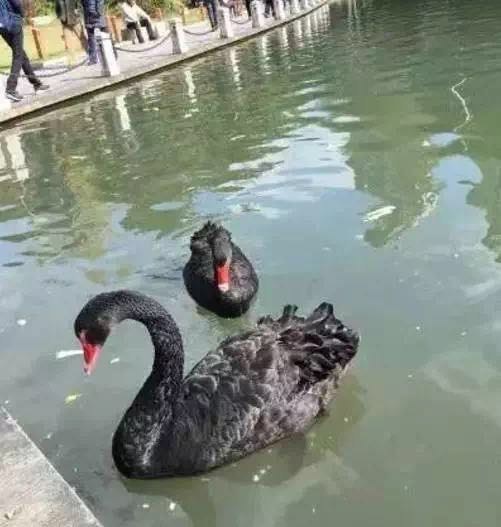
Duo detained for killing swan in downtown Shanghai

Two men has been detained by police for allegedly stealing and killing a black swan from Xujiahui Park in Shanghai, police said.

The duo, surnamed Zhou and Wang, allegedly stole the black swan around 1am on April 20 from the park and slaughtered it at their rented home. Zhou confessed to police they kept it in the fridge and planned to eat it later. They later threw it away because it didn’t taste good.

The suspects had planned to catch fish in the first but gave up after seeing security guards patrolling. On their way out, they saw the black swan and grabbed it around its neck, police alleged.

The missing of the bird was reported to the police on April 20 by the park securities who also provided surveillance footage.

The two people were detained on charges of hunting and killing wild animal and further investigation is underway, police said.


Good retail sales and no shop price inflation

The April retail sales figures were good. Total sales were up 6.3%. The delayed Easter reduced the March figures and flattered the April ones as I argued at the time of the March release. We can now see the underlying pattern, which is still one of decent growth. Food has been stronger than non food, with the BRC itself saying that taking the two months of March and April together food sales “were up by around 4% on last year, exceptional growth by all recent standards”. More importantly, there was no overall shop price inflation, giving the lie to those who have argued rising prices will follow from a weaker pound.

Why haven’t prices risen as some said? There is considerable competition in world goods markets. There is even more competition in UK retail. The main store groups have increased their trading areas at the same time as on line retail has provided formidable competition to them. Discount retailers have kept their prices down, whilst use of the web has enabled shoppers to look around for the best deals especially for the larger items. The pound is now strengthening again, some 8% up on its lows. I do not expect that to suddenly cut prices, just as I did not expect a price surge from the previous falls in sterling.

The construction outlook has also brightened. Recent figures imply good growth in house building coming through, and a quickening of the pace in industrial property. New offices are weaker. Overall the PMIs and the recent starts figures point to a growing industry with more investment in buildings.

It is interesting to note that the FTSE 250 Index of smaller companies with more UK business as a proportion is now up by one third since June 27th 2016, whilst the large companies in the FTSE 100 with more exposure to foreign currency earnings are up by 23%.

Published and promoted by Fraser McFarland on behalf of John Redwood, both at 30 Rose Street Wokingham RG40 1XU


Interview with Kieran Gilbert, SKY News

KIERAN GILBERT:

With us now, the Prime Minister Malcolm Turnbull.

Mr Turnbull thank you for your time, a busy morning for you. The banks, according to some chatter around the markets, they’re already talking about lifting the mortgage rates from 14 to 15 basis points to recover the levy. Is that a bit rich? What do you say to them for that?

PRIME MINISTER:

That would be really excessive. But let’s see how they react. They don’t need to pass this on. They’re very profitable and the ACCC will be watching them very, very carefully indeed. It’s a competitive market. There are other banks that are not caught by the levy and of course there will be plenty of opportunities for people to go elsewhere if the banks do choose to raise mortgage rates. But the ACCC will be monitoring it very, very carefully.

KIERAN GILBERT:

Have they brought it on themselves? The levy?

PRIME MINISTER:

Well look I wouldn’t put it that way, I mean the fact of the matter is that levies of this kind are common right around the developed world. These big banks in particular benefit from the implicit support of the government. You know they are, as they say, too big to fail. That obviously gives them an advantage in terms of fund raising.

We’ve decided – and again this is not original because many other countries have similar arrangements, Europe in particular – that’s it’s fair that they make a contribution via this levy. Of course that enables us to help bring the budget back into balance.

KIERAN GILBERT:

Is it like a super profits tax to an extent?

PRIME MINISTER:

No, no.

KIERAN GILBERT:

Or is it paying for the guarantee guarantee that the government basically provides the big banks? As you say, too big to fail.

PRIME MINISTER:

It recognises the fact of that implicit support that government provides.

KIERAN GILBERT:

And if they did move within 24, 48 hours, is that just reaffirming people’s doubts about the banks and their behavior?

PRIME MINISTER:

Well it would be very, I think it would be unwise for them to do that. There’s obviously a lot of concern about the conduct of banks. Leaving aside the levy, in the Budget there is a comprehensive banking reform package. As you know we’re establishing a one-stop-shop, a Financial Complaints Authority, to deal with small business and consumer complaints, whether it’s against banks or indeed other financial institutions and a very rigorous regime relating to the registration and employment of senior bank executives, so that if they do the wrong thing, if they allow wrongdoing to go on, if they don’t address it, then they may find themselves deregistered and unable to work in the industry.

KIERAN GILBERT:

Anna Bligh says it’s a threat to the, it could be a threat to the stability of the banking sector.

PRIME MINISTER:

That’s nonsense. That’s nonsense. I mean in so many other countries in the world there are levies of this kind. In the UK, not only do they have a levy, but they also have to pay additional company tax, a higher rate of company tax. So the fact is that she is the lobbyist for the banks, right? She’s not the Premier of Queensland anymore.

KIERAN GILBERT:

It helps neutralise the call for a royal commission though, doesn’t it?

PRIME MINISTER:

Well look, the royal commission idea was always a waste of money. My objection to the royal commission was not that I thought there was nothing wrong with the banking sector. My objection to it was that it would take years, cost hundreds of millions of dollars, half a billion dollars or something of that order, and it would make a bunch of recommendations which you could write now. Because we know what the problems are.

You have a royal commission when you don’t know what’s happened and you want to find out. We know what’s gone wrong with the banks and the reform measures that are in the Budget are the type of measures that a royal commission would recommend. So we’re getting on with it. Rather than wasting money on lawyers and years and years of delay, we’re making the tough decisions, the reforms, right now. That’s what I promised and that’s what I’m doing.

KIERAN GILBERT:

On the Medicare levy, Julia Gillard when she introduced a 0.5 per cent increase to the levy back in 2013, in the Parliament she described it as: ‘a sliver of an average earners weekly pay packet.’ Would you put it the same way?

PRIME MINISTER:

No I wouldn’t put it that way. Obviously it’s 0.5 per cent for people of their income for people that are paying it. You know, it is 0.5 per cent and for many Australian families that will be, they will feel it. They will absolutely feel it but there is a benefit. Because what we are doing is delivering a fully funded National Disability Insurance Scheme, which Julia Gillard did not deliver.

So rather than saying to parents with a disabled child, in a couple of years’ time: “I’m sorry, the cupboard is bare. We don’t have the funds to support the NDIS anymore,” what we’re doing is looking all Australians in the eye and saying: “We all benefit from this National Disability Insurance Scheme.”

This is literally an insurance scheme. The premium is now 1 per cent of the 2.5 percent of the Medicare Levy. We all pay it and what that means is, we’re all covered.  So I think this is just, it’s fair, it’s responsible.

KIERAN GILBERT:

Does it reflect your confidence as Prime Minister in the NDIS? There have been all sorts of claims it’s running overtime, over budget and so on. But those claims have been in large part repudiated by those in the sector, do you have confidence in the NDIS and where it is at?

PRIME MINISTER:

Well I do, but there are obviously issues with implementation and there will always be. It’s a big scheme and it’s going to cover over 600, 000 people when it’s fully you know rolled out by 2019. Which is why the levy comes in in 2019, but it’s clearly going to require very close management and attention to detail, all of those things.

You know Christian Porter is you know paying the closest attention to it, he is the Minister, but it is always going something that needs to be well run.

KIERAN GILBERT:

The Tories in Great Britain have said they’re not going to balance the books on the back of the poor. David Cameron said words to that effect and yet another budget another cut to foreign aid from the Coalition?

PRIME MINISTER:

Well we froze it, it is frozen for a couple of years. But the important thing is that we are a substantial foreign aid donor. The important thing is to make the dollars that we spend on foreign aid spent effectively.

You know there’s a lot of people that measure the value of foreign aid, you know the virtue of foreign aid by reference to the dollars. We’re more focused on ensuring that we get the right outcomes and that we get the right outcomes in terms of improved governance and in terms of improved amenity in the countries that we’re providing aid to.

KIERAN GILBERT:

The critics including some former, or one of your former staff members and former chief of staff to Tony Abbott, Peta Credlin says she said, I think, which side of the chamber right now they’re both Labor governments? Both high tax, high spend governments. What do you say to the suggestion that you haven’t done enough to rein in spending?

PRIME MINISTER:

Well we’ve done frankly, a lot more and even since the last election we’ve achieved $20 billion, now actually over $25 billion of total savings. We’ve achieved that through the Senate, so we have achieved a lot of savings. But there are a number of measures that we cannot get passed by the Senate and you know, at some point you have to confront reality. I think confronting reality is a very important thing for everyone to do, particularly in politics. You have to recognise that if you cannot legislate savings through the Senate than you have to find other ways of bringing the budget back into balance.

KIERAN GILBERT:

So this is plan B?

PRIME MINISTER:

This is a fair and responsible Budget. It’s setting us up for the future. It’s making the investments in infrastructure, $75 billion in road and rail alone. It’s making, providing the incentives to business, reducing company tax – first for the small and medium sized businesses as you know – and of course by bringing the budget back into balance and doing so credibly.

You’ve just had Chris Richardson here saying what a good budget it is. You’ve had Moody’s affirming our AAA rating. So the experts are saying: “Yes, this is a responsible budget.”

Now what is the hallmark of Liberal National governments? It’s responsible economic management. This is a responsible budget and it’s delivering a strong surplus in 20/21 and it is a more rapid progression to balance and surplus than even we forecast in the budget last year.

KIERAN GILBERT:

A couple of quick issues just before you go, I know you have got a busy morning.

On housing affordability there was, expectations were quite high. This savings mechanism through superannuation, does it go as far as you need to, to try and alleviate some of the pressures? Particularly in Sydney and Melbourne, for people trying to get in?

PRIME MINISTER:

Well it’s only one part, the housing package is a very big one and it provides support for first homebuyers and the savings package and you know, assistance there. It also unlocks supply in a very physical way. For example, in Melbourne, with that big defence site at Maribyrnong which we will open up for housing, that will be over 6,000 homes will be able to be built there. That is big, you know it is within ten kilometres of the Melbourne CBD. We are also working with state and local governments to ensure that they liberalise zoning and change zoning requirements to enable more housing to be built. That’s been the big blocker in Sydney in particular.

KIERAN GILBERT:

Yeah.

PRIME MINISTER:

And of course Scott has provided considerable incentives for the development of more affordable housing. So you know, and of course, providing of real incentive and indeed a tax, if foreign owners of residential property do not either occupy or rent it. So that’s just to get around this problem of overseas buyers buying apartments and then just locking them up and leaving them vacant for years.

So it is a big, well-thought-out package and that is why all the housing sector, you know, industry groups have praised it. They’ve seen it as being very well researched, very well thought through and addressing the real challenges.

KIERAN GILBERT:

Last question and it relates to the unemployed and the many, you would think, assume, would have drug issues. Is it fair?

PRIME MINISTER:

Yes.

KIERAN GILBERT:

To do this? Because-

PRIME MINISTER:

It’s not only fair but it’s actually-

KIERAN GILBERT:

They’re in a very tough spot, to put that added pressure on them?

PRIME MINISTER:

Yes, but you see you’re helping them out. Look, if somebody has got an addiction to drugs and you love them, what do you want to do? You want them to get off it, don’t you?

KIERAN GILBERT:

It’s not that easy though is it?

PRIME MINISTER:

Well but hang on, this is the question. You want to help them get off drugs?

KIERAN GILBERT:

Of course.

PRIME MINISTER:

Of course you do. So what this does is it helps them. If they test positive, if they do have that dependency then they get the cashless debit card, they get management – cash management, income management is very important – and also will get the support, access to rehab to get them off the substance abuse. Because frankly, unless they do that, they can’t get a job and the best form of welfare, after all, is a job.

I mean all of our policies, we shouldn’t – the Labor Party very often misses the point here. The object of welfare is, as far as possible, is to provide a safety net to enable people to get back into the workforce. That is what we want to do. That’s Australians want to do and so addressing substance abuse is helping them. This is a very important positive step.

KIERAN GILBERT:

PM, appreciate it. Thanks.

PRIME MINISTER:

Great to be with you.

[ENDS]


Interview with Fran Kelly, ABC RN Breakfast

FRAN KELLY:

Malcolm Turnbull – welcome to Breakfast.

PRIME MINISTER:

Great to be with you.

FRAN KELLY:

A tax on the banks, rail over roads, future proofing the NDIS and Medicare – could you have come up with a more Labor budget if you tried?

PRIME MINISTER:

If it was a Labor budget you’d have $16.5 billion higher deficits and higher debt. In fact, we’re bringing the deficit down, we are getting it down to a balance, surplus in 20/21 of $7.4 billion. That is a big increase on what was forecast in last year’s budget. So this is a responsible plan of economic management and as you said earlier, this is making the right choices for the better days ahead.

FRAN KELLY:

In the end it is a pretty simple formula, isn’t it? A 0.5 per cent increase in the Medicare levy, a great big new tax on the banks and you fix the budget. Tax your way out of trouble?

PRIME MINISTER:

Fran, the important thing is to ensure that you bring the budget back into balance. I mean, there is no point kidding yourself about savings measures you can’t get through the Senate.

Now we have got a lot of savings measures through the Senate and it’s a great credit to Tony Abbott’s government, and indeed to my team that we’ve been able to get over $25 billion of savings through. But there are a number of measures we could not get through, so we had to take them off the books and we had to make sure that we did the right thing by our kids and grandkids and brought the budget back into balance.

You can see that from next year, in fact, we will no longer be borrowing to fund recurrent expenses like education and health and welfare and by 20/21 we will actually be in a very, in a substantial surplus, $7.4 billion. Which is way up from where it was estimated at the end of last year.

FRAN KELLY:

It’s four years off and we have heard this before, not from you but from prime ministers past. All Australians who currently pay the Medicare levy will be hit with the rise which will take the Medicare levy to 2.5 per cent of taxable income.

PRIME MINISTER:

That’s right.

FRAN KELLY:

Why did you go after middle income earners? Why didn’t you just increase, give the increase to the high income earners? They’re going to lose that 2 per cent budget-

PRIME MINISTER:

You couldn’t raise the money, Fran. I mean, in order to raise the money, you need to secure the National Disability Insurance Scheme which benefits all Australians. I mean, all of us could be beneficiaries of that – us or our children or someone we love. It is a vitally important part of our social infrastructure and it needs to be funded.

Now Labor promised it but they had no way of funding it. I mean they literally had a line on a graph. They were completely reckless about this.

We set out to fund it through savings as you know. We’ve not been able to get those savings through the Senate. So here is the choice – do you keep, do you just leave it unfunded? Are you going to turn around and say in a few years’ time to parents of disabled kids: ‘Sorry there is no money in the till’? So you’ve got to fund it and what we’ve done is taken the tough decision and said: ‘Right, we’ll increase the Medicare levy.’ There was already 0.5 per cent in that which funds NDIS and now there will be another half per cent and now it is fully funded.

So you’ll know, you’ll know Fran, if you have a disabled child, you’ll know and you’re getting benefits from the NDIS or you’re expecting to, you will know the money is there and it is there because Scott Morrison included it in the budget last night. That is why it is there. And that’s fair.

FRAN KELLY:

That’s half the money from the Medicare levy. The other half goes to-

PRIME MINISTER:

Medicare.

FRAN KELLY:

Fund those changes to Medicare or the restoration.

PRIME MINISTER:

Yep.

FRAN KELLY:

And the scrapping of the changes that were in the Tony Abbott 2014 budget. Is this just a war chest to protect you from another Labor mediscare campaign again?

PRIME MINISTER:

What it does is it guarantees Medicare. We are establishing a Medicare guaranteed fund. And as you know, we are putting the 1.5 per cent of the Medicare levy that goes to Medicare into that fund plus every year from July 1, an amount from personal income tax receipts will go into that fund and that will be fully disclosed, totally transparent, in a lock box to be only spent on Medicare and the Pharmaceutical Benefits Scheme, the PBS.

FRAN KELLY:

So Labor can’t go after you again like they did last election?

PRIME MINISTER:

It will be, Medicare will be guaranteed. It will be guaranteed by an Act of Parliament and the money will be there for all to see.

FRAN KELLY:

Prime Minister, let’s talk about the $6 billion smash and grab on the banks. Why hit the banks with this levy at the same time you’re planning to give them a tax cut of about the same size, as it happens? You give with one hand, take with the other. How is that good for economic growth?

PRIME MINISTER:

Let’s talk about company tax first. Right around the world – and I saw this when I was in New York last week. In the United States in particular, there is a move to lower company taxes. Our company tax which used to be competitive is absolutely not at 30 per cent. And if you don’t have a competitive company tax, then you’ll get less investment – you get less investment, you get less jobs.

So lowering company taxes is very important.

Having said that, as far as the banks are concerned, the big banks benefit as you know from an implicit Government support – that is they are the most profitable banks in the world. I think the Canadian Banks are about the same level of profitability but they are absolute standouts, they can absolutely afford this, and it is fair that they make this contribution to bringing the budget back into balance.

FRAN KELLY:

But you talk about the banks as though these are personal riches. I mean this is essentially either a tax on shareholders or end up being a tax on mortgage holders wont it? The banks will almost certainly pass it on in some way. It’s going to affect the shareholders at the very least.

PRIME MINISTER:

Well they have no need to pass it on.

FRAN KELLY:

But the shareholders will be effected by it?

PRIME MINISTER:

Well they may be Fran.

FRAN KELLY:

Well it is a chop to the profits.

PRIME MINISTER:

But Fran at the end of the day my job as Prime Minister is to manage the budget responsibly and that means I have to bring it back into balance.

Now you’ve talked, you’ve given a whole long list of people who have promised to bring it back into balance and haven’t done so. Since I’ve been Prime Minister we’ve improved our forecast. Why? Because we’re making tough decisions and that includes both cutting spending where we can, where its appropriate and where can get support in the Senate and also being prepared to raise revenue.

Look the fundamental test here is can we live within our means? I’m demonstrating that we have the will and the conviction and the character to do so.

FRAN KELLY:

Just taking into account though, we’re going to be joined by Anna Bligh from the banker’s lobby group, the ABA shortly, they’re already saying this a direct attack on jobs and growth.

PRIME MINISTER:

Oh nonsense.

FRAN KELLY:

Elizabeth Proust, Chair of the Bank of Melbourne says it will hit the banks share price which means it will hit people’s super funds. Did you take all this into account?

PRIME MINISTER:

Of course, and can I just say Fran the idea that the banks should be some sort of protected species is ridiculous. I mean the bottom line is –

FRAN KELLY:

Well you’ve been protecting them from the royal commission saying we need to protect the financial stability of the banks.

PRIME MINISTER:

Well, no, Fran what I have done, or what we have done in this budget, what Scott’s done in the budget is set out reforms to the banking sector in terms of making Anna Bligh’s executives of those banks accountable. Making sure that they’re registered. If they do the wrong thing, they can’t work in the industry, establishing a one stop shop, a financial complaint authority that will deal promptly and efficiently with customers and consumers and small businesses claims against the banks.

What we’ve done, if you look at what we’ve put in that bank reform package in the budget and you ask yourself- let’s say you had a Royal Commission, let’s say you spent half a billion dollars and went on for three years and the lawyers all made a fortune – what would the recommendations of the royal commission conceivably be? It’s hard to imagine what they would recommend beyond what we have already done.

And this was my point, I said right at the outset we know what’s wrong in the banking sector, we know the changes that need to be made. What we should do is get on and do them. Shorten’s proposal for a royal commission would have delayed, wasted billions, hundreds of millions of dollars, possibly billions, and taken a long time to you know fluff around with lawyers making points about procedure and so forth. Instead my government has got on with the reforms right here right now. That’s what they want me to do, they want me to govern – not to conduct royal commissions.

FRAN KELLY:

You’re listening to RN Breakfast. Our guest is the Prime Minister Malcolm Turnbull. Prime Minister I know you’re a very busy man this morning of course. Let’s talk about some of these spending measures $75 billion in infrastructure spending. The inland rail is going to cost $8.4 billion. Infrastructure Australia recently put the risk return at 1.1 meaning the project would turn a profit but only just. And out of all of that of course would go to the operator, in this case the Commonwealth. How can you assure taxpayers that we’re not going to be lumbered here with an expensive white elephant?

PRIME MINISTER:

Look, this is, you know, connecting Melbourne and Brisbane – it is vitally important to open up all of those opportunities.

FRAN KELLY:

Will it be profitable?

PRIME MINISTER:

Yes, yes it will be and that’s what Infrastructure Australia has said.

But you know you need a bit of vision Fran and you’ve got to be prepared to build the infrastructure in advance.

The fact of the matter is that we have, our population is growing – South East Queensland and Melbourne are the two most populous parts of the country. Are we seriously saying that the only development in infrastructure is going to be snaking along the coast, the east coast of Australia? There is an enormous opportunity to create jobs, opportunities in inland Australia. So that rail line, that additional rail line that will go from Melbourne to Brisbane is going to open up all of that country. And this is not empty space of course you’re talking about Western, you know Victoria, Western New South Wales, South East Queensland.

FRAN KELLY:

Sure but this is off the books, is it going to make a return?

PRIME MINISTER:

No it’s on the books. It’s on the books. It’s on the balance sheet. Sure, it’s an investment.

FRAN KELLY:

It’s an investment but it’s not going to the deficit, the bottom, it’s not coming out of that sum. Because you say it’s going to make a rate of return. What’s the risk there?

PRIME MINISTER:

Well it’s an investment but it’s a massive piece of infrastructure. It’s like Western Sydney Airport. We’re going to build an airport as well. This is what governments should do. Governments have got to build and invest for the future.

FRAN KELLY:

And why are you going to buy the Snowy? That’s already built, why do want the whole thing. That was a surprise last night.

PRIME MINISTER:

Yeah we need to invest, there’s a lot of money we need to invest into Snowy and a lot of money that can come as debt obviously, but there would have to be some additional equity going into Snowy Hydro to expand it.

FRAN KELLY:

Snowy 2.0?

PRIME MINISTER:

Snowy 2.0. This is going to increase the scale of Snowy, of clean green renewable energy storage which makes all other renewables reliable. It’s a vital investment. New South Wales and Victoria obviously would rather have their money out and they’ve been interested in selling. So what we’ve said to them is if they want to sell, we’re happy to buy it. I think the public expect this piece of national infrastructure to be in the hands of the national government. Again, that is a very profitable company. It’s a good investment and it’ll be a great investment for generations to come.

FRAN KELLY:

Prime Minister a couple of other issues before you – there’s a range of measures on housing in the budget but the first homebuyers offering, it’s already been knocked back by Labor. Chris Bowen this morning on this program says they won’t support that offer for first homebuyers to save in their super. Labor says this is just simply a hit on super. Is it back to the drawing board?

PRIME MINISTER:

Oh it’s not. He’s absolutely wrong. It does not deplete or diminish anybody’s super. What we have done is we have set up a plan whereby a young person, a young couple can save, put additional savings over and above their super contributions into their superfund. That’s for administrative purposes.

FRAN KELLY:

So it’s in the super fund?

PRIME MINISTER:

It’s in the super fund. Then they get the normal tax breaks for doing that. Then when they withdraw it, if they withdraw it to buy a house, they pay the marginal tax rate less 30 per cent. So it’s very tax advantageous. It’s got a cap of $30,000 as you know. But what this does is it gives real support for young people seeking to get that deposit together. But it does not diminish their super. There’s a lot of – you know, I’ve never supported people being able to divert superannuation into a home deposit scheme because superannuation is there to provide for retirement. But what this does is enable people, if they can, it gives them the incentive to save additional money, but to use the mechanism – because it’s much simpler administratively – of saving it in their super fund.

FRAN KELLY:

Prime Minister in the welfare changes, the eye-catching one was the trials of drug testing, drug testing of new welfare recipients. Jobseekers who test positive will have their income quarantined – they’re placed on the cashless debit card. Is that-

PRIME MINISTER:

We’re doing them a favor. We’re doing a huge-

FRAN KELLY:

Is that overkill?

PRIME MINISTER:

No.

FRAN KELLY:

A 25-year-old goes to a party the night before and gets drug tested the next day for having a joint. Is that really, they should be on the cashless welfare card?

PRIME MINISTER:

Well you know as well as I do, that substance abuse and drug dependency and alcohol dependency have got a very high correlation to unemployment and welfare dependency.

FRAN KELLY:

But a random drug test doesn’t necessarily test for dependency does it?

PRIME MINISTER:

Well Fran look, the lesson is don’t do drugs and the bottom line is if you’re on welfare, what you’ve got to do is get off welfare and into a job. We’re doing everything we can to ensure we can achieve that. This is doing those people a big favour.

FRAN KELLY:

You’ve got to go – just finally, the Treasurer calls this combined tax hikes a Senate tax. You’re blaming the Senate for these tax increases. Are you just getting rid of these zombie measures because you’re just sick of them, sick of the fights over them? Or because you think they’re bad measures?

PRIME MINISTER:

They can’t be legislated, so they’re –

FRAN KELLY:

Were they bad measures?

PRIME MINISTER:

Well it’s not a question of good or bad. I mean, they were measures that we thought, which we believed had merit.  We took them up to the Senate, in some cases several times.

But the fact is that we’ve got to live in the real word. We’ve got to live with the Parliament that the Australian people elected. My job is to get legislation through the Parliament.

Now we have 29 seats out of 76 in the Senate, so if the Labor Party won’t support it, we’ve obviously got to find support on the crossbench. There is no point leaving savings or measures on the books if they cannot be legislated.

I mean it is critically important for us that we don’t just talk about bringing the budget back into balance, but we do. We’ve got to deliver. That is what we’re doing. What you’ve seen and you saw this confirmed by Moody’s, the ratings agency last night – this is a credible budget, credible in bringing the budget back into balance. It is a conservative forecast, reasonable assumptions. This delivers for our kids and grandkids, whether it’s on budget balance or on infrastructure, on assuring them of fair, needs-based school funding, guaranteeing Medicare, guaranteeing the NDIS. This is a fair budget.

FRAN KELLY:

A budget to be proud of?

PRIME MINISTER:

I’m very proud of this budget, believe me.

FRAN KELLY:

Malcolm Turnbull thank you very much for joining us.

PRIME MINISTER:

Thanks Fran.

[ENDS]