Radio interview with Bianca, Terry & Bob 97.3FM Brisbane

HOST:

Welcome to Brisbane, the Prime Minister of Australia, Malcolm Turnbull. Good morning Prime Minister.

PRIME MINISTER:

Good morning, how are you?

HOST:

Very intrigued to know –

HOST:

How do we know it’s not an impersonator?

HOST:

It could be, is that really you?

HOST:

Is it really you, Malcolm?

PRIME MINISTER:

It is really me.

HOST:

Do you know Donald Trump?

(Laughter)

PRIME MINISTER:

I do, I do I met him in New York only the other day.

HOST:

Yeah we saw a few photos.

PRIME MINISTER:

It was a great meeting – beg your pardon?

HOST:

We saw a few photos.

PRIME MINISTER:

Yes. You know it was great to meet, Lucy and I were thrilled to meet President Trump and Melania, they were very, very welcoming and very warm. But it was amazing to meet some of the old veterans you know who had served in the Australian and US Navy’s in the Battle of the Coral Sea 75 years ago. They were there in their early 90’s.

HOST:

Wow.

PRIME MINISTER:

In this old World War ll aircraft carrier, the Intrepid and they had turned the tide of war in the Pacific in 1942 when they were teenagers. So it was amazing.

HOST:

You’re lucky that you get to meet those people.

HOST:

Travel is great yeah –

PRIME MINISTER:

I was very honoured, yeah. Very honoured.

HOST:

Travel’s great but of course the highlight is a warm up to come and do a walk around Brisbane this morning. Now John Howard was famous for walking round in his Wallabies jersey, can’t remember when he played for the Wallabies. Tony Abbott doesn’t mind a bike ride or a budgie smuggler in the water. Is there a legacy of your morning exercise routine that you’re going to leave for us?

PRIME MINISTER:

Well, you know I normally walk along, through the gardens and across the bridge, across the river and then down through –

HOST:

Kangaroo Point?

PRIME MINISTER:

Through that beautiful sort of longer with bougainvillea on it.

HOST:

Oh the arbor.

PRIME MINISTER:

This morning I actually did some exercise in the hotel, so I didn’t get out this morning. But look it’s a beautiful, beautiful city to walk around along the river, along the south bank, it’s fantastic.

HOST:

We love our Brisbane.

PRIME MINISTER:

It’s really great, and it’s getting better. It’s getting I think, more pedestrian friendly all the time. More places to walk, so I’m a very big fan, as is Lucy.

HOST:

You should try the city cycles, that’s a whole other story.

(Laughter)

PRIME MINISTER:

All the cycling, what – the sort of men-in-lycra, you think that’s a good look?

HOST:

Yes, Abbott’s done enough of showing off what that can do, so don’t worry about it.

HOST:

In the next little while Prime Minister we’re going to build a big casino down complex along North Quay, are you good on the punt? Have you got a game? If I had to play a game of poker against you would I win, or would you take my money?

PRIME MINISTER:

I think you’d probably beat me. Look I must tell you, we’re talking about walks. I must tell you a story about Wallaby jumpers.

HOST:

Okay yeah.

PRIME MINISTER:

Some time ago, not long after I’d become Prime Minister I was in Canberra and it was a cold morning. I got up –  Lucy was there – and I pulled on a football jumper out of drawer in our bedroom.

HOST:

Yeah.

PRIME MINISTER:

And it actually was a Wallaby’s jumper. And I was walking along and Daisy our daughter called us on Facetime. And so she was talking to Lucy and then Lucy turned the phone so she could see me. And there I was with my Wallaby jumper and Daisy said: “Oh my god. You are the Prime Minister”.

(Laughter)

HOST:

That’s what it takes.

(Laughter)

HOST:

Because you’re in your Wallaby’s jumper!

(Laughter)

PRIME MINISTER:

Walking around Lake Burley Griffin in a Wallaby’s jumper so –

HOST:

I love that you’re up to date and you’re doing the whole Facetime thing. I think it’s great. Listen Malcolm, we quite often do this. Oh do I call you Prime Minister? What do I call you?

PRIME MINISTER:

Malcolm is fine.

HOST:

Okay.

PRIME MINISTER:

Everyone else does.

HOST:

Oh, okay.

HOST:

The Honourable Malcolm.

HOST:

The honourable Prime Minister. We do this thing called a minute with Bianca and its rapid-fire questions and you just give rapid-fire answers. You just say the first thing that comes to your mind when I ask you a question.

VOICEOVER:

Bianca, Terry and Bob’s minute with Malcolm.

HOST:

Are you ready to go Prime Minister?

PRIME MINISTER:

I’m ready.

HOST:

I still think it’s an impersonator. Anyway let’s go. Let’s go. Okay Malcolm, let’s start it.

Have you had your heart broken?

PRIME MINISTER:

Yes.

HOST:

Has Lucy ever had a spray tan?

PRIME MINISTER:

No.

HOST:

What’s the first thing you do on your day off being Prime Minister?

PRIME MINISTER:

Sleep.

HOST:

(Laughter)

Glad you’re not the only one. Are you on Instagram?

PRIME MINISTER:

Yes, I am.

HOST:

Oh! Okay, have you got as many followers as grumpy cat? Don’t answer that. What’s on your bucket list to do before you die?

PRIME MINISTER:

Just spend lots more time with my grandkids and Lucy.

HOST:

Do you ever feel like getting in your car-

PRIME MINISTER:

That’s the main thing.

HOST:

Do you ever feel like getting in your car and just driving away?

(Laughter)

PRIME MINISTER:

Never. No, I love this job and I’m a very, very happy Prime Minister.

HOST:

Okay sunsets or sunrise?

PRIME MINISTER:

Sunrise I think, yeah sunrise.

HOST:

Do you ever Netflix and chill with Lucy?

PRIME MINISTER:

Yes, yes we do. Yep.

HOST:

Good to know.

HOST:

What do you watch? House of Cards?

(Laughter)

PRIME MINISTER:

We have watched House of Cards, actually we haven’t watched much on Netflix lately, but we do watch things on Netflix. We’ve watched a bit on iTunes.

It’s interesting isn’t it the way that so much of the entertainment that you see on television nowadays is over the top – you know, I mean over the top as in over the internet.

HOST:

Yeah.

HOST:

Absolutely.

PRIME MINISTER:

iTunes or Netflix and other applications like that. Such a huge change in the television business.

HOST:

Oh no it’s totally turned it upside down. Netflix and Stan and all of those. Tell us, one last question I’m going to sneak in. When you interviewed Donald Trump, the elephant in the room, did you stare at his hair?

(Laughter)

HOST:

Come on! Be honest!

PRIME MINISTER:

No, lots of eye contact. No hair contact.

HOST:

I’m so glad you did because I’d just be staring at that hair. It’s got a mind of its own. What’s the last thing you cooked?

PRIME MINISTER:

The last thing I cooked was some pasta on the weekend. It was just some spaghetti with, you know, tomato sauce.

HOST:

I love it. Malcolm does a spag bol.

PRIME MINISTER:

Yeah. Actually I love making passata, you know where you roast a whole tray of tomatoes and –

HOST:

Yum.

PRIME MINISTER:

With some garlic, if you like garlic, and some salt and olive oil and when they’re all roasted, then put them through a mouli and mush them up. You have a beautiful tomato sauce. You can use some, and what we do it we use some and generally freeze some, do it in bulk. Freeze some and you can make a really lovely tasty pasta dish very quickly.

HOST:

I love that the Prime Minister food-preps for the rest of the week!

HOST:

Makes his own passata. Yeah.

(Laughter)

PRIME MINISTER:

I love passata, yeah it’s great. Good for you too, all of those tomatoes.

HOST:

I should warn you Prime Minister, we have hung out with a Masterchef this week.

A couple of listener questions coming right here, just very quick ones. What colour are Bill Shorten’s eyes.

PRIME MINISTER:

(Laughter)

I don’t know. I don’t know, you’d have to –

HOST:

Not paying attention.

PRIME MINISTER:

I’ll endeavor to peer, to look into them, next time I see him.

HOST:

Gaze lovingly.

HOST:

Apparently – we tried to Google it – apparently blue and piercing as it turns out.

This is actually quite a serious one; at the moment there is a lot of stuff about the girl they’re calling Cocaine Cassie in Columbia. But it’s about when young people get into to trouble overseas. You’ve got Schapelle Corby coming back. How much can you actually do? At which point do you pick up the phone and talk to another country.

PRIME MINISTER:

Well the answer is the first thing is, when you’re overseas, obey the laws of the country you’re in., I’ll say that again. When you’re overseas, obey the laws of the country you’re in. You know, they’re often very different to Australia and often much harsher than Australia, particularly with respect to drugs. So that is the absolutely vital message.

Secondly, take advice from the Department of Foreign Affairs and Trade website, the Smartraveller website. Always make sure you’re up to date on that. They go to a lot of trouble to provide updated advice on security and other matters.

Now as to what we do. Well, we provide consular assistance, but if people break the law in other countries, they will face the legal process there. Just like foreigners who break the law in Australia, face legal process here. Do we contact other Governments? Yes we do. Our consular officials do that and we, you know, we’ve often made representations, particularly when Australians are subject to sentenced to or threatened with a death penalty. You know, there have been a number of cases of that. But the fundamental message guys  –

HOST:

Don’t stuff up in the first place.

PRIME MINISTER:

Yeah, if you’re going overseas, respect the laws of the country you’re in. Recognise that they are, you know, it’s not Australia. When you leave Australia, you’re under the jurisdiction of another country.

HOST:

Thank you for giving us that very long answer.

(Laughter)

PRIME MINISTER:

I’m sorry about that!

HOST:

No! But you’re the Prime Minister, that’s your job.

PRIME MINISTER:

But it’s an important point and a lot of people forget it and overlook it and get into a lot of trouble. You know we do everything we can to help them, but you know, if you break the law somewhere else, you’re subject to the laws of that other place.

HOST:

Alright let’s ask a really serious question. Will you still be in town for Paniyiri?

(Laughter)

HOST:

It’s this weekend, it’s the big Greek festival.

PRIME MINISTER:

No I won’t, I’m in Queensland all week, for the rest of the week here. I’m here in Brisbane today, I’m going up to Rockhampton tomorrow and then to Emerald. But I’ll be back in New South Wales by the weekend.

HOST:

You’re so busy.

HOST:

Never mind, never mind.

HOST:

Such a busy life.

HOST:

That means Bianca will have to Zorba dance by herself Prime Minister, she was going to hit you up but you got out of town in time.

PRIME MINISTER:

I’m sure I would only cramp your style, Bianca. You’re better off Zorba dancing by yourself.

HOST:

I think you’re a very cool Prime Minister Malcolm Turnbull. Thank you so much for your time, thanks for chatting with us exclusively this morning. It’s been lovely, thanks for having fun with us.

PRIME MINISTER:

Okay, it’s great to be with you.

[ENDS]


Sichuan native offers solutions to Denmark’s oyster crisis

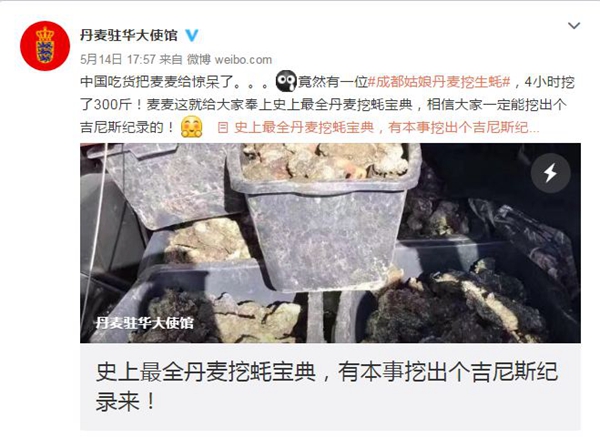
The official Weibo account of the Danish embassy in Beijing on Sunday forwarded a report by the Chengdu Business Daily about a woman from Sichuan who managed to dig up around 150 kilograms of giant oysters along the Danish coast. [Photo: Weibo.com]

The official Weibo account of the Danish embassy in Beijing on Sunday forwarded a report by the Chengdu Business Daily about a woman from Sichuan who managed to dig up around 150 kilograms of giant oysters along the Danish coast.

The Sichuan native, Bian Miaomiao, subsequently put on a massive oyster fry for her family and friends in Denmark, where she has lived with her husband in the past seven years.

Embassy staff was interviewed by Chengdu Business Daily and said they support Bian’s oyster fry, as well as welcome more Sichuan people to travel to Denmark and help solve an oyster crisis in the country.

Giant oysters, a much-loved commodity in China, are said to be overrunning Denmark’s beaches, causing concern among local fishermen.

Data from China’s Zhiyan organization showed Chinese people consumed some 4.5 million tons of oysters in 2015, an annual rise of some 5%.

The Danish embassy in Beijing says it is willing to begin sending their oyster reserves to China, provided they get interested local parties involved.


China, ASEAN expected to build closer ties

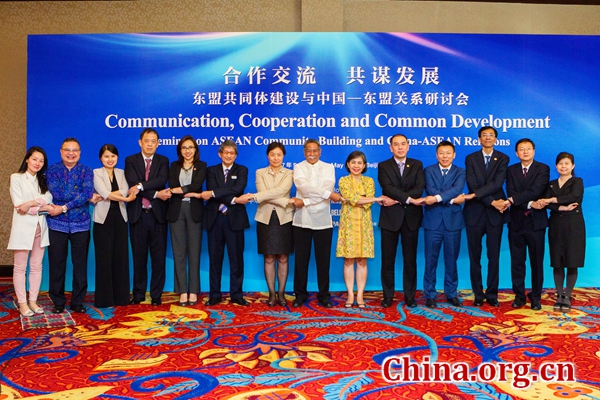
A one-day forum on China-ASEAN relations organized by Beijing Review, Mission of China to ASEAN and the Pangoal Institution, runs on May 15, in Beijing. [Photo provided to China.org.cn]

Once the combustible center for strife and conflicts, countries allied in the Association of Southeast Asian Nations (ASEAN) are now fostering a path of peace and prosperity under the framework of multilateral cooperation, among which their partnerships with China are much accentuated.

Dr. AKP Mochtan, deputy secretary general of ASEAN, described the relationship between China and ASEAN as a “red string of fate”, a Chinese metaphor for the knot tied by married couples.

“This is not a marriage proposal [in the context of bilateral relations. Nevertheless], it is actually what I believe we have shared and how we are connected,” he said.

He made his keynote speech when addressing the “Communication, Cooperation and Common Development Seminar on ASEAN Community Building and China-ASEAN Relations”, jointly hosted by the weekly magazine Beijing Review, Mission of China to ASEAN and Beijing-based think tank Pangoal Institution.

China and ASEAN are embracing a promising future with good momentum. Trade between China and Southeast Asia reached US$455.44 billion in 2016 and China has been ASEAN’s biggest trade partner since 2009. With a mild fluctuation of bilateral trade and investment last year, China and ASEAN are ushering in an era of cultural cooperation and people-to-people exchanges.

In ASEAN, there are 37 cities connected with 52 Chinese cities by means of 5,000 flights. Likewise, about 20 million visitors from China have chosen ASEAN countries as their holiday destinations, an increase of 60.5 percent from two years ago. Meanwhile, the number of ASEAN visitors to China has grown 60 percent to a current 10 million a year.

“I would rather work with a friend in the dark than be alone in the light,” Mochtan added.

His remark was echoed by Li Yafang, president of the Beijing Review.

“China and ASEAN are friendly neighbors linked by seas and mountains,” Li said, adding that “[ASEAN] countries are the major members of the Belt and Road Initiative (BRI)…and there is an invisible red string of bond [between the two sides] in the jungle.”

“China is seeking multilateral cooperation with others, tackling challenges together with ASEAN to achieve common development and prosperity to become a community of common destiny, and contributing to exchanges and cooperation. This is why we are coming today,” she said.

This year marked the 50th anniversary of the establishment of ASEAN with an involvement of six countries now grown to 10, namely, Malaysia, Indonesia, Thailand, Philippines, Singapore, Brunei, Vietnam, Laos, Myanmar and Cambodia. It has evolved into a mechanism of “ASEAN plus six” with the additional participation of China, Japan, South Korea, Australia, New Zealand and India, under the framework of the Regional Comprehensive Economic Partnership.

“The 21st Century Maritime Silk Road of the BRI proposed by Chinese President Xi Jinping in 2013 signals a splendid chapter in China’s broadened openness,” said Yu Hongjun, honorary president of the Academic Committee of the Pangoal Institution and former vice minister of the International Department of the Central Committee of the Communist Party of China (CPC).

“It is being wrongly suggested that an emerging power like China will definitely not escape from the historic pattern of overall rule, which is supposed to lead the country to be a new hegemon in the world,” said Yu.

“China’s BRI is a peaceful cooperation plan with mutual benefits,” he stressed.

According to Yu, there is still room for improvement to achieve even better cooperation. Disturbed by a number of complicated reasons, the trade between China and ASEAN, which has dropped slightly, has, nevertheless, challenged the two sides with targeted trade volume expected to hit US$1 trillion by 2020.

However, despite disputes and differences at times, experts in the forum generally agreed that the cooperation between China and ASEAN should be deepened while tackling technological innovation bringing a potential dramatic transformation of the world.

A fundamental change is taking place by the sweeping dominance of social media that is reshaping the way of mass communication and challenging the loss of readership of the media with traditional contents, said Dato Danny Lee Chian Siong, chairman of the Association for Regional Connectivity.

However, despite such challenges, it has also opened a window for opportunities where Facebook and WeChat can play their roles in boosting the diversity of ASEAN countries, he added.

Wang Xiaohui, editor-in-chief of China.org.cn, said, the relation between China and ASEAN dates back many hundreds of years, so the journalists, who may get the chance to represent the friendship carried on in hearts, languages, lives, as well as cultures of the peoples concerned, can tell the stories by using the platform of new media for future information flows on smart phones.


US, UK still top Chinese study sites

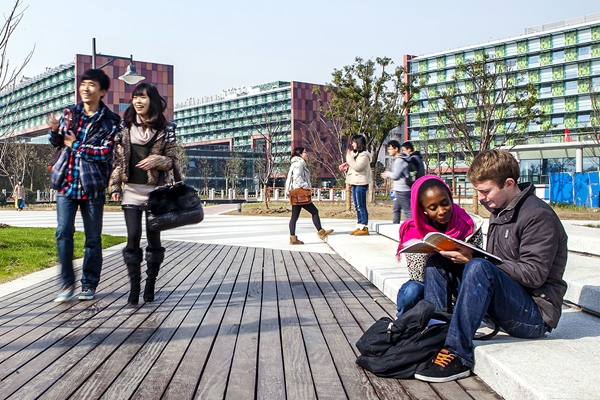
A survey of 6,217 students who plan to study abroad, or their parents, found that the United States remains the top choice, with 50 percent preferring the US, up from 46 percent last year. [File Photo]

US President Donald Trump’s arrival in the White House and Brexit in the United Kingdom have not lessened the appeal of these countries among Chinese students choosing an overseas education destination, according to a new report.

A survey of 6,217 students who plan to study abroad, or their parents, found that the United States remains the top choice, with 50 percent preferring the U.S., up from 46 percent last year.

It is the third consecutive year the country ranked No. 1 in the annual Report on Chinese Students’ Overseas Study, the latest of which was released on Tuesday.

The UK, which voted to leave the European Union last year, was the second-most popular destination, as it has been for three years.

The survey, by Vision Overseas Consulting Co and Kantar Millward Brown, was conducted in over 40 cities in February and March.

Some of Trump’s policies, including visa restrictions, are thought to have influenced international students and prospective immigrants. In a survey by five US higher education associations in February — covering around 250 U.S. colleges and universities — 38 percent reported a drop in foreign applications for the fall 2017 term — Middle Eastern students down the most — The Atlantic reported on Saturday.

Although China was not directly affected by the travel ban, 25 percent of universities saw undergraduate applications from China decline and 32 percent had fewer Chinese graduate student applications, the report said.

According to the Ministry of Education, over 540,000 Chinese students were studying in the U.S. last year, making it one of the largest source countries for international students.

“We have noticed the influence of Trump’s policy and conducted an internal survey of our clients months ago,” said Sun Tao, executive president of Vision Overseas Consulting.

“We did feel the concerns and worries of parents, but many of them stick to their choices in the U.S.”

In the survey, 51 percent of respondents said international political events did not affect their choices, and only 7 percent said they would change their choices of overseas study countries, Sun said.

The education level, overall national power and national culture have been the main factors in Chinese students’ and their parents’ choice of destination countries, the survey added.

“In addition, the full effect of the proposed U.S. visa restrictions have not become clearer, but they will raise the threshold for immigrants to stay and work in U.S.,” said Yu Zhongqiu, deputy head of Vision Overseas Consulting.

He added that the proposed restrictions require immigration applicants to have an annual income no less than $110,000, “quite difficult for new graduates to meet”.

In the survey, 73 percent planned to work in China after graduation, compared with only 57 percent last year.

“More students than before go overseas to broaden their vision and enrich their experiences, and intend to return home,” Yu said.


China approves clinical trial of albumin from rice

China’s food and drug authority has approved a clinical trial of human blood protein yielded from transgenic rice seeds, which could lead to large-scale production of much-needed plasma.

Human serum albumin is widely used in surgery. A Chinese research team led by Yang Daichang, an expert on China’s national “Thousand Talent” program, has researched using rice seeds to produce human serum albumin for 12 years.

Wuhan Healthgen Biotechnology Corp. for Human Health, a private Chinese firm that specializes in developing and marketing innovative animal-free products for pharmaceutical use, has invested 200 million yuan (29 million U.S. dollars) to support the research.

The company, based in the Wuhan National Bio-Industrial Base in Wuhan, capital of central China’s Hubei Province, is eyeing large-scale production of human serum albumin from rice.

With the drug trial approval, the albumin will be put into clinical use in August, and it can be expected to hit the market in four to five years.

There is a huge shortage of human serum albumin in China, estimated at 100 tonnes a year, and 60 percent of the country’s yearly demand of 420 tonnes relies on imports.

Safety is also a concern with plasma from human donors as blood diseases such as HIV/AIDS and hepatitis still pose a threat.

Yang’s team transplanted human serum albumin into rice seeds. As the seeds grow, they continue to generate the protein, which has been tested to have purity of 99.9999 percent and a productivity rate of 10 grams per kilogram of rice grain.

The Center for Drug Evaluation under China Food and Drug Administration said that rice-extracted human blood protein is “safe and effective,” and its quality can be easily controlled.