Families warned of risk to life from unregistered gas work amid surge in prosecutions of illegal traders
- Public urged to check Gas Safe Register as new HSE figures released show seventeen people convicted for illegal gas work in the past 18 months alone
- They include a fraudster who faked the Gas Safe logo to exploit a new homeowner, and a rogue trader whose faulty gas work put a 90-year-old man in danger
- HSE expert issues Gas Safety Week warning to public of the fatal risks from unsafe gas work
Families, homeowners and businesses have been warned not to gamble with their safety by using unregistered gas fitters, as new figures reveal a sharp rise in prosecutions for illegal gas work.
To mark Gas Safety Week (14 to 20 September 2026), the Health and Safety Executive (HSE) has revealed that since the beginning of 2025, seventeen people have been convicted for carrying out gas work illegally. By comparison, there were three convictions in the year 2022/23 and four in 2023/24.
Over the past five years, HSE has successfully investigated and prosecuted dozens of defendants for breaching gas safety laws by working on gas appliances without being registered with Gas Safe Register.
Unqualified gas work can have fatal consequences. Poorly installed or serviced boilers, cookers and fires can cause gas leaks, explosions, fires and carbon monoxide poisoning — a silent killer that claims lives every year.
Gas Safety Week, now in its fourteenth year, is a national campaign bringing together the gas industry, local authorities and landlords to raise awareness of the importance of gas safety.
It takes just seconds to verify an engineer’s credentials at www.gassaferegister.co.uk or by calling 0800 408 5500, or you can ask to see a gas engineer’s Gas Safe ID card.
HSE’s Principal Inspector of Gas Safety, Steve Critchlow, said;
“Gas Safety Week is the right time to remind people just how serious the risks of illegal gas work can be – and the rising number of convictions of rogue traders carrying out unregistered gas work should be a warning to everyone.
“Temperatures are going down and bills are going up, but cutting corners when it comes to getting your gas appliances properly serviced by a registered professional could be a fatal mistake.
“Uncontrolled gas leaks can cause fires, explosions, and carbon monoxide poisoning; and even though the gas industry has an excellent safety record, every tragic incident is one too many.
“As people start thinking about their heating ahead of winter, it’s exactly the right time to say: check your engineer is on the Gas Safe Register before you let them anywhere near your gas appliances. If they’re not on the register, don’t let them through the door.
“If you think you’ve been the victim of a rogue gas trader, report it straight away; HSE can investigate and prosecute unregistered gas fitters who put the public in harm’s way”.
CASE STUDIES: RECENT HSE PROSECUTIONS
Fraudster faked Gas Safe logo to trade illegally across five homes
Alexander Robson advertised his services on social media and with flyers faking the Gas Safe logo, despite not being on the Gas Safe Register. He was sentenced to eight months’ imprisonment, suspended for a period of two years.
Robson traded under names including GasnHeat Plumberz and North East Renocationz and undertook gas work on boilers and gas fires at five homes in Blyth, Ryton, Hexham, Winlaton and Newcastle. Not only was the work he carried out illegal, it was also sub-standard and endangered the lives of those living in the properties.
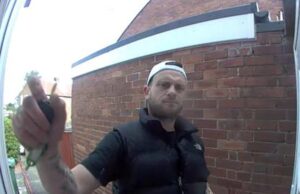
Robson had previously been on the Gas Safe Register aligned to various businesses up until 1 February 2024, but continued carrying out work for several months after that was no longer the case.
One of his victims, 25-year-old Megan Oliver, spoke out about the dangers posed by the likes of Robson, telling people to do their research before hiring people to carry out work.
“I’d only just bought my flat and as a first-time home owner, I’d never had to deal with things like gas work,” she said.
“My mum had put a post on Facebook asking for someone to come and cap off a gas cooker. He replied saying it was something he could do.
“He demanded half of the money up front but I began to get suspicious as he’d always come to the house late at night to carry out the work.
“I remember him saying there were only certain people who are Gas Safe, but it was actually something I’d never even heard of.
“I remember him rambling on a lot and me not being able to get a word in.
“It was only when another company came to fit my new boiler did I find the work he’d done was so poor and that he wasn’t even on the Gas Safe Register.
“When I refused to pay him the rest of his money, he became aggressive and abusive and made threats against both me and my parents.
“I would tell anyone to do their own research on a person before you hire them and make sure they’re a trusted trader and not just from how they appear on Facebook.
“It looked it was such a legitimate company – but it clearly wasn’t.”
Fraudster jailed for endangering elderly homeowner
Israel Jackson, 56, of Sandbach Place, London, was jailed for 12 months at Croydon Crown Court on 4 February 2026 after his dangerous work put the life of a 90-year-old homeowner at risk.
Jackson was sent by a contracted company to install a new boiler at the elderly man’s home in Croydon in May 2022 after lying about being qualified. He had never been registered with Gas Safe Register — and this was not his first offence, having been prosecuted by HSE for illegal gas work in 2015.
Jackson installed the boiler and issued a fraudulent gas safety certificate. When relatives noticed the hot water wasn’t working and smelled gas, a British Gas engineer attended and issued an ‘immediately dangerous’ notice. Jackson returned the following day, ignored the notice, and put the boiler back into use — even demanding his taxi fare be paid. It took over a year before another engineer fully replaced the dangerous installation.
Jackson pleaded guilty to contravening Regulations 3(3) and 3(7) of the Gas Safety (Installation and Use) Regulations 1998.
Family left without heating after illegal work caused three gas leaks
Lee Lancaster, 38, of New Market Street, Ulverston, was sentenced to a 12-month community order with 200 hours of unpaid work and ordered to pay £2,000 costs at Barrow-in-Furness Magistrates’ Court on 23 January 2026.
In February 2024, Lancaster installed a gas combi boiler and pipework at a family home in Ulverston. Shortly after, one of the occupiers smelled gas. Cadent identified three separate gas leaks, and the gas supply was shut off for six weeks — leaving the family of four without heating or hot water.
Gas Safe inspectors classified the work as ‘Immediately Dangerous’. HSE’s investigation found Lancaster held no gas qualifications whatsoever and was not registered with Gas Safe Register.
Lancaster pleaded guilty to breaching Regulations 3(1) and 3(3) of the Gas Safety (Installation and Use) Regulations 1998.
About Steve Critchlow
Steve Critchlow, HSE’s Principal Inspector Gas Safety, or, has more than 30 years of experience at HSE and is one of the foremost experts in gas safety in the country. As a specialist gas inspector based at HSE’s science centre in Buxton, he is often among the first on scene in the aftermath of explosions and deaths caused by carbon monoxide poisoning, and gives evidence during Coronial proceedings and in prosecution cases. He provides expert technical advice to HSE inspectors and the wider gas industry. This Gas Safety Week, Steve will be speaking at events in the UK and Scottish Parliaments.
Further information:
- HSE is the national regulator responsible for enforcing gas safety legislation in Great Britain. It is also responsible for the Gas Safe Register itself.
- The Gas Safety (Installation and Use) Regulations 1998 make it illegal for anyone to carry out gas work unless they are registered with Gas Safe Register or working under appropriate supervision.
- Gas Safe Register is the official list of gas engineers legally allowed to work on gas appliances in the UK.
- Since 2020/21, HSE has successfully prosecuted 34 defendants for breaches of Regulation 3(1) or 3(3) of the Gas Safety (Installation and Use) Regulations 1998. Since the beginning of 2025, 17 people have been sentenced, compared with 3 in 2022/23 and 4 in 2023/24.
- Carbon monoxide is known as the ‘silent killer’ because it is colourless and odourless. Symptoms of poisoning include headaches, dizziness, nausea and confusion.
- Gas Safety Week 2026 runs from 14 to 20 September.