Farm fined after worker’s leg trapped in machine

· “Safe stop” procedure must be followed when using potato harvesters, says regulator

A farming partnership has been fined £20,000 after an employee trapped his leg in a potato harvester machine whilst working on a farm in Cheshire.

The employee, who was 20-years-old at the time, was working for LP Ollier & Son on its potato farm when the incident occurred on 18 October 2023. Whilst assessing a blockage in the potato harvester machine, the roller mechanism caught his right leg and pulled it into the device, causing serious injuries including crushing, fractures, nerve damage and skin damage. He has been unable to work in agriculture since the incident.

Employee leg after it became trapped in potato harvester Potato harvester machine


An investigation by the Health and Safety Executive (HSE) found the guard gates to the machine were open and the machine was not isolated. LP Ollier & Son failed to prevent access to dangerous parts of machinery, namely the rotating parts of a potato harvester by means of implementing and following a suitable safe system of work.

HSE guidance states that employers must follow the ‘safe stop’ procedure when using a potato harvester, including when dealing with blockages. This is in order to ensure that dangerous parts are not accessed when the machine is powered. Suitable training must be given, and monitoring and supervision must be in place to ensure that the ‘safe stop’ procedure is adhered to at all times. Guidance can be found here: Safe use of potato harvesters – HSE.

LP Ollier & Son, of Frog Lane Farm, Frog Lane, Knutsford, Cheshire, pleaded guilty to breaching Section 2(1) of Health and Safety at Work etc. Act 1974. The partnership was fined £20,000 with a £2000 victim surcharge and ordered to pay £5,110.80 in costs at Warrington Magistrates Court.

HSE inspector Joseph Wright said: “All too often, serious and sometimes fatal incidents occur as a result of inadequate systems of work in relation to potato harvesters. This case was a wholly avoidable incident caused by the failure to follow the safe stop procedure for the potato harvester, and ensure that the machine was fully isolated before a blockage was addressed. Had the partnership ensured a suitable safe system of work was followed when blockages occurred, these life-changing injuries would not have occurred.

“The fine imposed on LP Ollier & Son should underline to everyone in the potato harvesting trade and wider agricultural industry, that the courts, and HSE, take a failure to abide by the law very seriously. We will not hesitate to take action when there is a failure to keep employees and contractors safe while they are working.”

This HSE prosecution was brought by HSE enforcement lawyer Julian White and paralegal officer Imogen Isaac.

Notes to Editors

  1. The Health and Safety Executive (HSE) is Britain’s national regulator for workplace health and safety. We are dedicated to protecting people and places, and helping everyone lead safer and healthier lives.
  2. More information about the legislation referred to in this case is available.
  3. Further details on the latest HSE news releases is available.
  4. HSE does not pass sentences, set guidelines or collect any fines imposed. Relevant sentencing guidelines must be followed unless the court is satisfied that it would be contrary to the interests of justice to do so.  The sentencing guidelines for health and safety offences can be found here.



HSE provides free online learning to help employers tackle work-related stress

The Health and Safety Executive (HSE) has today (12 May) launched a free online learning module to help employers get to grips with risk assessment of work-related stress. 

The launch coincides with Mental Health Awareness Week (12-18 May) and expands HSE’s Working Minds campaign, which supports businesses in preventing work-related stress and supporting good mental health. 

With around half of all work-related ill health attributed to stress, depression and anxiety, the new module provides step-by-step guidance for employers on conducting effective risk assessments, identifying root causes of work-related stress, and implementing solutions that have a real impact. 

The launch coincides with Mental Health Awareness Week (12-18 May)

Kayleigh Roberts from HSE’s Engagement and Policy Division said: “Preventing work-related stress isn’t just the right thing to do for your workers—it’s also a legal requirement. Our new online learning module aims to make it easier for businesses, particularly small to medium organisations to understand their obligations and what they need to do on a practical level. 

“This isn’t about ticking boxes. It’s about embedding good practices into everyday business operations. By taking a proactive approach, employers can improve productivity, reduce sickness absence, and retain their valued workers. The module provides all the practical templates, tools and resources needed to get started or to review existing practices.” 

HSE highlights six main areas that can lead to work-related stress if not managed properly: demands, control, support, relationships, role, and change. 

Businesses are encouraged to implement the Working Minds campaign 5Rs approach to support the risk assessment process: 

  1. Reach out and have conversations 
  2. Recognise the signs and causes of stress 
  3. Respond to risks by agreeing action points 
  4. Reflect on the actions taken 
  5. Make it Routine to check in regularly 

Employers can register for the online learning module to access step-by-step advice, practical tools, and downloadable templates. 

Visit the Working Minds campaign website for more information about the Working Minds campaign and to download materials. 


Further information: 

  • The Health and Safety Executive (HSE) is Britain’s national regulator for workplace health and safety. We are dedicated to protecting people and places, and helping everyone lead safer and healthier lives. Key stats can be found at www.hse.gov.uk. 
  • Mental Health Awareness Week runs from 12-18 May 2025. 
  • The Working Minds campaign was launched to help businesses recognise the signs of work-related stress and make tackling issues routine. 
  • More information about the legislation referred to in this case is available. 
  • HSE does not pass sentences, set guidelines or collect any fines imposed. Relevant sentencing guidelines must be followed unless the court is satisfied that it would be contrary to the interests of justice to do so.  The sentencing guidelines for health and safety offences can be found here. 


Car dealership fined after employees exposed to risks from vibrating tools

  • Two employees diagnosed with Hand Arm Vibration Syndrome (HAVS) following repeated exposure.
  • One worker says he had symptoms of HAVS for around eight years.
  • Guidance to keep staff safe is available.

A car dealership franchise in Devon and Cornwall has been fined more than £200,000 after two of its workers were diagnosed with Hand Arm Vibration Syndrome (HAVS).

The pair were diagnosed with the condition in November 2022 following repeated exposure to vibration from working for Rowes Garage Ltd at its bodyshop in Truro. They regularly used hand tools like random-orbital sanders and reciprocating saws for car body repairs.

Prolonged and regular exposure to vibration can affect a worker’s health resulting in painful and disabling disorders of the nerves, blood supply, joints and muscles of the hands and arms. These disorders are collectively known as HAVS and the risk of onset or worsening of it increases with daily exposure and varies widely between individuals. Health and Safety Executive (HSE) guidance can be found here.

One of the affected employees, who did not wish to be named, said: “It’s hard to say exactly how long I have had the symptoms for, but I think maybe about eight years.

“My fingers would go white and I’d lose feeling. This was particularly bad in damp or cold weather.

“I can say that over the years my symptoms seem to have got worse. The blanching has spread and I find it hard to pick up small items.”

The HSE investigation found that Rowes Garage had not put in place adequate management arrangements to assess and monitor the exposure of its employees to vibration. There was no suitable and sufficient risk assessment and control measures had not been implemented despite the likelihood of the exposure action value being exceeded.

Employees were not informed of the risk via information, instruction or training. Additionally, despite both employees reporting symptoms of ill health for a number of years, the company failed to take sufficient action to reduce their exposures.

Rowes Garage Ltd of Vertu House, Fifth Avenue Business Park, Gateshead, Tyne and Wear (since November 2023), pleaded guilty to breaching Section 2(1) of The Health and Safety at Work etc. Act 1974. The company was fined £204,000 and ordered to pay £8,099 in costs at Plymouth Magistrates’ Court on 8 May 2025.

HSE inspector Emma O’Hara said “Rowes Garage Ltd had been exposing employees to the risks arising from the use of vibrating tools for a significant period of time.

“They fell below expected standards which has been reflected in the fine that has been imposed. HAVS is a serious and disabling permanent condition and HSE will not hesitate to take action against employers that fall below the expected standard.”

The prosecution was brought by HSE enforcement lawyer Jonathan Bambro, and Paralegal Rebecca Forman.


Further information:

  1. The Health and Safety Executive (HSE) is Britain’s national regulator for workplace health and safety. We are dedicated to protecting people and places, and helping everyone lead safer and healthier lives.
  2. More information about the legislation referred to in this case is available.
  3. Further details on the latest HSE news releases is available.
  4. Relevant HSE guidance can be found
  5. HSE does not pass sentences, set guidelines or collect any fines imposed. Relevant sentencing guidelines must be followed unless the court is satisfied that it would be contrary to the interests of justice to do so.  The sentencing guidelines for health and safety offences can be found here.

  6. HAVS is an occupational disease reportable under The Reporting of Injuries, Diseases and Dangerous Occurrences Regulations 2013 (RIDDOR).


Construction boss avoids jail after worker died during house extension

  • Stephen Pywell fell while walking on roof beams
  • HSE guidance on working at height is available

The director of a Leicester-based construction company has been given a suspended prison sentence after a man fell to his death while working on a house extension.

Stephen Pywell was working under the control of Affordable Lifestyle Design Limited at a site in Thurmaston on 18 March 2019. It was during the roof construction phase when the 59-year-old fell while walking on the beams. He had accessed the beams via a ladder, however there was no edge protection in place to prevent falls. He fell from a height of just under eight feet. He was taken to hospital where he underwent surgery, but died as a result of his injuries.

Stephen Pywell fell from the wooden roof beams of the house extension

An investigation by the Health and Safety Executive (HSE) found that James Pitsillides, the director of Affordable Lifestyle Design Limited, had failed to manage the roof work. This included ensuring that roofing subcontractors, including Mr Pywell, were not exposed to health and safety risks.

Pitsillides pleaded guilty and was given a 20-week prison sentence, suspended for two years. The district judge also ordered him to complete 200 hours of unpaid work.

Working at height remains one of the leading causes of workplace injury and death and HSE has detailed guidance on working safely at height.

That guidance states that work at height must be properly planned, appropriately supervised and carried out in a manner that is safe. The “hierarchy of control” prioritizes collective fall prevention measures, for example scaffolding with suitable edge protection. If this isn’t feasible, fall mitigation measures like airbags or netting should be considered to reduce the consequences of a potential fall. In this case, none of these measures were used, and workers were accessing the roof with a ladder and no additional fall prevention measures in place.

James Pitsillides of Orchard Lane, Great Glen, Leicester, pleaded guilty to breaching Section 37 of the Health and Safety at Work etc. Act 1974, relating to an underlying breach of s.3(1) by his company. He received a 20-week prison sentence, suspended for two years and must complete 200 hours of unpaid work. He was also ordered to pay £10,000 in costs at Leicester Magistrates’ Court on 7 May 2025.

HSE inspector Phil Gratton said: “Every year, a significant number of incidents occur in construction as a result of poorly planned work at height.

“This was a wholly avoidable incident, caused by the failure to implement simple fall protection measures. Had the company used suitable work equipment or devised a safe system of work, Mr Pywell’s tragic death could have been avoided.

“Our thoughts remain with his family and friends.”

Further information: 

  1. The Health and Safety Executive (HSE) is Britain’s national regulator for workplace health and safety. We are dedicated to protecting people and places, and helping everyone lead safer and healthier lives.
  2. More information about the legislation referred to in this case is available.
  3. Further details on the latest HSE news releases is available.
  4. HSE has detailed guidance on working safely at height.
  5. HSE does not pass sentences, set guidelines or collect any fines imposed. Relevant sentencing guidelines must be followed unless the court is satisfied that it would be contrary to the interests of justice to do so.  The sentencing guidelines for health and safety offences can be found here.


School trust fined after member of public hit by falling tree branch

A school academy trust has been fined and a man given a suspended prison sentence after a member of the public was hit by a falling tree branch.

Bishop Bewick Catholic Education Trust and gardening services provider Nicolas Thépot (trading as ‘The Green Yem’) both pleaded guilty to health and safety breaches following the incident, which left a 68 year-old with serious injuries.

Gillian Gardner had been walking her dog on the pavement along West Road in Newcastle when she was hit by the falling branch, which, as a result of the impact, knocked her on to the road and into the path of incoming traffic.

Thépot continued working on the tree the very next day with the only change being that some cones and tape were placed on to the pavement.

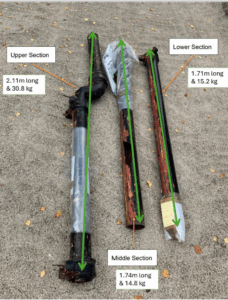
The incident took place on 9 August 2022. Thépot had been contracted by the trust to fell two trees in the grounds of St Cuthberts Catholic High School on Gretna Road. He and a young apprentice set about the work and having climbed one of the trees, Thépot was using a chainsaw to remove branches and sections of the trunk. He had been using a rope to tie to the branches to be removed, with his young apprentice tasked with pulling each one inside the school boundary as they fell.

However, it was during this operation that the rope snapped, causing both it and the falling branch to crash into Mrs Gardner and her dog.

In a statement, she said her ordeal had left her unable to leave the house for several weeks, with the injuries sustained including several broken ribs.

“It probably took about a year to totally recover she said.

“I still can’t carry anything heavy.

“I feel like it has all been downhill since my accident and I’ve lost confidence in what I can and can’t do.

“I haven’t been able to return to my weekly swimming I was used to before the accident.

“My dog has been very therapeutic for me and we’re inseparable.”

Thépot had no training or qualifications in arboriculture or use of chainsaws

An investigation by the Health and Safety Executive (HSE) found that Thépot had no training or qualifications in arboriculture or in the use of chainsaws. He was using an unsafe method to fell the tree, by carrying out aerial chainsaw work above the open footpath and road.

The investigation also found Bishop Bewick Catholic Education Trust had made no checks on Thépot’s experience, competence or qualifications. The trust had not checked how he intended to do the work in advance of awarding the contract, made no check on the method used during the work, and did not stop the work after the incident.

In fact, Thépot continued working on the tree the very next day using the same method. The only change made was that some cones and tape were placed on to the pavement. There was no way around the coned off area for pedestrians without stepping into the busy road, nor was there any signage in place to indicate risk. Members of the public were still walking underneath the tree while Thépot was working with a chainsaw – with the risk not immediately obvious to members of the public from the path. The trust did not attempt to stop him working in this manner despite the obvious risks and the incident the previous day.

The work was only stopped when HSE inspectors became aware of the incident, arrived on the scene, and served prohibition notices on both the trust and Thépot.

The rope being used to to tie to branches snapped during the tree felling work

Bishop Bewick Catholic Education Trust, pleaded guilty to breaching their duty under section 3(1) of the Health and Safety at Work Act 1974 to conduct their undertaking in such a way as to ensure, so far as is reasonably practicable, that persons not in their employment are not exposed to risks to their health or safety. It was fined £20,000 and ordered to pay £4,344 in costs at Newcastle Upon Tyne Magistrates Court on 17 April 2025.

Nicolas Thépot, (of Netherwitton Way, Newcastle upon Tyne) as a self-employed person, failed to discharge his duties under section 3(2) of the Health and Safety at Work Act 1974, to ensure persons not being his employees are not exposed to risks to their health or safety. He pleaded guilty at South Tyneside Magistrates Court on 7 May 2025 and was given a 12 week prison sentence, suspended for 12 months. He must also complete 100 hours of unpaid work and ordered to pay £1,000 towards the prosecution costs.

After the hearing, HSE inspector Stephen Garner said: “This incident was completely avoidable had the tree been felled by a safe method with controls put in place to protect members of the public from being struck by falling branches.

“It is particularly concerning that, in this case, the work continued by the same method the very next day, even after a member of the public was injured.

“This prosecution demonstrates HSE will not hesitate to take action against those who put the public at risk through unsafe work methods.”


Further information:

  1. The Health and Safety Executive (HSE) is Britain’s national regulator for workplace health and safety. We are dedicated to protecting people and places, and helping everyone lead safer and healthier lives.
  2. More information about the legislation referred to in this case is available.
  3. Further details on the latest HSE news releases is available.
  4. HSE does not pass sentences, set guidelines or collect any fines imposed. Relevant sentencing guidelines must be followed unless the court is satisfied that it would be contrary to the interests of justice to do so.  The sentencing guidelines for health and safety offences can be found here.