A Middlesbrough man has been given a suspended prison sentence after carrying out illegal gas work.
An investigation by the Health and Safety Executive (HSE) found Neil Burton carried out boiler services in a home in Stockton-on-Tees on two occasions, in May 2021 and April 2022. Although Burton had previously been on the Gas Safe Register, he had allowed his membership and qualifications to lapse. A subsequent review of the boiler identified defects which meant it was classed as a risk and a danger.
Burton, 41, also carried out work at a house in Middlesbrough in September 2022 and October 2023. These works included disconnecting a gas hob and installing a new one, as well as disconnecting a gas fire. As he had done previously, he carried out this work while not registered to do so. He had also been subject of previous action taken by HSE, when carrying out illegal gas work in 2015.
Neil Burton, of Harrogate Crescent, Middlesbrough, pleaded guilty to breaching Regulations 3(1) and 3(3) of the Gas Safety (Installation and Use) Regulations 1998. He was given a six-month prison sentence suspended for 12 months and ordered to complete 150 hours of unpaid work at Teesside Magistrates’ Court on 7 October 2025.
After the hearing, HSE Inspector Darian Dundas said:
“All gas work must be carried out by registered Gas Safe engineers to ensure the highest standards are met and to prevent injury or loss of life.
“The public should always ask to see a gas engineer’s identification and check their registration number online.”
Gas engineers and consumers can contact the Gas Safe Register in any of these ways:
The Health and Safety Executive (HSE) is Britain’s national regulator for workplace health and safety. We are dedicated to protecting people and places, and helping everyone lead safer and healthier lives.
More information about the legislation referred to in this case is available.
HSE does not pass sentences, set guidelines or collect any fines imposed. Relevant sentencing guidelines must be followed unless the court is satisfied that it would be contrary to the interests of justice to do so. The sentencing guidelines for health and safety offences can be found here.
World Mental Health Day: Protect your team’s mental health – and your business
To mark World Mental Health Day 2025, the Health and Safety Executive (HSE) is urging employers to go beyond raising awareness and take practical steps to prevent work-related stress.
In 2023/24, approximately half of all self-reported cases of work-related ill health in Great Britain—whether new or ongoing—were linked to stress, depression, or anxiety, according to data from the Labour Force Survey and HSE statistics. On average, each affected worker took 19.6 days off due to these conditions. The impact on businesses is significant – increased absence, reduced productivity, and higher staff turnover.
Take action
Kayleigh Roberts, Work-Related Stress Policy Lead at HSE, said: “This World Mental Health Day, we’re asking employers to keep talking – but start doing. We regularly hear from businesses struggling with rising absence, falling performance, and high staff turnover – often caused by preventable stress at work.
“The good news is that even small changes can make a big difference. Taking steps like reviewing workloads, enhancing communication, or giving staff greater autonomy can lead to improved wellbeing and stronger business performance. The organisations that thrive are those that address the root causes of stress before they escalate into a crisis.”
Support that works
HSE’s Working Minds campaign now includes 36 partners, reinforcing that mental health is a business priority, not just a moral responsibility.
The campaign’s five steps – Reach out, Recognise, Respond, Reflect, andmake it Routine – offer employers a clear framework to manage the six key causes of work-related stress: demands, control, support, relationships, role clarity, and change management.
More than 18,000 business leaders have already accessed HSE’s free online learning platform, with 94% saying they now feel confident in applying what they’ve learned.
Make a practical change today
This World Mental Health Day, commit to one change your business can make right now. Start with any of these practical steps:
Visit our Work Right website to access tools, templates, and free training.
The time to act is now. Protecting mental health is good for your people – and good for your business.
Contractor told to carry out unpaid work after ignoring HSE action
Workers put at risk of serious injury.
Inspector slams contractor for showing “complete contempt” for workers’ safety
HSE guidance is available on safe working from height and demolition.
A London contractor has been given a suspended prison sentenced after risking the lives of workers and ignoring action taken by Britain’s workplace regulator.
The Health and Safety Executive (HSE) ordered Mohammed Mehdi Ali to stop working at a construction site in Willesden on 7 September 2018. Inspectors visited the Willesden Lane site and found unplanned, unsupervised and unsafe work was putting people at serious risk of injury.
Workers had been identified working on the roof area where they were at serious risk of falling from a height as no measures to protect them were in place. Unplanned and unsafe demolition work had also left the building structure at risk of collapse.
Mr Ali put workers at risk of falling from height
Despite the prohibition notice being served against him, Mr Ali ignored it and the work continued as before, putting the lives of those working on the site at risk. Mr Ali, of Barn Hill in Wembley, also failed to turn up at court to face justice in 2021 and as a result a warrant was issued for his arrest. It was only thanks to intelligence from the local community that the police arrested him and the court proceedings could finally resume. He has now been given a suspended 20-week custodial sentence and ordered to complete 200 hours of unpaid work.
Not only did the HSE investigation find that Mr Ali disregarded the prohibition notice, but also that he failed to put in place measures to ensure the health and safety of people at his construction site.
Ali ignored HSE enforcement action telling him to stop the work
The law requires employers to carry out their legal duty to protect persons’ health and safety at the workplace by ensuring that construction work is adequately planned, managed, and monitored and appropriately supervised.
Falls from height remains one of the leading causes of workplace injury and death and HSE has detailed guidance on working safely at height. In law, demolition work is treated the same as any other construction work. Workers must be supervised and follow safe working practices. HSE guidance on demolition is available.
Workers on the site were put at continued risk
Mr Ali pleaded guilty to committing an offence under s33(1)(g) of HSWA by breaching a prohibition notice and continuing to carry on the work without suitable and sufficient measures in place thereby exposing his workers to serious risk of personal injury. He was sentenced to 20 weeks imprisonment, suspended for 18 months and must complete 200 hours of unpaid work as well as 10 days of rehabilitation. He was also ordered to pay £12,151 in costs.
HSE inspector Saif Deen said: “Mr Ali not only ignored HSE and the criminal justice system, he showed complete contempt for the safety of workers.
“The law requires employees to ensure the health and safety of persons at their workplace. Employers have a responsibility to ensure that everyone on a building site is safe.
“We will not hesitate to take action against those who fail to comply with HSE enforcement and continue to put their workers at risk.
“Working at height remains one of the leading causes of workplace death and injury.
“We would like to thank the local community for ensuring justice was done, which helps to keep people safe.”
This prosecution was brought by HSE enforcement lawyer Alan Hughes and paralegal officer David Shore.
Further information:
The Health and Safety Executive (HSE) is Britain’s national regulator for workplace health and safety. We are dedicated to protecting people and places and helping everyone lead safer and healthier lives.
More information about the legislation referred to in this case is available.
HSE does not pass sentences, set guidelines or collect any fines imposed. Relevant sentencing guidelines must be followed unless the court is satisfied that it would be contrary to the interests of justice to do so. The sentencing guidelines for health and safety offences in England can be found here and those for Scotland here.
Company fined after much loved family man killed by reversing HGV
Several failings identified during investigation.
Man described as ‘my everything’ by his daughter.
HSE guidance is available.
A manufacturing company has been fined £240,000 after a grandfather was killed by a reversing HGV in Birmingham.
David Saint – described as ‘my everything’ by his daughter – worked as an engineering manager at Northwood Consumer Limited, at its site in Electra Park, Electric Avenue.
The 61-year-old, from Spalding in Lincolnshire, was walking across the service road on the shared industrial estate on 19 October 2023, when the reversing HGV collided with him.
Mr Saint leaves behind his wife, Cassandra, his children Samantha and Adam, his grandchildren, Jake and Ava, as well as his father, Terry, and siblings, Paul, Kim and Michael.
David Saint was killed by a reversing HGV
His daughter, Samantha, said: “He was my everything, there was nothing he wasn’t involved in.
“My life now consists of ‘what would dad do?’
“I think of him and miss him every day.”
An investigation by the Health and Safety Executive (HSE) found that Northwood Consumer Limited failed to:
Undertake a suitable and sufficient assessment of the risks associated with workplace transport.
Address the movement of HGVs in its site rules;
Eliminate, as far as possible, the need for HGVs to reverse;
Provide any aids or assistance to HGVs that had to be reversed;
Display any signage to warn of the hazards arising from the movement of HGVs; and
Control when HGVs would access the site.
HSE guidance provides advice for employers on what they need to do to comply with the law and reduce risk. The guide is also useful for managers, supervisors, employees and their safety representatives, as well as contractors, vehicle operators and other organisations concerned with workplace transport safety.
A police drone captured this image of the aftermath of the incident
Mr Saint’s son Adam added: “I just miss my dad being there.
“I miss the conversations that we used to have and his guidance.
“I just miss everything about him.”
Northwood Consumer Limited of Northwood House, Stafford Park 10, Telford, pleaded guilty to breaching Sections 2(1) and 3(1) of the Health and Safety at Work etc Act 1974. The company was fined £240,000 and ordered to pay £6,917 in costs at Birmingham Magistrates Court on 6 October 2025.
Lead HSE inspector Charlie Rowe said: “This is a tragic and shocking case that has devastated Mr Saint’s family, friends and loved ones.
“Pedestrians being struck by moving vehicles remains a leading cause of workplace fatalities in Great Britain.
“Many of these incidents involve the reversal of vehicles with poor visibility, such as HGVs.
“The HSE will continue to take appropriate enforcement action where employers fail to implement reasonably practicable measures to keep people safe.
“My thoughts remain with all of David’s family and friends.”
This prosecution was brought by HSE enforcement lawyer Edward Parton and supported by senior paralegal manager Sarah Thomas.
Further information:
The Health and Safety Executive (HSE) is Britain’s national regulator for workplace health and safety. We are dedicated to protecting people and places, and helping everyone lead safer and healthier lives.
More information about the legislation referred to in this case is available.
HSE does not pass sentences, set guidelines or collect any fines imposed. Relevant sentencing guidelines must be followed unless the court is satisfied that it would be contrary to the interests of justice to do so. The sentencing guidelines for health and safety offences can be found here.
Lanes Group Limited fined £800k after investigation into death of devoted father
The partner of a man critically injured by an exploding jet hose waited until after Christmas to agree to switch off life support.
Estefania Fonseca, who planned to marry Miguel Galvao the following year, was placed in this impossible position following failures by Lanes Group Limited, who have been fined £800,000 following an investigation by the Health and Safety Executive (HSE).
She made the decision for the sake of the three children she had with Miguel. The 51-year-old died on 27 December 2022.
Miguel Galvao
Two-and-half-weeks earlier, on 10 December Miguel was working as a drainage engineer for the utility and infrastructure company. When priming the jetting hose, a loud explosion was heard and the end of the hose whipped up at high speed, striking him. Miguel was rushed to hospital but placed in an induced coma.
The morning of the incident was very cold, with witnesses describing temperatures dropping to around -3 to -4 degrees. Water was being filled into the jetting system (hose, pumps and filters) prior to jetting. The end of the hose was suspended in an inspection chamber when a large pressure release, thought to be due to a build-up of ice in the system, caused the end of the hose to strike Mr Galvao in the face.
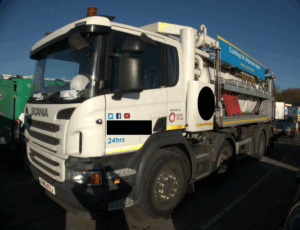
The jetting tanker
An investigation by the Health and Safety Executive (HSE) found that the company failed to ensure, so far as was reasonably practicable, the health, safety and welfare of its employees. The major failings identified during the investigation were:
There was no safe system of work detailing how priming of the jetting system should be done safely.
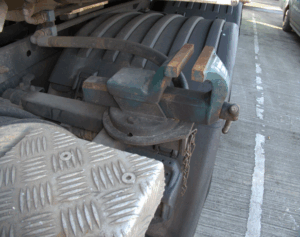
There was a failure to maintain work equipment in an efficient state, as a number of other jetting vehicles were seen with defective vices.
There was a failure to monitor use of physical control measures in place.
Employees were not provided with sufficient information, instruction, training and supervision.
During the investigation, the Water Jetting Association, a trade association representing those carrying out high pressure water jetting, released a safety alert reminding operators of the importance of restraining or anchoring the end of the jetting hose.
The end of the hose should have been mechanically secured in a system such as the vice provided on the vehicle, like the one shown below.
The vice on the vehicle that should secure the hose
“It felt like the floor had been taken from under me”
After two weeks in hospital, doctors told Estefania there was nothing more they could do for Miguel.
“They asked me if they could switch off the machine and then explained to me that Miguel could pass instantly or breathe by himself between five to seven days.
“Five days would have been Christmas day so I told them they could not do that because of the kids but they could do it afterwards. This was on 27 December.
“Since Miguel passed, I have PTSD – it has affected everything. Miguel was my everything, he was my rock. When Miguel died, it felt like the floor had been taken from under me.
“We lived together for 15 years and had planned to marry at Christmas 2023. We have three children – Angelica, Michael and Jose. It has been so difficult for them to cope without their dad.
“Michael screamed ‘my dad is dead’ when he saw him in hospital, and he still struggles with anger and grief. Angelica was a real daddy’s girl – she has trouble sleeping and misbehaves because she feels no one cares about what happened to her dad. Jose, our eldest, has tried to be strong, but it has affected him deeply too.
“I have good days and bad days, but everything has changed. We used to go out as a family every two weeks – to the cinema, to London, or even just to the park late at night – Miguel loved making memories with the children. We can’t do that now. The kids often ask why life is so different without daddy.
“Financially it has also been a real struggle. We relied on Miguel’s wages, and I now find myself on benefits, unable to give the children the life we had before. We don’t have a car anymore, I can’t always afford the heating, and I have to choose which child I can buy something for each month. It is heartbreaking.
“Miguel’s dream was to buy a house and retire in Portugal. When my father died, he said he would be happy living in my mum’s house there, and that is where we buried him. It is what he would have wanted.
“He worked for this company for nearly 10 years, and it hurts that he never came home from work. They came to his funeral but never spoke to me or the children. That lack of respect has been so painful.
“Miguel was a wonderful father and partner. He went to work that day and never came home. Our lives will never be the same without him.”
Lanes Group Limited of C/O Elements Ring Rd, Lower Wortley, Leeds, West Yorkshire, United Kingdom, LS12 6AB pleaded guilty to breaches under Section 2(1) of the Health and Safety at Work etc. Act 1974.
The company was fined £800,000, reduced from £1.2 million due to the early guilty plea, and ordered to pay £8,680 in full costs and a £2,000 victim surcharge at City of London Magistrates’ Court on 2 October 2025.
This HSE prosecution was brought by HSE enforcement lawyer Gemma Zakrzewski and paralegal officer Rebecca Withell.
HSE inspector Marcus Pope said:
“This absolutely tragic incident further demonstrates the need for companies to ensure there are suitable safe systems of work for non-routine work, such as work in freezing temperatures where machines are at risk of freezing.
“This investigation and the input from the Water Jetting Association should help demonstrate to the industry the importance of restraining or anchoring the end of jetting hoses when priming systems.”
This HSE prosecution was brought by HSE enforcement lawyer Gemma Zakrzewski and paralegal officer Rebecca Withell.
Further information
The Health and Safety Executive (HSE) is Britain’s national regulator for workplace health and safety. We are dedicated to protecting people and places, and helping everyone lead safer and healthier lives.
More information about the legislation referred to in this case is available.
HSE does not pass sentences, set guidelines or collect any fines imposed. Relevant sentencing guidelines must be followed unless the court is satisfied that it would be contrary to the interests of justice to do so. The sentencing guidelines for health and safety offences can be found here.