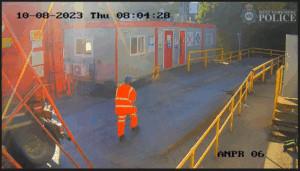
Site supervisor fined after exposing school pupils to asbestos

A construction site supervisor has been fined after he exposed primary school pupils and staff to asbestos during renovation work.

Adrian Barraclough was working as a site supervisor during the refurbishment of kitchen facilities at Holy Family Catholic Primary School in Bristol.

Adrian Barraclough was working as a site supervisor during the refurbishment of kitchen

During the works on 13 May 2023, the 54-year-old cut through asbestos insulating board using a circular saw. His actions resulted in asbestos fibres spreading throughout the school hall, which was subsequently used for two days by pupils and staff.

Holy Family Catholic Primary School in Bristol

An investigation by the Health and Safety Executive (HSE) found that Barraclough failed to follow his asbestos awareness training, including clear instructions not to disturb the wall. Following an asbestos survey, the wall was due to be checked by a licensed asbestos contractor prior to removal to clarify if asbestos was present.

HSE’s has two campaigns “Asbestos and You” and “Asbestos Your Duty” reminding tradespeople about the dangers of asbestos and the importance of working safely with it, also to reach those responsible for the maintenance and repair of non-domestic buildings.

Close up image of the asbestos containing material

The regulator also provides comprehensive guidance for workers and employers about working safely with asbestos on its website. This includes information on how to identify asbestos, what to do if you find it, and the appropriate safety measures needed when working with or around asbestos-containing materials. Workers in trades such as construction, maintenance, demolition and installation are particularly at risk and should ensure they have appropriate training before starting work that might disturb asbestos.

Adrian Barraclough, of Green Lane, Frome, pleaded guilty to breaching Section 7(a) of the Health and Safety at Work etc Act 1974. He was fined £1,800 and ordered to pay a £720 victim surcharge and £4,000 in costs at Bristol Magistrates’ Court on 12 June 2025 – a total financial penalty of £6,520.

HSE inspector Ian Whittles said: “Every year around 5,000 people die from asbestos-related diseases, often taking decades to develop symptoms. In this case, wholly unacceptable exposure to asbestos fibres occurred as a result of an individual employee not following instructions and procedures designed to prevent such occurrences.”

This HSE prosecution was brought by HSE enforcement lawyer Karen Park and paralegal Imogen Issac.

Further information

  1. The Health and Safety Executive (HSE) is Britain’s national regulator for workplace health and safety. We are dedicated to protecting people and places, and helping everyone lead safer and healthier lives.
  2. More information about the legislation referred to in this case is available.
  3. Further details on the latest HSE news releases are available.
  4. Relevant guidance can be found here: Introduction to asbestos safety: Overview – HSE.
  5. HSE does not pass sentences, set guidelines or collect any fines imposed. Relevant sentencing guidelines must be followed unless the court is satisfied that it would be contrary to the interests of justice to do so. The sentencing guidelines for health and safety offences can be found here.
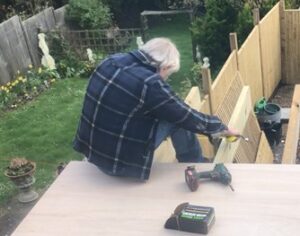
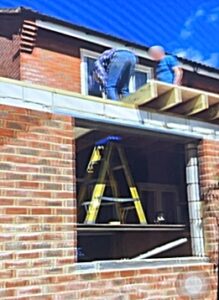
Demolition firm fined after worker seriously injured in fall from height

A demolition company has been fined after a worker fell six metres through a roof opening during a demolition project, suffering serious injuries.

Lawrie (Demolition) Limited had been appointed as the principal contractor to carry out the demolition of a vacant warehouse in Aberdeen.

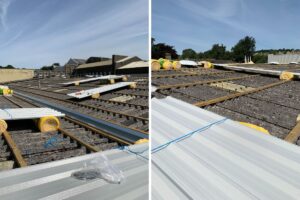
Warehouse in question

On 25 May 2023, 42-year-old Sylwester Zdunczyk was working with a team on the warehouse roof, removing aluminium over-sheeting. The sheets were being carried to pre-cut holes in the roof from where they were dropped to the ground floor. These holes were guarded by steel crowd control barriers secured together with plastic tie wraps – but they were not attached to the roof surface. No other fall prevention measures were in place.

While helping to carry a sheet backwards near one of the holes, Mr Zdunczyk lost his footing. The weight of the sheet and his own bodyweight caused the unattached barriers to shift, exposing the edge of the opening and creating a gap. He fell approximately six metres to the concrete floor below.

the worker fell from this roof

Mr Zdunczyk sustained a fractured pelvis and two broken ribs. He was unable to work for six months after being discharged from hospital and has not fully recovered. Previously fit and active, he can no longer run, cycle or play football and now requires pain medication.

An investigation by the Health and Safety Executive (HSE) found that Lawrie (Demolition) Limited failed to properly plan, supervise, and carry out the work at height safely. Workers were sent onto the roof without sufficient instruction, training or supervision. The company also failed to put adequate fall protection measures in place.

Working at height remains one of the leading causes of workplace injury and death and HSE has detailed guidance on working safely at height.

the warehouse

Lawrie (Demolition) Limited, of Rigifa, Cove, Aberdeen, pleaded guilty to breaching Regulation 4 of the Work at Height Regulations 2005 and Section 33(1)(c) of the Health and Safety at Work etc Act 1974. The company was fined £40,562.50 at Aberdeen Sheriff Court on 12 June 2025.

HSE inspector Muhammad Umair Tanvir said:
“This incident could have been avoided by simply implementing appropriate control measures and safe working practices.

“Falls from height remain the leading cause of fatalities and serious injuries in UK workplaces. In 2023/24, 50 workers died following a fall from height – the highest cause of workplace fatalities. This trend has remained consistent over recent years.”

Further information:

  1. The Health and Safety Executive (HSE) is Britain’s national regulator for workplace health and safety. We are dedicated to protecting people and places, and helping everyone lead safer and healthier lives.
  2. More information about the legislation referred to in this case is available.
  3. Further details on the latest HSE news releases is available.
  4. HSE does not pass sentences, set guidelines or collect any fines imposed. Relevant sentencing guidelines must be followed unless the court is satisfied that it would be contrary to the interests of justice to do so.  The sentencing guidelines for health and safety offences in Scotland can be found here.


Metal gate manufacturer fined after exposing workers to serious safety risks

A metal gate manufacturing company has been prosecuted after repeatedly ignoring Health and Safety Executive (HSE) enforcement notices.

Research and Development in Opening Gates Limited was first visited by HSE at its site in Grantham, Lincolnshire, where inspectors identified serious safety breaches, including unsafe equipment, inadequate control of welding fume, and poor structural integrity in workplace areas accessed by employees and visitors.

Three Improvement Notices were served following the initial inspection. These required the company to:

  • Take effective measures to control employee and non-employee exposure to welding fume, a substance hazardous to health.
  • Assess the structural safety of a mezzanine floor in use at the site.
  • Ensure lifting equipment, including a forklift truck, had undergone a thorough examination to confirm it was safe to use.
Buzzsaw without guard

Further material breaches were identified in a Notification of Contravention letter, including:

  • Unguarded dangerous parts of machinery.
  • Inadequate edge protection on the mezzanine floor to prevent falls from height.
  • Electrical systems not constructed to prevent, so far as reasonably practicable, danger.
  • Unsafe storage of flammable gases.
  • No competent person appointed to assist with health and safety management.
Unsafe storage of flammable gas

Despite this enforcement, follow-up inspections revealed continued non-compliance. HSE returned to the site five more times, serving three additional Improvement Notices and one Prohibition Notice.

The Prohibition Notice was issued during a second visit in relation to ducting installed above welding benches. The ducting was supported by unstable and unsecured structures that were visibly bowing, posing a serious risk of personal injury should it collapse. The installation had been intended to control exposure to welding fume but was found to be unsafe and ineffective.

Two further Notification of Contravention letters were also sent to the company. During the intervention, compliance deadlines were extended on two occasions, but legal requirements were still not met. The company’s failings put employees, contractors and visitors at risk of serious harm. Reasonably practicable measures could have been taken to control these risks, but the company failed to do so.

An investigation by HSE found that Research and Development in Opening Gates Limited had failed to ensure the health, safety and welfare of its employees and others affected by its work activities. The company’s standard of health and safety management fell significantly below legal requirements, leading to a proactive prosecution.

HSE guidance states that employers must take effective measures to control exposure to hazardous substances such as welding fume. This typically includes providing engineering controls, like Local Exhaust Ventilation (LEV). Workplaces must also be structurally sound and lifting equipment must be examined regularly by competent professionals.

Research and Development in Opening Gates Limited, of Lea Bridge Road, London pleaded guilty to breaching Sections 2(1) and 3(1) of the Health and Safety at Work etc. Act 1974. The company was fined £40,000 for each offence, totalling £80,000, and ordered to pay £7,495.72 in costs, along with a £2,000 victim surcharge. The sentence was handed down at Lincoln Magistrates’ Court on 12 June 2025.

HSE inspector Muir Finlay said:
“This prosecution follows a catalogue of failures, all of which posed serious risks to both the health and safety of workers and visitors of the site.

“The company failed to implement basic, well-understood measures to control risks. Health and safety must be effectively managed — it’s not optional.”

This HSE prosecution was brought by HSE enforcement lawyer Matthew Reynolds and paralegal officer Jason Dix.


Notes to editors

  1. The Health and Safety Executive (HSE) is Britain’s national regulator for workplace health and safety. We are dedicated to protecting people and places, and helping everyone lead safer and healthier lives.
  2. More information about the legislation referred to in this case is available.
  3. Further details on the latest HSE news releases is available.
  4. HSE does not pass sentences, set guidelines or collect any fines imposed. Relevant sentencing guidelines must be followed unless the court is satisfied that it would be contrary to the interests of justice to do so.  The sentencing guidelines for health and safety offences in England and Wales can be found here and for those in Scotland here.
  5.  Link to relevant HSE guidance: Welding fume: protect your workers – HSE


Taylor Wimpey fined £800,000 after teen apprentice injured on site

A housebuilder has been fined £800,000 after a teen apprentice was injured when a temporary stairwell covering collapsed.

Charlie Marsh, 17, had been working as a contractor on a Taylor Wimpey UK Limited site as it built around 450 new homes on its Meadfields site in Weston-Super-Mare.

The apprentice bricklayer, from Whitchurch in Bristol, was less than 12 months into his career when the incident happened. An investigator for the Health and Safety Executive (HSE) said the teen was lucky to escape serious injury.

The collapsed stairwell after the incident

On 22 August 2023 Charlie had been loading concrete blocks onto the temporary flooring on the first floor of one of the newly built homes. The blocks were being loaded into stacks of between 10 and 20, one of which was on or near to a temporary stairwell covering. This was a large area covered with a timber sheet material laid over joists – both of which would be later removed to install the staircase.

However, the area collapsed, causing Charlie and around 20kg of the concrete blocks to fall more than two metres to the ground below. He sustained injuries to his fingers, hand, wrist and shoulder.

The subsequent HSE investigation found that the joists under the timber sheet material should have been back propped. This was mentioned a number of times in Taylor Wimpey’s own health and safety manual for the site, however, it had been missed on this particular plot. Had suitably designed back propping been used, it is unlikely the incident would have occurred.

Taylor Wimpey UK Limited pleaded guilty to breaching section 3(1) of the Health and Safety at Work etc. Act 1974. The company was fined £800,000 and ordered to pay £6,240.25 costs with a £2000 victim surcharge at the North Somerset Magistrates’ Court on 3 June 2025.

Charlie Marsh, who was 17 at the time, fell through the stairwell with between 10 and 20 concrete blocks

HSE inspector Derek Mclauchlan said “Everyone working in construction has a responsibility to ensure people are safe.

“Any work involving structural stability is potentially high risk and proper planning and implementation should be given.

“This incident could have been avoided had the right steps been taken.

“The failures of Taylor Wimpey resulted in a young man at the very beginning of his career being injured. Charlie was lucky those injuries were not far more serious.

“Lessons should be learned.”

This HSE prosecution was brought by HSE Enforcement Lawyer Samantha Tiger and Paralegal Officer Rebecca Withell.


Further information:

  1. The Health and Safety Executive (HSE) is Britain’s national regulator for workplace health and safety. We are dedicated to protecting people and places, and helping everyone lead safer and healthier lives.
  2. More information about the legislation referred to in this case is available.
  3. Further details on the latest HSE news releases is available.
  4. Relevant guidance can be found here The Construction (Design and Management) Regulations 2015 – HSE.
  5. HSE does not pass sentences, set guidelines or collect any fines imposed. Relevant sentencing guidelines must be followed unless the court is satisfied that it would be contrary to the interests of justice to do so.  The sentencing guidelines for health and safety offences can be found here.


Edinburgh Airport fined after pensioner fell from ambulift

  • James Young died in hospital more than a week after the fall
  • Locking fault on “ambulift” had been in place for some time before incident
  • HSE guidance is available on the maintenance of work equipment.

The owner of Edinburgh Airport has been fined £80,000 after a pensioner fell from an ambulift on his return from holiday.

Following the fall, James Young was admitted to hospital, but died more than a week later from his injuries .

The 81-year-old had just landed at the airport after holidaying on the Greek island of Rhodes with his wife Anne, when the incident happened on 28 November 2023.

The Ambulift used by Mr Young and his wife

Mr Young and his wife, who has mobility issues, had been waiting for one of the airport’s ambulifts to assist them disembarking the aircraft shortly after 4pm. The couple had been two of six people requiring the assistance of the ambulift following the flight.

Ambulifts are a specially designed vehicle to assist passengers with reduced mobility. Edinburgh airport has several such vehicles which are owned, maintained and operated by the airport and driven by its employees.

Passengers who cannot embark or disembark using the aircraft steps can use an ambulift cabin, which is capable of being elevated to the level of the aircraft’s door and lowered to the chassis of the vehicle. At the rear of the vehicle, a tail lift platform is then deployed to the same level as the floor level of the passenger compartment.

The locking mechanism on the safety rail was misaligned

Passengers then exit the compartment onto the tail lift, which unlike the compartment, is not enclosed, but has safety side rails and a rear gate around its perimeter. Once secure on the tail lift, it is lowered to ground level, allowing its users to move on to the tarmac step free.

Mr Young attempted to pass a piece of hand luggage to a worker on the ground whilst the tail lift had not yet been lowered. It is believed he leant  against the safety rail, which swung open causing him to fall approximately five feet to the ground below.

He was assisted to his feet and helped into a wheelchair and although he wasn’t thought to have sustained serious injury at time, he was taken to hospital. When examined at Edinburgh Royal Infirmary, it was found Mr Young had sustained  serious injuries and he subsequently died on 7 December as a result of these injuries.

As a result of the incident, Edinburgh Airport Limited submitted a RIDDOR to the Health and Safety Executive (HSE) and an investigation was carried out. That found that when it was raised from the ground, the locking mechanism on the tail lift’s safety rail was misaligned, meaning it could potentially open outwards if pressure was applied to it. When the safety rail moved outwards from the lifting platform an open edge was created and it was through this that Mr Young fell.

The ambulift that was used on the day in question

The Provision and Use of Work Equipment Regulations 1998 require every employer to ensure that work equipment is maintained in an efficient state, in efficient working order and in good repair. Equipment must be maintained so that its performance does not deteriorate to the extent that people are put at risk. HSE guidance is available on the maintenance of work equipment.

Edinburgh Airport Limited pleaded guilty to breaching Regulation 5(1) of the Provision and Use of Work Equipment Regulations 1998 and Section 33(1)(c) of the Health and Safety at Work etc. Act 1974. The company was fined £80,000 at Edinburgh Sheriff Court on 10 June 2025.

HSE inspector Jurate Gruzaite, said: “Edinburgh Airport Limited had a duty to ensure all of its work equipment was maintained in an efficient state and in working order. The company failed in this duty and had a role in a family tragedy that unfolded the moment Mr and Mrs Young returned from holiday.

“It is clear that the fault on the ambulift had been in place before Mr Young fell from the platform.

“We can only hope this tragic incident is one the industry can learn from.”


Further information:

  1. The Health and Safety Executive (HSE) is Britain’s national regulator for workplace health and safety. We are dedicated to protecting people and places, and helping everyone lead safer and healthier lives.
  2. More information about the legislation referred to in this case is available.
  3. Further details on the latest HSE news releases is available.
  4. HSE does not pass sentences, set guidelines or collect any fines imposed. Relevant sentencing guidelines must be followed unless the court is satisfied that it would be contrary to the interests of justice to do so.  The sentencing guidelines for health and safety offences in Scotland can be found here.