Latest annual work-related fatalities published

  • 124 workers died in work-related incidents in 2024/25
  • 2,218 mesothelioma deaths in 2023 through past exposure to asbestos

Latest annual figures show 124 workers were killed in work-related incidents in Great Britain. A decrease of fourteen from the previous 12-month period.

The Health and Safety Executive (HSE) has today, Wednesday 2 July, published its latest annual fatality statistics, covering the period from April 2024 to March 2025. The number of deaths remain broadly in line with pre-pandemic levels, and compares to 223 twenty years ago (2004/05) and 495 in 1981.

The industries with the highest number of deaths were construction (35) and agriculture, forestry and fishing (23). Of all main industry sectors, agriculture, forestry and fishing continues to have the highest rate of fatal injury per 100,000 workers followed by waste and recycling.

The most common cause of fatal injuries continues to be falls from a height (35), representing over a quarter of worker deaths in 2024/25.

A further 92 people who were not at work were killed in work-related incidents in 2024/25. This refers to members of the public who were in a workplace but were not working themselves.

HSE’s Chief Executive Sarah Albon said: “Great Britain is one of the safest places in the world to work, but we must remember each of these deaths represents a tragedy for families, friends and communities.

“Despite the stability in numbers, we cannot accept that fatal accidents are an inevitable part of working life. We are encouraged by the long-term trend but urge against complacency  on workplace safety.

“Our practical and proportionate guidance is available for free on our website, and further support is available if needed.”

The figures relate to work-related accidents and do not include deaths arising from occupational diseases or diseases arising from certain occupational exposures.

The HSE has also published the annual figures for mesothelioma, a cancer caused by past exposure to asbestos. The figures show that 2,218 people died from the disease in 2023, representing a fall of 62 compared with 2022 and substantially lower than the average of 2,508 deaths per year over the ten-year period 2011-2020. Current mesothelioma deaths reflect exposure to asbestos that often occurred before the 1980s and annual deaths are expected to continue declining during the next decade.

Notes to editors

  • The Health and Safety Executive (HSE) is Britain’s national regulator for workplace health and safety. We are dedicated to protecting people and places, and helping everyone lead safer and healthier lives.
  • Prior to 1981 only fatal injury numbers to employees were reported to enforcing authorities.
  • A further 92 people who were not at work were killed in work-related incidents in 2024/25 (excluding work-related deaths to ‘patients and service users’ in England in health and social care premises registered with CQC).


Fine after council worker crushed at London waste facility

A waste and recycling company has been fined £400,000 after a council worker was crushed at a waste facility in London.

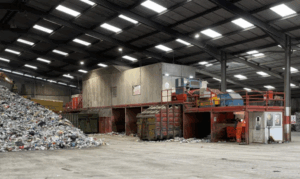
Paul McDaid, an Enfield Council employee, was working at the London Energy Ltd transfer station in Edmonton, London, on 13th May 2022 when a shovel loader reversed into him. The 58-year-old had been closing the tailgate on his tractor after tipping waste into a nearby bay, when the vehicle reversed without realizing he was there and crushed him between both vehicles. He sustained very serious injuries.

The company was undergoing major construction work and the area where the incident occurred was a temporary unit

The company was undergoing major construction work and the area where the incident occurred was a temporary unit. An investigation by the Health and Safety Executive (HSE) was not suitably risk assessed and appropriate control measures were not implemented.

The investigation also found the company had also failed to implement suitable controls to segregate pedestrians and vehicles for which detailed guidance is available. Where vehicles and pedestrians share a traffic route there must be enough separation between them. This can normally be achieved through the use of physical barriers and safe systems of work. Relevant guidance can be found here Workplace transport – HSE.

The company failed to implement suitable controls to segregate pedestrians and vehicles

London Energy Ltd of Ecopark, Advent Way, Edmonton, London, pleaded guilty to breaching Section 3(1) of the Health and Safety at Work etc. Act 1974. The company was fined £400,000 and ordered to pay £5,573 in costs at Westminster Magistrates’ Court on 27 June 2025.

HSE inspector Pippa Knott said: “Due to the failings of this company a man has been left with very serious injuries.

“They failed to segregate pedestrians and vehicles, putting both employees and council workers at risk.

“Too many workers are injured every year as a result of being struck by moving vehicles which could be avoided by implementing suitable control measures.”

The HSE prosecution was brought by HSE enforcement lawyer Rebecca Schwartz and paralegal officer Helen Hugo.


Further information:

  1. The Health and Safety Executive (HSE) is Britain’s national regulator for workplace health and safety. We are dedicated to protecting people and places, and helping everyone lead safer and healthier lives.
  2. More information about the legislation referred to in this case is available.
  3. Further details on the latest HSE news releases is available.
  4. Relevant guidance can be found here Workplace transport – HSE.
  5. HSE does not pass sentences, set guidelines or collect any fines imposed. Relevant sentencing guidelines must be followed unless the court is satisfied that it would be contrary to the interests of justice to do so.  The sentencing guidelines for health and safety offences can be found here.


Chemical manufacturer fined £100,000 after failing to protect workers from vibration risks

A West Midlands chemical manufacturer has been fined £100,000 after failing to protect employees from the health risks associated with the use of vibrating tools.

An investigation by the Health and Safety Executive (HSE) was prompted by nine reports of Hand-Arm Vibration Syndrome (HAVS) being made to the regulator.

The investigation found that workers at Robinson Brothers Ltd had been using vibrating equipment over a 14-year period without adequate measures in place to manage the risk of developing the condition.

Birmingham Magistrates’ Court heard how employees at the company’s West Bromwich site carried out a range of maintenance and civil engineering tasks using tools such as grinders and road breakers. Despite this, the company had not taken steps to properly assess or control their exposure to vibration.

HAVS is a serious condition caused by regular and prolonged use of hand-held vibrating tools. It can lead to permanent damage affecting the nerves, blood vessels, muscles and joints of the hand, wrist and arm. Symptoms can include pain, tingling, numbness and loss of strength – making everyday tasks such as fastening buttons or holding utensils difficult or impossible.

HSE inspectors found that the company’s risk assessment was neither suitable nor sufficient. Control measures, such as removing the need to use vibrating tools, using lower vibration alternatives, or limiting exposure times, had not been implemented. Health surveillance arrangements did not include checks for HAVS, and employees had not received training on the risks they faced.

HSE guidance, available here, and in the HSE publication Hand-arm vibration – The Control of Vibration at Work Regulations 2005 (L140), describes the risks to employees’ health and safety from exposure to HAVS, and sets out practical guidance to help employers fulfil their legal obligation to control these risks. It includes advice on the assessment of risk, ways to control exposure, and in-depth information about health surveillance.

Robinson Brothers Ltd, of Phoenix Street, West Bromwich, pleaded guilty to breaching Regulations 5(1), 6(1), 7(1) and 8(1) of the Control of Vibration at Work Regulations 2005. The company was fined £100,000 and ordered to pay £6,761.40 in costs at Birmingham Magistrates’ Court on Friday 27 June 2025.

HSE inspector Claire Coleman said:

“The effects of exposure to vibration can be debilitating and once damage is done, it is irreversible. The effects can make it difficult or impossible to do things like hold a pen, fasten buttons or use a knife and fork.

“It cannot be underestimated how important it is that employers take the necessary steps to ensure the health and safety of their employees should they need to use vibrating hand tools.

“The available guidance is extensive and straightforward to follow and includes tools to assist in deciding what is needed to protect employees. HSE will not hesitate to act against companies which do not do all that they should to keep employees safe.”

The prosecution was brought by HSE enforcement lawyers Edward Parton and Samantha Tiger, and paralegal officer Sarah Thomas.

Notes to Editors

  1. The Health and Safety Executive (HSE) is Britain’s national regulator for workplace health and safety. We are dedicated to protecting people and places, and helping everyone lead safer and healthier lives.
  2. More information about the legislation referred to in this case is available.
  3. Further details on the latest HSE news releases is available.
  4. Relevant guidance can be found here Hand arm vibration at work
  5. HSE does not pass sentences, set guidelines or collect any fines imposed. Relevant sentencing guidelines must be followed unless the court is satisfied that it would be contrary to the interests of justice to do so.  The sentencing guidelines for health and safety offences can be found here.


Nottingham builder spared jail after gas explosion injures worker

A Nottingham builder has avoided an immediate spell behind bars after his failures resulted in a gas explosion leaving a worker with burns so serious, he has been unable to work since.

Barry Newman, the sole trader of Foster Brother Builders, was given a 12-month suspended sentence and told to complete 240 hours of unpaid work.

Mr Newman had contracted a Nottingham man to carry out refurbishment works on a property in Bulwell. As part of those works, Newman, 58, had placed a faulty portable space heater, connected to a propane gas (LPG) cylinder, in the property’s cellar to dry out damp.

However, on 22 November 2022, a gas leak from the heater resulted in a violent explosion – causing the 51-year-old man to suffer severe burn injuries to his hands, legs, face and scalp. Footage taken by a member of the public in the immediate aftermath shows the extent of the damage caused to the property, with explosion debris also being propelled onto the pavement and residential road, putting members of the public at risk.

An investigation by the Health and Safety Executive (HSE) found that Newman failed to carry out a risk assessment and provide suitable and adequately maintained equipment for the work being undertaken.

The manufacturer’s instructions for the type of heater used clearly state that it is only for use in well-ventilated areas and that LPG cylinders should not be kept below ground. This is because the gas is heavier than air and will collect at the lower level if there is a leak. HSE guidance states that employers should ensure that work equipment is used only for operations for which, and under conditions for which, it is suitable.  Further guidance can be found here: https://www.hse.gov.uk/pubns/books/l22.htm

Barry Newman of The Quay, Beeston Marina, Nottingham pleaded guilty to breaching Regulation 4(3) of the Provision and Use of Work Equipment Regulations 1998. At Nottingham Magistrates’ Court on 19 June 2025 he was sentenced to twelve months imprisonment, suspended for two years, was ordered to complete 240 hours of unpaid work in the community, and required to pay costs of £2,000.

HSE Inspector Roy Poulter said: “This gas explosion has left one man unable to work due to the seriousness of the injuries sustained and it could have easily resulted in someone losing their life.

“This case should serve as a strong reminder to those in the building trade on the dangers of working with gas and the need to assess the risk, and just how serious both HSE and the courts take failures like this.

“HSE will take action against those who do not do all that they can to keep people safe.”

The prosecution was brought by HSE enforcement lawyer Samantha Wells.

Further information:

  1. The Health and Safety Executive (HSE) is Britain’s national regulator for workplace health and safety. We are dedicated to protecting people and places, and helping everyone lead safer and healthier lives.
  2. More information about the legislation referred to in this case is available.
  3. Further details on the latest HSE news releases is available.
  4. Relevant guidance on provision and use of work equipment can be found here: Safe use of work equipment. Provision and Use of Work Equipment Regulations 1998. Approved Code of Practice and guidance – L22
  5. HSE does not pass sentences, set guidelines or collect any fines imposed. Relevant sentencing guidelines must be followed unless the court is satisfied that it would be contrary to the interests of justice to do so.  The sentencing guidelines for health and safety offences can be found here.


Company fined after worker is crushed by car while praying

A Liverpool motor vehicle repair company has been fined after a car fell from a two-post car vehicle lift onto a worker who was praying on his break.

The court heard how the man suffered multiple serious fractures in the incident at a garage in the Kensington area of Liverpool on 23 November 2022.

The 56-year-old from Toxteth, Liverpool, was working as a mechanic at the time, at the Marvin Street premises of Car Spa & Tyres Ltd. Mr Hamad was working on a vehicle which had been raised on a two-post lift. Neither swivel arm on one of the lifting columns was locked into position, and as Mr Hamad took a break to pray, the car fell from the lift, crushing him beneath and causing multiple serious fractures.

Garage and prayer mat

He was taken to Aintree Hospital, where he was found to have a broken leg, three broken bones in his spine, five broken ribs and a broken pelvis.

HSE guidance on working safely under motor vehicles being repaired: Working under vehicles – HSE

The man spent four months in hospital because of his injuries. Almost two years later, he has been left highly dependent upon his wife, and others, to carry out even simple daily tasks. It is unlikely he will be able to work again.

An investigation by the Health and Safety Executive (HSE) found that Car Spa & Tyres Ltd, had failed to put in place a safe system of work, or to sufficiently train their staff, in the proper, and safe operation of the lifting equipment.

Lifting equipment and car

The company, of the Kensington area of Liverpool, were found guilty by the jury to breaching regulation 2(1) of the Health and Safety at Work Act 1974. It was fined £40,000 and ordered to pay £20,000 in costs at a hearing at Liverpool Magistrates’ Court on 25 June 2025.

After the hearing, HSE inspector David Bellis said:

“This was a very serious incident, and it is fortunate nobody was killed as a result.

“If Mr Hamad had been suitably trained in the use of the two-post lift, the company had a suitable system of work in place and the swivel arms had been positioned correctly and locked into place this incident would have been avoided.

“The HSE take all accidents seriously, especially those that could have been easily prevented, and will not hesitate to prosecute, whenever it is appropriate”.

The prosecution was brought by HSE enforcement lawyer Karen Park and paralegal officer Gabrielle O’Sullivan.


Notes to Editors:

  1. The Health and Safety Executive (HSE) is Britain’s national regulator for workplace health and safety. We prevent work-related death, injury and ill health through regulatory actions that range from influencing behaviours across whole industry sectors through to targeted interventions on individual businesses. These activities are supported by globally recognised scientific expertise. hse.gov.uk
  2. More about the legislation referred to in this case can be found at: www.legislation.gov.uk/
  3. HSE news releases are available at http://press.hse.gov.uk
  4. Guidance on working safely in the motor vehicle repair industry, and the safe use of lifting equipment can be found at:

L113: Safe use of lifting equipment (hse.gov.uk)

Health and safety in motor vehicle repair and associated industries (hse.gov.uk)

SIM 03/2010/02 Risk of vehicles falling from two-post vehicle lifts in motor vehicle repair (MVR) (hse.gov.uk)