Farm employee fatally injured by telehandler

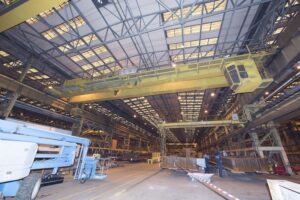
The pig barn interior

A farming partnership has been fined after a farm worker was fatally injured following an incident involving a telehandler within the pig barn.

Weston Super Mare Magistrates’ Court heard how, on 17 October 2019, Mr Andrew Denning, a self-employed farm worker, was helping with the mucking-out and animal welfare checks inside a large pig shed.

Mr Denning was working in close proximity to a telehandler, fitted with a bucket, which was scraping the muck from the floor using multiple short manoeuvres. Mr Denning was struck by telehandler and killed as it reversed.

An investigation by the Health and Safety Executive (HSE) found that C M Stone failed to ensure a safe system of work. Staff working within the shed were not adequately segregated from the machine so far as was reasonably practicable.

CM Stone of The Yards, Woolavington Puriton, Bridgwater, pleaded guilty to breaching regulation, 3(1) of the Health and Safety at Work Act.The company has been fined £53,000.00  and ordered to pay costs of £8,000.00

Speaking after the case HSE inspector William Powell commented: “The system of work used at this farm was not safe. Simple measures to keep pedestrians and large farm vehicles properly separated could have prevented Mr Denning’s death.

“Being struck by a moving vehicle has been the biggest cause of workplace fatalities on farms for several years. Farmers should properly assess their workplace transport risks and separate people and vehicles where reasonably practicable. HSE will not hesitate to take appropriate enforcement action against those that fall below the required standards”

Notes to Editors:

  1. The Health and Safety Executive (HSE) is Britain’s national regulator for workplace health and safety. We prevent work-related death, injury and ill health through regulatory actions that range from influencing behaviours across whole industry sectors through to targeted interventions on individual businesses. These activities are supported by globally recognised scientific expertise. hse.gov.uk[1]
  2. More about the legislation referred to in this case can be found at: legislation.gov.uk/ [2]
  3. HSE news releases are available at http://press.hse.gov.uk


Contractor sentenced after asbestos disturbance in public park

A contractor has been awarded 100 hours community service and 10 days Rehabilitation Activity following a conviction of health and safety breaches after labourers disturbed asbestos and worked dangerously at height while refurbishing a disused park toilet block.

Southwark Crown Court heard how, in 2019, a charity hired a local contractor, Fahadh Rasheed, to convert a toilet block in Valentines Park, Ilford, into a community meeting centre. The work included replacing the weather-damaged roof.

Mr Rasheed employed unskilled and untrained labourers to undertake this work. The labourers disturbed a significant amount of asbestos insulation board present in the structure, spreading asbestos debris around the site.

The construction work was brought to the attention of the Health and Safety Executive (HSE) by a member of the public who observed the labourers working on the roof, without scaffolding or other control measures, to prevent them falling from height. The asbestos was later cleaned up by a licensed asbestos removal company.

An investigation by HSE found that Mr Rasheed had not carried out a refurbishment and demolition asbestos survey before work began. Furthermore, he had not ensured the workers he’d engaged had the necessary skills, knowledge and experience, including asbestos awareness training, to undertake this work.

Previously a jury had found Mr. Rasheed guilty of breaching Regulation 15.(2) of The Construction (Design and Management) (CDM) Regulations 2015. At the sentencing hearing on 6 December 2021, Mr. Rasheed was given a Community Order including 100 hours unpaid work and a 10 days Rehabilitation Activity Requirement.

After the hearing HSE inspector David King said: “This was a case of a contractor completely failing to grasp the importance of planning, managing and monitoring construction work to ensure the health and safety of construction workers. “Companies and their Directors should be aware that HSE will not hesitate to take appropriate enforcement action against those that fall below the required standards.”

Notes to editors 

  1. The Health and Safety Executive (HSE) is Britain’s national regulator for workplace health and safety. We prevent work-related death, injury and ill health. It does so through research, information and advice, promoting training; new or revised regulations and codes of practice, and working with local authority partners by inspection, investigation and enforcement. gov.uk[1]
  2. More about the legislation referred to in this case can be found at: legislation.gov.uk[2]
  3. HSE news releases are available at http://press.hse.gov.uk


Construction company in court over inadequate health and safety standards

A national construction company has been fined after an unannounced inspection by Health and Safety Executive inspectors found poor welfare standards, dangerous electrical systems and inadequate health and safety provision on site.

Liverpool Magistrates’ Court heard how concerns had been raised regarding the health and safety standards at the construction site of the former Tobacco Warehouse, Stanley Dock, Liverpool, being renovated by Abercorn Construction Limited. A site inspection found the welfare cabin used by employees to be in poor condition, containing exposed live wires and damaged electrical sockets, a mouldy dishwasher and an accumulation of rubbish both inside and outside the cabin with the potential to attract vermin.

A general site inspection found numerous uncontrolled high risks such as a damaged cable on a 400v transformer, insufficient fire alarms, a lack of fire extinguishers and signage indicating emergency routes and multiple examples of unprotected edges and openings exposing workers to risk of a fall from height. There was also inadequate pedestrian and vehicle segregation, poor order, poor lighting and the risk of exposure to live electrical conductors.

The investigation by the Health and Safety Executive (HSE) found the company had failed to effectively plan, manage and monitor the works which had resulted in these health and safety issues arising on site. These risks had already been highlighted to the company in previous written enforcement. Despite compliance being achieved, poor standards had been allowed to develop again.

Abercorn Construction Limited of 50 Bedford Street, Belfast pleaded guilty to breaching Regulation 13(1) of the Construction (Design and Management) Regulations 2015 and Regulation 6(3) of the Work at Height Regulations 2005 and was fined £77,000 and ordered to pay costs of £2,025.52.

After the hearing, HSE inspector John Padfield commented: ”This type of proactive prosecution will highlight to the industry that HSE will not hesitate to prosecute companies for repeated breaches of the law.

“Good management of health and safety on site is crucial to the successful delivery of a construction project and principal contractors have an important role in managing the risks of construction work and providing strong leadership to ensure standards are understood and followed”

Notes to Editors:

  1. The Health and Safety Executive (HSE) is Britain’s national regulator for workplace health and safety. We prevent work-related death, injury and ill health through regulatory actions that range from influencing behaviours across whole industry sectors through to targeted interventions on individual businesses. These activities are supported by globally recognised scientific expertise. www.hse.gov.uk
  2. More about the legislation referred to in this case can be found at: Managing health and safety in construction. Construction (Design and Management) Regulations 2015. Guidance on regulations L153 (hse.gov.uk) and Construction – Principal contractors: roles and responsibilities CDM 2015 (hse.gov.uk)
  3. HSE news releases are available at http://press.hse.gov.uk


HSE Chair Sarah Newton on mental health and the Working Minds campaign

HSE Chair, Sarah Newton

I remember vividly the day that the MP Charles Walker stood up in the House of Commons and declared himself proud to be a ‘practising fruitcake’ during a parliamentary debate. That poor mental health was a subject for discussion in the House seemed to be a watershed moment in itself, but what struck me most about my colleagues who shared their experience of anxiety, depression and, in Charles’s case, OCD, was that in many cases this wasn’t just an act of speaking out; this was the first time they had spoken to anybody about it.

It seems unconscionable now that less than a decade ago, the stigma and isolation that can be associated with mental health issues persisted to the extent that people would hide their distress from their employers, colleagues, friends and even members of their family.

By speaking openly about their own struggles with stress and anxiety, high-profile figures from Stephen Fry to Jesse Nelson have helped to generate a public conversation which has thankfully created a shift in attitude and neutralised that perceived shame. There is far greater recognition that taking care of our mental wellbeing is as important as maintaining our physical health.

Perhaps one of the most salient lessons we can take from the pandemic is that no matter where we work or what we do, all of us can feel mentally, emotionally and psychologically vulnerable at times. For employees in work which is insecure, low-paid or carries inherent risk, that vulnerability is often amplified. A recent survey of 40,000 workers by the charity Mind suggests that two in five employees’ mental health worsened during the pandemic. Over 17 million working days were lost last year as a result of stress, anxiety or depression. Two weeks ago the Health and Safety Executive’s (HSE) chief executive and I signalled this as a potential health and safety crisis which aside from the personal cost to workers, could potentially negatively impact on productivity and the wider economy.

For almost half a century, the HSE has worked with businesses across a range of sectors and industries to ensure all of us can go home safe and well at the end of the working day. Our Working Minds campaign is a reminder to employers that their responsibility to safeguard the health and safety of their workforce extends to psychological risks as well as physical ones – especially if they work from home. We know that small and medium-sized businesses often don’t have the resources of large corporates, so HSE has created a suite of materials including the five R’s (Reach out, Recognise, Respond, Reflect, and make it Routine), Stress Indicator tool and Talking Toolkit, which employers can use to proactively ensure the wellbeing of their workforce.

Part of this is creating a culture where workers can feel as comfortable raising issues of stress as reporting that they have gone down with flu. With our campaign partner Mind, we are encouraging people to join our network of Working Mind champions to ensure nobody needs to struggle alone and in silence. At HSE we are working hard to support our staff through the challenges many of us have faced over the past 18 months, for example by embracing flexible work patterns or giving additional support to those whose roles have become increasingly demanding through the pandemic, but we are all on this journey together and it’s important that we all share what we learn as we move forward.

Organisations of all sizes can adopt the Five Rs, which I would suggest results in another ‘R’ – resilience. Investment in the emotional and psychological resilience of any organisation’s greatest asset, its workforce, is an investment in your organisation’s success.

Through my work with my local NHS Trust, I have met many people who have experienced profound mental distress who have been supported back into work after an absence. Many have said being back in employment has given them a sense of purpose and literally been a ‘life-saver’.  The old HSE adage that “good health and safety is good for business” is as relevant today as ever; an open, supportive work environment which safeguards the mental health of its workforce can enable organisations and their employees to thrive.

Read more about the Working Minds campaign Working Minds – Work Right to keep Britain safe (campaign.gov.uk)


Exemption: pressure systems forming an enclosure for high voltage equipment

Britain’s workplace regulator has granted a legal exemption that will enable the use of more environmentally friendly gases in the electricity distribution network.


The Health and Safety Executive (HSE) exemption comes into effect today, Wednesday 1 December 2021 and is applicable to any pressure system containing an insulating and interrupting gas and forming an integral part of high voltage (HV) electrical apparatus.


The decision was made by HSE’s Product Safety and Market Surveillance Unit, which acts as a policy lead for Pressure System Safety Regulation 2000 (PSSR), after they were approached last year by the Energy Network Association, the body that represents energy suppliers in the UK.


The PSSR aims to guarantee safe design and use of pressure systems, including high voltage pressurised units, that form part of the electrical network across the UK, and that are critical to maintaining supply. Current regulations include an exception, which effectively exempts application of PSSR to high voltage apparatus which have been manufactured to remain sealed, and which contain Sulphur hexafluoride (SF6) – an extremely potent and persistent greenhouse gas, with warming potential 23,900 times that of CO2 and with atmospheric residence of up to 3,200 years.


The use of SF6 is facing increasing restrictions and potential international bans, prompting leading manufacturers to develop new designs of high voltage electrical apparatus using alternative gasses with significantly lower global warming potential.


The Energy Networks Association on behalf of the electricity network operators requested that the exception be extended to include other gases which meet the same technical and safety criteria offered by SF6.


Luke Messenger, a HSE inspector from the Product Safety and Market Surveillance Unit said:


‘’The new exemption removes a barrier to technical progress thereby facilitating the removal of SF6. It will help level the playing field amongst the network operators and will bring equipment user legislation (Pressure Systems Safety Regulations 2000) in line with product supply legislation (Pressure Equipment Safety Regulations 2016).


‘’Allowing use of alternative gasses without requiring these pressure systems to undergo through examination will also help avoid customer power outages and reduce the chance of equipment failures, in turn reducing costs that might be passed on to consumers. This decision will also contribute towards the UK’s Net Zero carbon reduction targets.’’


Alternative gasses have broadly similar properties, the equipment is designed to the same standards and is still covered by the requirements of Health and Safety Work Act and the Electricity at Work Regulations for maintenance and inspection, therefore the health and safety standards are not going to be affected.


The class exemption is of most relevance to the electricity distribution and transmission network operators represented by the Energy Network Association and the equipment manufacturers represented by BEAMA, but will equally apply to any other dutyholders operating high voltage electrical equipment containing a pressure system at the generation and consumer ends of the electricity network.


The exemption takes effect from Wednesday 1 December 2021 and will remain in force for five years, when it will be reviewed.


  1. The Health and Safety Executive (HSE) is Britain’s national regulator for workplace health and safety. It aims to reduce work-related death, injury and ill health. It does so through research, information and advice, promoting training; new or revised regulations and codes of practice, and working with local authority partners by inspection, investigation and enforcement. www.hse.gov.uk
  2. More about the exemption referred to in this notice can be found at: https://www.hse.gov.uk/pressure-systems/pssr-exemption.htm
  3. HSE news releases are available at http://press.hse.gov.uk