Company fined after operative receives fatal head injury at work

  • Worker fatally injured after becoming entangled in unguarded machinery.
  • HSE investigation found failure to prevent access to dangerous moving parts.
  • Company could have implemented recognised industry safety measures.

A South Yorkshire wire company has been sentenced following serious health and safety breaches after a worker sustained fatal injuries at its premises in Penistone.

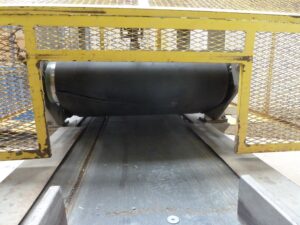
Sheffield Magistrates’ Court heard how, on 18 November 2021, an operative died after becoming entangled in an unguarded wire drawing and recoiling machine at Stanley Wire Limited’s site on Talbot Road. The machine, known as a ‘Gravity Block’, had exposed moving parts which the worker was able to access.

The machine, known as a ‘Gravity Block’

The incident resulted in the operative sustaining fatal head injuries.

An investigation by the Health and Safety Executive (HSE) found that the company had failed to take effective measures to prevent employees from accessing dangerous moving parts of the wire drawing machine. The investigation identified that the company should have carried out a suitable and sufficient risk assessment for the machine, and subsequently developed a safe system of work and clearly communicated this to its workforce.

HSE also found that fixed closed guards, interlocks or pressure mats should have been installed to prevent operatives from entering the Gravity Block while it was rotating. The company could have appointed a designated competent person on site and provided formal training to operatives, rather than relying on verbal instruction.

Recognised industry-standard safety measures could and should have been implemented on a number of machines, instead of allowing substandard conditions to persist over a prolonged period.

HSE has detailed guidance on the safe use of work equipment and machinery guarding, including the requirements under the Provision and Use of Work Equipment Regulations (PUWER), which is available at: Provision and Use of Work Equipment Regulations 1998 (PUWER) – HSE

Stanley Wire Limited, of Stanley Mills, Talbot Road, Penistone, South Yorkshire, after pleading  guilty at an early hearing of breaching Section 2(1) of the Health and Safety at Work etc Act 1974. The company was fined £140,000 and ordered to pay £6,652 in costs.

After the hearing, HSE Inspector Charlotte Bligh said:

“Following the incident, eight Prohibition Notices were served on the company. The remedial action taken demonstrated that appropriate measures, such as effective guarding, were readily available and could have been put in place had the risks associated with the activity been properly considered.

“Companies are reminded that HSE will not hesitate to take appropriate enforcement action against those that fall below the required health and safety standards.”

This HSE prosecution was brought by HSE enforcement lawyer, Matthew Reynolds and paralegal officer, Benjamin Stobbart.


Further information:

  1. The Health and Safety Executive (HSE) is Britain’s national regulator for workplace health and safety. We are dedicated to protecting people and places, and helping everyone lead safer and healthier lives.
  2. More information about the legislation referred to in this case is available.
  3. Further details on the latest HSE news releases is available.
  4. Relevant guidance can be found here: Provision and Use of Work Equipment Regulations 1998 (PUWER) – HSE
  5. HSE does not pass sentences, set guidelines or collect any fines imposed.


‘James Bond’ builder who threatened HSE inspectors found guilty

  • Unsafe work spotted by inspectors from HSE.
  • Site manager refused to co-operate and made threats of violence.
  • Inspectors had to return to site with police officers.

A builder who threatened inspectors from Britain’s workplace regulator and told them his name was James Bond has been fined.

David Robert Lane, 59, was the site manager of an extensive cottage refurbishment in Staffordshire when unsafe work caught the attention of two inspectors from the Health and Safety Executive (HSE). The pair had been carrying out routine inspections in the Rugeley area on 11 February 2025 when they saw two people on the site accessing a roof from the bucket of an excavator.

Clearly identifying the practice to be unsafe, the inspectors decided they had to stop and take action.

Inspectors took this photo of the unsafe working at height work taking place

There were around ten workers on the site and when the inspectors approached, Lane, who would later be identified as the site manager, came over to intervene. He refused to identify himself, except as James Bond, and rebuffed their attempts to inspect the site. He went on to tell the inspectors he was in fact the property owner, that the men on site were unpaid friends and relatives, and that they had no legal right to inspect. He followed that up with threats of violence, at which point the inspectors withdrew.

The two inspectors returned to the site a week later, accompanied by officers from Staffordshire Police. Site manager Lane greeted them with a shout of “It’s PC Plod!” while still refusing to identify himself. He maintained that he was the owner, told all his staff not to speak to HSE, except to confirm that they were his relatives and not at work, and told the inspectors once again that they had no right to inspect and to leave the site.

After making several enquiries, the inspectors were able to identify Lane as the site manager – this resulted in him being served with enforcement action.

Upon receiving notification that he was to be prosecuted for the offence of obstruction, under 2 counts of section 33(1)(h) of the Health and Safety at Work etc Act 1974, he responded with three expletive laden emails, and said “I won’t jump through your hoops”.

HSE defines work-related violence as ‘any incident in which a person is abused, threatened or assaulted in circumstances relating to their work’. This can include verbal abuse or threats, including face to face, online and via telephone and physical attacks. It can include violence from members of the public, customers, clients, patients, service users and students towards a person at work.

David Robert Lane, of Talbot Street, Rugeley, Staffordshire, failed to attend Birmingham Magistrates Court on two occasions, and on the latter was found guilty after being tried in his absence on 9 January. He was fined £3,000, ordered to pay full costs of £6,450 and must pay a victim surcharge of £1,200.

Speaking after the hearing, HSE inspector Gareth Langston said: “This case highlights the difficulties we face in trying to improve the health and safety of workers across Great Britain.

“HSE inspectors have an important job to do, in safeguarding the health, safety and welfare of people at work. This includes investigating incidents and securing justice for innocent workers and the families that are tragically left behind.

“We conduct more than 13,000 inspections every year and it is through this proactive engagement that we are able to advise employers on how they can improve their ways of working, we only take enforcement action when the circumstances require it.

“We accept that not all employers will be pleased to see us, but the vast majority are professional and accept us with good grace.

“HSE will not tolerate the obstruction of its inspectors, and may prosecute offenders in rare cases such as this, where this is necessary.”

This HSE prosecution was brought be enforcement lawyer Edward Parton and paralegal officer Hannah Snelling.


Further information:

  1. The Health and Safety Executive (HSE) is Britain’s national regulator for workplace health and safety. We are dedicated to protecting people and places, and helping everyone lead safer and healthier lives.
  2. More information about the legislation referred to in this case is available.
  3. Further details on the latest HSE news releases is available.
  4. HSE does not pass sentences, set guidelines or collect any fines imposed. Relevant sentencing guidelines must be followed unless the court is satisfied that it would be contrary to the interests of justice to do so.  The sentencing guidelines for health and safety offences can be found here.


Packaging company fined after worker suffers life-changing head injuries

A manufacturer of paper packaging has been fined after a worker suffered a severe skull fracture and permanent injuries when a 4.5-ton machine fell on him.

Matthew King was working for Multi Packaging Solutions UK Limited at its East Kilbride site on 31 October 2023 when he was struck on the head whilst working underneath the machine.

The 39-year-old sustained a severe skull fracture, bruising to his head and nerve damage to the left side of his face. He has been left with permanent double vision, loss of peripheral vision, facial palsy and hearing loss. He is unable to drive and has required multiple surgeries and ongoing mental health support.

Mr King was part of a team relocating the machine from a warehouse to a storage area approximately 160 metres away. The machine, which weighed approximately 4.5 tons and measured 1.56 by 4.15 metres, had no lifting or anchoring points.

Image from scene

Workers had improvised a system involving lifting the machine with a forklift, placing skates underneath, and pulling it forward. The machine had already slid off the forks on at least two occasions before the incident.

At the time of the accident, Mr King was positioned underneath the suspended machine to secure a wheel on its underside when it slid from the forks and struck him on the head.

Image from scene

An investigation by the Health and Safety Executive (HSE) found that the lifting operation had not been properly planned by a competent person. The characteristics of the load, including its weight, size, centre of gravity and lifting points, had not been adequately assessed, and no safe system of work had been put in place.

Moving a machine of this size and weight was not a regular task at the site and there was no established system of work for it.

HSE guidance on planning and organising lifting operations  states that it is important to properly resource, plan and organise lifting operations so they are carried out in a safe manner.

Multi Packaging Solutions UK Limited of Phoenix Centre, 1 Westrock Millennium Way West, Nottingham, NG8 6AW pleaded guilty to breaching Regulation 8(1)(a) and (c) of the Lifting Operations and Lifting Equipment Regulations 1998. The company was fined £433,333 and ordered to pay a victim surcharge of £32,500 at Hamilton Sheriff Court on 20 January 2026.

Image from scene

HSE inspector, Ingrid Grueso, said: “This incident was entirely preventable. The company failed to properly plan the lifting operation or implement a safe system of work.

“Mr King has been left with life-changing injuries including permanent damage to his eyesight, hearing and facial movement. He has had to sell his car as he can no longer drive safely and now relies on his wife to transport him and their three children.

“Employers must ensure that lifting operations are properly planned by a competent person and carried out safely. This is especially important for non-routine tasks involving heavy or awkward loads.”

Further Information

  1. The Health and Safety Executive (HSE) is Britain’s national regulator for workplace health and safety. We are dedicated to protecting people and places, and helping everyone lead safer and healthier lives.
  2. More information about the legislation referred to in this case is available.
  3. Further details on the latest HSE news releases is available.
  4. Relevant guidance can be found here Planning and organising lifting operations – HSE
  5. HSE does not pass sentences, set guidelines or collect any fines imposed.


Derbyshire Police prosecuted for failing to protect officers

Derbyshire Police has been fined £60,000 after several of its officers were injured when a riot training exercise went wrong.

Four serving police officers suffered burns after petrol bombs were thrown at them during the simulated exercise at a training facility in Rotherham on 2 February 2021.

An investigation into the incident by the Health and Safety Executive (HSE) found that the officers had been exposed to significant and avoidable risks during the exercise.

A burnt item of PPE being worn by officers at the time

Officers wearing flame-retardant personal protective equipment (PPE) had been required to face petrol bombs thrown by other officers as part of a training drill intended to replicate a public disorder situation.

However, it resulted in four of the 13 officers taking part sustaining burns to their lower bodies, three of whom required hospital treatment. All four have since returned to work, but the incident resulted in permanent scarring, and psychological harm which will have a lasting effect.

One of the petrol bombs used during the training exercise

The HSE investigation found that Derbyshire Constabulary had failed to properly plan and risk assess the exercise. Key failings included:

  • Failing to give officers adequate information on the lifespan, care, and inspection of the flame retardant PPE to ensure it provided adequate protection.
  • Failing to carry out a suitable and sufficient risk assessment for both the production and deployment of petrol bombs during the training.
  • Failing to implement safe systems of work to control the foreseeable risks created in the course of petrol reception training.

Derbyshire Constabulary of Butterley Hall, Ripley, Derby, pleaded guilty to breaching Section 2(1) of The Health and Safety at Work etc. Act 1974. They were fined £60,000 and ordered to pay £9,470 in costs at Sheffield Magistrates Court on 19 January 2026

After the hearing, HSE Inspector Jennifer Elsegood, said: “Being a serving police officer is a job that carries with it levels of risk, however while preparing officers for dangerous situations is important, it must never come at the expense of their safety.

“High‑risk training activities must be planned and controlled with the same care and professionalism expected in any other workplace.

“The risks created by the training should have been identified as part of the Constabulary’s risk assessments and appropriately controlled.

“We hope this case reinforces the importance of thorough risk assessment, robust equipment assurance, and safeguarding those who put themselves forward to protect the public.”

This HSE prosecution was brought by senior enforcement lawyer Robert James and paralegal officer Rebecca Withell.


Further information:

  1. The Health and Safety Executive (HSE) is Britain’s national regulator for workplace health and safety. We are dedicated to protecting people and places, and helping everyone lead safer and healthier lives.
  2. More information about the legislation referred to in this case is available.
  3. Further details on the latest HSE news releases is available.
  4. HSE does not pass sentences, set guidelines or collect any fines imposed. Relevant sentencing guidelines must be followed unless the court is satisfied that it would be contrary to the interests of justice to do so.  The sentencing guidelines for health and safety offences can be found here.



NHS Trust fined after it failed to manage hand-arm vibration risks

  • NHS Trust fined £40,000 after several employees developed serious and irreversible hand-arm vibration-related conditions.
  • The court heard how failures to assess and control vibration exposure left staff at risk of lifelong ill health.
  • One long-serving employee described losing her career, independence and financial security as a result.

An NHS Trust has been fined £40,000 after several employees were diagnosed with Hand Arm Vibration Syndrome (HAVS) and Carpal Tunnel Syndrome (CTS), following prolonged exposure to vibration from work equipment.

The Health and Safety Executive (HSE) began an investigation into Chesterfield Royal Hospital NHS Foundation Trust after an employee was diagnosed with HAVS – a serious, lifelong condition characterised by persistent numbness and tingling in the fingers, reduced sensory perception and impaired manual dexterity.

The investigation found the Trust failed to carry out a suitable and sufficient assessment of the risks posed by the use of vibrating tools. There were no records to demonstrate the level of vibration exposure employees faced, and the Trust also failed to eliminate exposure or reduce it to as low as reasonably practicable.

also, It became clear that employees had not been provided with suitable and sufficient information, instruction or training about the risks associated with vibration exposure.

HSE also identified that the Trust had failed to report that two other employees had been diagnosed with HAVS and that one employee had been diagnosed with Carpal Tunnel Syndrome (CTS).

Sally Elliott worked in the plaster-cast department for more than 25 years

One affected employee, Sally Elliott, who worked in the plaster-cast department for more than 25 years, described how she was never warned about the risks of vibration exposure.

“I never, for one minute, suspected that the issues I was experiencing were being caused by the tools I used in my workplace,” she said.

“I was never given any information on the risks of HAVS and I knew nothing about the potential symptoms.”

She went on to explain how her symptoms gradually worsened, affecting both her work and everyday life:

“Every aspect of daily life is impacted due to the numbness, weakness, pins-and-needles in my fingers and hands. From getting up to going to bed anything that I need to do with my hands is affected.”

After being diagnosed with advanced stage 3 vascular and sensorineural HAVS, she was no longer able to continue in her role and has remained off work since October 2023.

“I gave my all to Chesterfield Royal Hospital and enjoyed my job,” she added.

“I took seriously my duty of care to patients, and I feel the Trust failed in their duty of care to me. I feel let down and I am suffering the consequences through no fault of my own.”

The HSE investigation concluded that Chesterfield Royal Hospital NHS Foundation Trust failed to properly assess the risks associated with hand-arm vibration and failed to adequately control employees’ exposure.

HSE guidance clearly sets out the measures employers must take to assess and control vibration risks. Exposure should be eliminated where reasonably practicable or otherwise reduced to as low as reasonably practicable. Further guidance is available on the HSE website found here: Hand arm vibration – Control the risks

Chesterfield Royal Hospital NHS Foundation Trust, of Chesterfield Road, Calow, Chesterfield, Derbyshire, pleaded guilty to breaching Section 2(1) of the Health and Safety at Work etc. Act 1974. The Trust was fined £40,000 and ordered to pay full prosecution costs of £4,911 at Chesterfield Magistrates’ Court on 12 January 2026

HSE Inspector Muir Finlay said: “The fine imposed on the Trust should underline to all employers that expose their workers to vibration that the courts and HSE take failures to follow the regulations extremely seriously.

“HSE will not hesitate to take action against those that do not do all that they should to keep people safe and healthy at work.”

The HSE prosecution was brought by HSE enforcement lawyer Samantha Crockett and paralegal officer Stephen Grabe.


Further information

  1. The Health and Safety Executive (HSE) is Britain’s national regulator for workplace health and safety. We are dedicated to protecting people and places, and helping everyone lead safer and healthier lives.
  2. More information about the legislation referred to in this case is available.
  3. Further details on the latest HSE news releases is available.
  4. Relevant guidance can be found here.
  5. HSE does not pass sentences, set guidelines or collect any fines imposed. Relevant sentencing guidelines must be followed unless the court is satisfied that it would be contrary to the interests of justice to do so.  The sentencing guidelines for health and safety offences can be found here.