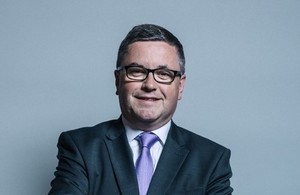
Speech: Environment Secretary speech: CLA Rural Business Conference

Introduction

I wanted to begin by reflecting on the past. The CLA has been around for around 110 years now. And as I’m sure every single person in this room knows, the CLA was originally founded following the publication of a pamphlet called the ‘Land and the Social Problem by a man called Algernon Tumor. Now, Algernon had been a private Secretary to Benjamin Disraeli when he was Prime Minister. In that pamphlet in 1907 he argued that British agriculture was going through a time of huge change. Of course the political backdrop at that time was a debate about whether or not we should pursue more free trade agreements with countries in far flung regions or whether we should integrate more closely with our European partners. And at the same time as Algernon was making the case for this period of change he also excoriated politicians for their failure to show provide sufficient leadership when it came to charting a clear course for those who own, manage and work on the land. How very different things are, 110 years on. I think the role that you in the CLA have played for over a hundred years has been wonderful. You have been leading the debate over how we use our oldest and most precious national asset – our land. In the face of social, political, economic and technological change, the CLA has always been pioneering new ideas, you have supported imaginative approaches to land management, you’ve helped us to sustain the rural economy, growing health, guaranteed employment for hundreds of thousands and you continue to shape a progressive future for the countryside.

I want to say a particular thanks to Ross Murray for his leadership and Tim Breitmeyer for his continuing leadership. You are uniquely fortunate in having two such distinguished individuals who understand the reality of the rural economy, who speak with authority and such candour to those in power and are an asset to this country and also to you, the membership of the CLA.

Even in the brief opportunity I had to mix with some of you after lunch earlier, I was again struck by the way in which CLA members lean in. The way in which CLA members embrace the future. When I was talking to Ed Barnston earlier about the work he is doing in south Cheshire I was struck by the fact that he is ambitious for the future investing in an increasing determination to grow and produce more high quality food. And when I was talking to Peverel Manners, I was struck by his desire to clock up the air miles, go out to Australia and further afield to ensure that Great British produce was on foreign kitchen tables. It is that degree of ambition for the future which has always characterised the CLA and one thing that will always be true about land ownership and land management in this country is that we need to be ambitious for the future when it comes to continuing to produce the very best food and drink in the world. Because demand for British food has never been higher.

Food and drink

Our exports now surpass £20 billion for the first time, up by nearly 10% on the last year. That growth has been built on the reputation for quality built by people in this room.

And we know, that the food chain brings £110 billion to the UK economy. Food and drink is our biggest manufacturing sector. That is why I am so delighted that in the Industrial Strategy published by my colleague Greg Clark yesterday recognised the vital importance of food and drink, with a new Food and Drink Sector Council. This Council will help pair the way for a for a food and drink sector deal in order to ensure that responsibility for effectively marketing and supporting primary producers and others is at the heart of the government’s industrial strategy.

When we talk about the industrial strategy it is important to recognise that we are not just world leaders in the way in which food and drink has grown as an export in the course of the last couple of years. We are world leaders in terms of quality. We have the world’s highest animal welfare standards, we are moving towards having the world’s most ambitious environmental goals and also embedding the most rigorous approach towards sustainability,

All these are good in themselves but it is also the case that they can provide us with an advantage in the marketplace for food and drink. Increasingly consumers – not just in this country but across the world – are demanding higher quality food. Consumers want to know more about the meat they buy, the milk they drink, the provenance of their vegetables, the carbon cost of production, the weight of the footprint left on the planet by particular farming methods and the circumstances under which animals were reared during their lives. Not to mention the way in which their lives end.

The more specific the story we can tell about the care invested in the food we produce the more we actually reinforce our competitive edge Because if we make quality our hallmark we can secure farming’s future.

So when it comes to finding an edge in an ever more competitive world of food and drink, we need to recognise its in goods recognised for their exceptional quality and special distinctive provenance that will become market leaders.

Let me give you one example. As I was searching for an example I was spoilt for choice, thinking about producers in this room who have shown how provenance and quality can give you a marketing edge. So I didn’t want to favour anyone by making them teacher’s pet. I wanted to choose an example not relevant to anyone in this room but very close to my heart. Whisky.

When I was growing up whisky was produced – in industrial quantities – using industrial methods – for an industrious population – that meant that when you bought your Whyte and Mackay or Bell’s or Black and White it was pretty much the same product, the differentiation was price.

Now, whisky is sold more and more not on the basis of price but provenance, not cost but quality. Instead of relying on industrially-produced blends, the Scottish whisky trade is moving to carefully crafted single malts, with water drawn from particular springs, peatiness inculcated from particular islands and delicate flavour notes imparted by ancient sherry or port barrels for the fastest market growth.

And Since 2000 there has been a 218% increase by volume and a 415% increase by value in malt whisky exports. The Macallan, Glenlivet, Glenfiddich, Laphroaig and others have become global brands. All by stressing their local, and artisan, origins.

I believe that by stressing the local and the distinctive, whether its lamb or beef, cheese or bacon, cider or beer, bread or jam, that products will become the best in the world. The more the story behind the product speaks of provenance and tradition, attention to quality, respect for the environment and the highest ethical standards, the bigger the commercial opportunity for all of us.

But if we are to continue to strengthen our position as a world leader in quality food production we need to concentrate not just on provenance but also on productivity.

Productivity and technology

And that means investing in the technology of the future.

Today you have already heard from the world-leading academics at Harper Adams University. On a recent visit there I saw for myself the ground-breaking work that they are undertaking.

From the fit-bit for cows that tracks their health and diet, to the ‘hands-free hectare’ technology, these latest advances will shape farming in the future and also demand of the next generation of farmers a familiarity with robotics and data analytics alongside an understanding of animal husbandry and soil health.

We are on the cusp of a new agricultural revolution.

There is a critical role for Government to play. We need to support the innovation that you will use to reshape agriculture. Scientific breakthroughs in other countries in areas as diverse as nuclear, biotech and digital have been stimulated by Government investment and government ambition.

There is no reason why Britain cannot be the world leader in drone technology, robotics, laser treatment of weeds and pests, the deployment of big data, and also responsible genomics. All of these have the capacity to improve productivity and enable environmental enhancement. And I hope to say more in coming days about how we will advance these technologies.

Of course, we already help farmers, landowners and rural entrepreneurs through the Rural Development Programme, which is supporting thousands of projects in areas as diverse as innovative cheese making and also the deployment of artificial intelligence. Funding is granted to ideas that improve productivity, generate growth and provide additional jobs in rural areas.

Today I am pleased to announce that applications for grants from a further £45 million will open this Thursday, 30th November. Grants will be awarded to projects that support business development, food processing and, in addition, rural tourism infrastructure projects.

Recently, we have also put £60 million into the Countryside Productivity scheme, which makes large grants for projects that add value to farm produce and improve farming productivity. This money can also be used to buy tools like precision slurry application equipment, which reduces ammonia emissions, delivers savings on fertiliser and ultimately helps the environment.

Tools like this are exactly what we want to support when we say you can boost productivity and enhance the environment at the same time. And that brings me to the final and most fundamental aspect of a successful rural economy: environmental stewardship.

As custodians of the landscape, farmers know, and have known for centuries what the rest of us are only just beginning to properly appreciate: without a healthy environment we have nothing.

To take just one example from many, over the last 200 years we have lost 84% of our fertile peat topsoil in East Anglia. It is estimated that what remains, unless we take action, could be eradicated in the next 30-60 years. The rate at which vast stores of carbon held in these soils is being lost is nothing short of an emergency. We know that in many cases this damage is due to the short-term thinking which governed past patterns of intensive agricultural activity.

We know that 95% of food production relies on healthy soil, antibiotics come from soil, a quarter of the world’s biodiversity comes from soil, so it is clear that we need to think and act together more sustainably. To everyone in this room, soil is a fundamental asset and its degradation costs us money. So Defra must, in its future agricultural support funding prioritise the health of our soils.

History teaches us that civilisations can survive incredible challenges. Coups, revolutions, secession from empires, all these are survivable, sometimes even beneficial, but one change is fatal. The degradation of our environment. We have only one set of natural resources. We have to protect them and manage them sustainably to make sure our children can enjoy their fruits. No country can withstand the loss of its soil.

At Defra we have made a commitment to be the first generation to leave the environment in a better state than we found it. And if we want a better environment we must protect all our habitats, enhance our biodiversity and safeguard the beauty of all our rural landscapes. And it is for that reason we said we will change the way in which we invest in our countryside. The public money which we, rightly, allocate to land owners to help them manage the land is there, ultimately, to secure public goods. And the pre-eminent public good is environmental enhancement.

We all know that the current system of support for farmers and landowners shaped by the Common Agricultural Policy is inefficient, ineffective, inequitable and environmentally harmful.

The environmental damage generated under the CAP has been striking. EU-inspired systems of agricultural production have damaged our soil.

CAP-inspired and sponsored methods of agricultural production in the UK have led to soil degradation which costs us £1.2 billion a year according to Cranfield University.

The damage is more than just towards soil. Since we joined the EU the number of farmland birds has declined by 54% while the populations of priority species overall have declined by 33%. And also, in recent years, intensive agricultural production systems of the kind driven by the CAP have reduced the numbers of pollinators. With a 49% decline in some specific bee populations, scarcely mitigated by a 29% increase in others.

All of this has happened under a system where the majority of financial support allocated to farmers and landowners has comes under “Pillar One” of the CAP and has all been related to the size of productive agricultural land-holding rather than any wider benefit.

And even though Pillar One funding has recently been changed to incorporate explicit environmental goods – the greening of CAP, the evidence that Pillar One funding encourages genuine environmental improvement is slight. In a recent paper by Alan Matthews for the RISE Foundation he pointed out that Pillar One funding had done little to improve land use.

“The maintenance of permanent grassland requirement and the crop diversification obligation have led to minimal changes in land use, and the fact that the great majority of land enrolled in EFAs is used for productive options are pointers to that the additional environmental benefits, relative to the pre-greening baseline are likely to be low”

The lion’s share of current support for land owners is, clearly, inefficiently allocated. It does not secure the public goods the public wants and needs if you want to provide resilient habitats, richer wildlife, healthier rivers and cleaner water, trees and peatland to absorb carbon and provide a home to precious species.

We do know, however, that, public money, properly allocated through agri-environment or environmental land management schemes, can secure significant gains.

Analysis of how farms in one particular set of Higher Level Stewardship schemes have done over the years are encouraging. There is no perfect single measure of biodiversity but the Farmland Bird Index is one of the best. And it has shown that in farms operating countryside stewardship schemes there has been an increase in the Farmland Bird Index of up to 165% even as the numbers nationally were in decline by 24%.

Effective environmental land management schemes can do so much to protect our countryside. It can help protect moorland and heathland, encourage tree planting and wildflower meadows, mitigate the impact of flooding and climate change, improve water quality and lock in improved soil health and fertility. But it is still the case that of the money we allocate from Defra to the CAP, only around one fifth of the goes on environmental land management schemes, around 80% goes on the inefficient and ineffective pillar one payments.

I believe that has to change. And I know that one of the major reasons why there has been such a relatively low take-up of appropriate environmental land management schemes so far has been the dreadful way in which we in Government have actually administered them. Natural England does many many good things but I have to say that Natural England and Defra scarcely deserve medals for the operation and administration of the Countryside Stewardship scheme.

That is why I have asked Andrew Sells, Natural England’s brilliant Chairman, and James Cross, The Natural England Chief Executive, working with the Rural Payments Agency, to overhaul delivery of the scheme. The first part of that reform is a simplification of the application process and the creation of four new, hopefully much more streamlined offers, which I hope will be routes to securing support. These changes will, I hope, encourage more land owners and managers to adopt stewardship schemes but I, and the leadership team at Natural England, know there is still much more to be done.

Because as everyone here knows – if we can get more investment in environmental land management schemes we can generate more economic growth. Studies of rural development spending have shown that schemes with an environmental focus have a very good return on investment, with each pound spent generating £3 in return. Natural capital analysis shows that the priority habitats which environmental land management schemes protect and enhance provide more than a billion pounds of economic benefit every year. And, of course, that investment, properly directed, also helps support food production. Wildflower margins which attract bees and other insects not only help pollination they also attract the predators who deal effectively with crop pests.

In addition, as everyone here will also know, rural tourism is a vital, and inevitably growing, element in driving rural economic growth and wise environmental land management is critical to encouraging that tourism. Whether people are drawn by the chance to see rare flora and fauna, enjoy green space, appreciate the wild and untamed, follow traditional country pursuits or go glamping within easy reach of a gastropub, the quality of the environment is a critical factor in bringing visitors, and money, into the countryside. The consultancy GHK has estimated that 60% of rural tourism is dependent on high quality landscape and wildlife, generating around 5 billion pounds a year and supporting at the moment nearly 200,000 jobs.

Conclusion

As we prepare to leave the European Union we have a once in a lifetime opportunity to refashion how the state supports farming, what we pay landowners and what we want from the land.

Government I believe has a vital role to play. It’s our role to champion food production, it’s our role to help you invest in new technology and it’s our role to pay you if you enhance the environment. Because ultimately our landscapes are beautiful and special not because the state or any Minister decrees it so but because those, you, who work on the land love what you do and where you work. Which is why we in government are grateful to all of you. Thank you.


Press release: Minister for Africa Rory Stewart in Kenya

Minister for Africa Rory Stewart visited Kenya from 27-28 November to attend the inauguration of President Uhuru Kenyatta. This was Mr Stewart’s first official visit to the country.

The Minister attended the inauguration ceremony and the official inauguration luncheon on 28 November.

In the afternoon, Mr Stewart met with President Kenyatta and passed on a message of congratulations from Prime Minister Theresa May, alongside an invitation to the Commonwealth Summit in London next year.

During productive discussions, President Kenyatta and Mr Stewart discussed the future of the wide-ranging partnership shared by the UK and Kenya. The Minister welcomed the President’s commitment to national unity, and made clear his hope that Kenya will now come together in the spirit of reconciliation, after a difficult election period.

Speaking at the end of the visit, Mr Stewart said:

I am pleased that I was able to visit Kenya and attend President Kenyatta’s inauguration. This marks the moment where Kenya can move forward after a prolonged, divisive election period in a new spirit of reconciliation. I hope that all Kenyans will recognise the need now for national dialogue and healing.

The UK has extensive and historic links with Kenya, through our business links, our development programmes, and our diasporas. This has been an opportunity to reaffirm our partnership and hear more about the ways that our two countries can work together.

Further information


Press release: Foreign Secretary hosted meeting on Yemen

The Foreign Secretary hosted a meeting on Tuesday 28 November to continue the UK’s work to find a peaceful resolution to the conflict in Yemen.

The meeting was attended by Foreign Ministers of the United Kingdom, Saudi Arabia (Adel Al Jubeir), United Arab Emirates (Sheikh Abdullah bin Zayed), Oman (Yusuf bin Alawi), the US Under Secretary of State for Political Affairs Thomas Shannon and UN Special Envoy Ismail Ould Cheikh Ahmed. The meeting of key stakeholders, known as the ‘Quint’, is part of the main, multilateral process aimed at achieving a long-term political solution to the conflict in Yemen.

Speaking ahead of the meeting, Foreign Secretary Boris Johnson said:

The UK is hosting this important forum on Yemen because it is vital that we redouble efforts to work towards a sustainable political solution to the conflict. Since the beginning of the crisis the UK has played a leading role in diplomatic efforts and we will continue to do so.

The people who are suffering most from this conflict are the people of Yemen. This is the world’s worst humanitarian crisis and largest ever cholera outbreak. The UK is the fourth largest humanitarian donor to Yemen, and we have increased our funding this year to £155 million.

I welcome the steps taken towards reopening the ports of Hodeidah and Salif and the resumption of UN flights to Sana’a airport. The UK will continue to press for humanitarian and commercial access to be restored to all ports, so that the already dire humanitarian situation does not deteriorate further. We will also be taking forward the UN-led diplomatic process, as well as reviewing the security situation including the recent attempted ballistic missile strike.

The UK is leading diplomatic and humanitarian efforts in Yemen

Yemen

A communique was issued following the meeting:

If you use assistive technology (such as a screen reader) and need a version of this document in a more accessible format, please email webmaster@digital.fco.gov.uk. Please tell us what format you need. It will help us if you say what assistive technology you use.

Further information


News story: Ben Wallace meets Tunisian Minister at the Home Office

Today, the British Minister of State for Security, Rt Hon Ben Wallace MP, and the Tunisian Minister of Relations with the Constitutional Bodies, Civil Society and Human Rights, Mr Mehdi Ben Gharbia, met in London to discuss counter-terrorism.

The meeting focused on further strengthening Tunisian-British cooperation in the shared fight against radicalisation. Both ministers deplored the global scourge of terrorism and discussed their shared desire to continue working in partnership with communities to counter the poisonous ideology that Daesh and other terrorist groups promote.

The ministers noted that their countries were built on values of democracy, respect for human rights and tolerance, and that it was these values that terrorists were attempting to challenge, by spreading hatred and division.

The Security minister welcomed Tunisia’s commitment to combating violent extremism, and was clear that the UK would continue its wide range of existing support to Tunisian efforts in this field and also further areas of cooperation, such as addressing terrorist use of the internet. Over £10m of UK programmes in 2017/18 were being directed towards supporting Tunisia, including on promoting security sector reform and collaboration on tourist protection.

Both ministers discussed the good progress made in Tunisia’s democratic transition with advancements in citizen’s rights, and also agreed that the first ever municipal elections scheduled in 2018 would help to further consolidate these democratic gains.

Speaking after his meeting with Mr Ben Gharbia, Security Minister Ben Wallace said:

The threat we face from terrorism, and particularly the evil ideology of Daesh, is a global problem. Both our countries have suffered horrendous attacks in recent years and innocent lives have been lost.

I am grateful to Mr Ben Gharbia for his commitment to combating this shared threat together. We are also in agreement on the importance of tackling the misuse of the internet by those who seek to distribute terrorist propaganda and spread their message of hate.

I congratulate Tunisia for the steps that have been taken towards improving its security situation following the appalling terrorist attacks in 2015. This played an important role in our decision to change the travel advice for Tunisia earlier this year, and I look forward to the return of British holidaymakers to the country.

The UK and Tunisia are close partners in the fight against terrorism, and we will continue to co-operate and learn from each other’s experience. We are united in our view that we must defeat terrorism together.

Speaking after the meeting, Mr Ben Gharbia added:

We are determined to continue the fight against terrorism, working closely with international partners such as the UK.

During our meeting I expressed the Tunisian government’s commitment to adopting the legal framework for the protection of human rights, in line with the Tunisian constitution of 2014.

Furthermore, I stressed that in 2018 the Tunisian Government will hold municipal elections, and complete the establishment of constitutional bodies and the constitutional court, which will ensure the sustainability of the democratic process”.


News story: Future manufacturing and infrastructure systems: apply for funds

Innovate UK is to invest up to £19 million in innovation projects across the manufacturing and materials and infrastructure systems industry sectors.

You can apply in either area, depending on your idea. Your project will need to fit the competition scope and improve business growth and productivity or create export opportunities for at least one UK small to medium-sized enterprise (SME).

Additional funding of up to £16 million is being made available for Knowledge Transfer Partnerships (KTPs), which help businesses to recruit a suitable graduate to work on an innovation project.

Innovations in infrastructure systems

The market for systems that ensure smart and resilient infrastructure is expanding.

It is driven by a global urban population that is growing by almost 60 million every year, and a demand for more adaptable infrastructure that is better integrated with social systems.

There is also £425 billion of planned UK public and private infrastructure investment through the National Infrastructure Delivery Plan 2016 to 2021. This will help to support disruptive ideas come to market more quickly.

Competition focus

In this competition we are looking for innovation projects in:

  • smart infrastructure, which adds intelligence to physical infrastructure or the design process and create improvements in wholelife cost and performance, or resilience, security and sustainability
  • urban living solutions that tackle the challenges people face in urban areas, improve user experience and lower costs. This could be:
    • ‘hard’ systems, including energy, transport, waste, water and communication
    • ‘soft’ systems, including security, law and justice (such as public order and safety), health, wellbeing, social care and education
    • ‘environmental’ systems, including green spaces and waterways
  • energy supply and systems, to improve the value, affordability and security, and reduce emissions
  • connected transport that moves people and goods more efficiently, and makes transport more secure, user-centric and accessible

The details

  • the competition is open, and the deadline for applications is 31 January 2018
  • projects should range from total costs of £25,000 to £3 million, and last between 3 months and 3 years
  • UK-based businesses of any size or research and technology organisations can lead a project
  • you could get up to 70% of your eligible project costs
  • there is a briefing event on 12 December 2017

Opportunities in manufacturing

There is a huge opportunity for businesses working on manufactured products, materials and associated services.

The UK is the ninth largest producer in the world. We have an output of $247 billion, which accounts for 3% of global manufacturing output and 11% of the nation’s GVA (gross value added). It represents 50% of exports and 69% of business research and development.

New manufacturing technologies and materials can enable new types of products or services. This can grow UK manufacturing productivity, increase material efficiency and sustain our competitiveness in the long term.

Competition focus

The aim of this competition is to encourage and broaden innovation in the manufacturing and materials sector. This may include:

  • developing more flexible and efficient processes
  • developing processes that enable faster and greater customisation of products
  • developing materials for ease of manufacture
  • addressing the manufacturing readiness of growing sectors
  • developing materials to targeted performance specifications
  • diversifying product and service lines
  • developing novel services or business models that open up new sources of revenue

It incorporates a wide range of manufacturing and materials technologies.

The details

  • the competition is open, and the deadline for applications is 31 January 2018
  • we expect projects to range between 6 months and 3 years. They should range in size from total costs of £50,000 to £2 million
  • UK-based businesses of any size or research and technology organisations can lead a project
  • you could get up to 70% of your eligible project costs
  • there is a briefing event on 12 December 2017

Applying for a KTP

There is up to £16 million available for businesses to set up KTPs across the 2 sector areas.

All disciplines and applications within infrastructure systems and manufacturing and materials will be considered for a KTP. That includes applications beyond the scope of the competitions.

As in the 2 competitions, the deadline is 31 January 2018, but the application process is different. You should speak to your local knowledge adviser, who will help you to apply.