Press release: PM’s roundtable with the aerospace industry: 26 April 2018

This morning the Prime Minister hosted a roundtable with the aerospace industry at Downing Street.

The Prime Minister opened the meeting by talking about how the aerospace industry has made a huge contribution to the UK’s economy and has real growth potential in the future. She spoke of the history of successful collaboration between the industry and government, working together through the Aerospace Growth Partnership.

The Prime Minister gave an update on Brexit, confirming that we were seeking a deep and special partnership with the European Union and reconfirming the government’s intention for the UK to remain part of the European Aviation Safety Agency after the UK leaves the EU. This was welcomed by the roundtable attendees.

They also discussed the two customs proposals put forward last summer. The Prime Minister set out the government’s firm intention for an arrangement that secures as frictionless trade as possible, avoids a hard border in Northern Ireland and allows us to set our own, independent trade policy.

The Prime Minister asked industry leaders about what more the government could do to ensure the sector remains competitive in the future and discussed the opportunities that new technologies and greater partnerships could deliver.

The roundtable finished with the Prime Minister acknowledging the significance and importance of the Farnborough International Airshow and that the government would support industry in using this opportunity to show the world that the UK is – and will remain – a leading aerospace nation.

The meeting was also attended by the Transport Secretary Chris Grayling and the Business Secretary Greg Clark who gave an update on the Industrial Strategy.
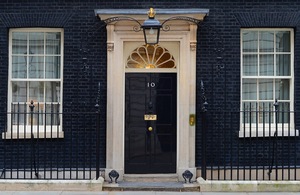


Press release: PM meeting with President Aliyez: 26 April 2018

PM meeting with President Aliyez: 26 April 2018 – GOV.UK

Prime Minister Theresa May met President Aliyez of Azerbaijan.

placeholder

A Downing Street spokesperson said:

This afternoon the Prime Minister hosted President Aliyev of Azerbaijan in Downing Street for a bilateral meeting. The Prime Minister welcomed President Aliyev and said that she was pleased that he had chosen the visit the UK so soon after his inauguration. The leaders agreed on the importance of the UK-Azerbaijan relationship and of our co-operation on issues of shared interest including regional security and energy. They noted the commercial opportunities presented by our close ties, underlined by the sixth Production Sharing Agreement between BP and SOCAR which they witnessed being signed following the meeting.

They discussed matters of regional and global security and agreed on the need to restore international norms against chemical weapons use. The Prime Minister thanked President Aliyev for Azerbaijan’s continued contributions to regional security including through its support to the NATO mission in Afghanistan. They spoke about the threat to security posed by foreign fighters returning from Syria and Iraq and agreed on the importance of continued close co-operation and information sharing between our security services.

The Prime Minister and President Aliyev discussed democracy and human rights in Azerbaijan. They agreed that the UK and Azerbaijan would continue to work to address concerns both bilaterally and through multilateral organisations in order to support sustainable development and modernisation in Azerbaijan.

Published 26 April 2018


Press release: UK gifts historic shipwrecks to Canada

Ownership of the two shipwrecks, HMS Erebus and HMS Terror, two of the most archaeologically important shipwrecks in the world, was formally transferred to the Canadian government with the signing of a Deed of Gift at a ceremony today. With this historic transfer, Inuit of Nunavut, who played a key role in their discovery, will also become joint owners of the wrecks and artefacts.

The ceremony at the Canadian Museum of History saw the Canadian Minister of Environment and Climate Change, Catherine McKenna, accept ownership of the wrecks on behalf of Canada from the UK government, represented by the British High Commissioner Susan le Jeune d’Allegeershecque CMG. Mr Torsten Diesel, from the Inuit Heritage Trust spoke of the importance of this transfer to Inuit.

The gifting is an historic milestone in the long-standing cooperation between the UK and Canada on the issue.

Defence Secretary Gavin Williamson said:

We have deep historic links with Canada and this gift is testament to our prospering relationship.

The story behind these vessels is both fascinating and incredibly important to the history of both our nations. The UK joined forces with the Canadian government and Inuit population to search for these ships for 172 years and I’m delighted they will now be protected for future generations.

The two ships, under the command of Rear-Admiral Sir John Franklin, set sail from England in 1845 on an ill-fated voyage through the Canadian Arctic to find the Northwest Passage. During the treacherous journey, the ships became trapped in thick sea ice. The crews abandoned the ships to trek overland to safety, but tragically none survived.

Despite many attempts to locate the wrecks, they proved elusive for over 172 years. In 1997, the UK and Canadian governments signed an agreement giving custody and control of the wrecks and their contents to Canada, while still remaining property of the UK.

Thanks to Inuit knowledge of the area, along with state of the art technology, Erebus was finally located in 2014 and Terror two years later in 2016 in shallow Arctic Waters.

In recognition of this momentous discovery, the British and Canadian governments jointly settled a new agreement. As of 26 April 2018, ownership of the vessels has been formally transferred to the government of Canada, and by extension, the Inuit Heritage Trust.

Artefacts from the wrecks will be available for display at museums in both countries. Currently there are examples on display at the Canadian Museum of History as part of the “Death in the Ice” exhibit.

Canadian Minister of Environment and Climate Change Catherine McKenna said:

I would like to express my deepest gratitude to the United Kingdom for this exceptional gift of the wrecks of HMS Erebus and HMS Terror and all yet-to-be discovered artifacts. Moving forward, we will work with the Inuit Heritage Trust to ensure these historic treasures are protected, and that the intriguing and expanding story of the Franklin Expedition continues to be shared with Canada and the world.


Press release: Minister hails life sciences sector as one of Britain’s great assets

Baroness Fairhead, Minister of State for Trade and Export Promotion, today (Thursday 26 April) highlighted the importance of the UK’s life sciences sector to future trade at a major pharmaceutical event.

The Association of the British Pharmaceutical Industry’s (ABPI) annual conference was attended by Britain’s leading pharma businesses, and showcased the UK’s world leading capability to develop solutions to ever changing health risks around the world.

Speaking in London, Baroness Fairhead set out how the forthcoming Export Strategy will work closely with the Department for International Trade’s Life Sciences Organisation to deliver practical support to both domestic and global businesses who use the UK as a manufacturing and export base.

The minister also detailed how a combination of top universities, research institutions and increasing government support means that the UK is a fantastic place for the sector to invest.

The UK is now one of the top 3 life sciences hubs globally, with businesses based across the country exporting more than £30 billion of goods and services last year.

Speaking at the ABPI conference today, Baroness Fairhead said:

When it comes to world trade, I know that the life sciences sector is one of Britain’s great assets – so let me promise you, the government understands how important it is to our prosperity and public health.

Our shores are the place to develop, manufacture and commercialise medicines. Our open and innovative environment has supported our world-leading research capability, established secure platforms for clinical trials, and ensures efficient access to supply chain and service partners. We are home to flying start-ups and world-beating multinationals and our regulatory standards are hailed the world over.

The government knows this and we, as a nation, are proud of our past, present and potential in this sector – and we have every intention of nurturing our industry for continued success.

UK exports of goods and services as a whole increased by 12.1% to £622 billion last year, and with the UK gearing up to leave the European Union, the Department will shortly deliver a new Export Strategy. This will set out the government’s ambition to get businesses of all sizes exporting their products.

Top 5 ways DIT supports businesses to export:

  1. great.gov.uk – export platform which lists thousands of export opportunities worth millions of pounds. It also puts firms in touch with global buyers at the click of a mouse.
  2. UK Export Finance – the UK’s export credit agency provides financial support like capital loans, to ensure no viable export deal fails due to lack of finance and insurance. UKEF has recently partnered with 5 of the UK’s biggest banks, to help small businesses easily access government-backed financial support.
  3. Face-to-face support for exporters in England – delivered via a network of around 250 International Trade Advisers (ITAs). ITAs are managed by 9 delivery partners who operate in each of the 9 English regions.
  4. Trade shows – DIT supports trade shows across the world to showcase the best of UK companies from sectors including life sciences, automotive and food and drink.
  5. Board of Trade – with representatives from the business community to be the ‘eyes and ears’ of modern businesses. It meets 4 times a year rotated around the UK guaranteeing all parts of the Union have a chance to raise the issues most important to them.


Press release: DIT supports Salisbury with export masterclasses

Small businesses in the South West received a boost this week as the Department for International Trade (DIT) Export Hub visited Salisbury to deliver several masterclasses on how to start exporting.

The visit on Wednesday came as part of day-long series of events for the South Wiltshire Business Expo, with more than 260 companies present and key note speeches from local business leaders highlighting what the region has to offer.

The visit of the Export Hub provided businesses with the tools they need to build on the success of the region, with DIT’s regional International Trade Advisers on hand to set out the key steps that companies need to consider if they want to begin their exporting journey.

Baroness Fairhead, Minister of State for Trade and Export Promotion, said:

I’m delighted to see businesses across Salisbury and the South West exporting their products to markets far and wide such as Canada, China and India.

Exporting has the power to create jobs and drive local growth, that is why we stand ready with a wide range of support such as trade missions, our award-winning credit agency UK Export Finance and great.gov.uk.

The owner of one local clothing manufacturer was delighted to attend the event. Liz Willis said:

I can’t believe these amazing opportunities exist and I wasn’t aware. It’s unbelievable that DIT are offering all of this support for free.

I’m going to go home and make contact with the International Trade Adviser straight away. I’ve been confused about distributors and agents for some time and this has provided clarity and given me something to work on which will hopefully help me export into the US.

UK exports of goods and services as a whole increased by 12.1% to £622 billion last year, and with the UK gearing up to leave the European Union, the department will shortly deliver a new Export Strategy to set out the government’s ambition to get businesses of all sizes exporting their products.

Top 5 ways DIT supports businesses to export:

  1. great.gov.uk – export platform which lists thousands of export opportunities worth millions of pounds. It also puts firms in touch with global buyers at the click of a mouse.

  2. UK Export Finance – the UK’s export credit agency provides financial support like capital loans, to ensure no viable export deal fails due to lack of finance and insurance. UKEF has recently partnered with 5 of the UK’s biggest banks, to help small businesses easily access government-backed financial support.

  3. Face-to-face support for exporters in England – delivered via a network of around 250 International Trade Advisers (ITAs). ITAs are managed by 9 delivery partners who operate in each of the 9 English regions.

  4. Trade shows – DIT supports trade shows across the world to showcase the best of UK companies from sectors including life sciences, automotive and food and drink.

  5. Board of Trade – with representatives from the business community to be the ‘eyes and ears’ of modern businesses. It meets 4 times a year rotated around the UK guaranteeing all parts of the Union have a chance to raise the issues most important to them.