Press release: School children flood in for new defences tour
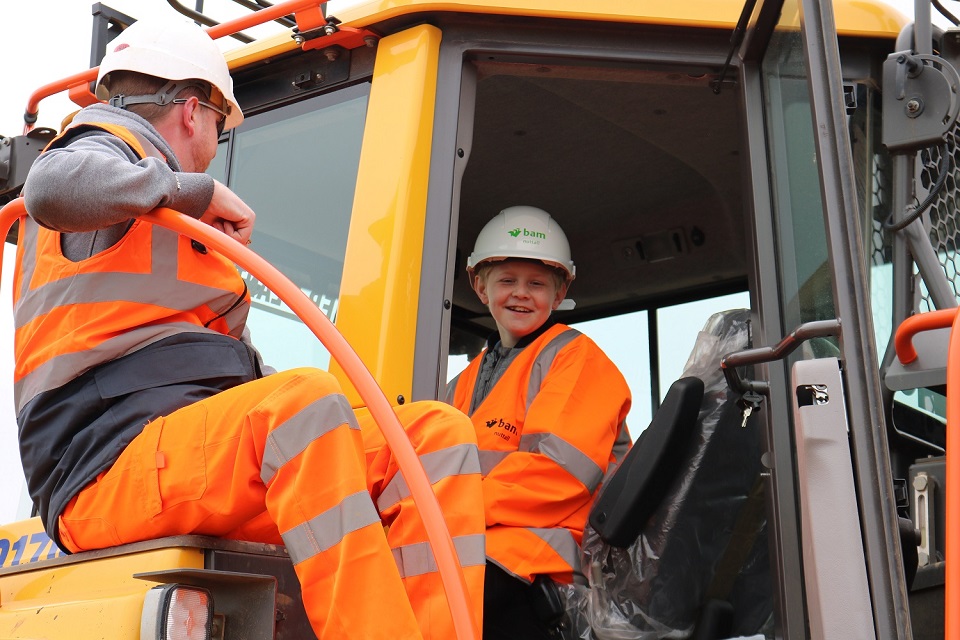
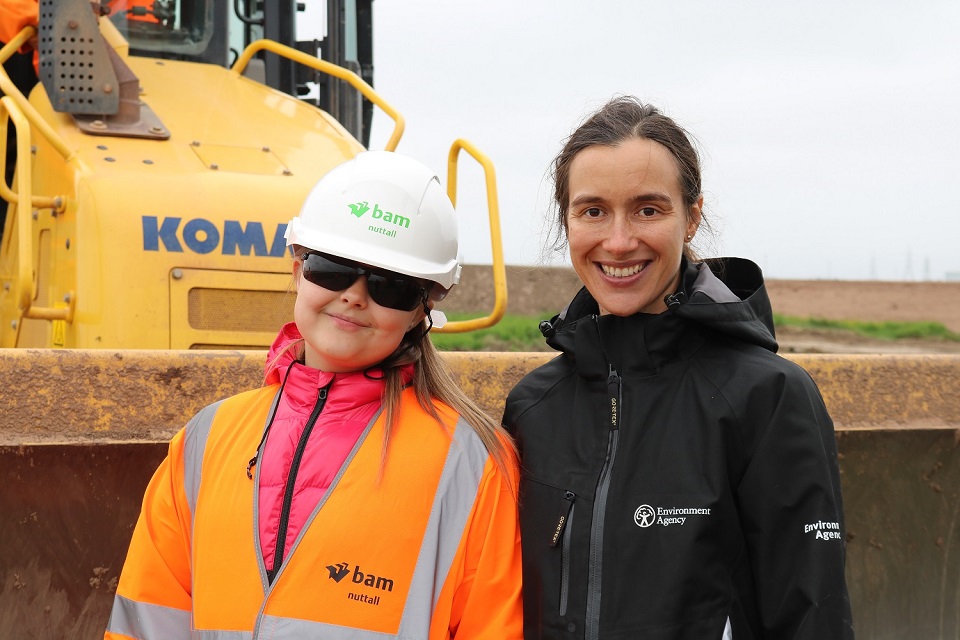
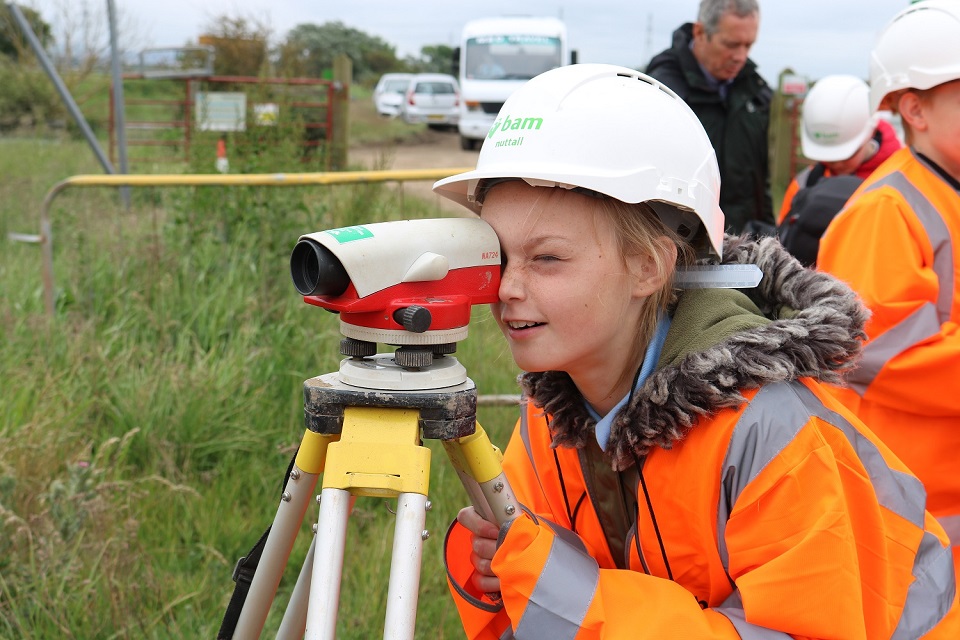
Engineers went back to school to give youngsters in Teesside a tour of new multi-million pound flood defences which protect their community from flooding.
Pupils at High Clarence Primary School were shown around the state-of-the-art £4.5million flood defences at Port Clarence which reduce the risk of flooding from the River Tees.
And they saw first-hand the £11million scheme, currently under construction, which reduces the risk of flooding from Greatham Creek and will create 30 hectares of new habitat for wildlife to thrive.
Together the projects protect 350 homes and 32 businesses at Port Clarence from flooding.
Pupils travelled on the Transporter Bridge across the River Tees to get a bird’s eye view of the flood defences, while at Greatham they got to see workers in action building new flood embankments – and even got to see the popular seals!
The event, which took place last week (Friday, 8 June), also gave local residents the opportunity to find out more about the scheme, while MP Alex Cunningham was also given an insight into how the defences work to protect his constituency.
Great project with innovative features
Phil Marshall, the Environment Agency’s Senior Advisor on the project, said:
It’s really important the community understands how the flood defences at Port Clarence work together with the scheme at Greatham Creek to reduce their risk of flooding.
It’s a great project with lots of innovative features and the added benefit of creating extra habitat for wildlife in a vital conservation area.
Our future generations will play an important role in ensuring our communities are resilient as we deal with the impacts of climate change and it was great to show the school pupils this great engineering and habitat creation project. Hopefully it will inspire them to want to make a difference!
The first phase of the project was completed in December 2015 and saw new flood defences built in Port Clarence, consisting of a mixture of earth embankments, flood walls, and a raised section of the road on the approach to the Transporter Bridge.
In addition, the Environment Agency worked together with local business Wilton Engineering to install removable steel flood defences along the River Tees. This improves flood protection while still allowing Wilton to operate from the river.
Work started on the second phase in summer 2017 and involves raising existing flood embankments along Greatham Creek.
Managed realignment
There is also a managed realignment of part of the current flood defences. This means a new embankment to the north of the RSPB Saltholme Nature Reserve has been built around a larger area of land, and then the existing flood embankment will be breached later this year.
This results in the creation of around 30 hectares of intertidal habitat to the north of the nature reserve. It’s a popular area frequented by seals, and a variety of bird species including shelduck, knot and redshank.
The Environment Agency is working with local businesses in the area, with SABIC UK providing funding towards the scheme and INOVYN ChlorVinyls providing some of their land for the additional habitat creation. Phil added:
Work is progressing well and is expected to be completed this autumn. The local businesses in the area know only too well how devastating it is to be flooded having been affected by the tidal surge in December 2013.
By working together with industry we’re vastly improving existing defences to protect residents and businesses and reduce the risk of flooding now and into the future as sea levels start to rise. This has been quite a unique partnership and I can’t emphasise enough the benefits this will bring for the area.
The Environment Agency has also been working closely with partners at RSPB and Natural England to design and build a scheme which maximises benefits for the internationally designated habitat, and to ensure disruption to wildlife and visitors to the local area is kept to a minimum.
Contractors BAM Nuttall and Mott MacDonald Joint Venture (BMMJV), are carrying out the work on behalf of the Environment Agency.
If you would like to know more about your risk of flooding and how to be prepared call Floodline on 0345 988 1188, or visit the Floods Destroy website
Press release: School children flood in for new defences tour
Engineers went back to school to give youngsters in Teesside a tour of new multi-million pound flood defences which protect their community from flooding.
Pupils at High Clarence Primary School were shown around the state-of-the-art £4.5million flood defences at Port Clarence which reduce the risk of flooding from the River Tees.
And they saw first-hand the £11million scheme, currently under construction, which reduces the risk of flooding from Greatham Creek and will create 30 hectares of new habitat for wildlife to thrive.
Together the projects protect 350 homes and 32 businesses at Port Clarence from flooding.
Pupils travelled on the Transporter Bridge across the River Tees to get a bird’s eye view of the flood defences, while at Greatham they got to see workers in action building new flood embankments – and even got to see the popular seals!
The event, which took place last week (Friday, 8 June), also gave local residents the opportunity to find out more about the scheme, while MP Alex Cunningham was also given an insight into how the defences work to protect his constituency.
Great project with innovative features
Phil Marshall, the Environment Agency’s Senior Advisor on the project, said:
It’s really important the community understands how the flood defences at Port Clarence work together with the scheme at Greatham Creek to reduce their risk of flooding.
It’s a great project with lots of innovative features and the added benefit of creating extra habitat for wildlife in a vital conservation area.
Our future generations will play an important role in ensuring our communities are resilient as we deal with the impacts of climate change and it was great to show the school pupils this great engineering and habitat creation project. Hopefully it will inspire them to want to make a difference!
The first phase of the project was completed in December 2015 and saw new flood defences built in Port Clarence, consisting of a mixture of earth embankments, flood walls, and a raised section of the road on the approach to the Transporter Bridge.
In addition, the Environment Agency worked together with local business Wilton Engineering to install removable steel flood defences along the River Tees. This improves flood protection while still allowing Wilton to operate from the river.
Work started on the second phase in summer 2017 and involves raising existing flood embankments along Greatham Creek.
Managed realignment
There is also a managed realignment of part of the current flood defences. This means a new embankment to the north of the RSPB Saltholme Nature Reserve has been built around a larger area of land, and then the existing flood embankment will be breached later this year.
This results in the creation of around 30 hectares of intertidal habitat to the north of the nature reserve. It’s a popular area frequented by seals, and a variety of bird species including shelduck, knot and redshank.
The Environment Agency is working with local businesses in the area, with SABIC UK providing funding towards the scheme and INOVYN ChlorVinyls providing some of their land for the additional habitat creation. Phil added:
Work is progressing well and is expected to be completed this autumn. The local businesses in the area know only too well how devastating it is to be flooded having been affected by the tidal surge in December 2013.
By working together with industry we’re vastly improving existing defences to protect residents and businesses and reduce the risk of flooding now and into the future as sea levels start to rise. This has been quite a unique partnership and I can’t emphasise enough the benefits this will bring for the area.
The Environment Agency has also been working closely with partners at RSPB and Natural England to design and build a scheme which maximises benefits for the internationally designated habitat, and to ensure disruption to wildlife and visitors to the local area is kept to a minimum.
Contractors BAM Nuttall and Mott MacDonald Joint Venture (BMMJV), are carrying out the work on behalf of the Environment Agency.
If you would like to know more about your risk of flooding and how to be prepared call Floodline on 0345 988 1188, or visit the Floods Destroy website
Press release: Hooligans blocked from going to World Cup
More than 1,200 troublemakers with a history of football-related disorder have been blocked from going to the World Cup after a joint operation by police and the Home Office.
The Football Banning Orders Authority (FBOA) – part of the Home Office – ordered 1,312 banned individuals who hold a passport to surrender it to police on Monday 4 and Tuesday 5 June.
The latest figures released today (Wednesday 13 June) show that forces in England and Wales have accounted for 1,254 passports.
This represents 96% of the people currently subject to football banning orders who hold a passport. Police will continue to root out the small number of outstanding passports throughout the tournament.
Police will hold the passports until the World Cup final on 15 July.
Forces throughout England and Wales have carried out enforcement action against banned individuals who failed to surrender their passports. This will continue throughout the tournament.
Minister for Policing and the Fire Service Nick Hurd said:
The World Cup is a festival of football and is no place for violence or disorder. The UK’s system of football banning orders is unique and means that people intent on causing trouble in Russia will instead be staying at home. I’m grateful to police forces for taking the necessary enforcement action to ensure that these thugs won’t be able to ruin the tournament for real fans.
Football-related arrests have fallen to an all-time low since the introduction of football banning orders in 2000.
Football banning orders are imposed by courts and can last for up to 10 years. Breaching a banning order is a criminal offence and can result in a fine of up to £5,000 and a six-month prison sentence.
In addition to the banning orders, police will be deployed at major UK ports during the World Cup to stop known troublemakers from travelling to Russia before and during the tournament. Officers will identify people likely to become involved in football-related disorder and stop them from travelling to Russia.
A UK policing delegation will travel to Russia, at the host country’s request, to work with their local counterparts to assist in ensuring a safe and trouble-free tournament for England fans.
Deputy Chief Constable Mark Roberts, the National Lead for football policing, said:
Over the past 30 years the UK has made steady progress in eradicating the behaviour of those intent on engaging in football-related violence and disorder. Ahead of the World Cup, a comprehensive policing operation has been in place across the country to account for passports of those on banning orders, which has once again seen only a handful of those outstanding. The legislation used for banning orders is the most effective of its kind, and affords us the ability to ensure the vast majority of England supporters travelling to Russia are genuine fans who simply want to enjoy the tournament.
Around 10,000 people are expected to travel from the UK to Russia to attend the World Cup.
The Foreign and Commonwealth Office (FCO) will be providing up-to-date advice for fans in Russia throughout the tournament. The latest information can be found at the FCO’s Be on the Ball website.
Notes to editors
- For media enquiries, contact the Home Office Press Office – 0207 035 3535
- Read the latest FCO travel advice for Russia
- 327 banned individuals do not hold passports. They are not required to report to police
- The Football Spectators (2018 World Cup Control Period) Order 2017 establishes a control period for the tournament that commences on 4 June (10 days before the first match) and concludes on 15 July (when the last match in the tournament is played)
- The control period empowers the FBOA to issue reporting notices to individuals subject to banning orders requiring them to surrender their passports ten days before the first match in the tournament. Passports can be collected on the last day of the tournament
- Failure to comply with a reporting notice is an offence. The maximum sentence on conviction is a six-month custodial sentence, or a fine of up to £5,000, or both. The court may also impose a further preventative football banning order
- The control period empowers police to intercept, detain and, where appropriate, prevent from travelling, any individual who has previously caused or contributed to violence and disorder provided the individual is assessed by the police as continuing to pose a risk. This prompts a banning order court hearing within 24 hours
Speech: The future of UK-Vietnam trading relationships
I’d like to firstly welcome Vice-Minister Vuong here to the UK: I’m looking forward to a valuable discussion later today. And to the PM’s trade envoy and my good friend, the Right Honourable Ed Vaizey. And thank you to the Greater Manchester Chamber of Commerce for letting us host you here.
I believe many of you are also attending the workshop the Department for International Trade is running at 10am, to show you how you can trade more effectively in Vietnam.
But I want to touch on something slightly different.
Not how you can trade, but why: why do we think you should trade with Vietnam? Why is the government so keen to support you?
It’s helpful here if we take a step back and fix our eye on the wider context.
Britain is one of the world’s natural trading nations.
Manchester itself is a great example of that – we’re barely 2 minutes’ walk from the old Free Trade Hall, which as the name suggests was literally built to celebrate the fruits of trade. I’m a great Manchester enthusiast – except for the football; I’m MP for Chelsea and Fulham.
But people often mistakenly think that’s something historical.
I’m sure those of you who work in manufacturing will have heard that annoying phrase – “why doesn’t Britain make anything anymore?”, which isn’t even true. People say the same to me about exports.
But actually, exporting is an unsung success story: and is going on right now.
In recent years we’ve leapfrogged long-term competitors, and we now export more than France and Japan.
We’re now the world’s fourth largest exporter – and the second largest exporter of services.
The figures speak for themselves: we export well over £600 billion per year.
We’ve also got more than £1.2 trillion invested abroad.
So we’re good at trade; it’s one of our strengths.
And that’s why the government is interested.
If we want a future with higher incomes and higher employment, we need to play to our strengths as a country, and seize the opportunities of free trade.
And the greatest opportunities are in countries like Vietnam.
According to the IMF, 90% of world growth in the next 10 to 15 years is going to come from outside Europe. Vietnam itself grew at nearly 7% last year.
Our trade has leapt up 22% in a single year, and that’s only going to be the start.
In politics we often slip into abstractions when we talk about the economy. But for Vietnam that has meant literally millions of people lifted out of poverty.
And it means tangible opportunities for firms like yourselves.
Because I believe that British businesses have a lot to offer Vietnam.
Our business and professional services are world-renowned.
Our firms and manufacturers are exceptionally innovative.
And that’s supported by a world-class science base – we’re ranked third worldwide for academic citations – and Manchester is one of our leaders here, the discover of graphene and home to Christies, the world-renowned cancer hospital.
To give just one example, Vietnam is a growing and popular market for British education companies, for both services and equipment; and the UK is a popular destination for Vietnamese students.
The British curriculum is the most popular choice for Vietnam’s rapidly growing international schools system, and there’s an increasing interest in vocational training partnerships in key sectors such as automotive and aviation.
That’s not a one-off – it’s replicated in sector after sector.
So trade with Vietnam is a great opportunity, and it’s one you, and other firms in the North-West and across Britain, are uniquely placed to understand.
And I can promise you that the government can and will help you with that.
Trade is one of the government’s top priorities.
For the first time ever we have a government department solely devoted to increasing international trade. We now have 4 trade ministers, and we’ve made over 160 overseas visits in less than 2 years.
And we’ll soon be publishing our new Export Strategy, to drive a step-change in our exporting.
And Vietnam is a country we want to trade more with, which is why I’m so pleased to welcome the Vice Minister here today; and why the Prime Minister appointed someone of the calibre of my friend and colleague Ed Vaizey as our trade envoy.
And the North-West is a region we want to trade more from.
That’s why the driving theme of the government’s Industrial Strategy was to increase growth outside London and the South-East.
That’s why we have the Northern Powerhouse.
I know the Vietnamese government also value regional growth, and I welcome the delegation from Quang Ninh province.
So we can help you trade – we can give you the help you need to sell overseas.
That partly means giving direct export support – UK Export Finance now has up to £2 billion in credit for the Vietnamese market – or giving advice, for instance through our Vietnam-based team of trade advisers.
But it also means supporting you to have the best market access possible.
Within the EU, we’ve been one of the strongest supporters of a Vietnam-EU trade agreement. We look forward to that being signed.
And we look forward to transitioning that trade deal as we leave, to become a UK-Vietnam Trade Deal – between the world’s fifth-largest economy and the world’s 14th most populous country.
Because trade has delivered so much to this city, and so much to both our countries.
And it can continue to flourish; I predict it will.