Speech: Modern Slavery and Homelessness conference 2018

Thank you. I’m delighted to be here. Last Wednesday was World Homelessness Day and this Thursday we’ll mark Anti-Slavery Day.

Two challenges that all too often go hand in hand. Two challenges I wish I didn’t have to speak about in 2018.

Yes, it’s a moment to think about those people without a home, those who are sleeping rough on our streets, and the tragic victims of modern slavery.

But it’s also a chance to share real solutions.

Tackling modern slavery and supporting people who find themselves homeless or sleeping rough are top priorities for this government – just as I know they are top priorities for you.

So it’s encouraging to see so many supporting partners from across the homelessness and anti-slavery sectors here today, including our Police Crime Commissioners – whose efforts are vital to this agenda.

Because working together is the only way we can hope to address these complex challenges.

Reducing homelessness

While we’re not at the levels of statutory homelessness we saw 15 years ago, there’s no denying the numbers have risen in recent years.

And we live in a one of the most advanced, inclusive and successful countries in the world. The fact we still have people without a home and people sleeping rough on our streets in 2018 should continue to shame us.

These are complex challenges. But in another respect, it’s simple. It begins with housing.

A steady home is that essential starting point for the virtuous circle which sees fewer people sleeping rough and vulnerable to trafficking.

And this government is determined to deliver the homes our country needs. We’re boosting housing supply, and as the Prime Minister has recently announced, we’re ushering in a new generation of council houses – councils can now borrow more to build more.

We’re also working with the private rented sector to explore how we can deliver longer and more secure tenancies – tipping the scales back towards the tenant.

And steady housing is at the heart of the Homelessness Reduction Act, which came into force in April this year. The Act transforms homelessness delivery, with local authorities giving extra support for more people. And crucially, at an earlier stage.

It has placed prevention at the heart of this government’s strategy to tackle homelessness.

And we are providing over £1.2 billion in funding to 2020 to address all forms of homelessness.

Rough sleeping

But we recognise there is work to do that goes beyond fixing these systemic challenges.

We also need to meet the complex needs of people who find themselves sleeping on streets in our cities, like here in Birmingham.

It needs bold and urgent action. It’s why this government has pledged to half rough sleeping in this parliament and end it for good by 2027.

And this year we’ve taken important steps. Our new Rough Sleeping Initiative brings experts from across the sector together and focuses on authorities with high levels of rough sleeping.

Funding is not only used for new bed spaces, but also for hiring dedicated staff such as outreach workers, mental health specialists and substance misuse workers.

Birmingham has received almost £1 million of Rough Sleeping Initiative funding to help people sleeping rough access the support and accommodation they need.

And the West Midlands was one of our first pilots of Housing First, with funding allocations announced by the Secretary of State at the excellent Sifa Fireside day centre in Bordesley.

Our Rough Sleeping Strategy builds on the Rough Sleeping Initiative, taking a comprehensive approach that looks at prevention, intervention and recovery.

To work, it needs us to join up across government. So we have a government-wide ministerial taskforce that works with experts from the sector on our Advisory Panel.

And I would like to take this opportunity to thank Jean Templeton and Andy Street for their support and valuable contribution to the Advisory Panel.

The strategy is providing a £100 million package to help those on the streets now, but also to begin placing the structures that will help us end rough sleeping once and for all.

It sets out 3 core pillars: preventing rough sleeping before it happens, intervening at crisis points, and helping people to recover with flexible support that meets their needs.

And fundamental to our vision of a country where no one needs to sleep rough again is promoting a rapid rehousing approach.

So people who find themselves at crisis point are swiftly helped into homes with appropriate support provided alongside. This will ensure that people can not only access the right accommodation, but sustain it.

We’ve been clear that this is just the first step. Ending rough sleeping requires concerted effort across all government departments and beyond.

Just recently, at party conference, the Prime Minister announced that there will be an increase in stamp duty paid on homes owned by those who do not pay tax in the UK.

Crucially, in recognition of the importance of the issue, the money raised will go to support rough sleeping schemes.

To show that we are committed to working on this issue in the long-term, we’ve committed to publishing annual public updates to the strategy.

We want to highlight progress we’ve made and identify new interventions needed to achieve our commitment.

Modern slavery

But we recognise there is still more to do. Our strategy highlights the clear risk of being trafficked faced by vulnerable people who are sleeping rough.

Modern slavery is a barbaric crime which destroys lives.

It’s why in government, we’re working at pace to get a comprehensive understanding of the links between modern slavery and rough sleeping.

For example, people exiting government support through the National Referral Mechanism – especially where they have no formalised immigration status – could end up being re-trafficked.

In that instance, we have extending the period for move-on support from 14 to 45 days and we will ensure drop-in hubs are accessible for victims for up to 6 months after leaving they leave support from 2020.

But that work should rightly start when they enter the National Referral Mechanism – which is why we now collect information on their housing status at the start, so we know their needs in advance.

And we’re supporting 6 pilot local authorities, including Birmingham, through our Controlling Migration Fund, to test pathways for victims moving out of support into local communities and identifying best practice.

This autumn we’ll host a roundtable with experts from homelessness and anti-slavery organisations, to build on the excellent work taking place at a regional level, such as the regional anti-slavery network here in the West Midlands.

And we’ll be providing new training packages for frontline staff, so they have the skills to support people who find themselves sleeping rough or are at risk, including how to identify and support victims of modern slavery.

And we’re working with the police, looking at evidence from the Police Transformation Fund on cases related to trafficking or exploitation of people who are homeless.

Through all this we want to build our understanding so we can best support some of the most vulnerable people in our society.

Conclusion

Because ultimately, we’re best when we’re joined up. Joined up across government, yes. But also joined up with you.

We’ll be holding ourselves to account, publishing annual refreshes of the Rough Sleeping Strategy to monitor our progress and ensure interventions remain effective and targeted.

But I have no doubt you will be holding us to account as well. And that’s only right.

Because we can all agree – no matter where you sit politically – modern slavery and homelessness have no place in our society.

As we work together on this most complex and challenging of issues, your support and expertise will continue to be invaluable, and I look forward to working with you in the years to come.

Thank you.


Press release: New training centre to keep Oxfordshire a hi-tech hotspot

Oxfordshire Advanced Skills (OAS) is a partnership between the UK Atomic Energy Authority (UKAEA) and the Science & Technology Facilities Council (STFC) to increase the number of trained technicians available to local employers.

Construction of the 3,800-square metre new OAS centre is underway at UKAEA’s Culham site, undertaken by Midas Construction Ltd. The building will welcome its first intake of apprentices in September 2019.
OAS Phase 1 has been operational and training apprentices for two years in an existing facility at Culham. The number of trainees has increased to almost 80 and there are now 16 partner employers on board. New employers sending their apprentices to OAS this year include Veolia Oxford Technologies, Oxford Instruments, Polar Technology, Valeofoods, Abbott and Satellite Applications Catapult.

The new building will be able to accommodate many more apprentices, with industry-standard equipment covering a wide range of engineering and technology disciplines. OAS is working with local businesses to ensure the facilities meet their advanced training needs.

Apprentice training at the new OAS centre (OAS Phase 2) will be provided by the MTC’s Advanced Manufacturing Training Centre (AMTC). AMTC is a state-of-the-art training centre based next to the Manufacturing Technology Centre near Coventry. It has an impressive track record in teaching not only core engineering skills but also the latest advanced manufacturing techniques being used in industry.

David Martin, the UK Atomic Energy Authority’s Chief Operating Officer – himself a former apprentice and the driving force behind OAS – said:

Oxfordshire is one of Europe’s biggest areas for science and technology, and the amount of people employed in these industries is four times the national average. We can only sustain this success if we have more skilled young people coming through, and OAS is a vital part of this skills pipeline.

The number of new starters at OAS for 2018 proves the demand exists for high quality apprenticeships in the area. The employer-led training centre we are building at Culham will allow us to greatly expand our capacity and provide more local firms with technicians who can go straight into the workplace with the skills the employer needs.

In AMTC we are partnering with one of the UK’s most forward-thinking training organisations. They will give apprentices at OAS access to new technologies and ways of working, ready for the hi-tech industries of the future.

Paul Rowlett, Managing Director of the Advanced Manufacturing Training Centre, said:

Having an insight into tomorrow’s technology gives us the ability to create training programmes and apprenticeships to equip industry with a capable workforce. We are delighted to be working with UKAEA and STFC to deliver the Oxfordshire Advanced Skills training programme. There is a clear synergy and shared vision across our organisations.

Helen Johnson, Head of Apprenticeship & Graduate Schemes at STFC said:

STFC already employs more than 80 apprentices across our laboratories and has a vibrant and growing apprenticeship programme, recruiting and training apprentices in engineering, project management, computing and ICT. They are an integral part of STFC’s skill base and this expansion of what OAS is able to offer engineering and technology apprentices is fantastic news for STFC and the many partner organisations we work with in the commercial and public sectors.

Ends

For more information contact Nick Holloway, UKAEA Media Manager – nick.holloway@ukaea.uk or 01235 466232.


Press release: New training centre to keep Oxfordshire a hi-tech hotspot

Oxfordshire Advanced Skills (OAS) is a partnership between the UK Atomic Energy Authority (UKAEA) and the Science & Technology Facilities Council (STFC) to increase the number of trained technicians available to local employers.

Construction of the 3,800-square metre new OAS centre is underway at UKAEA’s Culham site, undertaken by Midas Construction Ltd. The building will welcome its first intake of apprentices in September 2019. OAS Phase 1 has been operational and training apprentices for two years in an existing facility at Culham. The number of trainees has increased to almost 80 and there are now 16 partner employers on board. New employers sending their apprentices to OAS this year include Veolia Oxford Technologies, Oxford Instruments, Polar Technology, Valeofoods, Abbott and Satellite Applications Catapult.

The new building will be able to accommodate many more apprentices, with industry-standard equipment covering a wide range of engineering and technology disciplines. OAS is working with local businesses to ensure the facilities meet their advanced training needs.

Apprentice training at the new OAS centre (OAS Phase 2) will be provided by the MTC’s Advanced Manufacturing Training Centre (AMTC). AMTC is a state-of-the-art training centre based next to the Manufacturing Technology Centre near Coventry. It has an impressive track record in teaching not only core engineering skills but also the latest advanced manufacturing techniques being used in industry.

David Martin, the UK Atomic Energy Authority’s Chief Operating Officer – himself a former apprentice and the driving force behind OAS – said:

Oxfordshire is one of Europe’s biggest areas for science and technology, and the amount of people employed in these industries is four times the national average. We can only sustain this success if we have more skilled young people coming through, and OAS is a vital part of this skills pipeline.

The number of new starters at OAS for 2018 proves the demand exists for high quality apprenticeships in the area. The employer-led training centre we are building at Culham will allow us to greatly expand our capacity and provide more local firms with technicians who can go straight into the workplace with the skills the employer needs.

In AMTC we are partnering with one of the UK’s most forward-thinking training organisations. They will give apprentices at OAS access to new technologies and ways of working, ready for the hi-tech industries of the future.

Paul Rowlett, Managing Director of the Advanced Manufacturing Training Centre, said:

Having an insight into tomorrow’s technology gives us the ability to create training programmes and apprenticeships to equip industry with a capable workforce. We are delighted to be working with UKAEA and STFC to deliver the Oxfordshire Advanced Skills training programme. There is a clear synergy and shared vision across our organisations.

Helen Johnson, Head of Apprenticeship & Graduate Schemes at STFC said:

STFC already employs more than 80 apprentices across our laboratories and has a vibrant and growing apprenticeship programme, recruiting and training apprentices in engineering, project management, computing and ICT. They are an integral part of STFC’s skill base and this expansion of what OAS is able to offer engineering and technology apprentices is fantastic news for STFC and the many partner organisations we work with in the commercial and public sectors.

Ends

For more information contact Nick Holloway, UKAEA Media Manager – nick.holloway@ukaea.uk or 01235 466232.


Press release: Change of Her Majesty’s Ambassador to Spain during summer 2019

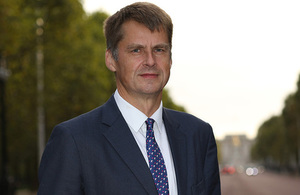
Mr Hugh Elliott has been appointed Her Majesty's Ambassador to Spain and Non-Resident Ambassador to Andorra.
Mr Hugh Elliott has been appointed Her Majesty’s Ambassador to Spain and Non-Resident Ambassador to Andorra.

Mr Hugh Elliott has been appointed Her Majesty’s Ambassador to Spain and Non-Resident Ambassador to Andorra in succession to Mr Simon Manley CMG. Mr Elliott will take up his appointment during summer 2019.

CURRICULUM VITAE

Full name: Hugh Elliott

Married to: Maria Antonia Elliott

Children: Two

2018 to present Department for Exiting the European Union, Director of Communication and Stakeholders
2017 to 2018 FCO, Director, International Agreements
2017 FCO, Director, Europe
2013 to 2017 FCO, Director of Communication
2006 to 2013 Global Head of Government Relations, previously International Relations Manager, Anglo American plc
2002 to 2006 Paris, Counsellor, Global Issues/Strategic Threats
1999 to 2002 Buenos Aires, Head of Economic, Political and Public Affairs
1998 to 1999 FCO, Deputy Head, Drugs and International Crime Directorate
1996 to 1998 FCO, Deputy Head then Head, Amsterdam Treaty Unit, EU Directorate
1991 to 1996 Madrid, Third then Second Secretary, EU/Economic
1989 to 1991 FCO, Assistant Desk Officer, East Africa Department

Further information

Published 15 October 2018


News story: Crime news: changes to submission of court appointee claims

All court appointee claims will have to be made on digital claim form CA1 from 1 January 2019.

The digital form has been used successfully since 4 June 2018 and it will be mandatory for all claims to be made this way from 1 January.

Benefits

The CA1 form:

• streamlines the billing process

• allows assessments to be completed with greater accuracy and efficiency

What you need to send

The electronic bundle must be sent for assessment in a single email containing three separate file attachments as follows:

Attachment 1 – CA1 digital claim form

Attachment 2 – copies of the s36 and s38 orders

Attachment 3 – copies of the following documents:

  1. copies of any correspondence with the defendant

  2. attendance notes

  3. invoices/receipts

  4. expert reports

  5. case summary/details of proceedings

  6. advocate’s work log and fee note

Where to find the form

The CA1 forms and accompanying guidance are listed under ‘How to claim back costs’ on this GOV.UK page:

Claims paid out of central funds

Submitting the form

You should send your claim form and electronic bundle to this email address:

courtappointee@justice.gov.uk