Correspondence: eAlert: 16 July 2018 – Changes to the Felling Licence process
Contents
- Changes to the Felling Licence application process
- FC Agent Authority form (for supporting FL applications, legacy grant claims and legacy agreement amendments)
With an aim of enabling better sustainment of the Armed Forces, LOGNET sought to retain a continuous dialogue between industry and Defence by explaining the challenges which Defence is currently seeking to solve. It highlighted emerging themes where focussed effort was being placed, with the broad spectrum of attendees from across the logistic enterprise providing a useful forum for developing ideas and exploring a breadth of views.
Major General Angus Fay CB, the Assistant Chief of the Defence Staff (Logistic Operations) opened the event with the strategic context for Defence Logistics:
Coming out of the campaigning era, logistics needed to be made fit for purpose and we have achieved that. But Defence is still transforming and we have big challenges. Currently we are supporting 32 named operations in five continents, enabling over 20 training teams, deploying a force out to Ex SAIF SAREEA in Oman later this year, and at the same time maintaining a physical Royal Navy presence in the Pacific.
From this, the question I’ve been asked is how do we make ourselves more deployable and how do we make ourselves more lethal at the far end? The answer is readiness and being materially ready. And this idea of being prepared and responsive to deploy to continental Europe, the Middle East and to the Pacific remains a major challenge for us. Trying to address these issues is why we need to continue to modernise Defence logistics.
The General’s introduction was followed by presentations from the j-Hub on how they are attempting to achieve faster procurement, an overview of the North Atlantic Treaty Organisation (NATO) Sustainment Procurement Agency and the benefits it can provide to civilian companies, and briefs from the Concept and Force Development team on potential areas of technology to conduct research and development. The remainder of the conference focussed on two key technologies that Defence Logistic intends on advancing; additive manufacture and logistic information systems. The deep dives on these areas provided useful feedback from delegates on where they could be better developed, whilst drawing together the stakeholders from Defence to create a coherent view of how they will be driven forward in a productive and efficient manner.
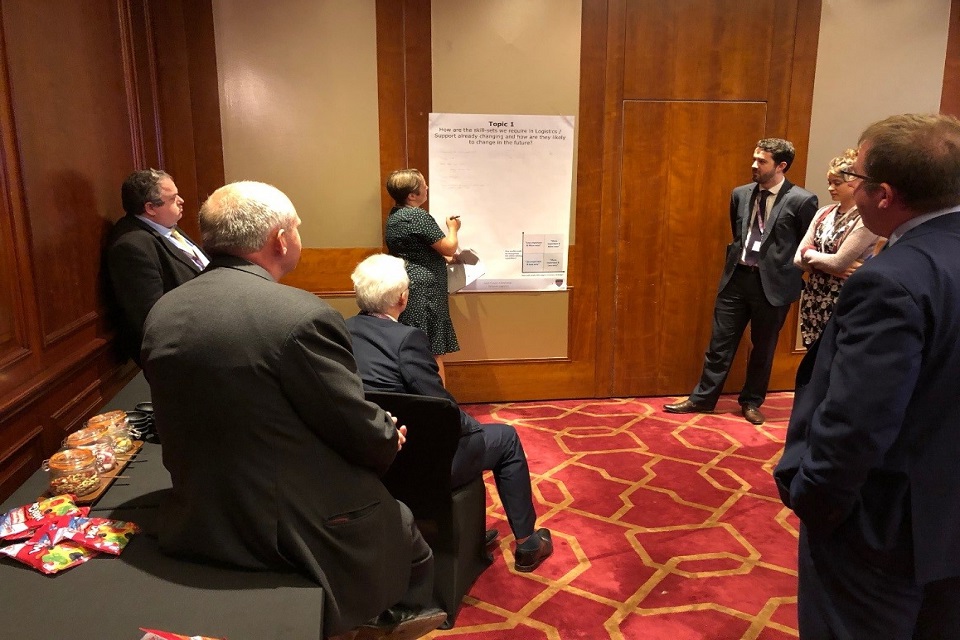
LOGNET 18-1 was fortunate to have two further keynote speeches. The first from Charles Forte, Chief Information Officer for the Ministry of Defence, opened the second day by laying out the challenges for information in the modern age of Defence. Air Vice Marshal (Retd) Matt Wiles provided a different perspective with an industry view of working with Defence, outlining Team Leidos’ success on the Logistic Commodities and Service Transformation Programme.
The outcomes of LOGNET 18-1 will be included in a report to be distributed and fed into a follow-up event later in the year.
18-2 is currently scheduled to be held on 9 October 2018 in London, and those wishing to attend can register at https://lognet18-2.eventbrite.co.uk.
If you would like further information on LOGNET or any of the information briefed at the event, please get in touch with the LOGNET team on 0207 807 8598.
With an aim of enabling better sustainment of the Armed Forces, LOGNET sought to retain a continuous dialogue between industry and Defence by explaining the challenges which Defence is currently seeking to solve. It highlighted emerging themes where focussed effort was being placed, with the broad spectrum of attendees from across the logistic enterprise providing a useful forum for developing ideas and exploring a breadth of views.
Major General Angus Fay CB, the Assistant Chief of the Defence Staff (Logistic Operations) opened the event with the strategic context for Defence Logistics:
Coming out of the campaigning era, logistics needed to be made fit for purpose and we have achieved that. But Defence is still transforming and we have big challenges. Currently we are supporting 32 named operations in five continents, enabling over 20 training teams, deploying a force out to Ex SAIF SAREEA in Oman later this year, and at the same time maintaining a physical Royal Navy presence in the Pacific.
From this, the question I’ve been asked is how do we make ourselves more deployable and how do we make ourselves more lethal at the far end? The answer is readiness and being materially ready. And this idea of being prepared and responsive to deploy to continental Europe, the Middle East and to the Pacific remains a major challenge for us. Trying to address these issues is why we need to continue to modernise Defence logistics.
The General’s introduction was followed by presentations from the j-Hub on how they are attempting to achieve faster procurement, an overview of the North Atlantic Treaty Organisation (NATO) Sustainment Procurement Agency and the benefits it can provide to civilian companies, and briefs from the Concept and Force Development team on potential areas of technology to conduct research and development. The remainder of the conference focussed on two key technologies that Defence Logistic intends on advancing; additive manufacture and logistic information systems. The deep dives on these areas provided useful feedback from delegates on where they could be better developed, whilst drawing together the stakeholders from Defence to create a coherent view of how they will be driven forward in a productive and efficient manner.
LOGNET 18-1 was fortunate to have two further keynote speeches. The first from Charles Forte, Chief Information Officer for the Ministry of Defence, opened the second day by laying out the challenges for information in the modern age of Defence. Air Vice Marshal (Retd) Matt Wiles provided a different perspective with an industry view of working with Defence, outlining Team Leidos’ success on the Logistic Commodities and Service Transformation Programme.
The outcomes of LOGNET 18-1 will be included in a report to be distributed and fed into a follow-up event later in the year.
18-2 is currently scheduled to be held on 9 October 2018 in London, and those wishing to attend can register at https://lognet18-2.eventbrite.co.uk.
If you would like further information on LOGNET or any of the information briefed at the event, please get in touch with the LOGNET team on 0207 807 8598.
Over the course of the 2017/18 academic year, the Department for Education, through the Education and Skills Funding Agency (ESFA), has piloted using School Resource Management Advisers (SRMAs). We’ve run the pilot with support from the Institute of School Business Leadership (ISBL).
Since January, SRMAs have provided impartial, expert business advice to schools and academy trusts. This includes how to make best use of their revenue and capital resources to deliver educational outcomes and contribute to whole-school improvement.
ESFA prioritises those schools/trusts that will benefit the most from this support. SRMAs then work through their financial information to identify ways to improve how they deploy staff or make more effective use of non-staff resources.
SRMAs also consider whether the trust or school uses an integrated curriculum and financial planning (ICFP) approach and how they carry this out.
So far, the results have been encouraging and SRMAs have been well received by the schools and trusts in the pilot who can see the real value of this service.
We are now in a position where we want to roll this service out more widely. To do this, we will be tendering for:
Suppliers of the management and supply contract will undertake activities including:
SRMAs must have at least 2 years’ experience of school business management or financial management. They must have a good understanding of how the school system works. Experience as an accountant, school business professional, or similar role is desirable as is specialist experience in the school sector including, but not limited to, estates management, HR and procurement.
The key activities under the accreditation contract will be to:
ESFA will be tendering for these services over the summer and expects to release the documentation later in July. We will run the tender process through the Bravo e-Procurement tool.
We will only make the tender documentation available through Bravo at the launch of the procurement.
This is an exciting opportunity. If you are interested in bidding, you can register on the Bravo e-procurement system now in advance of the tender launch.