News story: Compensation boost for northern passengers as ‘delay replay’ is extended

  • enhanced compensation package announced by rail minister
  • passengers to be able to claim for 15 minute delays instead of the current 30 minute delays or longer
  • introduction is a boost for passengers’ rights

Passengers on Northern will be eligible for enhanced compensation for train delays from this December (2018), rail minister Jo Johnson announced today (13 September 2018).

Attending the Transport for the North board in Sheffield, Mr Johnson unveiled plans by the operator to extend the existing ‘Delay Repay’ compensation scheme to include delays of 15 minutes – known as DR15 — and longer.

Currently, passengers can claim compensation if their train is at least 30 minutes late. But from the end of this year, the extended scheme will allow claims for delays of half that, meaning passengers delayed by between 15 and 29 minutes will be able to claim back compensation worth 25% of the single fare.

Department for Transport and Transport for the North, together under the rail north partnership, are working with Northern to finalise commercial terms before implementation.

Mr Johnson said:

Passengers deserve a reliable train service, and when things do go wrong it is vital that they are compensated fairly.

Extending ‘Delay Repay’ to cover 15 minute delays is a major boost for Northern passengers and we are committed to working with train companies across the network to make it as easy as possible for passengers to claim their rightful compensation.

We are investing in the biggest rail modernisation programme since Victorian times to deliver the improvements that passengers want – more space, and faster, more frequent services. Improving compensation for delays is a key part of this.

Mark Powles, Commercial Director, Northern said:

We welcome the introduction of ‘Delay Repay 15’ later this year. We are putting in place the right measures to make it as easy as possible for our customers to claim compensation for delays to their services.

David Hoggarth, Strategic Rail Director for Transport for the North, said:

This will be a welcome step forward for passengers who are inconvenienced by delays and is in addition to the previously announced special industry compensation package for those most disrupted by the May timetable changes. Our focus remains on ensuring the train operators and Network Rail continue to improve performance for passengers.

‘Delay Repay’ already exists on most train franchises, including Northern, for delays of 30 minutes, 60 minutes and 2 hours or more.

DR15 was first introduced on GTR in 2016 and is being rolled out across all other DfT franchises as contracts come up for renewal.

DfT is working with other train operators to implement DR15 at the earliest opportunity. The extension to DR15 comes on top of the compensation package announced for Northern and TransPennine Express passengers who experienced unacceptable disruption following the timetable changes earlier in the summer.


News story: Government Chemist supports FSA allergen awareness campaign

Most common types of allergenic foods

The FSA has launched a campaign, easytoask, designed to empower young people to ask food businesses about allergens when eating out, so that they can make safe choices. The campaign follows several allergy-related deaths among young people – data shows that children and young adults are disproportionately more prone to die from an allergic reaction than adults.

The Government Chemist works to support allergen management through measurement, as in the cumin and paprika cases and through knowledge transfer by publishing papers and organising dissemination events.

Michael Walker, Referee Analyst, will be giving a talk at the Anaphylaxis Campaign Corporate Conference in September on “Regulation of food allergens – before, during and after the UK’s exit from the European Union”. To know more about this event visit the Anaphylaxis Campaign website.

For more information about the work the Government Chemist does contact:

Published 13 September 2018


News story: Government Chemist supports FSA allergen awareness campaign

The FSA has launched a campaign, easytoask, designed to empower young people to ask food businesses about allergens when eating out, so that they can make safe choices. The campaign follows several allergy-related deaths among young people – data shows that children and young adults are disproportionately more prone to die from an allergic reaction than adults.

The Government Chemist works to support allergen management through measurement, as in the cumin and paprika cases and through knowledge transfer by publishing papers and organising dissemination events.

Michael Walker, Referee Analyst, will be giving a talk at the Anaphylaxis Campaign Corporate Conference in September on “Regulation of food allergens – before, during and after the UK’s exit from the European Union”. To know more about this event visit the Anaphylaxis Campaign website.

For more information about the work the Government Chemist does contact:

Government Chemist

Queens Road
Teddington
TW11 0LY


Press release: Royal approval for Kielder Salmon centre

Kielder Salmon Centre rears and releases around 360,000 juvenile salmon into the River Tyne catchment each year.

It was built in 1978 to compensate for the building of Kielder Reservoir – the biggest man-made lake in Northern Europe – which cut off around 7% of the River Tyne catchment including some of the best spawning streams for salmon.

On Wednesday 12 September the Prince of Wales was given a tour of the facility, including the new £100,000 visitor centre which is due to open to the public later this month.

The three-month refurbishment has created a more interactive experience for visitors and allows them to get up close with the salmon and other species the centre aims to protect – including the critically endangered freshwater pearl mussel.

The new visitor centre includes:

  • a natural North East river environment aquarium showcasing salmon and other local river species
  • videos revealing the behind the scenes work at the centre to protect iconic species
  • a prehistoric salmon fossil dig
  • a quiz and brass rubbings to unveil interesting information about the salmon
  • new and improved outside spaces and pearl mussel breeding beds
  • a circular salmon walk around the local area
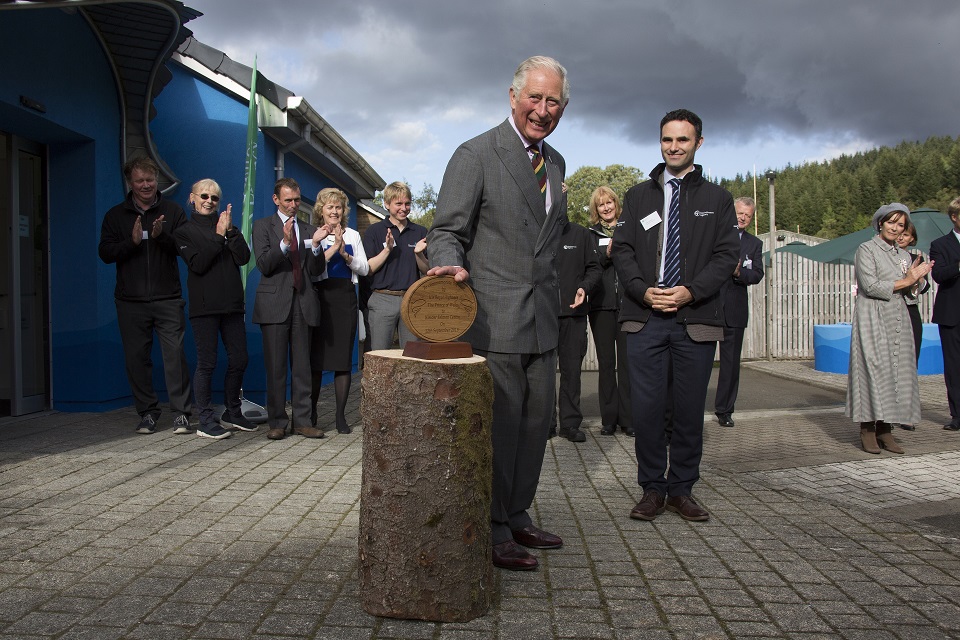
The Prince of Wales unveiling a plaque
The Prince of Wales unveils a plaque to commemorate his visit

The Environment Agency’s Richard Bond, who has been Manager of Kielder Salmon Centre since 1995, said:

We were absolutely delighted to be able to show the Prince of Wales around our conservation centre which aims to protect this incredible, iconic fish.

We also explained the innovative work we are doing to hand rear one of the UK’s most endangered species, the freshwater pearl mussel, which is absolutely vital to our river systems and in great decline.

He was interested to hear about the improvements to the River Tyne, which has gone from a heavily polluted industrial river to one of the best salmon rivers in the country thanks to improvements to water quality and conservation efforts from ourselves and our partners.

The new visitor centre has a wealth of information about the aquatic life of Northumbria and is a great way for people to understand the fascinating world that lies below the surface of the river.

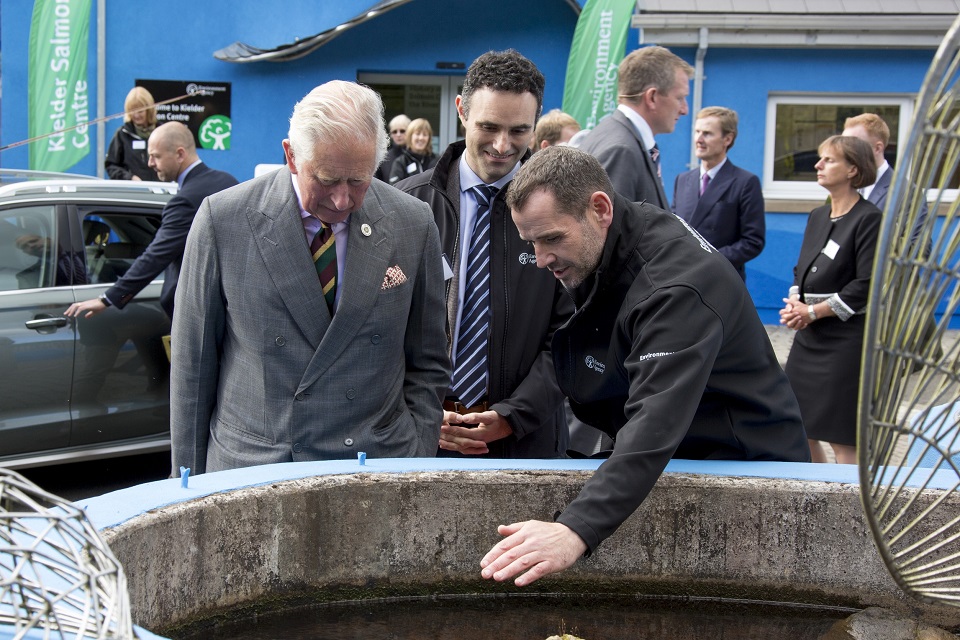
The Prince of Wales sees the adult pearl mussels
The Prince of Wales is shown the adult pearl mussels housed at the salmon centre.


Press release: Royal approval for Kielder Salmon centre

Kielder Salmon Centre rears and releases around 360,000 juvenile salmon into the River Tyne catchment each year.

It was built in 1978 to compensate for the building of Kielder Reservoir – the biggest man-made lake in Northern Europe – which cut off around 7% of the River Tyne catchment including some of the best spawning streams for salmon.

On Wednesday 12 September the Prince of Wales was given a tour of the facility, including the new £100,000 visitor centre which is due to open to the public later this month.

The three-month refurbishment has created a more interactive experience for visitors and allows them to get up close with the salmon and other species the centre aims to protect – including the critically endangered freshwater pearl mussel.

The new visitor centre includes:

  • a natural North East river environment aquarium showcasing salmon and other local river species
  • videos revealing the behind the scenes work at the centre to protect iconic species
  • a prehistoric salmon fossil dig
  • a quiz and brass rubbings to unveil interesting information about the salmon
  • new and improved outside spaces and pearl mussel breeding beds
  • a circular salmon walk around the local area
The Prince of Wales unveiling a plaque
The Prince of Wales unveils a plaque to commemorate his visit

The Environment Agency’s Richard Bond, who has been Manager of Kielder Salmon Centre since 1995, said:

We were absolutely delighted to be able to show the Prince of Wales around our conservation centre which aims to protect this incredible, iconic fish.

We also explained the innovative work we are doing to hand rear one of the UK’s most endangered species, the freshwater pearl mussel, which is absolutely vital to our river systems and in great decline.

He was interested to hear about the improvements to the River Tyne, which has gone from a heavily polluted industrial river to one of the best salmon rivers in the country thanks to improvements to water quality and conservation efforts from ourselves and our partners.

The new visitor centre has a wealth of information about the aquatic life of Northumbria and is a great way for people to understand the fascinating world that lies below the surface of the river.

The Prince of Wales sees the adult pearl mussels
The Prince of Wales is shown the adult pearl mussels housed at the salmon centre.