News story: Human Rights Council 39: UK statement for the Item 3 General Debate

Thank you, Mr Vice President,

The United Kingdom welcomes the attention given by the High Commissioner, and by this Council, to the safety of journalists. The ability to speak truth to power, to give a voice to the vulnerable and to shine a light on abuses and violations is an important element in protecting human rights.

Too often, such work is undermined by violence, intimidation and excessive restrictions. Already in 2018, an estimated 66 journalists and media workers have been killed. Over 300 have been imprisoned.

The UK continues to call for the immediate release of the two Reuters journalists sentenced to seven years’ imprisonment in Burma/Myanmar for reporting on human rights violations in Rakhine State. Their investigations revealed atrocities similar to those uncovered by the UN’s Fact Finding Mission established by this Council. The verdict has undermined both freedom of the media and the rule of law in Burma/Myanmar.

Despite ratifying the International Covenant on Civil and Political Rights, which safeguards freedom of expression, Iran continues to impose restrictions on journalists. The intimidation of BBC Persian employees and their families has rightly been condemned internationally. We call on Iran to drop the criminal charges against BBC Persian staff and cease harassment of all journalists and their families.

In Afghanistan 10 journalists lost their lives in a single day earlier this year. Another two were killed this month as they reported on an earlier attack, a stark reminder of the bravery of journalists operating in conflict environments.

In Russia, attacks on journalists continue with impunity. Activists and journalists are often faced with threats, intimidation, harassment and violence including murder.

Mr Vice President,

We call on governments to take all viable measures to ensure the safety and security of journalists and media workers, and to end the impunity for crimes against them.

Thank you Mr Vice President.


News story: Four awards in one week for Direct Rail Services

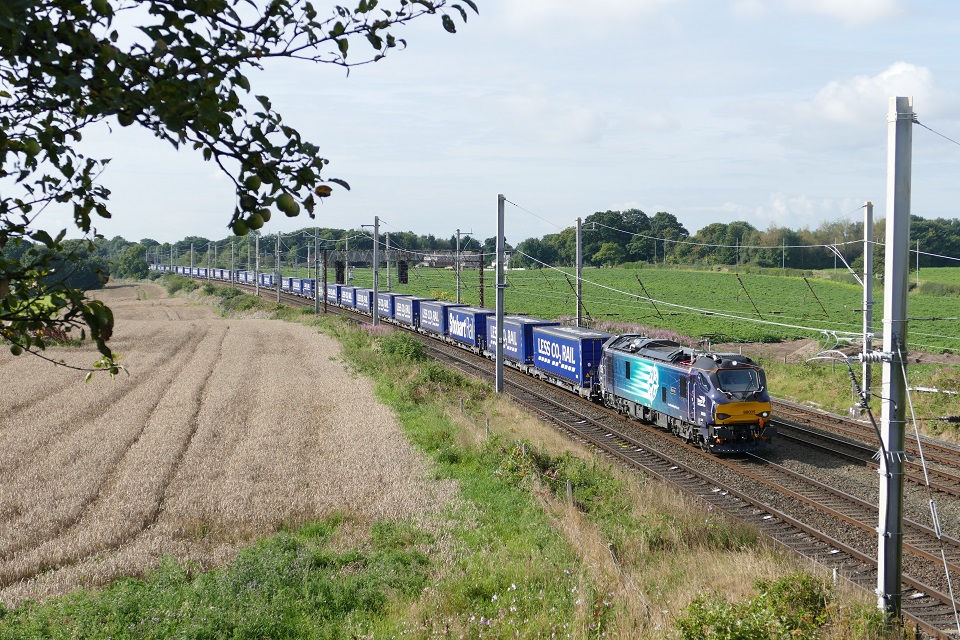
The Class 88 locomotive was described as a potential ‘game-changer’ in terms of electric freight train operation.

The Class 88, built by Stadler, is an electric locomotive that also boasts a powerful 750kW Caterpillar diesel engine which provides unrivalled flexibility allowing it to run on electrified and non-electrified parts of the rail network.

DRS, subsidiary of the Nuclear Decommissioning Authority, is using single Class 88 locomotives on its intermodal freight services which run daily between Daventry and Mossend.

Class 88s have also been used to operate DRS’s nuclear flask services nationwide, using electric power on the West and East Coast Mainlines and diesel power for long stretches of track that aren’t electrified.

The judges felt that the Class 88 has provided an excellent solution to efficient freight train operation into rail terminals. The ability to use metered electric power where available has also achieved considerable fuel cost savings.

Golborne Jn 2017 8 26 88005 0640 Daventry - Mossend Euroterminal David Clough
Golborne Jn 2017 8 26 88005 0640 Daventry – Mossend Euroterminal David Clough

This latest success comes hot on the heels of the Rail Freight Group Awards on Tuesday, where DRS received the ‘Business of the Year’ award. This accolade is presented to the company that the judges consider to be the overall best performing business in the rail freight sector.

Chris Connelly, Chief Operating Officer for DRS, said:

The DRS team is incredibly proud of the awards it has won over the past few days.

The recognition is testament to what can be achieved through effective teamwork together with huge support from our customers and suppliers. I would like to give my personal thanks to everyone involved as we look forward to many more exciting times ahead.

Judges said that DRS is a company that has shown excellence in several key areas this year and had “demonstrated a commitment to designing and implement exactly the right services for each customer, as well as introducing a very progressive staff development structure.” This had included giving office-based staff the chance to start a new career as train drivers.

Judges added:

Managing director, Debbie Francis, is at the forefront of championing the cause of rail freight in the wider business community and the role of women within the rail industry itself. The company shows an outstanding commitment to its customers, employees and the wider community.

This was not the only award on the night, DRS worked with Eddie Stobart Limited, to introduce a seasonal train in just two weeks in October 2017 to win the Customer Care Award.

DRS was also runner up in the ‘Community and Environmental Responsibility’ award for their efforts with the annual charity open day, sponsorship and donations fund and volunteer work in the community.


News story: Four awards in one week for Direct Rail Services

The Class 88 locomotive was described as a potential ‘game-changer’ in terms of electric freight train operation.

The Class 88, built by Stadler, is an electric locomotive that also boasts a powerful 750kW Caterpillar diesel engine which provides unrivalled flexibility allowing it to run on electrified and non-electrified parts of the rail network.

DRS, subsidiary of the Nuclear Decommissioning Authority, is using single Class 88 locomotives on its intermodal freight services which run daily between Daventry and Mossend.

Class 88s have also been used to operate DRS’s nuclear flask services nationwide, using electric power on the West and East Coast Mainlines and diesel power for long stretches of track that aren’t electrified.

The judges felt that the Class 88 has provided an excellent solution to efficient freight train operation into rail terminals. The ability to use metered electric power where available has also achieved considerable fuel cost savings.

Golborne Jn 2017 8 26 88005 0640 Daventry – Mossend Euroterminal David Clough

This latest success comes hot on the heels of the Rail Freight Group Awards on Tuesday, where DRS received the ‘Business of the Year’ award. This accolade is presented to the company that the judges consider to be the overall best performing business in the rail freight sector.

Chris Connelly, Chief Operating Officer for DRS, said:

The DRS team is incredibly proud of the awards it has won over the past few days.

The recognition is testament to what can be achieved through effective teamwork together with huge support from our customers and suppliers. I would like to give my personal thanks to everyone involved as we look forward to many more exciting times ahead.

Judges said that DRS is a company that has shown excellence in several key areas this year and had “demonstrated a commitment to designing and implement exactly the right services for each customer, as well as introducing a very progressive staff development structure.” This had included giving office-based staff the chance to start a new career as train drivers.

Judges added:

Managing director, Debbie Francis, is at the forefront of championing the cause of rail freight in the wider business community and the role of women within the rail industry itself. The company shows an outstanding commitment to its customers, employees and the wider community.

This was not the only award on the night, DRS worked with Eddie Stobart Limited, to introduce a seasonal train in just two weeks in October 2017 to win the Customer Care Award.

DRS was also runner up in the ‘Community and Environmental Responsibility’ award for their efforts with the annual charity open day, sponsorship and donations fund and volunteer work in the community.


Corporate report: Committee on Radioactive Waste Management (CoRWM): 14th annual report, 2017 to 2018

This report sets out CoRWM’s advice to the Department of Business, Energy and Industrial Strategy and to the devolved administrations from 1 April 2017 to 31 March 2018. It also summarises the work carried out by the committee over the year.


Press release: New outreach centre launched to help boost wildlife

A landmark new outreach centre has been officially unveiled today (14 September) at Humberhead Peatlands National Nature Reserve (NNR) in Yorkshire.

Opened by Natural England and backed by £3 million of government funding, the new outdoor laboratory facility includes an educational centre for visitors, local schools and universities helping to establish the reserve as a focal point for the local community.

Research at the site will help us understand how NNRs influence the environment way beyond their physical boundaries, boosting wildlife and providing wider benefits to society such as carbon storage and support for rural economies.

The opening of the new research centre marks the one year anniversary of the launch of an ambitious National Nature Reserve strategy, which brings together government, wildlife charities, NGOs and private landowners to help stimulate recovery across England’s native wildlife by creating conditions to enable wildlife to ‘brim over’ from nature reserves into the wider landscape.

Environment Minister, Thérèse Coffey said:

The transformation of the Humberhead from scarred industrial landscape to Britain’s single largest restored lowland peatland is a fantastic example of how by working together to restore ecological processes we can boost wildlife, improve access to the great outdoors and create new opportunities for the local economy.

Our National Nature Reserves are seen as a role model for conservation around the world and our ambitious strategy will see them flourish, helping us deliver on our ambition to leave the environment in a better state than we found it.

Over the last year the government has invested over £5 million to improve, expand and create NNRs. Natural England is committed to ensuring the future of these nationally important wildlife sites and has worked with partners to identify 80 additional priority landscapes across the country, which as they are developed, will form part of a new Nature Recovery Network of connected wildlife-rich habitats.

Representatives from the 53 conservation organisations involved in the delivery of the joint strategy, today gathered at Humberhead Peatlands NNR to reflect on the success of the programme so far.

Andy Clements, Chair of the NNR Partnership and Natural England Board member said:

The NNR Strategy builds on the solid achievements of half a century of hard work- it reinforces what we have done well, such as here on the Humber by restoring wetlands, bringing a fresh emphasis to the role of premier wildlife sites and restoring biodiversity in the wider landscapes.

This strategy forms part of the government’s 25 Year Environment Plan, which sets out how we will improve the environment for future generations by creating richer habitats for wildlife, using our land more sustainably, and connecting more people with nature. Natural England, the government’s advisor on the natural environment, is a key part of creating and delivering the plan.

Chief Executive of the Yorkshire Wildlife Trust, Rob Stoneman said:

Reconnecting people with their landscape and involving them in actions, is one of the main aims of our Landscape Partnership. Through working with 13 partner organisations, to restore and enhance 200 hectares of priority habitat, rare species will be protected including; crane, marsh harrier and nightjar.

With the NNR at its core we are connecting to other wildlife rich areas, so local people and future generations will hear the enigmatic call of the bittern or the incredible sight of a marsh harrier casting a shadow overhead.