Press release: Sex offender has sentence increased following Solicitor General’s referral

Justice
Justice

A man who sexually assaulted a teenage girl has had his sentence increased after the Solicitor General, Robert Buckland QC MP, referred his sentence to the Court of Appeal as unduly lenient.

Tony Baker, now 50, carried out a series of sexual assaults against the victim over a period of several years.

Baker was originally sentenced at Bournemouth Crown Court in August, where he was given 2 years and 3 months imprisonment. Today, after the Solicitor General’s referral, the Court of Appeal increased his sentence to 4 years imprisonment.

Commenting on the sentence increase, the Solicitor General said:

“Baker repeatedly sexually abused his victim over a number of years, robbing her of her youth. Thanks to the Court of Appeal’s decision today I am satisfied that justice has been done and seen to be done by those who have suffered at his hands.”

Published 31 October 2018


Speech: Women Mean Business speech

Good morning.

This is a really important event.

Not just because if we get the right environment and the right support we can have 1.1 billion more women entrepreneurs and £95 billion added to the UK economy by 2025.

Not just because the #metoo movement is more than just a statement of shared experience that is shouting for inclusion, but today is important for another reason too.

You are going to be hearing from some big names and some amazing business leaders today, but it is also important to think about those leaders that you won’t hear from today and will never hear from.

Like some of you, I spent some of my childhood in a single parent family. And I can tell you, you are seeing just as much physical leadership in the heart of British households as you will in any wealthy cooperation.

Don’t tell working women who are left to juggle the bread winning and the childcare about logistics and procurement.

Don’t tell these people about hard work. They are often working two or three jobs whilst keeping businesses going. We often talk about entrepreneurship as if it is always a choice but these people don’t do it because they’d like to be on the front of Forbes magazine or Fortune. They do it because they can’t.

They can’t find employers who understand flexible hours or the unique problem faced by juggling priorities with debts, they just do it themselves.

They reinvent the world one day at a time, and they do it quietly.

Financially fragile, women with multiple caring responsibilities, women whose partners careers have been the priority.

It was once said necessity was the mother of invention but it’s actually the other way around.

These entrepreneurial mothers are the invention of necessity, and I want them to thrive.

These people are resilient, resourceful and remarkable leaders and I wish our great business schools would spend more time studying them.

You don’t hear much about them because getting on social media or joining a political organisation when you are working 18 hours a day is tough.

You don’t have time to listen, or talk, or network, or come to events like this.

You only have time do what needs to be done. Remember Ginger Rogers saying that she did everything Fred Astaire did but she did it backwards and in heels?

Well these days it is more likely to be with no back up and in debt.

And for too long women have endured being at best patronised and at worst being casually insulted by a generation of men that elevated confidence to entitlement.

And so, as we call for change today and we focus on the barriers on attitudes to change and more women taking decisions in venture capital, we should also think about the conditions for success.

Did you know that the fastest growing group of entrepreneurs in the US are black women, running about 2.4 million businesses across the country?

And guess which group has the least access to capital?

Yeah, you guessed it.

And there are roughly the same percentage of women, working in, and taking decisions in venture capital in the UK as in the US – very few.

So what’s the difference, why in some parts of the United States are women entrepreneurs thriving, despite this?

Access to capital is one part, but its more so about skills, about confidence, and it’s about networks and support.

So when you listen to the amazing speakers you are going to hear today, from Mumsnet founder Justine Roberts, who built her business around her personal view that she recognised others had too.

And Mary Portas who credits her success to collaborative colleagues and networks.

And when you hear what has made a difference, such as Innovate UK’s Women in Innovation campaign, which resulted in a 70% increase in registrations for funding in female applicants.

Let us think how we can take that and translate that for the women who aren’t here today.

I am very pleased that the Treasury has announced that Alison Rose, Chief Executive Officer for RBS Private Banking, will be leading an independent review into the particular barriers faced by women entrepreneurs, and the keys to their success.

We need to do more of this and learn from other nations liked the United States.

So thank you Jo and The Telegraph for providing a platform, for us to do this.

And thank you for being here today.

Not just for yourselves, and your own businesses and your own ambitions but thousands of other women too.

Thank you.

Have a great day.



Press release: Support for young entrepreneurs

We’re proud the UK is one of the best places in Europe to start a business.

Did you know there are 5.7 million small businesses in the UK and that more than 1,000 start up every single day?

Not only that, but there are about 450,000 16-24 year olds running smaller businesses in the UK, many of whom are taking advantage of the wealth of help and support available.

The top 5 things we’re doing to support young entrepreneurs

1. Making it easier to find the right advice at the right time

Man using laptop

Gov.uk provides information on your rights and obligations and signposts sources of information and guidance:

Business Support Helpline: provides free advice to pre-start and start-ups.

2. Building an environment where entrepreneurs and small businesses can continue to thrive

Men looking at laptop

There are 38 Growth Hubs in England. They’re local places where budding business people can get help and advice from those in the know.

3. Making it easier to access finance

Man throwing notes around

Startup Loans provides start up finance and up to 12 months of mentoring support. Over £54 million worth of loans have been accessed by 18 to 24 year-olds since 2012.

Our very own British Business Bank has a new Finance Hub to put businesses in touch with finance options.

4. Working hard to make sure you get paid on time

Team studying graphs

Unfortunately some businesses make a habit out of paying invoices late, which makes things difficult for a small business. But we’re asking for your opinions on how to tackle this problem, with a consultation open until November 29. We recently introduced new laws to make it easier for small businesses to access invoice finance, providing a £1 billion long-term boost to the economy.

We set up the Office for the Small Business Commissioner to help you resolve payment disputes with larger businesses so you can concentrate on doing your job.

5. Supporting the nation’s innovators

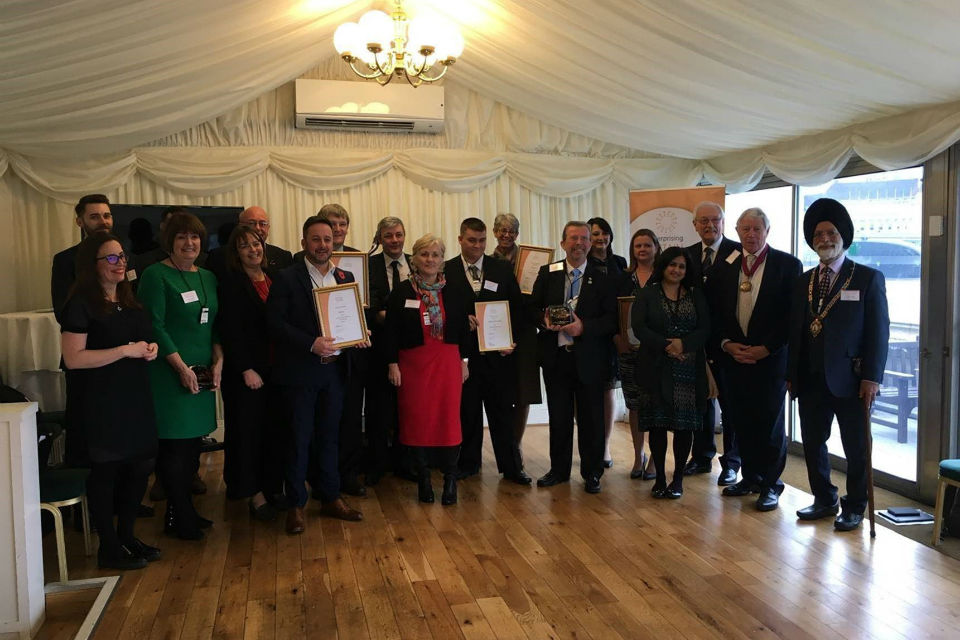
Enterprising Britain award ceremony

Our Enterprising Britain Awards 2018 honoured a range of projects that support young entrepreneurs all over the UK. These include Darwen Aldridge Community Academy, Lancashire and Teeside University where lots of good work is going on.

We are supporting and encouraging entrepreneurs by shaping an environment where they can continue to thrive. This is part of our modern Industrial Strategy. For more information, visit gov.uk.


Press release: Support for young entrepreneurs

We’re proud the UK is one of the best places in Europe to start a business.

Did you know there are 5.7 million small businesses in the UK and that more than 1,000 start up every single day?

Not only that, but there are about 450,000 16-24 year olds running smaller businesses in the UK, many of whom are taking advantage of the wealth of help and support available.

1. Making it easier to find the right advice at the right time

Gov.uk provides information on your rights and obligations and signposts sources of information and guidance:

Business Support Helpline: provides free advice to pre-start and start-ups.

2. Building an environment where entrepreneurs and small businesses can continue to thrive

There are 38 Growth Hubs in England. They’re local places where budding business people can get help and advice from those in the know.

3. Making it easier to access finance

Startup Loans provides start up finance and up to 12 months of mentoring support. Over £54 million worth of loans have been accessed by 18 to 24 year-olds since 2012.

Our very own British Business Bank has a new Finance Hub to put businesses in touch with finance options.

4. Working hard to make sure you get paid on time

Unfortunately some businesses make a habit out of paying invoices late, which makes things difficult for a small business. But we’re asking for your opinions on how to tackle this problem, with a consultation open until November 29. We recently introduced new laws to make it easier for small businesses to access invoice finance, providing a £1 billion long-term boost to the economy.

We set up the Office for the Small Business Commissioner to help you resolve payment disputes with larger businesses so you can concentrate on doing your job.

5. Supporting the nation’s innovators

Our Enterprising Britain Awards 2018 honoured a range of projects that support young entrepreneurs all over the UK. These include Darwen Aldridge Community Academy, Lancashire and Teeside University where lots of good work is going on.

We are supporting and encouraging entrepreneurs by shaping an environment where they can continue to thrive. This is part of our modern Industrial Strategy. For more information, visit gov.uk.


News story: Milestone for multibillion pound project as apprentices meet Minister for London

Apprentices taking part in a scheme set to boost the economy in south west London met Minister for London Jo Johnson today, 31 October 2018.

The minister spoke to apprentices working at the Battersea Power Station site in Wandsworth, to mark the 1000th person placed into work through the borough’s successful work match scheme.

He also visited the site of the new London Underground extension – where tunnelling works are now complete ready to extend the Northern Line to Battersea, previously backed by government investment through a £1 billion loan to the Greater London Authority.

Two new stations are being built, at Nine Elms and Battersea, with work targeted for completion in 2020.

Minister for London Jo Johnson said:

It is exciting to see first-hand the work that is going on as part of the regeneration project at Battersea – this London landmark is being put to excellent use to ensure existing neighbourhoods flourish, while attracting a wealth of new businesses to the area.

The Northern Line extension is a key part of this – we have to be ambitious for London in the decades to come and this will bring new jobs and opportunities to the area.

I enjoyed meeting some of the people who have found work through Wandsworth’s scheme, and wish them continued success in the future. This comes alongside the government’s drive to create 3 million quality apprenticeships – set to change the lives of young people and the prospects of businesses.

In total 150 apprentices have worked in construction as part of the Battersea project – in jobs ranging from crane drivers to carpenters – with more than half coming from the local community.

Wandsworth Council set up the work match scheme in 2013 to help get local residents into work, and struck up a partnership with Battersea Power Station Development Company to match local people to job vacancies.

Datuk Wong, Chairman of Battersea Power Station Development Company (BPSDC), said :

We were delighted to welcome Jo Johnson MP and Richard Graham MP to Battersea Power Station and show them the great progress being made on creating a new town centre for London.

Providing opportunities for local people is ingrained in Malaysian culture and therefore a huge priority for us, hence our involvement with Wandsworth’s Work Match programme and the establishment of the Battersea Academy of Skills Excellence (BASE). This will remain a key focus throughout the lifetime of this project and long after the regeneration of the area has completed.

This is such an iconic landmark that Malaysians are very proud to have invested in. Not only are we entrusted to restore the Power Station to its former glory but we are also committed to delivering a world-class destination for all to enjoy.

Leader of Wandsworth Council, Cllr Ravi Govindia, said:

We are incredibly proud of what the team at work match has done for our residents – to have put 1,000 Wandsworth people into employment is an incredible achievement.

As the range of jobs available in the Nine Elms area grows and changes with new shops and hospitality businesses opening up, we have found that businesses really trust work match to provide them with excellent candidates.

The minister was accompanied during the visit by Richard Graham MP, Special Envoy to Malaysia – to discuss Malaysian investment in the project. The Power Station site is owned by a consortium of Malaysian investors, demonstrating that the UK is open for business as we leave the EU.

During the visit, the minister also heard about the Battersea Academy of Skills Excellence (BASE), a jobs and training service created for people living locally, which was launched in 2016. It is focused on matching people with jobs at Battersea as well as providing training relevant to the work needed to make the development a reality.

The government is working to create 3 million quality apprenticeships that will change the lives of apprentices and the prospects of businesses. We are making apprenticeships longer, with more off-the job training and proper assessment at the end.