News story: North Star report and flyer published

MAIB’s report on a man overboard from the fishing vessel North Star on 5 February 2018 with the loss of 1 life, is now published.

The report contains details of what happened, the subsequent actions taken and recommendations made: read more.

A safety flyer to the fishing industry summarising the accident and detailing the safety lessons learned, has also been produced.

Press enquiries


Press release: UK aid to protect 7,000 Commonwealth veterans of the British Armed Forces from extreme poverty

Over 7,000 veterans of the Commonwealth who served the British Armed Forces will receive two meals a day through UK aid, International Development Secretary Penny Mordaunt confirmed today.

The programme will be delivered through the Royal Commonwealth Ex-Services League, a charity which has been supporting those such veterans who served The British Crown for almost 100 years.

Joseph Hammond, 91, a Commonwealth veteran from Ghana who fought for Britain in Burma during WWII

The new Department for International Development (DFID) programme will provide regular cash transfers to Commonwealth veterans and their widows and widowers in more than 30 countries to prevent them from going hungry.

Secretary of State for International Development Penny Mordaunt said:

We owe a tremendous amount to these Commonwealth Veterans. The British public would be shocked to know that those who have served alongside our Armed Forces would be living in such poverty.

It is absolutely right to make this commitment. I think the British public would approve of us pledging this support because of the sacrifices the Commonwealth Veterans have made and because of the debt of gratitude we owe to them.

Today’s announcement follows a commitment in June by DFID to design a programme to support pre-independence war veterans.

RCEL Deputy Grand President and former Chief of Defence Staff, Lord Richards of Herstmonceux GCB CBE DSO, said:

We owe a great debt to the service men and women of the Commonwealth who served in the British Armed Forces in the Second World War and afterwards prior to their countries’ independence.

This grant will help the RCEL ensure that these brave men and women are sustained and cared for in their twilight years. As important, it will let them know that they have not been forgotten and their service and sacrifice is remembered.

Without this support, the 4,500 veterans and 2,500 widows would be unable to secure the equivalent of one-meal-a-day. UK aid will mean that those who served in the British Armed Forces across the Commonwealth pre-independence will not live their later years in poverty.

Some of the veterans eligible for support through UK aid include:

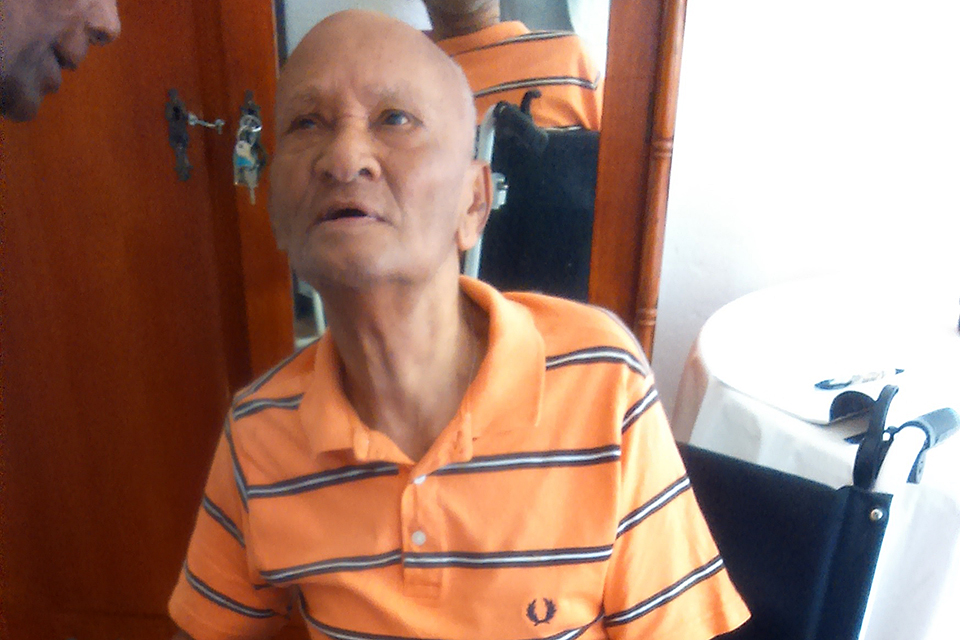
90-year-old Luc Pierre Achille, from Mauritius, who served in Egypt and Libya with the Pioneer Corps as a firefighter.

90-year-old Luc Pierre Achille, from Mauritius, who served in Egypt and Libya with the Pioneer Corps as a firefighter.
90-year-old Luc Pierre Achille. Image: RCEL

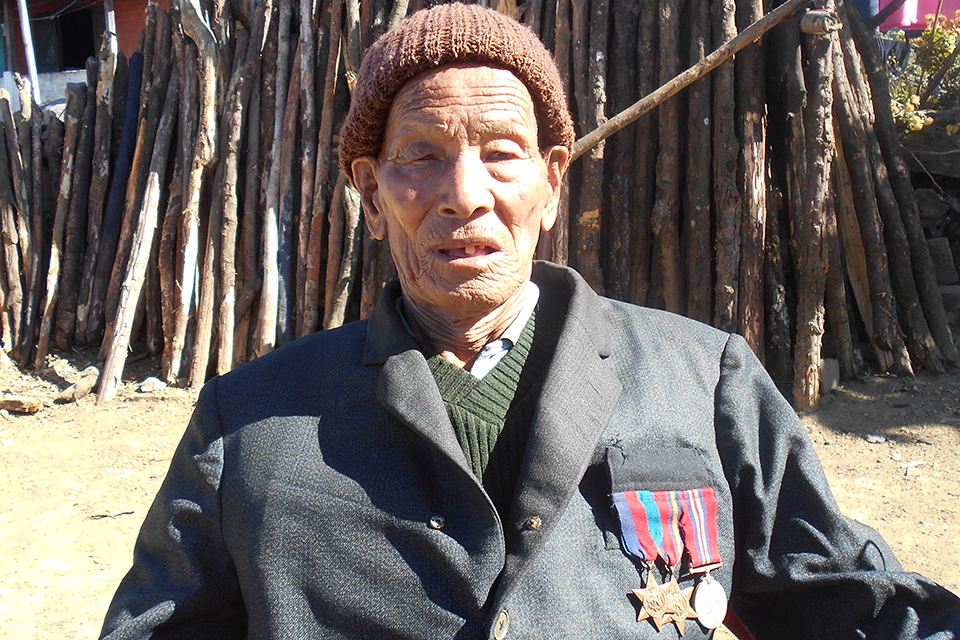
95-year-old Sepoy Penhungo Egung, pictured at his home in Nagaland, North India. Sepoy fought in Kohima and Burma during World War Two.

95-year-old Sepoy Penhungo Egung, pictured at his home in Nagaland, North India. Sepoy fought in Kohima and Burma during World War Two.
95-year-old Sepoy Penhungo Egung. Image: RCEL

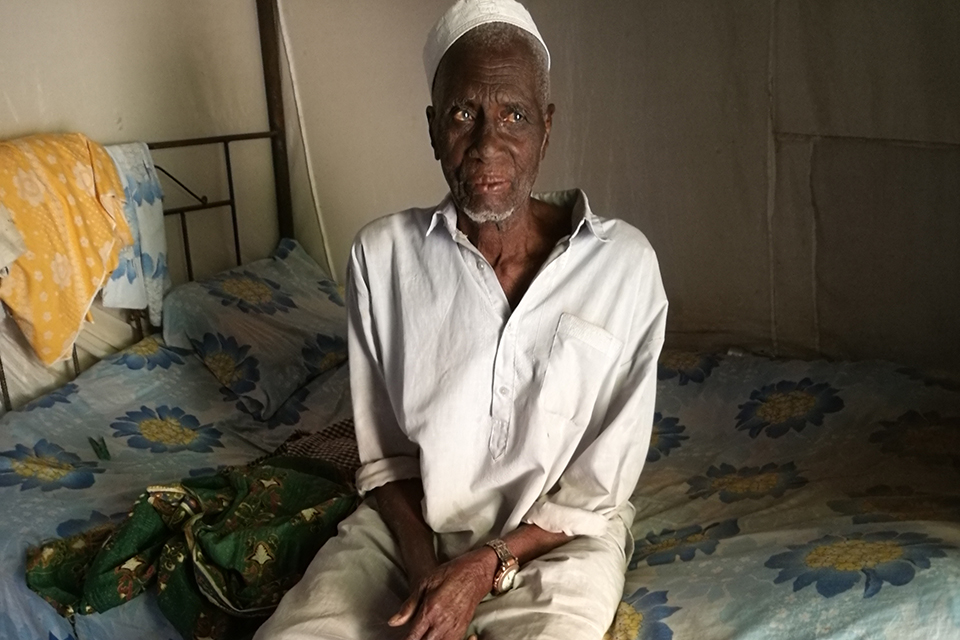
99-year-old Boto Marong, pictured at his home in The Gambia, served in the Royal Army Medical Corps as a medic in Burma from 1942-47.

99-year-old Boto Marong, pictured at his home in The Gambia, served in the Royal Army Medical Corps as a medic in Burma from 1942-47.
99-year-old Boto Marong, pictured at his home in The Gambia. Image: RCEL

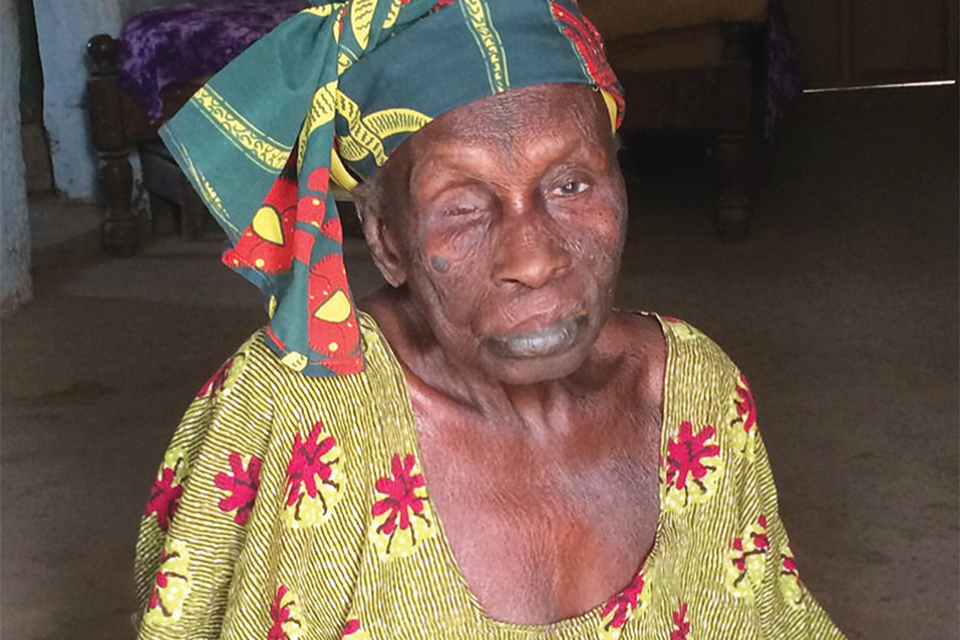
85-year-old Bakoto Jobe, pictured at her home in The Gambia. Bakoto’s husband was a corporal in the First Gambia Regiment who fought in Burma.

85-year-old Bakoto Jobe, pictured at her home in The Gambia. Bakoto’s husband was a corporal in the First Gambia Regiment who fought in Burma.
85-year-old Bakoto Jobe, pictured at her home in The Gambia. Image: RCEL

Notes to editors

  • The package, worth £11.8 million, will be awarded to the Royal Commonwealth Ex-Services League through UK Aid Direct. UK Aid Direct supports small- and medium-sized Civil Society Organisations and charities, based in the UK and overseas, to achieve sustained poverty reduction and to achieve the Sustainable Development Goals.
  • The Royal Commonwealth Ex-Services League (RCEL) was established in 1921 as a charity to provide support to those who served The British Crown during The Great War. Over the last century RCEL has continued to support veterans who served in the British Armed Forces and their widows from Commonwealth Nations prior to their country’s independence. All those supported are resident in their country of origin and living in poverty.
  • The welfare of Commonwealth veterans was previously provided for through grants from LIBOR grants, a means through which the UK government re-directs fines levied for financial manipulation of the LIBOR rate to worthwhile causes. LIBOR is the London Inter-bank Offered Rate or the average of interest rates estimated by each of the leading banks in London to borrow from other banks.
  • UK aid will mean the support for veterans is increased from the previous support they received through LIBOR grants and UK service charities, to ensure they receive the equivalent of two-meals-a-day or 2,400 calories (the amount healthy adults should aim to eat everyday) through cash transfers.
  • During the Second World War, an estimated 4.5 million Commonwealth soldiers from the Indian sub-continent, Africa and the Caribbean fought in the British Army for the Allied Forces. Many more Commonwealth soldiers fought in further conflicts.
  • Today, around 14,000 thousand veterans are living across the Commonwealth, with 7,000 veterans and their widows in need of support to meet their basic needs.
  • The programme will run in more than 30 countries eligible for Overseas Development Assistance (ODA): Antigua, Bangladesh, Belize, Botswana, Cameroon, Dominica, Fiji, Gambia, Ghana, Grenada, Guyana, India, Jamaica, Kenya, Lesotho, Malawi, Malaysia, Mauritius, Montserrat, Pakistan, St. Lucia, St. Vincent, Sierra Leone, South Africa, Sri Lanka, Swaziland, Tanzania, Uganda, Zambia and Zimbabwe.
  • The requisite years post-independence Commonwealth veterans are required to have served in the British Armed Forces to remain in the UK varies from unit to unit. The average time served to remain is approximately four years.

ENDS

General media queries

Follow the DFID Media office on Twitter – @DFID_Press


Press release: Elected women from around the world tackle gender equality

Minister for Women and Equalities and International Development Secretary, Penny Mordaunt, will co-host the International Women MPs of the World conference on Thursday 8 November, which will see women parliamentarians come together to fight for women’s rights.

120 women from 86 countries around the world – including Peru, Ghana and New Zealand – will sit in the House of Commons. The conference has cross-party support and is backed by former Deputy Leader of the Opposition, Harriet Harman MP, and Leader of the House, Andrea Leadsom MP.

This evening [7 November] the Prime Minister will host a reception for elected women from around the world. She will speak to them about the progress that’s been made over the years in ensuring women’s voices around the world are being heard. The Prime Minister will call on women from every part of public life to work together, learn from each other and build the networks that will allow them to succeed.

Globally, 800 girls and women die every day through pregnancy and childbirth complications. Girls and women who experience violence are 1.5 times more likely to acquire HIV, are at increased risk of maternal mortality, and are less likely to complete their education. Violence against women and girls is estimated to cost economies between 1.2% and 3.7% of GDP.

When girls receive an extra year of primary schooling they can increase their wages by 10-20% when they get a job, most of which is likely to be reinvested in her family and community. When women are meaningfully involved in conflict resolution, peace accords are 35% more likely to last for 15 years or more.

Currently there are the highest number of women in history sitting in the House of Commons, but still only 32% of UK MPs are women, and worldwide just 24% of people elected into international Parliaments are women. One hundred years ago women were not only denied seats in the Chamber, they were also denied seats in the public gallery, in case they distracted the men from the serious business of politics.

In her opening speech, Ms Mordaunt will also set out some of the obstacles female parliamentarians working to provide support, empowerment and services for women are facing, as well as the heroism in overcoming those obstacles.

Minister for Women and Equalities Penny Mordaunt said:

Every woman and girl deserves the right to a safe childhood, to a quality education, to reproductive healthcare and to a life without fear.

But the shocking reality is that for many girls and women across the world this is not the case – women’s rights have dropped off the global agenda.

The women attending today’s historic sitting in our House of Commons have all overcome challenges in their own countries to become MPs and have their voices heard. Together we will commit to redoubling our fight for women’s rights and pledge that we won’t be deterred by political barriers.

Our message is simple – women’s rights are human rights.

Getting more women into politics gives a voice to women and girls around the world to enable them to fight for their rights, creates female role models and leads to legislation and work which tackles gender inequalities and discrimination.

The conference will also include discussion on the support elected women need to deal with harassment and abuse, balance family and political responsibilities, and help more women to be active in politics.


Press release: Elected women from around the world tackle gender equality

Minister for Women and Equalities and International Development Secretary, Penny Mordaunt, will co-host the International Women MPs of the World conference on Thursday 8 November, which will see women parliamentarians come together to fight for women’s rights.

120 women from 86 countries around the world – including Peru, Ghana and New Zealand – will sit in the House of Commons. The conference has cross-party support and is backed by former Deputy Leader of the Opposition, Harriet Harman MP, and Leader of the House, Andrea Leadsom MP.

This evening [7 November] the Prime Minister will host a reception for elected women from around the world. She will speak to them about the progress that’s been made over the years in ensuring women’s voices around the world are being heard. The Prime Minister will call on women from every part of public life to work together, learn from each other and build the networks that will allow them to succeed.

Globally, 800 girls and women die every day through pregnancy and childbirth complications. Girls and women who experience violence are 1.5 times more likely to acquire HIV, are at increased risk of maternal mortality, and are less likely to complete their education. Violence against women and girls is estimated to cost economies between 1.2% and 3.7% of GDP.

When girls receive an extra year of primary schooling they can increase their wages by 10-20% when they get a job, most of which is likely to be reinvested in her family and community. When women are meaningfully involved in conflict resolution, peace accords are 35% more likely to last for 15 years or more.

Currently there are the highest number of women in history sitting in the House of Commons, but still only 32% of UK MPs are women, and worldwide just 24% of people elected into international Parliaments are women. One hundred years ago women were not only denied seats in the Chamber, they were also denied seats in the public gallery, in case they distracted the men from the serious business of politics.

In her opening speech, Ms Mordaunt will also set out some of the obstacles female parliamentarians working to provide support, empowerment and services for women are facing, as well as the heroism in overcoming those obstacles.

Minister for Women and Equalities Penny Mordaunt said:

Every woman and girl deserves the right to a safe childhood, to a quality education, to reproductive healthcare and to a life without fear.

But the shocking reality is that for many girls and women across the world this is not the case – women’s rights have dropped off the global agenda.

The women attending today’s historic sitting in our House of Commons have all overcome challenges in their own countries to become MPs and have their voices heard. Together we will commit to redoubling our fight for women’s rights and pledge that we won’t be deterred by political barriers.

Our message is simple – women’s rights are human rights.

Getting more women into politics gives a voice to women and girls around the world to enable them to fight for their rights, creates female role models and leads to legislation and work which tackles gender inequalities and discrimination.

The conference will also include discussion on the support elected women need to deal with harassment and abuse, balance family and political responsibilities, and help more women to be active in politics.


Speech: PM speech at reception for Women MPs of the World conference: 7 November 2018

Good evening everyone, and a very warm welcome to Downing Street for what is a very special event.

The women here tonight come from many nations, many cultures and many backgrounds. We have lived very different lives, we hold different political beliefs, but each of us have answered the unique calling that is public service. And we all have the privilege of serving our communities and our countries in our national legislatures.

Here in the UK, women have been allowed to do that for just 100 years – later this month will see the centenary of the law being changed to allow women to stand for Parliament. A year from now we will also mark the 100th anniversary of Nancy Astor becoming the first woman to take her seat in the House of Commons.

Celebrating is something we should be doing this evening. Because today, 2018, we see more female members of parliaments and legislative assemblies around the world than there have ever been.

And that is good news for all of the citizens we serve.

More women in elected office means a greater voice speaking out on issues that affect women, certainly. It also means a greater focus on preventing gender-based violence, on girls’ education, on childcare and on women’s health.

One of my proudest achievements as Home Secretary was passing the Modern Slavery Act, which makes a real difference in the fight to protect women and girls.

And as Minister for Women and Equalities I was delighted to change the law on parental leave so that both parents are able to take on caring responsibilities for their child – something I’d long campaigned for in opposition.

But the benefits of a more equal parliament are also felt more widely. After all, if half the population is systematically excluded from politics them you’re excluding half the talent.

A parliament where women are a rare sight is a parliament working with one hand tied behind its back; a more representative parliament leads to better decision making, better politics and ultimately better government.

So we should absolutely celebrate the progress that has been made, and the number of women who now have a place in their nation’s parliament. And we should remember that it has not come about by accident. It is the result of many years of effort by people around the world.

That includes one of the women who has been instrumental in helping to deliver tomorrow’s conference, Harriet Harman MP.

Harriet has been an MP for 36 years – she won’t mind me saying. She has spent much of that time battling to make Parliament a better, more accessible workplace for women. And although we certainly have our differences, Harriet, I want to thank you for all you have done –and continue to do – to support the cause of women in politics.

In 2010 I took over from Harriet as Minister for Women and Equalities. And I want to thank the present Minister, Penny Mordaunt, for everything she has done in making tomorrow’s conference possible – and for everything she is doing, as Secretary of State for International Development, promoting women’s participation in politics at home and around the world.

While we celebrate how far we have come, we should not lose sight of the fact that there is still a long way to go. Women make up half the world’s population but barely a quarter of its nationally elected representatives.

If we want to see that improve in our lifetimes, then it’s not enough to simply stand by and wait for change to happen. We have to make it happen. And I’m absolutely committed to doing just that.

Back in 2005, here in the UK, I co-founded an organisation called Women2Win, aimed at giving more women the tools and networks they need to be selected as candidates in my party.

It’s not about positive discrimination, but creating a level playing field – and it’s making a real difference.

When I first entered the Commons I was one of only 13 female MPs in my party. Today there are 67 of us, and I’m immensely proud at how many have benefited from the support of Women2Win’s.

As a government, we are funding nationwide programmes aimed at getting more women and girls interested in politics here in the UK.

And worldwide our Department for International Development is working to empower women in political life.

In Sierra Leone we’ve worked with groups including the Westminster Foundation for Democracy to run a voter education campaign for women.

In Nigeria, the Women in Politics programme has helped establish a Women’s Caucus in Abuja’s National Assembly.

And in Pakistan, a UK-funded voter registration drive signed up more than 400,000 women ahead of this year’s general election.

By doing so we’re helping to give women in the UK and around the world a greater voice – and we’re not alone in such efforts. From Ireland’s Inspire to India’s Girls Parliament, people and programmes are working to get more women and girls interested in politics, asking them to stand, and supporting them to win.

Getting elected is only half the battle. We also have to make the system work once we are a part of it – and doing so in what is often a male-dominated and male-oriented environment is not always easy.

So I hope that tomorrow’s conference, by giving you the opportunity to share ideas and insights, will enable you to learn from one another. Because, together, we can overcome challenges, and can get on with what we got into this business to do: contributing to society, responding to the needs of local constituents and making a real difference to people’s lives.

It’s the ability to do that – to make a difference – that makes being an member of parliament the best job in the world. It’s a privilege we all enjoy, and one I’d like many more women and girls around the world to aspire to.

In the words of the great British suffragist Millicent Fawcett, whose statue took its rightful place in Parliament Square this year, she said, “courage calls to courage everywhere”. So regardless of affiliation or ideology, let’s all work together, let’s learn from each other, let’s build the networks that will allow us to succeed.

And let’s make sure women and girls know that whatever their views, whatever their party, whatever others may say, a woman’s place is in elected office.