Press release: Back to school to inspire engineers of the future
Highways England is building bridges to inspire the next generation of engineers through a variety of educational activities across the South West.
Highways England is building bridges to inspire the next generation of engineers through a variety of educational activities across the South West.
Ongoing and planned engagement with schools and colleges in Wiltshire, Somerset and Cornwall is helping to highlight numerous engineering opportunities within the highways industry and inspire young people to consider engineering as a rewarding career.
Next week the company will be involved in a bridge-building exercise with pupils from a Somerset school. The team behind the A303 Sparkford to Ilchester dualling scheme will visit Countess Gytha Primary School in Queen Camel on 23 November, helping Year 6 pupils to design and build K’Nex bridges as well as giving the youngsters an insight into the design of the route and what animals have been found during survey work.
Hannah Sanderson, Project Manager for the A303 Sparkford to Ilchester scheme, said:
Highways England is very focused on inspiring young people to consider engineering as a rewarding career.
It should be a fun experience for the youngsters, and we’re really looking forward to taking our branch of engineering into the classroom.
Responsible for improving, managing and maintaining England’s motorways and major A roads, the company is working with schools and colleges across the country as part of the Year of Engineering campaign.
By bringing young people face to face with engineering experiences and role models, the campaign aims to showcase the creativity and innovation of engineering careers and widen the pool of young people from all backgrounds who are willing to consider the profession.
As part of the STEM (Science, Technology, Engineering and Mathematics) Insights programme, Highways England also took part in a recent initiative with Wiltshire schools.
Maria Madeley, a primary teacher and science co-ordinator at Minety School, spent a week with the company earlier in the year, gaining an understanding of the engineering and geotechnical work around structures and roads across the strategic network.
This enabled Maria to build a curriculum around road building for her Year 5 and Year 6 pupils. And after Highways England spent a day teaching the children about smart motorways, bridge building and the geology of rocks, it culminated in a British Science Association-funded How Real Stuff Works event at Malmesbury School.
Elsewhere, the team behind the A417 Missing Link project engaged three Gloucestershire schools in chocolate-based STEM projects recently, while earlier this year the A303 Stonehenge project team met with Amesbury Primary School pupils, educating the children about the company’s environmental and archaeological work, as well as safety and engineering aspects of the proposed scheme.
Esther Gordon-Smith, the team’s legacy and benefits lead, also took part in Wiltshire Council’s Science and Engineering Fair last month, delivering a ‘STEM serves society’ presentation to teachers and school leaders. The A30 Chiverton to Carland Cross team are also seeking to build relationships with schools and communities alongside the route in Cornwall, and have just launched a STEAM (Science, Technology, Engineering, Arts and Maths) initiative.
The schools’ outreach programme is designed to engage children from four to 18 in fun, hands-on activities.
Any schools interested in receiving a STEAM visit, can email: A30ChivertontoCarlandCross@highwaysengland.co.uk
For more information visit the Year of Engineering website.
Members of the public should contact the Highways England customer contact centre on 0300 123 5000.
Journalists should contact the Highways England press office on 0844 693 1448 and use the menu to speak to the most appropriate press officer.
Ongoing and planned engagement with schools and colleges in Wiltshire, Somerset and Cornwall is helping to highlight numerous engineering opportunities within the highways industry and inspire young people to consider engineering as a rewarding career.
Next week the company will be involved in a bridge-building exercise with pupils from a Somerset school.
The team behind the A303 Sparkford to Ilchester dualling scheme will visit Countess Gytha Primary School in Queen Camel on 23 November, helping Year 6 pupils to design and build K’Nex bridges as well as giving the youngsters an insight into the design of the route and what animals have been found during survey work.
Hannah Sanderson, Project Manager for the A303 Sparkford to Ilchester scheme, said:
Highways England is very focused on inspiring young people to consider engineering as a rewarding career.
It should be a fun experience for the youngsters, and we’re really looking forward to taking our branch of engineering into the classroom.
Responsible for improving, managing and maintaining England’s motorways and major A roads, the company is working with schools and colleges across the country as part of the Year of Engineering campaign.
By bringing young people face to face with engineering experiences and role models, the campaign aims to showcase the creativity and innovation of engineering careers and widen the pool of young people from all backgrounds who are willing to consider the profession.
As part of the STEM (Science, Technology, Engineering and Mathematics) Insights programme, Highways England also took part in a recent initiative with Wiltshire schools.
Maria Madeley, a primary teacher and science co-ordinator at Minety School, spent a week with the company earlier in the year, gaining an understanding of the engineering and geotechnical work around structures and roads across the strategic network.
This enabled Maria to build a curriculum around road building for her Year 5 and Year 6 pupils. And after Highways England spent a day teaching the children about smart motorways, bridge building and the geology of rocks, it culminated in a British Science Association-funded How Real Stuff Works event at Malmesbury School.
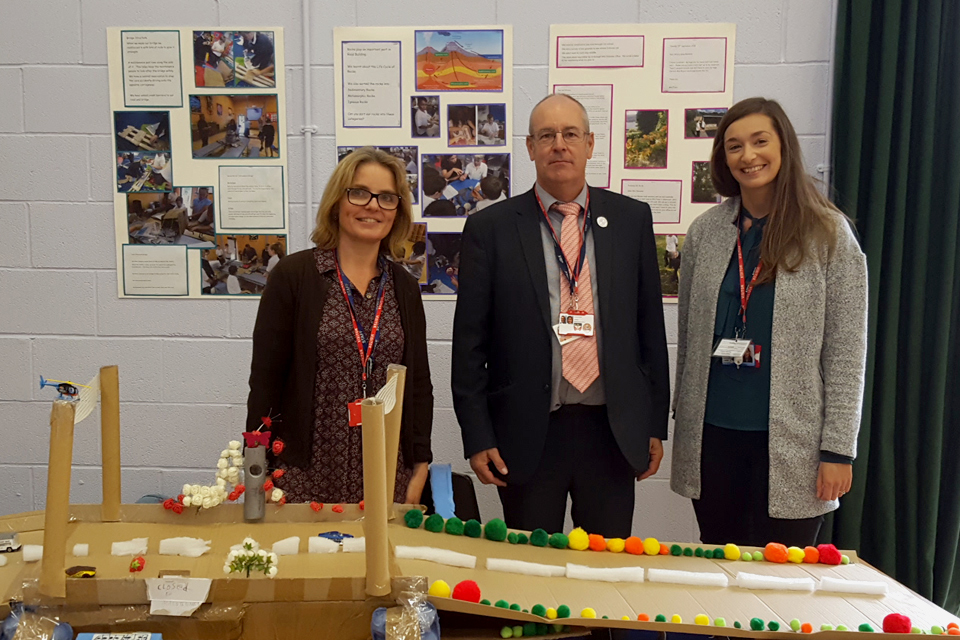
Elsewhere, the team behind the A417 Missing Link project engaged three Gloucestershire schools in chocolate-based STEM projects recently, while earlier this year the A303 Stonehenge project team met with Amesbury Primary School pupils, educating the children about the company’s environmental and archaeological work, as well as safety and engineering aspects of the proposed scheme.
Esther Gordon-Smith, the team’s legacy and benefits lead, also took part in Wiltshire Council’s Science and Engineering Fair last month, delivering a ‘STEM serves society’ presentation to teachers and school leaders.
The A30 Chiverton to Carland Cross team are also seeking to build relationships with schools and communities alongside the route in Cornwall, and have just launched a STEAM (Science, Technology, Engineering, Arts and Maths) initiative.
The schools’ outreach programme is designed to engage children from four to 18 in fun, hands-on activities.
Any schools interested in receiving a STEAM visit, can email: A30ChivertontoCarlandCross@highwaysengland.co.uk
For more information visit the Year of Engineering website.
Members of the public should contact the Highways England customer contact centre on 0300 123 5000.
Journalists should contact the Highways England press office on 0844 693 1448 and use the menu to speak to the most appropriate press officer.
Motorway drivers are being urged to take extra care around gritters this winter following seven collisions in the North West.
Motorway drivers are being urged to take extra care around gritters this winter following seven collisions in the North West.
Highways England has issued the warning after 36 of its vehicles were struck on motorways and major A roads across the country last winter.
Gritter driver Garry White was spreading salt on the M57 near junction 6 at Kirkby in March this year when his vehicle was struck from behind by a Ford Focus travelling at high speed. The car was written off and the back of the gritter also received extensive damage, requiring repairs.
Garry, 43 from Runcorn, suffered minor injuries and was off work for several days following the collision. He said:
The psychological impact was quite bad to be honest and I didn’t want to get back in a wagon for a few weeks after it happened. Experience prevails, and you push on and you get back in, but both me and the car driver were lucky not to have sustained much worse injuries.
I’d ask drivers to give us as wide a birth as possible this winter and to stay behind us until we’ve finished our treatment if they can as it’s much safer. Usually you’ll find a gritter will only be doing a few motorway junctions before pulling off anyway.
Gritters have flashing amber beacons, are 2.5 metres wide and are bright orange but causes of collisions have included drivers misjudging the amount of space needed to overtake them or driving too close to them when they are spreading salt.
The vehicles, which each weigh up to 26 tonnes, usually travel at 40mph in the middle lane to ensure the right amount of salt is spread to all lanes.
The back of a gritter is the most vulnerable area as it is where the salt spreading equipment is located. If it is struck then it can mean the gritter has to be taken off the road to be repaired, which is costly and could affect critical services in extreme weather conditions.
Andrew Olive, Highways England’s North West severe weather manager, said:
The vast majority of drivers support our gritter drivers by leaving a sensible distance and only passing when it’s safe to do so, but we do have occasions when people misjudge the situation and end up colliding with one of our vehicles.
The driver of the Ford Focus was lucky not to be more seriously injured in the incident on the M57 earlier this year, and gritter drivers like Garry should be able to do their job without having to worry about whether other vehicles might strike them.
Our gritter drivers perform a vital role to keep motorways and major A roads moving during the winter so I’d urge drivers to take extra care when travelling near them.
During severe winter weather drivers are urged to follow this advice:
Members of the public should contact the Highways England customer contact centre on 0300 123 5000.
Journalists should contact the Highways England press office on 0844 693 1448 and use the menu to speak to the most appropriate press officer.