Speech: PM’s statement on Brexit: 14 November 2018

The Cabinet has just had a long, detailed and impassioned debate on the draft Withdrawal Agreement and the Outline Political Declaration on our future relationship with the European Union.

These documents were the result of thousands of hours of hard negotiation by UK officials, and many, many meetings, which I and other ministers held with our EU counterparts.

I firmly believe that the draft Withdrawal Agreement was the best that could be negotiated, and it was for the Cabinet to decide whether to move on in the talks.

The choices before us were difficult, particularly in relation to the Northern Ireland backstop.

But the collective decision of Cabinet was that the Government should agree the draft Withdrawal Agreement and the Outline Political Declaration – this is a decisive step which enables us to move on and finalise the deal in the days ahead.

These decisions were not taken lightly – but I believe it is a decision that is firmly in the national interest.

When you strip away the detail, the choice before us is clear. This deal which delivers on the vote of the referendum, which brings back control of our money, laws and borders; ends free movement; protects jobs, security and our union; or leave with no deal; or no Brexit at all.

I know that there will be difficult days ahead. This is a decision which will come under intense scrutiny and that is entirely as it should be and entirely understandable.

But the choice was this deal, which enables us to take back control and to build a brighter future for our country, or going back to square one with more division, more uncertainty and a failure to deliver on the referendum.

It is my job as Prime Minister to explain the decisions that the Government has taken and I stand ready to do that beginning tomorrow with a statement in Parliament.

If I may end by just saying this. I believe that what I owe to this country is to take decisions that are in the national interest, and I firmly believe with my head and my heart that this is a decision which is in the best interests of our entire United Kingdom.


Speech: Lifting Sanctions on Eritrea and Improving Peace and Security in Somalia

Thank you very much indeed, Mr President.

Welcome to our colleagues from Djibouti, Eritrea and Somalia. I’d like to thank Council members for their unanimous support for this resolution. It lifts sanctions on Eritrea. It sets out the Council’s continued support for efforts to improve peace and security in Somalia.

The agreement to lift sanctions on Eritrea recognises the improvements in regional peace and security and the positive steps Eritrea has taken to meet the demands of the Security Council. It is right, in the light of such developments, we reconsider the measures. It is also right that we continue to urge dialogue between Eritrea and Djibouti on the Djiboutian combatants missing in action and on the resolution of their border dispute. We look forward to continued efforts to normalize relations between both countries and we stand ready to assist.

Turning to Somalia, we condemn in the strongest terms the horrific attacks in Mogadishu on Friday. It’s clear that Al-Shabaab continues to pose a serious threat to the peace and stability of Somalia and the region. This resolution underlines our full support for the Somali authorities in their efforts to combat this threat.

In this context, we welcome the progress to date on security reform. Further progress is now essential to implement the National Security Architecture and make full use of integrated regional Somali forces to deliver a successful transition to Somalia-led security. Coordinated international engagement will remain key.

We also look forward to further cooperation between the Somali authorities and the reconstituted Panel of Experts on the implementation of the arms embargo.

Mr President, I think the countries concerned and the region deserve to be congratulated on the important steps forward that they have taken that have made this resolution possible today. Not only is it a very important step for the countries in the region, I think it sends a helpful wider signal to the international community that if the right steps are taken, sanctions can be lifted.

The United Kingdom has the pleasure to continue to offer its full support to these Somali authorities, the Djiboutian and Eritrean authorities, the Sanctions Committee and a Panel of Experts in their efforts to support peace and stability.


Press release: Press statement – Progress on the UK’s exit from, and future relationship with, the European Union

Press statement about progress made on the UK’s exit from, and future relationship with, the European Union


Press release: Press statement – Progress on the UK’s exit from, and future relationship with, the European Union

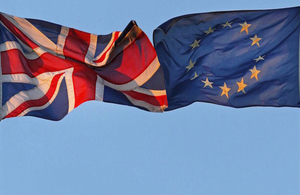
UK and EU flags

The United Kingdom and the European Union negotiating teams have reached agreement in principle on the Withdrawal Agreement. The terms of the UK’s departure on 29 March 2019 have been established, providing a smooth exit and orderly transition to the future relationship for people, businesses and organisations across our country.

The two sides have also agreed an outline of the Political Declaration on the future relationship, which sets out the broad structure, scope and objectives for the UK’s future partnership with the EU.

Negotiations will now continue to finalise the full Political Declaration for review by the Prime Minister, and the leaders of the EU27.

Published 14 November 2018


Press release: FCO Minister statement on Rohingya Repatriation to Burma

I am deeply concerned by the plans to begin repatriation of Rohingya refugees from Bangladesh to Burma in the coming days. The United Nations and other international organisations have been clear that conditions for the Rohingya to return to Burma have not yet been met. Violence and impunity persist in Rakhine and refugees continue to flee Burma.

The UK has consistently emphasized that the repatriation of any Rohingya refugees to Burma must be voluntary, safe, dignified, sustainable and uphold their human rights.

Along with many other nations, the UK recognises the way that the people of Bangladesh and the government of Bangladesh have handled one of the biggest humanitarian crises of our time, despite the great hardships this has placed on their own people.

We call on the Governments of Bangladesh and Burma to uphold the internationally recognised principles of voluntary, safe and dignified return, and urge the Government of Burma to guarantee the necessary safeguards for and protection of any returning Rohingya refugees. Ensuring safe freedom of movement, equal rights, access to health and education services, as well as citizenship for all Rohingya is essential.

We continue to call on the Government of Burma to grant full and unimpeded access for UN and international organizations, as well as international observers, to monitor and assess any future repatriation efforts.