Press release: Vulnerable court users to benefit from £5m government investment

The investment will allow for more people to be supported in a safer, more comfortable environment and is part of HMCTS’ commitment to improving the condition of court buildings and access to justice for all users.

The Personal Support Unit (PSU) is a charity that helps people who find themselves in court and in need of assistance, providing them with advice and guidance through a team of volunteers so they can represent themselves to the best of their ability. These are largely people representing themselves in cases of divorce, contact with children or eviction from their homes. Additional facilities now available include:

  • a new, larger room so that more people can be helped;
  • kitchen facilities and new furniture;
  • extra phone lines to allow volunteers to support more clients;
  • privacy screens for conversations between clients and volunteers.

Justice Minister, Lucy Frazer said:

Court appearances can often come at difficult and emotional times in a person’s life. Therefore, I was delighted to hear the positive effects these new and improved personal support facilities are already having and look forward to seeing first hand the difference this refurbishment has made.

The team of volunteers in Liverpool are doing a fantastic job and this funding means they can now offer their guidance and support to even more people. This government is committed to helping those that need it most and ensuring our justice system remains the best in the world.

Personal Support Unit Chief Executive Officer, Eileen Pereira said:

I was bowled over by the work that has been done by the courts team at Liverpool to enable this expansion of service to take place. Our team of volunteers will be able to support more Litigants in Person as a direct result of the move to the new room which is already being shown by the rise in numbers of people we have helped.

The PSU nationally managed more than 65,000 contacts in the last year and in this financial year we are expecting over 75,000 contacts. Liverpool is fast becoming one of our busier PSU units. Our vision “No one should face court alone” is alive and well in Liverpool.

The refurbishment is part of HMCTS’ ambitious £1bn reform programme, which is bringing new technology and modern ways of working to the justice system.

This programme has already delivered:

  • A new fully accessible online civil money claims service giving the public the ability to make a small claim online – with more than 31,000 claims made since its launch in March and user satisfaction at 90%;
  • A new system for applying for divorce online, which has cut errors in application forms from 40% to less than 1%;
  • A new probate system in testing, which has cut errors, quickened the process and has a user satisfaction rate of 93%;
  • A pilot of fully video hearings in tax tribunals to test the potential for roll-out where appropriate across the courts and tribunals system;
  • The national implementation of a new in-court system to record the results of cases digitally and instantly.


News story: Professional Entry Scheme: Bar Council app to be tested at five new courts

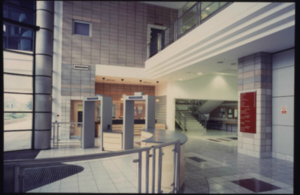
Security entrance at court building

In August we announced that we would be testing a Professional Entry Scheme at a limited number of courts, in a pilot designed to reduce queues and grant legal professionals easier access to court buildings.

The pilot, which is being tested in partnership with legal professional membership organisations, has been running since September. When the pilot completes in December, we will evaluate it. If successful, the scheme will be extended nationally and could be extended to other professional groups.

Throughout the pilot, the Bar Council has also been testing an app that it has developed to give its members a digital ‘id card’, which can be scanned by Court Security Officers. From Monday 26 November 2018, Bar Council members who have registered for the app will be able to use it at five additional courts:

  • Chester Crown Court.
  • Nottingham Crown Court
  • Portsmouth Combined Court
  • St Albans Crown Court
  • Swansea Crown Court

For more information about registering for the Bar Council’s app, contact: MemberServices@BarCouncil.org.uk

Published 23 November 2018


News story: Local courts and tribunals help to raise the bar on provision of refreshments

Courts and tribunals vary a lot in the refreshments they provide. Some have a selection of hot and cold food; others offer drinks; and some offer very little. This can depend on where the building is, and how many people use it; but new guidance has been issued that will help courts to be more ambitious and provide better refreshment options.

For the first time, the guidance sets a minimum standard – saying that, at the very least, all visitors to our buildings should be able to access a broad selection of good quality hot and cold drinks, even in our smallest buildings.

In most places, we are keen to offer more than this. The new guidance and sources of information we’ve introduced will help operational teams to explore and introduce the best approach possible for their buildings and the people who use them. This includes both best practice in getting the right catering provision in place through conventional contracts; and advice on how to source and support sustainable small-scale initiatives with local businesses or charities in buildings where a commercial arrangement with a caterer may not work.

There are lots of good examples taking place across the estate that others can learn from. For example, one small court uses local sandwich shop menus to provide a delivery service to jurors; and in other courts local catering firms bring baskets of sandwiches round at busy times, for staff and those waiting for hearings.

In one court, we’ve encouraged a charity which supports children coming out of the care system to set up a snack bar which both provides great food, and helps to train young people in kitchen and service skills.

By encouraging and supporting a wider range of approaches to providing refreshments on site, we expect to raise the bar on court and tribunal catering.

Susan Acland-Hood, Chief Executive of HMCTS commented:

Since joining HMCTS, I’ve heard a lot about court refreshments – and seen a lot too, in the visits I make every week. At the moment, what we do is inconsistent; we have too many sites with no refreshments, and what others provide is very basic.

But there are also some great examples of excellent catering – and of people doing things in really innovative ways where a conventional big contract wouldn’t work. The guidance will help us bring the rest to the standard of the best, by giving people advice, help and support to put good arrangements in place.

For further information, email us at: changesomethingthatmatters@hmcts.gsi.gov.uk.


Press release: All British ‘eye in the sky’ to tackle oil spills, illegal shipping and deforestation

  • The first images from a new British-made radar satellite which can see earth through clouds and the darkness of night were released today
  • the satellite – supported by a grant from the government – can detect oil spills in the oceans, help spot suspicious shipping activity and monitor the effects of deforestation
  • supporting the £14 billion space industry and the UK’s world-leading space capabilities is a key part of the government’s modern Industrial Strategy

The first images from a new satellite which can see through clouds and image the Earth round the clock to help stop illegal activity and protect the environment was unveiled today (Friday 23 November).

Science Minister Sam Gyimah saw the images from the NovaSAR-1, the first Synthetic Aperture Radar (SAR) satellite made entirely in the UK, during a visit to its makers, Surrey Satellite Technology Ltd (SSTL). SAR technology can see through clouds and image the Earth 24 hours a day. Images can be used to detect oil spills and suspicious shipping activity, and monitor deforestation.

The satellite, launched in September, tests a new platform for low-cost satellite imaging. The government invested £21 million to assist the development of NovaSAR-1 and will benefit from access to its data, significantly boosting the UK’s Earth observation capabilities and providing data to start-ups at the Satellite Applications Catapult in Oxfordshire.

The images released today show Cairo and Sydney Harbour. Cropped images taken from the original picture of Sydney Harbour include Sydney Opera House, Bondi beach and a close-up image shows small boats moored in the natural harbour at Church Point, north of Sydney in a demonstration of the usefulness of SAR for detecting vessels of different sizes and types, particularly at night or through cloud cover.

The image of Cairo shows the River Nile flowing from Upper Egypt through Cairo and down towards Beni Suef. Cropped images taken from the original show The Great Pyramids of Giza, and the Red Pyramid and Bent Pyramid near Dahshur.

Satellite view of great pyramids, Cairo. Credit: SSTL

Science Minister Sam Gyimah said:

Yet again we can see UK research and innovation that is truly out of this world. This ‘eye in the sky’ can capture an image a dozen times wider than the Strait of Dover and the data it provides can help crack problems from illegal shipping to alerting us to damaging pollution that needs to be countered.

This satellite, backed by a £21 million investment from the UK Government, is a great example of how we are working with the space sector through our modern Industrial Strategy to remain at the forefront of pioneering science and exploration.

Andrew Cawthorne, Director of Earth Observation at SSTL said:

The quality of the SAR images we are downloading validate the capabilities of NovaSAR’s innovative low cost S-Band SAR platform and demonstrate successful delivery of valuable data for maritime, agricultural, forestry, ice-monitoring and disaster monitoring applications.

We have worked closely with the SAR experts at Airbus in Portsmouth to develop NovaSAR-1 and the whole team is delighted with these first results – the outcome of space engineering expertise, ingenuity and collaboration. I would like to thank the UK Space Agency for their support and we look forward to starting service delivery in the near future to our mission partners.

NovaSAR-1 has 3 imaging modes that create images with higher definition for precision applications including monitoring disasters and deforestation, and it also has a maritime mode and AIS receiver.

The satellite’s dedicated maritime mode allows it to monitor an area of ocean 400km wide. This allows ships to be detected by radar and compared with their ship tracking data, with discrepancies between the two highlighting potentially illegal activity.

Partners signed up to receive data from NovaSAR-1 include the UK Space Agency, Australia’s Commonwealth Scientific and Industrial Research Organisation (CSIRO), and the Indian Space Research Organisation (ISRO).

NovaSAR-1 was entirely made in Britain, being designed and manufactured by SSTL, with an SAR payload developed by Airbus Defence and Space in Portsmouth and an Automatic Identification Receiver supplied by Honeywell Aerospace. NovaSAR-1 is operated in orbit from SSTL’s Spacecraft Operations Centre in Guildford UK.

The government is backing the space sector by working in partnership with it through its modern Industrial Strategy, which includes major initiatives such as the National Satellite Test Facility at Harwell and the development of the proposed commercial spaceport in Sutherland, Scotland. The UK continues to be a leading member of the European Space Agency, which is independent of the EU. This week (Monday 19 November) Business Secretary Greg Clark announced that Airbus will assemble satellite components and major parts in the UK for Eutelsat in a new multi-million-pound deal signed at the Department for Business, Energy & Industrial Strategy. The deal will support hundreds of high quality jobs in Portsmouth and Stevenage and thousands of jobs in the supply chain – a further vote of confidence in the UK’s future economy and growing space industry.

The UK is a world leader in Earth Observation technologies, which have an increasing number of down to Earth applications including through the UK Space Agency’s International Partnership Programme (IPP). This programme harnesses the expertise of the British space sector to tackle problems all around the world, from predicting dengue fever outbreaks in Vietnam to improving healthcare in Nigeria through satellite connectivity. Earth Observation satellite services are estimated to support industries representing a total turnover of more than £235 billion.


Press release: All British ‘eye in the sky’ to tackle oil spills, illegal shipping and deforestation

The first images from a new British-made radar satellite which can see earth through clouds and the darkness of night were released today.