Press release: Change of Her Majesty’s Ambassador to Tajikistan
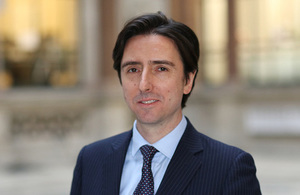
Mr Matthew Lawson has been appointed Her Majesty's Ambassador to the Republic of Tajikistan.

Mr Matthew Lawson has been appointed Her Majesty’s Ambassador to the Republic of Tajikistan.

Mr Matthew Lawson has been appointed Her Majesty’s Ambassador to the Republic of Tajikistan in succession to Mr Hugh Philpott OBE who will be transferring to another Diplomatic Service appointment. Mr Lawson will take up his appointment during June 2019.

CURRICULUM VITAE

Full name: Matthew Richard Ambrose Lawson

2018 to present Full time language training (Russian & Tajik)
2015 to 2018 Sarajevo, Deputy Head of Mission
2013 to 2015 Ottawa, Head of Global Issues Group
2011 to 2013 FCO, Joint Head of Policy Unit
2009 to 2011 FCO, Head of Pakistan Team, South Asia Group
2008 to 2009 Full time language training (Russian)
2007 to 2008 Political Adviser to the High Representative/EU Special Representative for Bosnia and Herzegovina
2005 to 2007 Banja Luka, Head of British Embassy Office
2004 to 2005 Full time language training (Bosnian/Serbian/Croatian)
2003 to 2004 FCO, Desk Officer, Afghanistan Team
2002 to 2003 Department for International Development, Deputy Programme Manager, Afghanistan Team
2001 to 2002 Her Majesty’s Treasury, Policy Analyst

Further information

Published 16 January 2019



Press release: Change of Her Majesty’s Ambassador to Tajikistan

Mr Matthew Lawson has been appointed Her Majesty’s Ambassador to the Republic of Tajikistan.


News story: Updated Information Statement on Food Allergy issued by IFST

Fish, nuts, milk and other allergenic foods

Most commonly allergenic foods

Dr Michael Walker and Dr Hazel Gowland of Allergy Action, and research collaborator of the Government Chemist, refreshed the Information Statement (IS) on Food Allergy, pending a full review. The Information Statement describes the nature of food allergies, outlines legislation that aims to help people with allergies and to emphasises the measures that manufacturers and caterers should take to minimise the problems.

Developed and peer-reviewed through the IFST Scientific Committee, of which Hazel and Michael are members, Information Statements outline the latest scientific developments, as well as regulation and other relevant information, surrounding matters of topical importance within food science and technology into one single document.

Published 16 January 2019


News story: Robots tackle Sellafield’s notorious radioactive ‘hot spot’

The radioactive ‘hotspot’, known to those at the site as ‘D-Bay’, is a sub-section of the First Generation Magnox Storage Pond.

The area was used to deposit radioactive sludge which started to accumulate in the plant in the 1970s.

The sludge is now being carefully ‘hoovered up’ using robotic arms, following 10 years of planning with supply chain partners ACKtiv joint venture and Jacobs.

Robots removing sludge from D Bay

Head of Legacy Ponds for Sellafield Ltd, Dorothy Gradden, said:

D-Bay has always been one of our biggest headaches at Sellafield.

It is a concentration of a problem in our most complicated and hazardous legacy facility.

After years of designing, making and installing the necessary equipment, we are now delighted to be safely reducing the hazard day by day.

The dedication and innovative thinking of more than 800 people at Sellafield and in our supply chain that has ensured that we safely arrived at this ‘man on the moon’ moment for this plant.

I’d like to thank and congratulate them all.

D-bay holds the equivalent of 35 concrete mixer trucks full of radioactive sludge, which is a by-product formed from decaying nuclear fuel and other debris.

It has been a no-go area for around 40 years, due to the proximity of the sludge to the surface of the water and the sheer volume of radioactive material.

The work has been done remotely using ‘Brokk’ manipulator robots, operated by people who control them from behind a shielded wall.

The robotic arms are attached to an overhead travelling crane and various tools can be attached to the arm for different tasks.

A suction device is used to ‘hoover’ up the sludge, while other tools allow the arm to pick up larger waste items and chop them into smaller pieces (referred to by operators as ‘giving a haircut’), so that the sludge can be accessed more easily.

The material is being transferred to a state-of-the-art plant for safe storage.

Now 66 years old, the pond was originally used to store, cool and prepare magnox fuel for reprocessing.

It is now one of the 4 legacy ponds and silos at Sellafield that the Nuclear Decommissioning Authority has prioritised for clean-up.

D-Bay is one of the plant’s ‘wet bays’, which were separate areas designed for removing the cladding on nuclear fuel rods.

Work is ongoing to remove waste from the main pond, which is due to be emptied by 2031.


Press release: Curfew and £13k penalties for illegal waste offender

A Derby man has been ordered to pay £13k for running a breaker’s yard without a permit – putting the environment at risk