Speech: Addressing the manmade humanitarian crisis in Venezuela

Thank you very much indeed, Mr President.

As is clear, the United Kingdom voted in favour of the American text and against the Russian one. I think the fact that the Russian resolution failed, whereas the American text was vetoed, accurately pinpoints the unease that very many members of the United Nations feel about the situation in Venezuela and how untenable it is for it to continue. We were content, Mr President, to vote in favour of the US text because it addressed important issues in Venezuela about which we too are concerned. It emphasised the importance of establishing the necessary conditions for a new and credible electoral process in Venezuela.

Despite the Russian polemic, the US text did not seek a permanent transfer of power to a different leader; it called for free and fair elections and we believe in that also, Mr President. We believe that the Maduro presidency is illegitimate and the National Assembly President Juan Guaido is constitutionally interim president of Venezuela until credible, free and fair elections can be held. And these elections, Mr President are conditions on the part of transition to peace.

Secondly, the resolution acknowledged deep concern about violence and the use of excessive force by the security forces in Venezuela against unarmed, peaceful protesters, including those, Mr President, actively engaged in getting humanitarian assistance into the country to the benefit of ordinary citizens. There’s clear evidence that liberty and justice have been systematically dismantled by Maduro’s regime.

And finally, Mr President, the text addressed the economic collapse brought about by Maduro’s corrupt policies which led to the humanitarian crisis that has so far forced over three and a half million Venezuelans to leave their country for other countries in the region. This has placed huge strain on the social services of their neighbours.

We would like to thank the United States as penholder on this resolution for drafting a text that properly recognises the gravity of the situation in Venezuela. There are limits, Mr President, as to how far a government can inflict damage and suffering on its own people.

Turning to the Russian text, the United Kingdom was compelled to vote against the resolution proposed by the Russian Federation today. We fundamentally disagreed with its content because it pretended that there were threats to use force against the territorial integrity and political independence of Venezuela. There have been no threats to Venezuela’s political independence or territorial integrity.

Secondly, the resolution focused on alleged attempts to intervene in Venezuela’s domestic affairs. As we have seen, Mr President, the crisis has spilled far beyond Venezuela’s borders and the current situation in Venezuela represents a clear threat to peace and security in the region.

Thirdly, the text included a selective reading of the UN Charter – one that we have heard before. It presents a biased interpretation of the events unfolding in Venezuela and its support of the Maduro regime. A full reading of the UN Charter, Mr President, would show that the Security Council should cooperate to address the suffering of the Venezuelan people.

Finally, Mr President, the text failed to explicitly recognise two crucial aspects of the situation in Venezuela. The humanitarian crisis – I should say the man-made humanitarian crisis – brought about by corrupt economic policies and the need for free, fair and credible elections.

Thank you, Mr President.

Right of Reply by Ambassador Karen Pierce, UK Permanent Representative to the UN, at the Security Council on Venezuela

There’s a number of lurid claims that were made against my country. I’d like to respond very quickly. Firstly, Mr President, to say that I have sent you a letter – in response to allegations made by the Venezuelan representative – that sets out very clearly British policy towards his country. And it’s very much on the lines of the European Union policy which we heard about earlier. I think the second thing Mr President is to say that if theft and plunder of the Venezuelan people is occurring it is because of their own government. It’s not because of mine. Thank you.
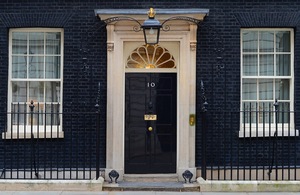


News story: PM bilat with King Abdullah II of Jordan: 28 February 2019

placeholder

A Downing Street spokesperson said:

Prime Minister Theresa May hosted His Majesty King Abdullah II of Jordan today in Downing Street for bilateral talks.

The Prime Minister told King Abdullah that she was pleased their two countries were co-hosting the Jordan: Growth & Opportunity conference today in London.

They welcomed support announced by the government and the private sector at the conference and agreed the importance of using this to ensure Jordan maintains momentum in implementing its economic reforms.

The leaders reaffirmed the deep rooted partnership between the UK and Jordan in areas such as defence, and trade.

They agreed the importance of continuing to work together on regional security matters. And the Prime Minister thanked the King for Jordan’s cooperation as part of the Counter-Daesh coalition and acknowledged the central role the country plays in hosting refugees who have fled conflict in the region.

The leaders said that they looked forward to building on their countries’ close relationship in the years ahead.

Published 28 February 2019


Speech: PM speech at the Jordan: Growth and Opportunity conference

Prime Minister Theresa May spoke at the Jordan: Growth and Opportunity conference in London.


Speech: PM speech at the Jordan: Growth and Opportunity conference

Thank you Prime Minister Razzaz, it has been a pleasure to welcome you and King Abdullah to London today.

And it has been fantastic to see the strength of support from right across the international community as we have come together with the private sector to demonstrate our commitment to Jordan and its future.

In 2017, I was delighted to visit Jordan not once, but twice. And it was there in Amman that I and the King agreed a new ambitious partnership for the long-term benefit of both our countries. Today we have built on that partnership through our new initiative, the London Initiative.

This Initiative backs Jordan’s Vision 2025 and supports Jordan in delivering social and economic reforms that will transform its economy, making the most of its young, talented and diverse workforce – and, crucially, actively encouraging the participation of its women.

That vision is already becoming a reality – today has demonstrated how much has been achieved, and how Jordan’s reform programme is already making a difference. And earlier today, I heard from the King directly his own personal commitment to supporting Jordan’s government to drive forward these reforms.

There of course remain complex and long-term regional and economic challenges.

But Jordan has a robust and realistic strategy to bring about change. Coming together today provides us with the opportunity to shore up and transform Jordan’s economy, work together to tackle instability, and create an attractive environment for investment that can benefit not just Jordan but all of us now and in the future.

That is why it has been so good to see governments, CEOs and investors backing this new approach to support Jordan – matching confidence with commitments that will help unlock growth, jobs and investment.

And unlocking that potential, to enable Jordan to prosper and remain a beacon of stability, matters to all of us.

Jordan sits at the centre of a region that has faced turbulence and uncertainty over the last decade. The political upheaval in 2010 and 2011, the emergence of Daesh, and the on-going conflict in Syria have changed the face of the Middle East.

The people of Jordan have demonstrated resilience in the face of these challenges. They have carried a heavy burden, but despite having their traditional trade relationships severed, their energy costs increasing and supply disrupted, they have given shelter and support to more than 650,000 refugees from regional conflict.

They have shouldered that load unsparingly and they deserve our gratitude.

All the while, Jordan has been steadfast in the fight against terrorism.

Steadfast as an ally in the Global Coalition against Daesh.

Steadfast in pursuing peace and promoting stability in the Middle East. For decades, on these, and other issues, Jordan and the UK have stood side by side.

As I told leaders at the first EU-League of Arab States Summit earlier this week – a stable, peaceful, prosperous region matters to the UK, Europe and beyond.

The fortunes of all of our countries have long been intertwined.

So we must be clear – a stable Jordan defends us from terrorist groups taking root and strengthens the border security of neighbouring countries. And that is why our collective support for Jordan is so crucial.

Jordan is an old and cherished friend of the UK. At the heart of our long-term partnership with Jordan is a broad and deep commitment to tackling common challenges.

Our continued close co-operation on defence, border security and intelligence adds to our collective security.

We will work with Jordan and other regional partners to support peace and prosperity in the Middle East, and to find long-lasting solutions, backed by the international community, to sources of instability.

And that is why so many of you are here today, to demonstrate our collective support and show Jordan that the international community remains in lockstep with it as it delivers its compelling plan for growth and economic reform.

Today has demonstrated that the UK is at the centre of coordinating the assistance that will help lay the foundations for a strong and prosperous future for Jordan. Key to this is the role played by the IMF and the World Bank – pillars of the international system which defends and supports financial stability and sustainable economic growth – which matters to us all in today’s interconnected world.

The extent of collective international support for Jordan has been clear from the commitments we have seen and heard today from governments. But we have to remember that the private sector will be the key to catalysing Jordan’s economic transformation, and that’s why I am so pleased to have so many representatives from the business community here today. As governments we can create the frameworks and environments which foster economic growth, but private investment is what will make the real difference.

To demonstrate the extent of the UK’s own confidence in Jordan, and our determination to make the vision that Jordan’s Prime Minister and King have spoken about today a reality, I am pleased that the UK will be underwriting a $250 million World Bank loan to Jordan. This will come alongside a substantial uplift in our grant financing over the next five years. This will open the door to reinvigorating Jordan’s economy, attracting the investment needed to stimulate growth and create jobs.

The UK’s assistance for Jordan is a practical demonstration of the approach I set out in Cape Town. This is about working in partnership, sharing our skills, experience and resources to jointly tackle the challenges we face in a way that delivers global security and prosperity.

Our commitments are a tangible demonstration of the fundamental strategic shift in the way that the UK is using its aid programme – investing in the UK’s national interests, in a way that helps shape a global economy that works for everyone.

And that is why this government remains committed to spending 0.7% of GNI on Official Development Assistance. We have been and will continue to be a global champion in this area, spending our aid programme innovatively and in a way that delivers value for money for the UK tax payer.

Today has shown us what a modern, reforming, innovative Middle Eastern state can look like – and how a dynamic, stable Jordan can generate benefits not only for its people but for many beyond.

But it is important now that we maintain momentum. I want to thank all those who have made commitments today – and everyone here for coming together to demonstrate your support for a brighter more prosperous Jordan of tomorrow.

This has been an important milestone. We have an opportunity – and a way forward – to support Jordan and it is crucial that we all pull together as we form a global coalition to back Jordan for the future.

A future in which together Jordan and the international community can bring about lasting change.


Press release: New for newts: better for wildlife, business and people

An innovative approach by Natural England to protect great crested newts and encourage sustainable development was today (28 February) launched in Kent.