News story: UK-China EFD sees launch of London-Shanghai Stock Connect
UK listed companies will be able to sell shares in China from today (17 June).
UK listed companies will be able to sell shares in China from today (17 June).
UK listed companies will be able to sell shares in China from today (17 June), with the launch of the London-Shanghai Stock Connect. This is the first time that any foreign company will be able to list in mainland China.
Investors will be able to trade across London and Chinese time zones, allowing issuers from both markets to raise capital in the other market. It will mean UK listed companies can be traded by more investors, providing investors with greater choice.
There are almost 1500 companies listed in Shanghai, over 260 of which are potentially eligible to take part in Stock Connect and list in London. It is also estimated that China will reach over $17 trillion in assets under management (AUM) by 2030, having had $2.8 trillion AUM in 2016.
The launch of Stock Connect is the centrepiece of today’s UK-China Economic and Financial Dialogue (EFD) which sees the Chancellor host Vice Premier Hu Chunhua and a Chinese delegation in London to discuss multilateral and bilateral economic issues, financial services cooperation, and trade and investment.
Launching Stock Connect’s first day of trading at the London Stock Exchange, Philip Hammond, Chancellor of the Exchequer will say:
London is a global financial centre like no other, and today’s launch is a strong vote of confidence in the UK market.
Stock Connect is a ground-breaking initiative, which will deepen our global connectivity as we look outwards to new opportunities in Asia.
The culmination of four years’ work, Stock Connect will mean, for the first time, that international investors will be able to access China A-shares from outside of Greater China, and through international trading and settlement practices. Stock Connect will not require any direct trading infrastructure links. Instead, it will allow companies to dual-list on both the Shanghai and London Stock Exchanges using Depositary Receipts (DRs).
From today, London investors will have the opportunity to trade Global Depositary Receipts (GDRs) for Huatai, the technology-enabled securities group in China.
Areas where accident rates are highest could benefit from a new sign which warns of hazards due to animals in the road.
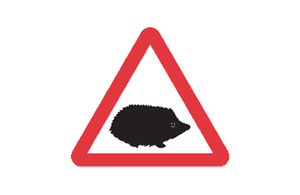
Hundreds of people are injured every year in collisions involving animals in the road, according to the latest Department for Transport figures.
In 2017, 629 people were injured in accidents involving an animal in the road (excluding horses) and 4 people were killed.
Transport Secretary Chris Grayling has today (17 June 2019) unveiled a new traffic sign, featuring a hedgehog, which warns road users of hazards due to animals in the road ahead and could be placed in areas where accident rates are highest.
He is calling on local authorities and animal welfare groups to identify accident and wildlife hotspots where the sign should be located.
The road sign is also designed to reverse the decline in wildlife numbers, in particular, hedgehogs whose population in rural areas has halved since 2000.
Chris Grayling said:
We have some of the safest roads in the world but we are always looking at how we can make them safer. Motorcyclists and other vulnerable road users are particularly at risk.
The new small mammal warning sign should help to reduce the number of people killed and injured, as well as helping our precious small wild mammal population to flourish.
The Transport Secretary is also meeting with road safety experts today, including Brake, the AA and the RAC, together with animal protection groups including the Wildlife Trust, to discuss the scale of the problem.
Between 2005 and 2017, 100 people were killed, with a further 14,173 injured in accidents where an animal was in the road.
Tony Campbell, chief executive of the Motorcycle Industry Association (MCIA), said:
Powered two-wheelers provide a great solution to road congestion, but like all road users, riders must be aware of those around them.
Therefore the MCIA is pleased to welcome these new signs that will help everyone, including those on 2 wheels or 4 legs, complete their journeys more safely.
The small wildlife sign complements other warning signs already used on UK roads, filling a gap between warnings about smaller animals such as migratory toads and wildfowl, and large animals such as deer and livestock.
Jill Nelson, CEO at People’s Trust for Endangered Species, said:
At PTES roadkill has long been a concern, which is why we launched our Mammals on Roads survey.
We have also joined forces with the British Hedgehog Preservation Society to deliver the Hedgehog Street campaign, meeting with Mr Grayling to express our concerns for hedgehogs on roads and elsewhere.
We welcome this focus on road safety and protection for all small mammals.
These signs will be used to warn motorists in areas where there are large concentrations of small wild animals, including squirrels, badgers, otters and hedgehogs.
The move also comes shortly before a refreshed Road Safety Statement and two-year action plan are published. These will look at further ways to reduce the number of deaths on the roads.
Media enquiries 020 7944 3021
Out of hours media enquiries 020 7944 4292
Switchboard 0300 330 3000
Package of support will overhaul approach to preventing mental illness, building on record investment in mental health services.
Every new teacher will be trained in how to spot the signs of mental health issues, under a new prevention plan unveiled by the Prime Minister today (Monday 17 June).
Theresa May will pledge better access to education, training and support across communities as part of an overhaul of society’s approach to mental illness.
The wide-ranging package of measures will make sure people have the confidence and skills they need to identify mental health issues before they become critical, particularly in young people.
Today’s announcement means schools, social workers, local authorities and healthcare services will receive extra support to make sure people know how to promote good mental health in the same way that they look after physical wellbeing. These measures include:
Today the Prime Minister will visit a school in South West London to meet with pupils learning about the importance of developing healthy habits for life-long good mental health.
Prime Minister Theresa May said:
Too many of us have seen first-hand the devastating consequences of mental illness, which is why tackling this burning injustice has always been a personal priority for me.
But we should never accept a rise in mental health problems as inevitable.
It’s time to rethink how we tackle this issue, which is why I believe the next great revolution in mental health should be in prevention.
The measures we’ve launched today will make sure at every stage of life, for people of all backgrounds, preventing mental illness gets the urgent attention it deserves.
Further plans to drive a step-change in public awareness around looking after your mental health include a new national awareness campaign called Every Mind Matters, launching in October.
From 2020 parents will also get access through the campaign to targeted advice on how to deal with issues like stress, online bullying and self-harm.
Vulnerable people are known to be at greater risk of mental illness, including those who face financial difficulties such as problem debt. Government will launch a new breathing space scheme to provide respite from debt collection while people seek support to help prevent the onset of mental health problems – with special access for those receiving crisis treatment.
As part of this prevention agenda, the Prime Minister has also announced:
Today’s package of changes will also fast track action against undignified and unequal treatment for those in mental crisis – including by committing to overhaul the Mental Health Act to make it fit for modern society.
This legislation will include banning once and for all the use of police cells as a place to detain people experiencing mental illness, following the Prime Minister’s work to stamp out this practice in the treatment of under-18s.
Today she has also confirmed that a White Paper will be published before the end of the year in response to Sir Simon Wessely’s review of the Mental Health Act, setting out the steps taken to tackle unequal treatment faced by ethnic minority groups.
Professor Sir Simon Wessely, Chair, Independent Review of the Mental Health Act, said:
Theresa May deserves credit for drawing attention to those with the most severe mental illnesses yet who are the most overlooked.
The recommendations of the review of mental health legislation that she commissioned have been warmly welcomed from all sides but now need to be acted on.
Today’s announcements are a further welcome step towards that goal.
Paul Farmer, Chief Executive of Mind, the mental health charity, said:
We welcome the sustained momentum from the Prime Minister and government to improving support for people with mental health problems.
It’s particularly positive to see such priority given to young people’s mental health – our recent work in schools has shown us the true scale of the need and, as most mental health problems start in childhood, decent support as early as possible is key.
We also welcome progress on the Mental Health Act review.
Finally, it’s encouraging to see government acknowledge the enormous impact that financial problems can have on mental health, and recognition that improving the wellbeing of the nation is about more than getting NHS services right alone.
Professor Wendy Burn, President of the Royal College of Psychiatrists said:
We strongly welcome today’s announcements from the Prime Minister. Her commitment to parity of esteem for mental health will lead to better care for people with a mental illness.
We fully support the need for a greater investment in prevention so that people can live happier, healthier and more independent lives.
The Independent Review of the Mental Health Act was an important step in making sure that people get the support and care they need when they are at their most vulnerable. It is good to see the start of the implementation of the recommendations from the review particularly in the area of equality.
But success will depend on continued commitment from future prime ministers to drive sustained investment and improvement across government departments.
The new measures launched today will build on the largest expansion of mental health services in a generation under the NHS Long-Term Plan.
Today marks one year since the Prime Minister announced a record £33.9 billion a year cash funding boost for the health service, including £2.3 billion more a year in real terms on mental health care to support an extra 345,000 children, at least 380,000 more adults with common mental illnesses, 370,000 adults with serious mental illnesses, and 24,000 more new and expectant mothers. The plan will make sure that funding for mental health services will grow as a share of the NHS budget.
As Loneliness Awareness Week begins today, a new campaign launched by Loneliness Minister Mims Davies is helping to tackle the stigma of loneliness and encourage people to speak out.
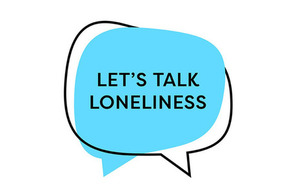
‘Let’s Talk Loneliness’ brings together charities, organisations and businesses including The Marmalade Trust, the Co-op Foundation, the British Red Cross, the Campaign to End Loneliness, Mind, Public Health England and the Jo Cox Foundation to help people talk about their feelings.
It comes as a new poll shows that not wanting to burden others is the main barrier to people talking about their feelings of loneliness.
The new YouGov research also shows:
The survey also showed that young people aged 18-24 are most likely to say they have felt lonely (75%). In contrast, 63% of people aged 55 and over said they never feel lonely.
Previous research shows nearly three quarters (74%) of people said when they felt lonely, they didn’t tell anyone despite most having someone they could count on.
Minister for Loneliness Mims Davies said:
Loneliness is one of the biggest health challenges our country faces. It can affect anyone at any time and its impact is in line with smoking or obesity. But we can only begin to help one another if we feel able to understand, recognise and talk about it.
Let’s Talk Loneliness’ will encourage us all to engage with this issue, speak up without stigma, spot the signs of loneliness and help build more meaningful connections so people feel less isolated.
The campaign, a commitment from the government’s Loneliness Strategy, is being launched today with a short film ‘Less of a Lonely Place’. It features the voices of young people from across the UK talking about their personal experiences of loneliness, brought to life by young animators. Adverts for the campaign that show loneliness as an emotion that comes with being human and one we should talk about will be presented on 20 big screens in cities across the country this week.
As part of Loneliness Awareness Week, the government has also announced it is partnering with the Co-op Foundation to match-fund a new £1.6 million initiative that supports activity in community spaces to promote social connections.
The government is also investing £1 million in a Tech to Connect Challenge Prize. Applications are open from the 26th June 2019 to the 7th August 2019. The Prize, which will be designed and delivered by charitable foundation Nesta, aims to find tech solutions to the problem of social isolation. Charities and social enterprises are urged to apply as up to £500,000 will be up for grabs to incentivise social tech innovation. The £1 million prize will be split into £500,000 of business support from Nesta with the other £500,000 being awarded as cash prizes to the best entrants.
Founder of the Marmalade Trust Amy Perrin said:
People rarely talk about loneliness, despite it being a very common feeling. When people do talk about loneliness, it’s often in negative terms – something that is ‘suffered from’ or perhaps to say; ‘I admit it, I’m lonely’.
Our wish is to change this habit of loneliness being seen as a negative, weak or hopeless thing. Though it can be an uncomfortable feeling, with the right support it can be temporary and can in fact be framed positively – a blank canvas on which currently lonely individuals can fill their lives with new friends, new conversations and new experiences.
This awareness and positive support is what Loneliness Awareness Week is all about this year.
Jim Cooke, Head of the Co-op Foundation, said:
Shared spaces for people to meet and socialise are vital for tackling loneliness and helping communities work together to address local challenges. Our match-funding partnership with government will strengthen communities by maximising the potential of spaces where people can connect and co-operate, making an important contribution to Co-op’s wider community work.
Tris Dyson, Executive Director at Nesta Challenges said:
Social isolation is a major public health issue affecting people of any background, age or location. This includes people living with long term conditions and limited mobility, and those facing prejudice due to belief, age, gender, sexuality and ethnicity.
The Tech to Connect Challenge is all about using innovation to tackle social isolation, offering charities, social enterprises and social ventures the funding and expertise to bring their ideas to life. We want to hear from any civil society organisation with a strong idea on how to make a meaningful difference to social isolation.
We will provide guided support to seven finalists, so that they can develop their concepts into working prototypes. By turning the strongest ideas into reality, we will help tackle one of the major challenges facing our society.
Zoe Abrams, British Red Cross Executive Director, Communications and Advocacy said:
As the British Red Cross, we have been leading the way on helping reconnect people with their communities to overcome loneliness and isolation. Our research shows that nearly 1 in 5 people feel lonely always or often, so reducing the stigma around loneliness for people of all ages and backgrounds is an imperative. We hope that by encouraging everyone to talk about it, this campaign will help break down barriers to combating loneliness and empower those struggling to reach out for support.
For more information call DCMS Press Office on 0207 211 2210
Find out more about our Let’s Talk Loneliness campaign
The Marmalade Trust launched the first Loneliness Awareness Week (LAW) in 2017; to raise awareness of loneliness, and further their aim of making loneliness something that is spoken about openly and normally.
More information about Nesta’s Tech to Connect Challenge Prize.
Co-op Foundation is the Co-op’s charity, helping communities UK-wide work together to make things better. Subscribe to the Co-op Foundation blog for announcements on the Community Spaces Fund.
National figures, unless otherwise stated, are from YouGov Plc. Total sample size was 2114 adults. Fieldwork was undertaken between 17th – 20th May 2019. The survey was carried out online. The figures have been weighted and are representative of all UK adults (aged 18+).
City figures, unless otherwise stated, are from YouGov Plc. Total sample size was 2264 adults. Fieldwork was undertaken between 17th – 28th May 2019. The survey was carried out online. The figures have been weighted and are representative of all adults in each city (aged 18+).
Source of 74% stat – campaign research and polling.
Outdoor media specialists Ocean Outdoor are providing space on 20 of their nationwide-network of big screens during Loneliness Awareness Week.