Diplomatic missions of the Caribbean: call for bids: 2019/20
The British diplomatic missions in the Caribbean would like to invite proposals for projects for 2019.
The British diplomatic missions in the Caribbean would like to invite proposals for projects for 2019.
Legislation laid today puts the UK on the path to become the first major economy to set net zero emissions target in law.
Legislation laid today puts the UK on the path to become the first major economy to set net zero emissions target in law.
Rural areas could benefit from £10 million fund that has already helped over 150 rural communities become cleaner and more sustainable.
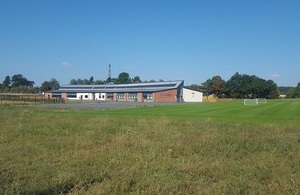
Rural sports clubs, schools and churches could power their buildings with clean electricity, cut their bills and reduce emissions thanks to a £10 million government fund.
One beneficiary of the Rural Community Energy Fund (RCEF), a project in Frome which included Frome Town FC, installed over 200 kW of solar capacity – enough to power 2,000 light bulbs and strip 333 tons of CO2 being pumped into the local environment. It also generated almost £70,000 for the local community by selling extra solar electricity back to the grid.
New community projects across England are now being encouraged to apply for feasibility grants of up to £40,000 for green initiatives, including solar battery storage, wind, hydro and geothermal heat projects. Viable proposals will also be considered for further grants of up to £100,000 for business development and planning applications, as the government hopes to increase energy self-sufficiency in rural communities and boost jobs in green technology.
It comes just days after the government became one of the first major economies to legislate for net zero emissions by 2050.
Energy and Clean Growth Minister Chris Skidmore, said:
It will take all corners of the country and sections of society to help us to tackle climate change on our path to becoming a net zero emissions economy and communities are at the heart of our mission for a greener planet.
This £10 million fund can help sports clubs, churches and schools not only save money and reduce emissions by creating their own clean energy but also make money by selling it back to the grid.
The RCEF has already supported 152 community renewable energy projects in rural areas helping generate around 105,000 kW of electricity – enough to power the equivalent of nearly 30,000 homes. It’s also helped generate thousands of pounds for community coffers thanks to selling electricity back to the grid.
In Wiltshire, RCEF funding has helped not-for profit Salisbury Community Energy develop renewable energy projects at 8 sites across the city, including:
Alison Craig, Development Manager at Salisbury Community Energy, said:
Climate change is going to hit us all hard. The flood risk to Salisbury has, according to the most recent Environment Agency data, risen significantly. This makes the move towards making Salisbury zero carbon all the more important. These grants have enabled us to take the crucial first steps in creating green community assets for our historic city.
The RCEF funding, which is to be managed by 5 Local Energy Hubs around England, is designed to catapult rural areas into the ‘clean growth’ revolution, helping people living outside urban areas benefit from the income-generating potential of renewable energy.
Communities: find out more. Applications for the new scheme will be managed by 5 regional Local Energy hubs across the UK and hosted by a local authority in each area.
1. The Rural Community Energy Fund (RCEF) is a £15 million programme, jointly funded by the Department for Environment, Food and Rural Affairs (Defra) and the Department for Business, Energy & Industrial Strategy (BEIS). It supports rural communities in England to develop renewable energy projects which provide economic and social benefits to the community. Find out more about RCEF.
2. 5 regional energy hubs will manage the application process:
A local representative within the relevant Local Energy Hub will be able to provide tailored support on local planning matters.
3. Some of the projects helped by the RCEF include:
a. Frome County Council (Somerset): Solar panel installations at Frome Medical Practice and Frome Town FC have stripped 333 tons of CO2 – the equivalent produced by 56 cars every year – out of the local air, as well as helping the practice and football club generate over £68,000 in extra revenue by selling energy back to the grid.
b. Salisbury Community Energy (Wiltshire): RCEF funding has helped 8 projects in the historic city ranging from:
c. Avalon Community Energy (Somerset): Projects in Brookside and Evercreech are set to save 52 tonnes of CO2 emissions per year – with the profits used to establish a community benefit fund to help support local initiatives.
d. Dane Valley Community Energy (Cheshire): Eaton Bank Academy in Congleton are harnessing the power of a roaring waterfall by using the funds to install hydropower generators on the Havannah Weir on the River Deane. Once installation is complete the project will generate 250MW a year – enough to power 80 houses. It will also generate almost £5,000 for local charities a year by selling extra electricity back to the grid.
e. Alston Moor Community Energy (Cumbria): The RCEF helped Alston Primary and Samuel Kings Secondary schools install 27 kW solar of panels. Over the next 20 years the project expects to bring £70,000 of profit to the school by selling energy back to the grid while saving over 150 tonnes of carbon.
f. Wigton Baths Trust (Leicestershire): A local group from Wigton with a passion for fighting climate change have benefited from £20,000 from the government’s RCEF to carry out feasibility studies into the installation of solar panels at the site. They are supporting the installation of 40 solar panels on the local swimming pool which will be used to generate 10 kW of power for use on site or for export back to the grid for a profit. The extra revenue will help the facility get back on its feet after a recent closure.
Payments will be made in full to eligible farmers in agri-environment schemes who are still waiting to be paid, the government has confirmed today (19 June).
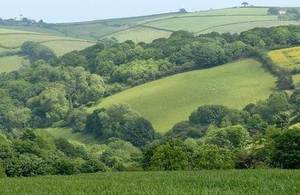
Farmers and land managers in Environmental Stewardship (ES) and Countryside Stewardship (CS) agreements do important work to protect the countryside. However, a significant number of agreement holders have not yet received full payment for work they have undertaken.
ES and CS customers with unpaid annual revenue claims, some dating back to 2015, will receive a payment for the full amount they are owed by the end of July.
This is a Treasury-funded payment, which will be made to farmers and land managers while their annual revenue claims from the Common Agricultural Policy (CAP) budget are processed.
RPA Chief Executive Paul Caldwell said:
Today we are announcing that outstanding revenue claims for agri-environment schemes will be paid in full.
We are determined to build on the improvements that we have already put in place, keep up a regular cycle of timely payments, and restore confidence in these schemes which are so important for our environment.
The RPA is writing to all unpaid customers this week to provide an update on payments. Once individual claims have been processed, the RPA will write again to customers to confirm any adjustments to be made to the final payment.
Taking land out of production for species-rich meadows, building ponds to provide a water source for wildlife, or planting trees for carbon sequestration are a few of the options under ES and CS that farmers and land managers are currently paid for.
The future Environment Land Management (ELM) scheme, which will replace CS and ES once we leave the EU, will undergo tests and trials with farmers and industry groups before being rolled out. It is expected to be fully operational in late 2024.