National Statistics: Latest cattle, sheep and pig slaughter statistics
Monthly UK statistics on cattle, sheep and pig slaughter and meat production.
Monthly UK statistics on cattle, sheep and pig slaughter and meat production.
British Ambassador to Mongolia, His Excellency Philip Malone, gave a speech to celebrate the Queen’s 93rd birthday, the ever-strengthening UK-Mongolian connections, and possibilities of green growth.
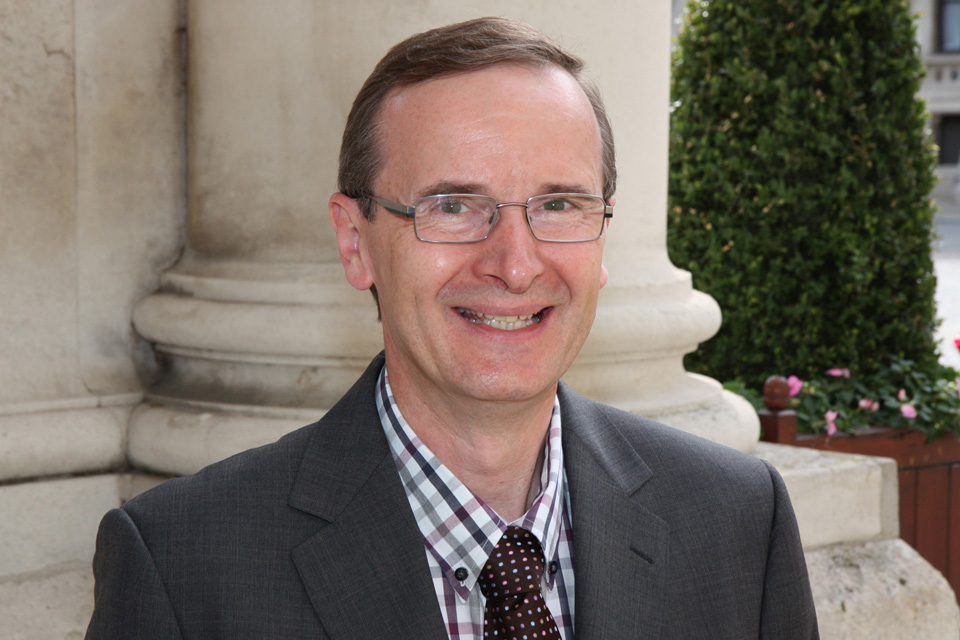
Delivered on: 14 June 2019 (Transcript of the speech, exactly as it was delivered)
Our Guest of Honour, MP Oyundari, Honourable Ministers and MPs, my ambassadorial colleagues and members of the Diplomatic Corps, ladies and gentlemen.
A very warm welcome to you all to the British Residence to join us in celebrating Her Majesty The Queen’s Birthday in Ulaanbaatar.
It has been another memorable year for Her Majesty The Queen who celebrated her 93rd birthday this year. Her Majesty became a great-grandmother for the seventh time with the birth of Archie Harrison Mountbatten-Windsor to TRH The Duke and Duchess of Sussex. Just this week Her Majesty hosted the State Visit by the President of the United States and attended the national event to commemorate the 75th anniversary of the D-Day landings of 1944. And Her Majesty made her very first post on Instagram earlier this year!
Here in Mongolia too, we have enjoyed a further year of strengthening relations between our two countries. We have seen a high number of senior visits in both directions which have underscored the strong relationship between our two countries, have progressed important areas of bilateral cooperation and highlighted the UK’s commitment as a Third Neighbour of Mongolia.
We have shared interests in trade and investment, in promoting democracy and a rules based international system and in supporting economic development and diversification in Mongolia.
Our trade and investment relationship continues to thrive. One of the British Government’s most important interests in Mongolia is to support Rio Tinto’s investment in Oyu Tolgoi, the single largest foreign investment of any kind in Mongolia which represents a significant contribution to Mongolia’s prosperity. I am hopeful that the current politically-motivated challenges faced by Oyu Tolgoi will be resolved sensibly and to the benefit of both Mongolia and Oyu Tolgoi.
Our combined trade continues to increase. The UK is Mongolia’s second-largest export destination and Mongolia enjoys a healthy surplus with the UK. To help bilateral trade, the British Government offers support through the UK’s Export Finance organisation and will introduce a UK equivalent of the EU’s GSP+ trade preference scheme when we leave the EU which will enable continued preferential access to the UK market for Mongolian exports.
A further priority for us is to expand the partnership between the London and Mongolian Stock Exchanges to support development of capital markets in Mongolia and initial public offerings of state enterprises.
We have worked together on important issues and shared interests at the United Nations. This week I attended once again the UB Dialogue on NE Asian Security and the UK will send a contingent to next week’s Khaan Quest defence exercise. Our respective peacekeepers are enjoying a very strong and collaborative relationship in South Sudan with British peacekeepers providing English lessons for their Mongolian counterparts in exchange for wrestling and martial arts training!
We continue our work to support economic development and diversification for example in education, the cashmere sector and green growth. And it is indeed green growth that is our theme for this year’s Queen’s Birthday Party.
Taking action to combat climate change and environmental degradation is a top priority for the UK government both at home and around the world. These issues are highly important for Mongolia’s economic development too.
You will see around you this evening examples of British activities and innovative technologies showcasing the UK’s Green support for Mongolia in areas such as renewable energy, low carbon initiatives. protection of the environment and conservation of Mongolia’s iconic wildlife and forest steppe ecosystem. We also have a recycling point to reflect our aim of being a Plastic Free Embassy by the end of this year. I am grateful to Shine Zuun shop, to Raspberry Pie, the National University of Mongolia and the Academy of Sciences and students from the New Mongol College of Technology for enabling these displays tonight. Do check them all out during the evening.
And we continue to make good use of the UK’s soft power with our Great Train Journey earlier this year, a video of which you can see on the LED screen and the BBC’s documentary about the UK Foreign Office which included a section on the UK/Mongolia relationship featuring the President of Mongolia among others.
One well known example of our soft power has of course been the Steppe Inne pub at the Embassy which has for so many years provided a haven for Mongolians and Brits alike. Sadly, its reign is coming to an end as we will shortly move to new offices in the Shangri-La complex after more than 50 years in our current office. But to celebrate the legacy of the Steppe Inne, we have created a mini-version for you here this evening!
Of course, there are many other things which make up the UK/Mongolia relationship and all of you here this evening play your own particular role and I am grateful to you all for that. Before I finish, I wanted to say a big thank you to our sponsors this evening: Cummins Mongolia, Jaguar Land Rover, Pandrol, Diageo, Chinggis Beer and Ahmad Tea. To our caterers, Namaste Restaurant. And of course to my wonderful Embassy team who continue to excel themselves and have once again done incredible work to make tonight’s event such a success. So please enjoy the food, drink, music and company and thank you again for coming.
Published 21 June 2019
Honourable ladies and gentlemen, I am proud to be representing Pitcairn here today, and it is a privilege to listen to such expert and thought-provoking interventions.
Pitcairn is the smallest and most remote of the members of the Pacific Community. Situated in the middle of the Pacific Ocean, halfway between New Zealand and Chile, and two days away by boat from the nearest other human settlement. It has just 50 inhabitants. It is a community that has endured, against the odds, since 1790, and is by necessity a community closely connected to the sea.
And despite its size and location, it is deeply committed to playing its part on these critical global issues under discussion today – and in particular in protecting our oceans, our sea life, and tackling the scourge of plastic pollution.
Pitcairn is proud to be home to an MPA of 835,000km2. The sea life there is extraordinary – when you dock up at Pitcairn, hundreds of sharks come to swim in the lights of the boat.
Henderson Island, one of the three uninhabited Pitcairn Islands, has the highest density of plastic pollution anywhere in the world.
And as I speak we have a scientific expedition underway on Henderson Island, clearing up the plastic, studying it and its impact on the environment, setting up cameras to monitor plastic pollution build up and impact, and highlighting the plight of plastic pollution to the wider world.
It is still underway, but to date the team have cleared 5 tonnes of rubbish and cleared 2.3km of beach. And the science outcomes will include data on ocean temperatures, depth and sea bed sampling; underwater footage of the coral reefs; a research paper on hermit crabs; data on the effect of plastic pollution on turtle nesting sites.
And of course amazing footage and reporting – through newspapers, social media and the National Geographic – highlighting the scale of the problem and helping to galvanise action to tackle plastic pollution.
We will share the outcomes of the expedition – in terms of science and communications -with our Pacific Community partners.
Ladies and Gentlemen Pitcairn is, of course, a territory of the United Kingdom, and I want to use the floor briefly to highlight our bid for a UK Presidency of COP26, in partnership with Italy. The UK and Italy have a strong track record of high ambition on tackling climate change – the UK recently became the first major economy to legislate for net zero emissions by 2050.
Our Presidency will encourage the highest possible ambition through COP26, and focus on tangible actions to deliver on the Paris agreement. We will champion robust science as the basis for global climate action. We will have a prioritise youth engagement – as it is the youth and those not yet born who will bear the brunt of climate change impacts. And we will put Small Island Developing States – and in particular the Pacific – at the heart of our Presidency, in recognition that these countries are on the frontline of this existential crisis facing our climate and our oceans.
Thank you.
Thank you Mr President, and also thank you to our briefers. I thought the briefings today were particularly insightful and clear.
Mr President, while it is good to hear that security has broadly improved in some areas over the past six months, I’d like to start by offering my condolences to the families of those killed in the attacks by members of the RRR group near Pahoua on 21 May. Violence such as this perpetrated by members of armed groups who signed the peace agreement demonstrates a flagrant disregard for the integrity of the peace process.
The United Kingdom fully supports the peace process in the Central African Republic just as we supported the African Union-led peace agreement on which it is founded. I again congratulate the African Union for their leadership and their ongoing work. It is vital that we all send our clear and unambiguous backing for a peace agreement and the peace process. With coordinated and sustained international support in particular from the region, the Central African Republic can achieve long lasting peace and stability. We call on all armed groups to cease all forms of violence and to engage in the implementation of the peace agreement.
We also reiterate the Secretary-General’s call to reinforce local peace and reconciliation committees which offer agency to women members of civil society, religious leaders and youth. As we know Mr President from many conflicts in this chamber, an inclusive peace agreement is more likely to be a sustainable peace agreement. It is vital that the Central African people feel ownership for the peace agreement and its implementation. We need to see built a better understanding of the peace process, taking into account the views and needs of Central Africans.
Mr President, there can be no peace without justice. Incitement to violence including on religious and ethnic grounds and attacks on civilians peacekeepers and humanitarian workers will, I’m afraid, continue if perpetrators are not held to account. Accountability – again, as we’ve seen in so many conflicts – is vital if the people of the Central African Republic are to see peace and stability in their country.
The United Kingdom recognises the efforts by the government of the Central African Republic, together with MINUSCA and UNDP to bring some of the perpetrators of serious crimes to account. In particular we welcome the progress made in establishing the Special Criminal Court and initiating the first investigations. And we note that the court is conducting a nationwide campaign to raise awareness of its mandate. But more needs to be done. and we urge the Central African Republic to work with the international community to expedite progress on transitional justice – an essential component for peace and stability.
Mr President, more than one in four Central Africans are displaced and half of the population is in desperate need of humanitarian assistance. The United Kingdom is committed to supporting the humanitarian situation in CAR and has provided over $140 million worth of funding since 2014 in this regard. However in 2018, only 36 per cent of the humanitarian response plan was funded. A stable secure and peaceful CAR remains in all of our interests and we encourage all member states to help fill the gap.
Mr President, the United Kingdom fully supports the work of minister and is committed to working with the Security Council in support of ministries stabilisation mandate. We support the Secretary-General’s observation that there should be a renewed focus on the peace process with MINUSCA’s participation and more responsibility taken by the guarantors and facilitators of the peace agreement. Enhanced UN political engagement will support political, peace building and security efforts in the Central African Republic. And I want to today pay tribute to all the work done by me by MINUSCA and send our thanks via the Special Representative to those who represent this Council in blue on the ground.
We also though need clear communications to the people of the Central African Republic to show them and help them understand how much MINUSCA is delivering to them. To conclude Mr President, the international community and their government the Central African Republic are making progress towards implementing key elements of the peace agreement. But there is much at stake; We must continue to focus on building peace, stability and create the conditions for safe and credible elections in 2020 which will help us get to the long term protection and prosperity that the people of CAR deserve.
Thank you Mr President.