General Assembly debate on the responsibility to protect and the prevention of genocide, war crimes, ethnic cleansing, and crimes against humanity

We call on all member states to do all in their power to prevent and end atrocities against the peoples and to prosecute those responsible for them.

From: Foreign & Commonwealth Office Delivered on: 27 May 2019 (Transcript of the speech, exactly as it was delivered)
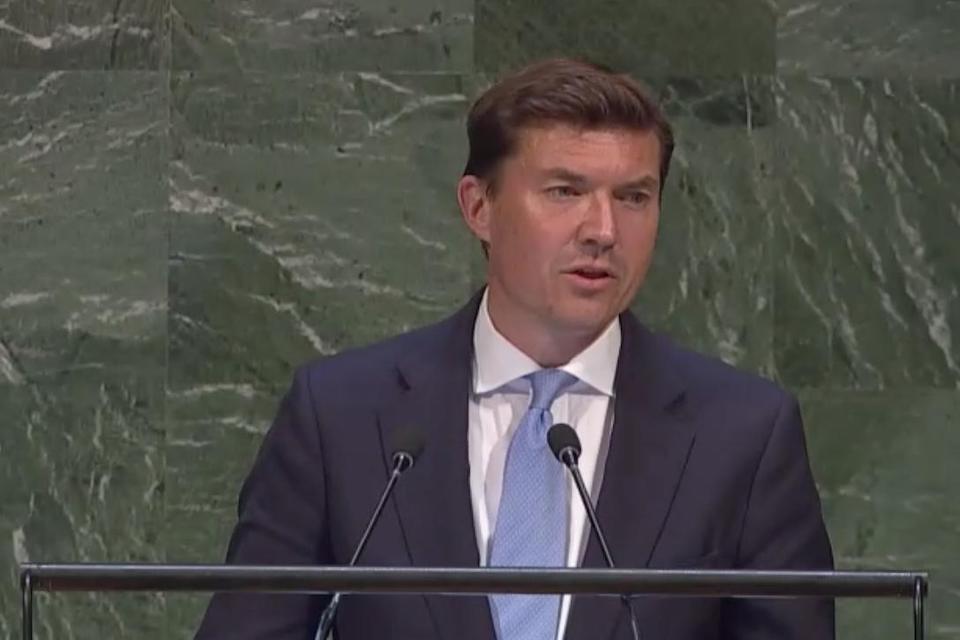
Mr Chair, this debate is an opportunity for us to reaffirm our support for the principles of our Responsibility to Protect, as endorsed in the 2005 World Summit. Yet, despite this historic commitment, it is clear as we look across the world that we are failing in our responsibility. The UNHCR reports that armed conflict and persecution have led to 70.8 million people being forcibly displaced. Some member states in this United Nations not only failed to protect their people, they willingly harm them. So our adherence R2P has never been more important. We must continue to assert that states should protect; not harm their people. We should anticipate and diffuse conflicts before they begin and where atrocities occur: we should investigate and hold those responsible accountable. So, unlike some, we strongly support the inclusion of this item on the formal agenda of UNGA 2019. We also welcome the S-G’s report and the valuable work being done by Special Advisors Adama Dieng and now Karen Smith.

Let’s remind ourselves what our common undertakings are. Under Pillar 1, states must uphold their obligations under International Human Rights law, Humanitarian Law and Refugee Law. But there are too many examples of states that fail to do so because they are either unable – but more often – unwilling to meet their responsibilities. Some of those states have spoken here this morning. Tellingly, they dispute this concept of the Responsibility to Protect. They do so because its existence is a daily repudiation of their abuses against their own people.

In Venezuela, economic devastation, starvation and, malnutrition has resulted in the flights of over 3 million Venezuelans to neighbouring countries – the largest migration in Latin American history. In Myanmar, a culture of military impunity left the civilian government unable to prevent the mass exodus of 700,000 Rohingya refugees who have fled to Bangladesh since 2017. Primarily due to the actions of the Myanmar military. There are further 244,000 internally displaced within Myanmar. The atrocities against the Rohingya and other ethnic minorities constitute ethnic cleansing on an industrial scale. And they also may constitute genocide. And in Syria – who we heard from at length this morning – there the horrifying reports of attacks on schools, hospitals, and first responders and the use of barrel bombs in Idlib are chilling examples of the devastating effect on civilians when a state not only fails to uphold its Responsibility to Protect but actively breaches its obligations to do so. Russia and the Assad regime must cease these attacks against the Syrian people, and respect their obligations under International Human Rights Law. But we must all, here, redouble our efforts to help those people whose own governments have abandoned them or actively persecuted them.

We should also do more as the Secretary- General’s reform agenda urges us: to focus on the preventative capabilities within the Responsibility to Protect – the second pillar. We know that human rights violations and abuses if left unchecked can be both an indicator of, and a first step towards, mass atrocities. We welcome the Secretary-General’s assessment that there needs to be a more systematic and structured approach across the UN system to information gathering, assessment of atrocity risks, and collective analysis so that member states can receive early recommendations for action and prevention. We agree with the Secretary-General that there should be greater use of the Human Rights Council and the Universal Periodic Review process to highlight human rights violations and abuses and to help states respond to them. And the UN Joint Office continues to play an essential role in mainstreaming R2P within the UN and on an international level. We welcome the appointment of Dr. Karen Smith as the new R2P Special Advisor and support her work in partnership with the Special Advisor on the Prevention of Genocide and bringing potential risks of atrocity crimes to the attention of the Security Council.

Mediation also has a key role: active preventative diplomacy and mediation can help prevent atrocities and reduce tensions and conflict. The UK has been a strong supporter of the strengthened UN mediation capacity. The UN Secretary-General recently reported that peacebuilding dividends in respect to Mali, Madagascar, Ethiopia, Eritrea, and South Sudan were all clearly visible from this work. We encourage states to be alert to the early signs of conflict, to engage with communities and civil society, and to make use of the Secretary-General’s Good Offices and the UN mediation Support Unit.

And these peacebuilding processes and efforts to prevent conflict also need to be inclusive and diverse. We know that women continue to build peace when formal processes fail. They lobby for peace processes to begin when parties refuse to talk, and implement peace agreements long after international donors have left. We want to see the UN through support from the international community increase the number of female Special Envoys nominated by the Secretary-General and increase both the number of women nominated for the mediation standby unit and the number of female candidates selected.

Finally, onto the third pillar: accountability and ending impunity. It is vital for deterring the recurrence of atrocity crimes. States have the primary responsibility to investigate and prosecute crimes committed within their jurisdiction. While international courts and hybrid tribunals can play an important role where states are genuinely unwilling or unable to do so, the UN should draw on diverse mechanisms to identify risks and take early action to prevent countries from falling into greater crisis. We will continue to shine a light on appalling violations of International Humanitarian and Human Rights Law in situations such as Syria and Myanmar. There should be no impunity for those who perpetrate these crimes and atrocities.

Mr Chair, there have been a handful of suggestions within this chamber this morning that Responsibility to Protect is somehow discredited. But these voices are an insignificant minority set against the voices of support we have heard today. But our words of support need to result in real action. Yesterday, in this room, we recommitted ourselves to the UN Charter. We the peoples. But what good is that if we do not recommit ourselves to the Responsibility to Protect those peoples? We call on all member states to do all in their power to prevent and end atrocities against the peoples and to prosecute those responsible for them. We owe this to those who cannot protect themselves.

Thank you Mr Chairman.


‘Claudia’s law’ to lift families of missing people out of legal limbo

New law will allow families to take over the affairs of missing loved ones.

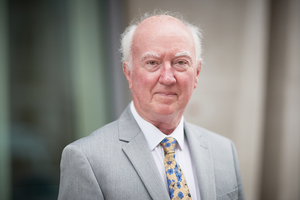
Peter Lawrence OBE

  • Previously there was no legal recourse to deal with someone’s affairs if missing
  • The new regulations will come into effect on 31 July 2019

The financial and administrative burdens faced by families of missing loved ones will be eased after legislation was laid today (28 June 2019) to pave the way for ‘Claudia’s Law’.

Named after Claudia Lawrence who went missing in 2009, the law creates a new legal status of guardian of the affairs of a missing person, allowing families to act in their best interests after they have been gone for 90 days or longer.

It will mean that families can step in and safeguard their loved one’s assets in their absence – for example, suspending direct debits for mobile phone and utility bills or making mortgage payments.

Previously there was no mechanism in England and Wales to specifically protect the property and affairs of a missing person. Instead families could only take over the financial affairs of a missing person if they declared them dead, adding emotional pressure to families during an already difficult time. This also meant they could be left unable to pay debts or prevent repossessions or insolvency

Officially known as the Guardianship (Missing Person’s) Act 2017, the new provision was introduced as a Private Members’ Bill by Kevin Hollinrake MP and backed by Claudia’s father Peter Lawrence OBE, who has been tirelessly campaigning for the change since her disappearance, together with the charity Missing People and other families affected.

Justice Minister Paul Maynard said:

No family dealing with the despair of a loved one going missing should have to endure the additional stresses of administrative problems.

This government is committed to helping families cope as best they can in these incredibly difficult circumstances and today’s legislation is an important part in that.

Claudia’s law will mean families can oversee the financial and property affairs of their missing loved one – removing a huge burden at such a traumatic time.

Families in England and Wales can apply to be a guardian following a number of statutory instruments being laid in Parliament today to bring forward provisions within the Act – with the new regulations coming into force on 31 July 2019.

Successful applicants for the guardian role will be able to look after their loved one’s affairs for up to 4 years with the option to renew. The scheme will be operated and supervised by the Office of the Public Guardian.

Susannah Drury, Missing People’s Director of Policy and Research, said:

This is a triumph for all the family members who have campaigned with us over the past decade and shown so powerfully why Guardianship is needed.

This regulation will mean that families who face the emotional distress of a disappearance will not be blocked from handling the financial and legal affairs of their loved ones.

Peter Lawrence OBE, father of missing York chef Claudia Lawrence said:

I am delighted that Claudia’s Law is coming into force at the of end of July.

This will make such a difference to the lives of the hundreds of families who have been waiting so long for it, enabling them to deal with their missing loved one’s financial and property affairs in the same way as everyone else is able to on a daily basis.

One less burden at a time when families are at their emotional lowest ebb will help enormously.

Notes to editors

The Guardianship (Missing Persons) Act 2017

  • Introduced as a Private Members’ Bill the Act received Royal Assent on 27 April 2017.
  • The Ministry of Justice launched a public consultation on 19 December 2018 to seek views on the proposals for bringing the legislation into force.
  • Specifically the new legislation will:
    • Set out rules of court and related practice directions for guardianship proceedings;
    • Detail the regulations relating to the registration and supervision of guardians by the Public Guardian, which will provide safeguards to both the missing person and the guardian;
    • Introduce fees payable to the court and to the Public Guardian including relevant remissions and exemptions; and
    • Publish a Code of Practice to provide guidance to guardians and persons making applications under the Act.
  • The Presumption of Death Act 2013 let families take over the financial affairs of a missing person, but required families to declare a missing person dead.


Fram of Shieldaig report and flyer published

Our report on the fatal man overboard from the fishing vessel Fram of Shieldaig on 7 August 2018, is now published.

The report contains details of what happened, the subsequent actions taken and recommendation made: read more.

A safety flyer to the fishing industry summarising the accident and detailing the safety lessons learned, has also been produced.

Press enquiries


‘Watercolours’ exhibition by J.M.W. Turner takes place in Chile

Embassy high-level contacts visited the exhibition of 80 watercolours created by the great British artist, which is taking place at La Moneda Cultural Center.

250 Embassy contacts were invited to watch the film ‘Mr. Turner’, directed by Mike Leigh and featuring Timothy Spall in the main role as Mr. Turner.

On the occasion of the exhibition ‘J.M.W. Turner. Watercolours. Tate Collection’, which will be open at La Moneda Cultural Centre until 28 July, the Embassy in Santiago, in conjunction with the British Council, the British Chilean Chamber of Commerce and the British Institute, organised the screening of the film ‘Mr. Turner’, directed by Mike Leigh and featuring Timothy Spall in the main role as Mr. Turner. After the film, the guests were invited to a private tour of the marvelous work of this British artist, originally sitting at Tate Britain.

Embassy’ high-level contacts, including Government representatives, businesspersons, artists and members of the academia, attended this exhibition, which was also the perfect occasion to celebrate the 102nd Anniversary of the British-Chilean Chamber of Commerce and the 80th Anniversary of the British Institute. Launched in March with the presence of Tate Britain’s Curator and Director of International Exhibitions, this is the first time that Tate is coming to Chile, and a perfect occasion to display 80 watercolours of this great British painter.

GREAT Campaign

The exhibition ‘J.M.W. Turner. Watercolours. Tate Collection’ in Chile have received support from the GREAT campaign, a cross-Government initiative aimed to showcase the best of the UK and encourage people to visit, do business, invest and study in the UK. It is the Government’s most ambitious international promotional campaign ever, uniting the efforts of the private and public sectors to generate jobs and growth for Britain.

Further information

If you want to learn more about the exhibition, visit the website of La Moneda Cultural Centre.

If you want to watch the film ‘Mr. Turner’, see the exhibition dates at the Cinema of La Moneda Cultural Centre.

For more information about the events and activities of the British Embassy in Santiago, follow us on:


PM calls for immediate action to improve response to terrorist content online

Theresa May will today urge stronger cooperation between governments and tech companies to stop terrorists from being able to ‘broadcast their atrocities in real time’ on the internet.

In her intervention at the G20 Summit’s session on Innovation, Digital Economy and Artificial Intelligence, the Prime Minister will say that governments need to learn lessons from previous attacks, including the Christchurch shootings.

She will urge close collaboration between Government security officials and social media and technology companies to prevent terrorist exploitation of the internet.

The PM will highlight a new crisis response mechanism which is being developed by technology companies and supported by the UK and others as part of the Christchurch Call.

This will ensure that companies have established networks of “online first responders”, who are directly linked to those at the heart of international governments’ Counter-Terrorism units and law enforcement agencies.

These connections will allow companies to more rapidly stop the spread of terrorist or violent extremist content following any attack in coordination with each other.

The crisis hotline would be used, for example, to share “digital fingerprints” which allow companies to prevent the re-upload of existing terrorist content on to their platforms.

The PM will also stress the need for continued development of technology to address terrorists’ abuse of live-streaming, which has a devastating impact on victims’ families and communities.

Prime Minister Theresa May is expected to say:

We should do all we can to bring the best minds together across industry to develop technology to tackle the misuse of live-streaming. We’ve seen the damage when terrorists can advertise into people’s homes – now we mustn’t let them broadcast their atrocities in real time.

The PM will say that, most urgently, governments and industry must work quickly to establish the crisis response mechanism – building on what was started through the Global Internet Forum to Counter-Terrorism.

GIFCT was created in the aftermath of the Westminster terror attack. The companies involved – Facebook, Google, Twitter and Microsoft – are already making use of technology to automatically remove terrorist propaganda.

GIFCT has already worked with over 100 smaller platforms. The PM will say we now need to see tools and expertise being shared with others to build the capacity of industry to tackle terrorist content online.

The Prime Minister is expected to say:

There are no easy answers but I am sure that by combining different methodologies to detect illegal and harmful content we will be able to find an approach that severely limits terrorists ability to live-stream. In the UK we are encouraging social media companies to develop these techniques at pace. Others should do the same.

The Prime Minister’s intervention at the G20 will build on the “Christchurch Call To Action”, which world leaders signed at the Online Extremism Summit in Paris earlier this year.

The 1.5 million copies of the video of the sickening Christchurch attacks had been removed by Facebook, but could still be found on YouTube for as long as eight hours after it was first posted. Similarly, the 2017 attacks in the UK exposed gaps in our response and underlined the need to rapidly address this issue.