Tighter restrictions on oak tree imports to come into force

Tighter measures on the import of oak trees to come into force in England to protect the country against oak processionary moth

Published 12 July 2019 From: Department for Environment, Food & Rural Affairs, Forestry Commission, Animal and Plant Health Agency, and Lord Gardiner of Kimble
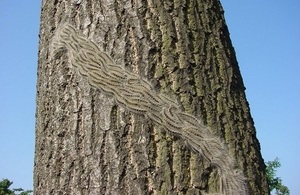
Strengthened measures on the import of most species of oak into England are to be introduced to protect native trees from the threat of the tree pest Oak Processionary Moth (OPM).

The bolstered measures will only permit imports of certain oak trees, including:

  • those from OPM free countries
  • those from designated pest free areas including Protected Zones (PZ) – an area of the European Union declared free of OPM
  • those that have been grown under complete physical protection for their lifetime.

This Statutory Instrument (SI) – which is due to be introduced in Parliament shortly– builds on measures introduced in August 2018 and applies to all oak trees, except cork oak, over a certain size. This is because these trees represent the greatest likelihood of introducing OPM into the UK PZ, as they are more susceptible to pest populations and more difficult to inspect.

The restrictions will cover both imports from overseas and the movement of trees from areas of the country where OPM is already present – in London and surrounding counties.

Biosecurity Minister Lord Gardiner said:

Biosecurity is absolutely key to everything we do and we must to do more to stop pests and diseases crossing continents and borders. That is why as a country we have more protected zones than anywhere else in the EU.

It is essential that we further strengthen our import controls on oak trees. These new measures will ensure robust protections for our oak trees from pests such as the Oak Processionary Moth.

OPM caterpillars feed on oak leaves and can increase trees’ vulnerability to attack by other pests and diseases making them less able to withstand adverse weather conditions, such as drought and floods.

Nicola Spence, Defra Chief Plant Health Officer said:

Since 2012 we have invested more than £37 million in tree health research, including a dedicated programme of research and development on oak.

We will continue to work with local authorities and land managers to tackle OPM in areas where it is present with a control programme of treatment and surveillance. These strengthened measures will help protect against further arrivals of the pest on our shores.

The Plant Health Service has received reports of an exceptional expansion of the OPM population in parts of Europe due to the hot weather experienced last year.

Woodland managers, land owners, the forest industry and tree nurseries are being urged to remain vigilant after the Plant Health Service intercepted findings of Oak Processionary Moth (OPM) caterpillars on trees recently imported from the Netherlands, and are being asked to urgently check recently planted large oak trees.

Dr Anna Brown, Head of Tree Health & Contingency Planning, Forestry Commission, said:

Those of us involved in importing or trading plants must maintain our vigilance against exotic pests and diseases such as OPM. There is a lot we can do such as buying British, only buying stock from reputable, responsible suppliers and inspecting imported plants.

These stronger requirements will increase our protection but my message remains the same: inspect, inspect and inspect again. We can’t check imported plants too often for signs of trouble. Don’t presume that because your supplier found no evidence of a pest or disease that you won’t either. You might spot something that they have missed.

If you suspect OPM, you should not attempt to destroy or move infected material yourself as the nests and caterpillars can pose some risks to human health.

Visit the Forest Research website for more information on how to identify OPM. To report sightings of pests and diseases, use the TreeAlert online portal.

The Forestry Commission, councils and land managers tackle the pest which affects Greater London and several surrounding counties with an annual control programme of treatment.




‘Teachers can be proud of contribution to pupils’ lives’, Hinds

At the Pearson Teaching Awards, Damian Hinds thanks teachers for their selfless work inspiring young people

Published 12 July 2019 From: Department for Education

Teachers have been hailed for the life-changing contribution they make to young people’s lives in a speech by Education Secretary Damian Hinds.

At the Pearson National Teaching Awards Reception at the House of Commons, the Education Secretary met short-listed teachers and praised them, and all 450,000 teachers across England, for their selfless and dedicated work in inspiring young people.

Those attending the reception had been shortlisted for one of the categories of the Teaching Awards, in recognition of their outstanding commitment to inspiring young people through their role in the classroom.

Speaking at the reception, the Education Secretary Damian Hinds said:

To be shortlisted from thousands of applications across the UK is an extraordinary achievement and a testament to your commitment to the profession. In my time as Education Secretary I’ve visited over 100 schools and getting out and about and into classrooms is one of the best bits of my job because I get a chance to see the fantastic teaching and learning that is your every day.

I am sure you all know better than me, how rewarding a career in teaching can be, but I’m also acutely aware, that at times it can be a challenging one. Over the summer holidays I hope you will take some time to reflect on your fantastic achievements and special moments from the last academic year.

The DfE sponsored two of the thirteen categories in this year’s National Teaching Awards; Outstanding New Teacher and Lifetime Achievement.

The four headteachers nominated for the Lifetime Achievement award, in recognition of their immense contribution to education and to the many thousands of young lives they have changed for the better, are listed below:

  • David Blow, The Ashcombe School, Surrey;
  • Frank McCarron, Stockport Academy, Cheshire;
  • Keith Berry, Park Community Academy, Lancashire; and
  • Teresa Roche, Dronfield Henry Fanshawe School, Derbyshire.

The five teachers nominated for the Outstanding New Teacher prize, recognising the inspiration to all new teachers dedicating their careers to shaping young minds and inspiring them to succeed, are listed below:

  • Sharmin Rahman, Crowmarsh Gifford Church of England Primary School, Oxfordshire;
  • India Brown, Fulham Cross Girls’ School and Language College, London;
  • Natalie Wilsher, The Gryphon School, Dorset;
  • Francesca Buckland, World’s End Junior School, Birmingham; and
  • Connor Goulding, Sacred Heart R.C. Primary School, Bolton.


Convicted Unqualified Immigration Advisor gets unpaid work order

Man receives 12 months Community Order

Published 12 July 2019 From: Office of the Immigration Services Commissioner

A Reading man has received a community order after being found guilty of 12 counts of providing unregulated immigration advice and service.

Howard Ogbonmwan, 52, of Byfield Road, Reading, ran a company called Visionary Community Ambassadors from Arlington Business Park, Theale, where between 2013 and 2015, he gave immigration advice and services to six individuals when he was not qualified to do so.

Specifically, Mr Ogbonmwan had not passed the relevant training or have the relevant qualifications to give advice or provide services.

At Reading Crown Court, on 21 June 2019, Mr Ogbonmwan was sentenced to 12 months Community Order with a requirement to carry out 40 hours unpaid work.

His Honour Judge Dugdale said, “If someone provides immigration services, simply writing to the Home Office or an immigration tribunal on behalf of someone, or provides advice to someone, in the course of a business, they must be regulated.

“This is a very good thing because those people who come inside our community, who seek immigration advice, support, will all be very vulnerable.

“They need regulated, reliable advice. Putting it bluntly, you just can’t have people operating as a business, giving immigration advice, who don’t have the relevant qualifications. “

Speaking about the decision, Immigration Services Commissioner John Tuckett commented, “This is not a technical or victimless crime, Howard Ogbonmwan was advising vulnerable people who could not handle their immigration cases on their own.

“People trusted him and his organisation known as Visionary Community Ambassadors but he was unqualified to represent them. In reality he did not assist these persons but added to their immigration issues with poor advice, applications and appeals. I am delighted with the outcome in this case.”

Notes to editor

  1. The OISC is an independent public body, established under the Immigration and Asylum Act 1999, to regulate the provision of immigration advice and services in the UK.

  2. For further information contact Victoria Bovill-Lamb, Manager, Investigations and Intelligence Team, OISC, on 0207 211 1591.

  3. For further media information contact Cornelius Alexander, Corporate Communications Officer, OISC, on 0207 211 1167.


Call for evidence on insolvency practitioner regulation

The government has launched a call for evidence and is seeking views on the impact of the regulatory objectives introduced for the insolvency profession in 2015.

Stakeholders are also being asked to assess whether there would be potential benefits in making changes to the current system, including establishing a single regulator for insolvency practitioners.

Responses are welcome from insolvency practitioners, Recognised Professional Bodies, trade bodies, creditors and their representatives, debt charities, and other interested parties.

Any proposals emerging from this call for evidence would be subject to further consultation.

Sarah Albon, Chief Executive of the Insolvency Service, said:

Insolvency is an important part of a dynamic economy and having an accountable and well regulated insolvency profession is absolutely vital to ensure creditors and members of the public have confidence in the system.

We welcome responses that can give us evidence on how the current system is working, including any suggestions stakeholders may have on how we can improve the regulatory framework.

The authorisation regime for IPs (insolvency practitioners) in Great Britain & Northern Ireland is set out in Part XIII of the Insolvency Act 1986.

Insolvency Practitioners are currently regulated by one of five Recognised Professional Bodies (RPBs):

  • Association of Charted Certified Accountants (ACCA)
  • Chartered Accountants Ireland (CAI)
  • Insolvency Practitioner Association (IPA)
  • Institute of Chartered Accountants England and Wales (ICAEW)
  • Institute of Charted Accountants Scotland (ICAS)

The Insolvency Service’s Insolvency Practitioner Regulation Section (IPRS) acts as the oversight regulator of RPBs in Great Britain on behalf of the Secretary of State. IPRS monitors the regulatory activities of the RPB’s and the Insolvency Service’s Annual Review of Insolvency Practitioner Regulation provides a summary each year of the work undertaken.


Government Minister praises Inverness Coastguard during visit

The vital work of HM Coastguard at one of the UK’s busiest search and rescue helicopter bases has been praised by Cabinet Office Minister Brandon Lewis today.

Mr Lewis visited the Inverness Coastguard to see how the helicopter crews and ground staff train for and carry out life-saving missions, ranging from mountain rescues and aiding ships stranded at sea to missing person searches.

Latest statistics show that of the 1,606 rescue operations carried out in the UK during the past year, 40% were undertaken in Scotland by the coastguards at Inverness and three other Scottish bases.

Cabinet Office Minister Brandon Lewis said:

HM Coastguard is the only UK-wide emergency service. Working as a national network highlights how the scale and size of our Union’s infrastructure helps to keep people safe all across the UK.

Our Coastguard helicopter teams provide a brilliant service to protect everyone who visits or works in our coastal and mountain regions, no matter where they are in the UK.

Mr Lewis was given a first-hand look at 2 new state-of-the-art helicopters, which cost a combined £40m. They are helping rescuers get to injured climbers and walkers quicker and to take on an ever-growing range of missions.

The new helicopters are part of a £1.9bn investment by the UK Government in search and rescue helicopter infrastructure to make sure all of the UK’s bases have everything they need to keep the nation’s coastlines safe.

Kevin Drodge, a Captain at the HM Coastguard Inverness helicopter base, said:

We are pleased to welcome Brandon Lewis MP today and to give him an insight into the base’s facilities, in terms of being prepared to undertake the crucial, life-saving work we do to keep people safe in Scotland.

Our priority is getting someone home safely from a search and rescue operation, whether that be at sea or in the mountains. Our base not only has state-of-the-art helicopters, but also the facilities and support we need to ensure HM Coastguard’s world class search and rescue standards.