Treasury renews support for Northern Powerhouse

The Exchequer Secretary, Simon Clarke MP, today heads to the Greater Manchester region to kick off a nationwide tour where he will pledge the Treasury’s unflinching support to revitalising left-behind areas so they enjoy the opportunities ahead as the UK leaves the EU.

The Minister visits Bolton, Farnworth and Astley to see how devolution is delivering for people outside of the major cities in the region and explore how the new £3.6 billion Towns Fund can further help secure a bright future. He will discuss with local leaders how the Treasury has placed support for the Northern Powerhouse project as one of its core objectives, backed up in recent weeks through the focus on transport, crime and health investment across the North.

He will also visit Manchester to meet metro mayor, Andy Burnham, to talk about ways of delivering on the region’s devolution deals, and driving growth and public service reform.

In Astley, the Minister will see the first new cycling route in Greater Manchester’s ‘Bee Network’ which has been achieved through £312.5 million from the government’s Transforming Cities Fund. In Bolton, he will see a newly refurbished bus station, while in Farnworth he will visit the local high street which is shortlisted to receive new government funding.

Last week, the Chancellor Sajid Javid pledged a step change in infrastructure investment right across the country – so that every corner of the UK can thrive. The Chancellor committed the Treasury to publishing a landmark National Infrastructure Strategy in the Autumn setting out long-term priorities.

Speaking ahead of the trip, the Exchequer Secretary to the Treasury, Simon Clarke, said:

The Prime Minister was clear that we want to see success spread across not just our big cities but our towns and rural areas – and it is our priority to support regional growth and prosperity to maximise the potential of places like Bolton, Farnworth and Astley as we leave the EU. As a Northern MP, I know the hunger that exists to change how people view our region – and indeed how we view ourselves and our future.

Here at the Treasury we will play our part by ensuring Britain gets the world-class infrastructure it needs to boost productivity, growth and quality of life, and I look forward to hearing people’s views. We want every corner of our great nation to thrive, and will deliver a step change in infrastructure investment across the country.

The Northern Powerhouse – from its bustling, diverse cities, to culturally and industrially rich towns and regions – has our full support and we won’t rest until we have levelled out opportunities and unlocked the potential of every part of the UK.

Additional Information

Over the coming weeks, the Minister will visit other areas across the country that qualify for towns fund investment and that have benefitted from devolution deals and the transforming cities fund. He will explore with local leaders their plans to boost growth and improve communities’ quality of life. This will include visits to other parts of the Northern Powerhouse and different regions across the country.

o It was recently announced health services across Greater Manchester will be allocated £119.2m, following the announcement of £850m in new funding to upgrade outdated facilities and equipment. The announcement covers:

  • Greater Manchester Mental Health NHS Foundation Trust will receive £72.3m to build a new adult mental health inpatient unit in Manchester

  • Stockport NHS Foundation Trust will receive £30.6m to provide a new Emergency Care Campus Development at Stepping Hill Hospital incorporating an Urgent Treatment Centre, GP assessment unit and Planned Investigation Unit

  • Tameside and Glossop Integrated Care NHS Foundation Trust will receive £16.3m to provide emergency care facilities at Tameside General Hospital in Ashton-under-Lyne


Government welcomes more pupils studying science

Education Secretary Gavin Williamson has said the increase in pupils taking science subjects at A level will equip this generation with the skills the country needs.

Pupils up and down the country received the results of their A levels today and many of them are learning whether they have been successful in applying to university.

A level entries are higher than expected, given the population is estimated to have decreased by around 3% while A level entries have only decreased by 1.3%.

Statistics published today show:

  • Entries to STEM subjects have increased for both boys and girls – overall a 26.2% rise since 2010;
  • More girls now do science subjects – biology, chemistry and physics combined – than boys and overall science entries are up by 7.4%, despite the fall in the population;
  • Entries to Spanish have risen making it the most popular language at A level while there has been a relative increase in entries to German for the first time since 2007;
  • Maths remains the most popular subject at A level;
  • Since 2010, total entries in mathematics and further mathematics have increased by 20.0%, despite a 10.7% fall in the A level cohort population in the period;
  • Entries to both history and geography have increased;
  • Girls narrowly outperform boys at A and A* combined, reversing last year’s trend, but boys did better than girls at A*;
  • The North East has the highest overall pass rate and the biggest percentage improvement at A and A* grades;
  • There has been a rise in non-EU students coming to the country to study; and
  • A rise in nursing admissions – bucking a recent trend.

Prime Minister Boris Johnson said:

I congratulate everyone receiving their A level results today.

The new government will do all we can to improve funding for education and to give schools the powers they need to deal with bad behaviour and bullying so that pupils can learn.

We also must focus much more attention on providing great apprenticeships for all those who do not go to university.

Secretary of State for Education Gavin Williamson said:

Receiving your A level results is a huge day for all involved so I want to congratulate pupils, parents and teachers on all their hard work.

I’m delighted to see more pupils choosing science-related subjects. This is encouraging particularly as we look to boost science in this country and the skills we’ll need in the future.

Overall the reforms we’ve put in place since 2010 and increasing rigour in our schools are giving pupils more opportunities.

This year sees the continuation of the Government’s reforms to A levels in England, with almost all A level exams sat this summer being reformed qualifications. The new A levels have been updated to provide the best possible preparation for further study and the world of work, and have all their exams at the end of the course, removing continual testing and enabling students to gain a deeper understanding of the subject before they are assessed.

Thousands of pupils getting their results today will go on to do an apprenticeship. Apprenticeships offer students high-quality training and a range of exciting career options. They have more off-the-job training than in previous years and have the buy-in of some of country’s leading employers, including Lloyds Banking Group, Royal Mail and Berkeley Group.


Fishermen in over 12m fleet urged to register now to be ready for EU exit

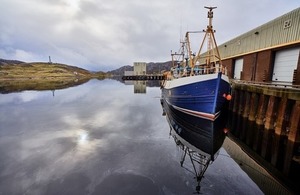
Boat in fishing harbour

Access for UK boats to fish in EU, Norwegian or Faroese waters after the UK leaves the EU will be a matter for negotiation. Should access to fishing be agreed, fishermen in the over 12m fleet will have to ensure their vessel has an IMO number to be licensed to fish outside UK waters when we leave the EU.

The UKFAs are urging fishermen to apply to the IMO now to make certain they have registered in good time for the UK’s departure.

IMO registration is free. UK fishing vessels will also have to submit their number to the Single Issuing Authority (SIA), established by the Marine Management Organisation (MMO) on behalf of the UKFAs, to manage licensing for commercial fishing in non-UK waters. The deadline for IMO numbers to be submitted to the SIA is the end of September.

Fishermen can download the IMO registration application form here. Fishing vessel owners should complete the form and send it to ship.imo@ihs.com to register with the IMO.

When fishermen have received their IMO number they should email it to the SIA at UKSIA@marinemanagement.org.uk along with their Port Letter and Number (PLN) and Registry of Shipping and Seamen (RSS) number.

All skippers and vessel owners, whether they have an IMO number or not, are also asked to register their email address with the SIA, to speed up issuing of the new licences that will be required when the UK leaves the EU.

Published 15 August 2019
Last updated 22 August 2019 + show all updates

  1. New link added
  2. First published.


One million granted status under the EU Settlement Scheme

The Home Office has today (15 August 2019) announced that over one million people have been granted settled or pre-settled status under the EU Settlement Scheme.

The milestone comes 4 and a half months after the scheme fully launched on 30 March 2019. More than 50,000 people applied in the opening weekend alone.

Minister of State for the Home Office Brandon Lewis said:

EU citizens have made incredible contributions to our country – which is why I’m so pleased that over one million people have been granted status, enshrining their rights in law.

The EU Settlement Scheme is designed to make it straightforward for EU citizens and their family members to stay after the UK leaves the EU. To apply they only need to complete 3 key steps – prove their identity, show that they live in the UK and declare any criminal convictions.

There is a wide range of support available for EU citizens and their families via phone, email and in person. This includes a dedicated Settlement Resolution Centre, over 300 Assisted Digital locations supporting those with limited computer access or skills and a network of 57 organisations, funded by the Home Office, helping vulnerable people such as the homeless, disabled and elderly to apply.

Barbara Drozdowicz, Chief Executive Officer at the East European Resource Centre said:

We are delighted that the EU Settlement Scheme has reached this important landmark.

So far, our charity has helped more than 700 vulnerable people from Central and Eastern Europe to submit applications to the scheme.

The Home Office has today published the latest statistics on the EU Settlement Scheme up to 31 July 2019, showing that the highest number of applications has come from Polish, Romanian, Italian and Portuguese people.

Employers are also stepping in to support their own staff to make applications and making use of a Home Office employers toolkit, designed to give them practical advice to support their staff.

Neil Yorke, Director at The Best Connection said:

The Best Connection is proud to be one of the largest employers of EU nationals in the UK.

We have received helpful guidance from the Home Office which, along with our own initiatives, has encouraged our EU national workforce to apply and obtain status so that they continue to live and work in the UK after Brexit.

Deal or no deal, EU citizens and their family members will have until at least 31 December 2020 to apply. The figure of one million people having been granted status has been obtained from internal management information and is not part of the published statistics.


AAIB report: Agusta Westland AW189, loss of visual references

The helicopter was tasked to rescue three climbers on the mountain at night. The crew made several attempts to reach them from different directions, but due to low cloud were unable to do so. On the fourth attempt, from another direction, the visual references seen through each pilot’s night vision system were lost and a turn back down the re-entrant was attempted.

Due to the proximity of the ground, the pilot climbed the helicopter but lost airspeed after which the helicopter yawed to the right. The pilot flying attempted to use the autopilot system upper modes to assist him but decoupled them because they caused the collective control lever to lower. The helicopter spot-turned through 370 degrees before it cleared the top of the cloud. Control was regained and the aircraft subsequently landed. The climbers were recovered on foot by the mountain rescue team.

Shortly after the incident, the operator introduced a scenario-based training exercise for all pilots that reproduced the incident during six-monthly recurrent training and testing. The training was continued with an emphasis on unusual attitude recovery.

Read the report.