Bishop of Hereford: 3 September 2019

placeholder

The Queen has approved the nomination of the Right Reverend Richard Charles Jackson MA MSc, Bishop of Lewes, for election as Bishop of Hereford in succession to the Right Reverend Richard Michael Cokayne Frith BA MA, who is due to retire on 30th November 2019.

Richard was educated at Christ Church, Oxford and Cranfield University and trained for ministry at Trinity College, Bristol. He served his title at All Saints, Lindfield in the Diocese of Chichester and was ordained Priest in 1995.

In 1998, Richard was appointed Vicar of Holy Trinity, Rudgwick and in 2005 took up the additional role of Rural Dean of Horsham. Richard became Diocesan Adviser for Mission and Renewal in 2009 and took up his role as Bishop of Lewes in 2014.

Published 3 September 2019


New HIV diagnoses fall by a third in the UK since 2015

Data published today, Tuesday 3 September 2019, by Public Health England (PHE) reveal that new HIV diagnoses in the UK have fallen to their lowest level since 2000. New diagnoses fell by almost a third (28%) from 6,271 in 2015 to 4,484 in 2018.

New HIV diagnoses have been declining in both gay and bisexual and heterosexual populations. The steepest falls have been seen among gay and bisexual men, where new diagnoses declined by 39% between 2015 and 2018. The biggest falls have been among gay and bisexual men who are:

  • white (46% decrease from 2,353 in 2015 to 1,276 in 2018)
  • born in the UK (46% decrease from 1,627 in 2015 to 873 in 2018)
  • aged 15 to 24 (47% decrease from 505 in 2015 to 269 in 2018)
  • living in London (50% decrease from 1,459 in 2015 to 736 in 2018)

During the same period, new diagnoses have also fallen by a quarter (24%) among people who acquired HIV through heterosexual contact.

The continued decline of HIV diagnoses is largely due to the success of combination HIV prevention over the past decade, which includes HIV testing, condom provision, the scale-up of pre-exposure prophylaxis (PrEP) and anti-retroviral therapy (ART) – drugs that keep the level of HIV in the body low and prevent the virus being passed on.

Dr Valerie Delpech, Head of HIV Surveillance at Public Health England, said:

It is thanks to the enormous testing and prevention efforts in the UK that we are seeing further declines in new HIV diagnoses, which have now reached their lowest in almost 20 years. People with HIV now benefit from effective treatments that stop the virus being passed on to sexual partners and the number of people diagnosed late is lower than ever before.

Getting tested for HIV has never been easier, with free tests available through GP surgeries, local hospitals and sexual health clinics, as well as through a self-sampling service or by using a self-testing kit. Early diagnosis means early effective treatment, which can prevent you passing on HIV.

The most common way of getting HIV in the UK is through unprotected sexual contact with a person unaware of their HIV infection. You can protect yourself from HIV through consistent and correct condom use with new and casual partners, through using PrEP, or if your partner is living with HIV, through knowing their virus is undetectable. Condom use will also stop you getting or transmitting other STIs.

The quality of HIV care and treatment continues to be excellent in the UK. In 2018, 94% of people in the UK living with diagnosed HIV HIV and accessing HIV treatment were virally suppressed and cannot pass on HIV.

Dying from HIV when diagnosed early in the UK is rare today. A person diagnosed early with HIV and on treatment now has the same life-expectancy as a person without HIV.

Despite falling rates of new diagnoses there remain challenges in ensuring that more people are diagnosed early. Almost half of people (43%) newly diagnosed with HIV in 2018 were at a late stage of infection, which increases the risk of death within a year ten-fold compared to people diagnosed promptly.

Public Health Minister Jo Churchill said:

I am delighted to see new figures released today which show we are well on our way to achieving our ambition of zero HIV transmissions in England by 2030, with HIV diagnoses at their lowest level since 2000.

This decline in diagnoses is a result of our unwavering commitment to prevention which has led to more people getting tested, and has allowed people with HIV to benefit from effective treatment, stopping the virus from spreading further. However, I am not complacent and remain dedicated to ensuring we reach our target of zero new HIV transmissions by 2030.

There are very effective treatments for HIV that enable people diagnosed with the virus to live a long and healthy life and minimise the risk of onward transmission. Early diagnosis through regular testing ensures people get the greatest benefit from these HIV treatments. HIV testing is freely available through GP surgeries, local hospitals and sexual health clinics, as well as through a self-sampling service or by using a self-testing kit.

PHE, alongside other government and third sector organisations, is working to control HIV by 2030 and these new figures are an encouraging sign that this is achievable.

Background

  1. HIV indicators are provided at local authority level on Public Health England’s Sexual and Reproductive Health Profiles. These profiles include epidemiological data about new HIV diagnoses and people receiving HIV care at the regional and Local Authority level and are based on place of residence. The profiles include existing measures of HIV testing coverage, new HIV diagnosis rates, late diagnoses and diagnosed prevalence rates. In addition, there are new measures of prompt ART treatment initiation and virological success. These profiles can be used to assist with monitoring the progress towards ending HIV transmission and can be analysed on the PHE Sexual Health Profiles.
  2. In these reports, apparent trends over time must be interpreted with care, as each data source is subject to reporting delay which varies over time.
  3. The data shows that:
    • In 2018, 4,484 people were newly diagnosed with HIV in the UK, a reduction by 28% compared to the 6,271 diagnoses reported in 2015. There has been a 6% decline relative to 4,761 new diagnoses reported in 2017.
    • There were 1,908 new HIV diagnoses among gay, bisexual men and other men who have sex with men in 2018, a 39% reduction from 3,121 diagnoses in 2015.
    • There were 1,550 were new diagnoses of HIV acquired through heterosexual contact in 2018, a 24% decline from 2,304 diagnoses in 2015.
    • There were 643 new HIV diagnoses among black African heterosexuals in 2018, a reduction of 27% compared to the 877 diagnoses in 2015.
    • Overall, in 2018 43% of people were diagnosed at a late stage of infection (CD4 count <350 cells/mm3 at diagnosis) compared to 52% in 2009. Late diagnosis is associated with a ten-fold increased risk of short term mortality (within a year of diagnosis).
    • In 2018, there were 225 people with an AIDS-defining illness reported at HIV diagnosis compared to 240 people in 2017.
    • In 2018, there were 473 deaths among people with HIV. Over the past decade there has been a 20% decrease in the number of deaths in people living with HIV (591 in 2009 to 473 in 2018).
    • In 2018, 96,142 people were receiving HIV-related care in the UK, with 97% (93,384/96,142) receiving anti-retroviral therapy to control the virus. Of people with diagnosed HIV receiving anti-retroviral therapy in 2018, 97% (88,528/91,266) were virally supressed (defined as a viral load ≤200 copies per ml). This means that 94% (90,583/ 96,142) of people living with diagnosed HIV in the UK and accessing HIV treatment were virally suppressed and cannot pass on HIV.
  4. Since 2015, HIV diagnoses totals for males and females have been based on gender identity (as opposed to sex) and include transgender people. The overall total includes people who identify gender in another way or with gender identity not reported. Breakdowns of the number of transgender people are presented for 2015 onwards in the Key Populations data tables.
  5. HIV is a virus which damages the cells in people’s immune system and weakens the ability to fight everyday infections and diseases. Without treatment, after an average of 10 to 15 years, the infection is fatal.
  6. PHE advises gay and bisexual men to have an HIV test at least once a year, or every 3 months if having unprotected sex with new or casual partners. Black African men and women are advised to have a regular HIV and STI screen, if they are having unprotected sex with new or casual partners.
  7. You can find out more information about how to prevent and get tested for HIV on NHS.UKHIV self-sampling services offer an alternative to traditional testing offered by GPs and sexual health clinics. www.FreeTesting.hiv has information about free HIV self-sampling test kits.
  8. It is too early to know the size of the expected additional effect on underlying HIV transmission and new HIV diagnoses of the scale-up of pre-exposure prophylaxis (PrEP). PHE is supporting NHS England in delivering the 3-year PrEP Impact Trial, which began in October 2017 and will culminate in 2020.
  9. Along with the current advancement in treatment and reductions in new diagnoses, projects funded by the PHE Reproductive Health, Sexual Health and HIV Innovation Fund demonstrate that innovative, community-led interventions also have a significant role to play in preventing onwards transmission and encouraging early diagnosis among risk groups.


Bankrupt’s restrictions extended after falsifying application

Grzegorz Kania (36), currently residing in Warsaw, applied for his own bankruptcy in September 2018 with liabilities of £37,000.

As part of his bankruptcy application, he was obliged to disclose any large purchases or transfers made in the five years prior to his bankruptcy.

He failed, however, to disclose to the Official Receiver that, in the six months leading up to his application, he had spent almost £75,000.

Grzegorz Kania purchased land in Poland for almost £25,000 in March 2018 but in the name of a connected person and not his own. Two months later, he also withdrew £50,000 from a successful personal injury claim and spent it on non-essential items.

When the Official Receiver investigated the bankrupt’s estate, these expenditures were brought to light.

Usually, bankruptcy restrictions are lifted after 12 months, but Grzegorz Kania’s actions were severe enough that the Official Receiver sought to extend them.

On 13 August 2019, the Secretary of State accepted an undertaking from Grzegorz Kania for a period of eight years. Effective from that date, he is subject to range of restrictions, including being unable to borrow more than £500 without telling a lender he is bankrupt and acting as a director of a company without the court’s permission.

Gerard O’Hare, Official Receiver for the Insolvency Service, said:

Grzegorz Kania wilfully spent thousands of pounds in the months before declaring himself bankrupt rather than use it to pay his debts. Even though he failed to disclose this, the bankruptcy processes ensured these payments were brought to light.

The bankruptcy regime is there to not only help people pay their debts but also to protect creditors’ interests. People applying for bankruptcy are therefore obliged to complete their application fully and honestly and those who do not can expect to have their restrictions extended for substantial periods.

All public enquiries concerning the affairs of the bankrupt should be made to: The Official Receiver, Level One Apex Court City Link Nottingham NG2 4LA Tel: 0115 852 5000.

Grzegorz Kania is formerly of Burton-on-Trent but currently resident in Warsaw, Poland. His date of birth is June 1983.

Details of Grzegorz Kania’s Bankruptcy Restrictions Undertaking are available on the Individual Insolvency Register.

Further information about the work of the Insolvency Service, and how to complain about financial misconduct, is available.

You can also follow the Insolvency Service on:


Heroic captain awarded for 75 years of outstanding service

  • recipients of 2019 Merchant Navy Medal awards announced
  • 19 mariners to be recognised across a range of categories
  • 3 September 2019 also marks Merchant Navy Day, honouring the significant role our Merchant Navy seafarers make to the UK

A 93-year-old seafarer who began his nautical career in 1943 has been given the highest honour in shipping, Maritime Minister Nusrat Ghani has announced today (3 September 2019).

Captain Angus McDonald is one of 19 men and women receiving a Merchant Navy Medal for Meritorious Service to the UK’s maritime industry.

Setting out to sea with the Merchant Navy at the height of World War 2, Captain McDonald served in international waters for more than 20 years and navigated the treacherous seas off the West African coast as a port pilot in Ghana.

Another recipient of this year’s prestigious award is Captain Rachel Dunn, who started her career in the Merchant Navy and later became the first female Admiralty Pilot.

Nusrat Ghani, Maritime Minister, said:

It is a privilege to announce the recipients of this year’s Merchant Navy Medal, for their service both at sea and on land.

These remarkable men and women have gone above and beyond their duty to provide an invaluable service not only to our maritime industry, but to our nation.

Their impressive contributions to the maritime sector have boosted the heart of the industry while also paving the way for the future generations of seafarers – and I would like to thank them for their work.

The annual Merchant Navy Day celebrates the vital role of Merchant Navy seafarers and the contribution they continue to make to our country, as well as their well-known service during wartime.

Other recipients of this year’s medal include Captain Mark Meade, who found his passion for all things maritime working alongside his father on small workboats and tugs.

Throughout his career, Captain Mark Meade has worked to improve the safety and standards of the industry and is now Chairman of the National Workboats Association.

Captain Fran Collins, who started as a cadet and sailed on deep-sea oil and gas tankers, went on to become the first female captain of a Condor ferry and is now the CEO of Red Funnel. She has also been honoured with a Merchant Navy Medal.

The medals will be officially awarded at a ceremony at Trinity House in November.


Prime Minister’s statement: 2 September 2019

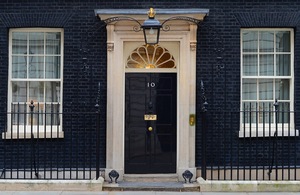
Five weeks ago I spoke to you from these steps and said that this Government was not going to hang around and that we would not wait until brexit day – October 31 – to deliver on the priorities of the British people.

And so I am proud to say that on Wednesday Chancellor Sajid Javid is going to set out the most ambitious spending round for more than a decade.

I said I wanted to make your streets safer – and that is why we are recruiting another 20,000 police officers.

I said I wanted to improve your hospital and reduce the waiting times at your GP.

And so we are doing 20 new hospital upgrades in addition to the extra £34 billion going into the NHS.

And I said I wanted every child in this country to have a superb education and that’s why I announced last week that we are levelling up funding across the country and spending much more next year in both primary and secondary schools.

And it is to push forward this agenda on these and many other fronts that we need a Queen’s speech in October.

While leaving due time to debate brexit and other matters.

And as we come to that brexit deadline I am encouraged by the progress we are making.

In the last few weeks the chances of a deal have been rising, I believe, for three reasons.

They can see that we want a deal.

They can see that we have a clear vision for our future relationship with the EU – something that has perhaps not always been the case.

And they can see that we are utterly determined to strengthen our position by getting ready to come out regardless, come what may

But if there is one thing that can hold us back in these talks it is the sense in Brussels that MPs may find some way to cancel the referendum

[Political content removed]

I don’t think they will. I hope that they won’t

But if they do they will plainly chop the legs out from under the UK position and make any further negotiation absolutely impossible

[Political content removed]

I want everybody to know – there are no circumstances in which I will ask Brussels to delay. We are leaving on 31 October, no ifs or buts.

We will not accept any attempt to go back on our promises or scrub that referendum

Armed and fortified with that conviction I believe we will get a deal at that crucial summit in October

A deal that parliament will certainly be able to scrutinise

And in the meantime let our negotiators get on with their work

Without that sword of Damocles over their necks

And without an election, which I don’t want and you don’t want

Let us get on with the people’s agenda – fighting crime, improving the NHS, boosting schools, cutting the cost of living, and unlocking talent and opportunity across the entire United Kingdom

With infrastructure education and technology

It is a massive agenda. Let’s come together and get it done – and let’s get Brexit done by October 31.