Communities Secretary commits funding to tackle online hate

Communities Secretary Rt Hon Robert Jenrick MP today (15 September 2019) confirmed £100,000 funding to stem the spread of antisemitic material online, as he underlined this government’s absolute commitment to tackling hatred in all its forms.

The additional funding will support the Antisemitism Policy Trust’s ongoing work to tackle the spread of racist tropes online and challenge harmful narratives about Jewish people. This forms part of the government’s wider agenda to tackle all forms of religiously and racially motivated hatred.

The organisation will use the funding to develop short, educative videos to counter, debunk, and undermine the proliferation of hateful antisemitic material online.

Communities Secretary Rt Hon Robert Jenrick MP said:

Antisemitism has absolutely no place in our society and I am committed to tackling it at its root.

Online hatred can be a pernicious force that not only causes immediate harm to its victims but can embolden its perpetrators.

By funding innovative programmes that educate future generations and stem the spread of harmful ideologies we will stamp out this scourge, wherever it appears.

In a speech at a Board of Deputies of British Jews event, Mr Jenrick is also due to commit to writing to all councils and universities this week demanding that they adopt the International Holocaust Remembrance Alliance (IHRA) definition as a matter of urgency.

Universities Minister Chris Skidmore MP said:

There is no place in our society for hatred or any form of harassment and it is frankly appalling that the battle against antisemitism still exists.

Universities should recognise the internationally renowned IHRA working definition of antisemitism accepted by the government.

I have already written to all vice chancellors earlier this year urging them to do so, but in recent weeks there have been alarming incidents demonstrating the need for further action and for universities to protect the welfare and act seriously on the concerns of Jewish students.

Universities must not risk damaging their reputation by not acting swiftly to root out antisemitism when it reveals itself.

Antisemitism in the UK continues to be a cause for concern. The most recent national hate crime statistics published by the Home Office last October showed that Jewish people were the most likely group to experience religiously motivated hate crime.

The Community Security Trust (CST), the leading Jewish organisation monitoring and supporting victims of antisemitism, recorded 1,652 reported antisemitic incidents in 2018 – their highest annual total on record for the third year running.

This government remains committed to protecting faith communities and the freedom to worship.

During the latest Spending Round, the Chancellor doubled the funding for the Places of Worship Fund to £3.2 million, and we continue to fund education courses to tackle the scourge of racism at its root.

The government adopted the International Holocaust Remembrance Alliance (IHRA) Working Definition of Antisemitism in 2016. We were the first government to do so and have been at the forefront of getting it adopted internationally.

We are providing £14 million this year, and provided over £65 million to date, for the Protective Security Grant to protect Jewish schools and institutions.

In July 2019, John Mann was appointed as an independent adviser on antisemitism. He will be responsible for providing the Ministry of Housing, Communities and Local Government with independent advice on the most effective methods to tackle antisemitism. He will also collaborate with Lord Pickles, the UK’s Special Envoy for Post-Holocaust Issues, as well as Rehman Chishti MP, the Special Envoy for Freedom of Religion and Belief, to ensure a consistent approach.

The Antisemitism Policy Trust works to educate and empower parliamentarians, policy makers and opinion formers to address antisemitism.

The APT work with British parliamentarians, policy makers and opinion formers to address policy issues relating to antisemitism. They also provide the secretariat to the British All-Party Parliamentary Group Against Antisemitism and work internationally with parliamentarians and others to address antisemitism.


Nationwide government events launched to help businesses get ready for Brexit

  • New Brexit Business Readiness Events Roadshow gets underway as part of the ‘Get Ready for Brexit’ campaign
  • Advisors from all relevant government departments will be at each event to provide practical advice and support to local businesses
  • Over 30 events spanning the UK will run for five weeks

Government advisors from the Department for Business, Energy and Industrial Strategy, the Home Office, HMRC, the Department for International Trade, the Department for Environment, Food & Rural Affairs and the Department for Culture, Media and Sport will be on hand for businesses to ask questions and receive advice on a range of areas where they may need to make changes to get ready for Brexit ahead of 31 October. We are encouraging businesses to make sure they are fully prepared and advice will include the importing and exporting of goods, exporting services, employing EU citizens and businesses that transfer data, and the extra support available in the local area.

The free events will combine a keynote address from senior government officials, advice stands and in-depth sessions to give businesses the information they need to get ready for Brexit. These will run over the next five weeks, with the first events taking place in Northampton on 16 September, Nottingham on 17 September, Swindon on 19 September and London on 20 September.

Business Secretary Andrea Leadsom said: 

The UK will be leaving the EU on 31 October and my number one priority is ensuring businesses have the help they need to get ready for Brexit and take advantage of the opportunities beyond. 

The whole of government is stepping up a gear and increasing the pace of our preparations. Businesses have told us that they also want more face to face support and we are listening.

These local events will provide the advice they need from all relevant government teams in one place. I encourage any business who wants more information about what they need to do to attend.

Other activity to enable preparations by businesses includes:

  • An additional £2.1bn for Brexit preparations, doubling funding for this year – HMT total funding for Brexit is £6.3 billion. This includes £108 million to support businesses to get ready.
  • Making £10m available to business groups and trade associations to help them to help businesses prepare for Brexit – the ‘Brexit Readiness Fund’.
  • Setting up a new Business Finance Council to ensure small businesses get the working capital and investment they need. This is made up of senior representatives from the UK’s leading banks and alternative lenders, co-chaired by the Business Secretary and HMT.
  • Making £1.3 billion available to lenders in guarantee schemes through the government-owned British Business Bank, so they can enable their SME customers to invest in capital, increase export capabilities and manage cashflow. The British Business Bank is already providing over £6.6billion of finance to almost 90,000 SMEs.
  • Removing a key administrative burden for businesses who trade with the EU by auto-enrolling nearly 90,000 VAT-registered businesses with an essential Economic Operators Registration and Identification (EORI) trading number. We urge non-VAT registered businesses to register for an EORI on GOV.UK – the process takes less than 10 minutes.
  • Securing agreements which cover £89 billion worth of trade and provide certainty for businesses trading with countries around the world. This has moved from £39 billion since March.
  • Advice stands will cover issues ranging from the importing and exporting of goods, exporting services, employing EU citizens and businesses that transfer data, to the support available in the local area. Government advisors will be on hand from the Department for Business, Energy and Industrial Strategy, the Home Office, HMRC, the Department for International Trade, the Department for Environment, Food & Rural Affairs and the Department for Culture, Media and Sport.

Notes to Editors

  • Businesses are urged to search “Brexit Business Readiness Event” to register to attend
  • The website also provides up to date information on locations and venues for events
  • In most locations, sessions will run in the morning and the afternoon
  • This event is part of the largest single communications and engagement campaign undertaken by the UK government to get people ready for Brexit. More details here

Wider support for business 

  • Business Ministers have also been hosting national and regional roundtables to engage with businesses on a regular basis.  
  • A new Business Finance Council, chaired by the Business Secretary, will bring together leading lenders to ensure small businesses get the working capital and investment they need 
  • There is £1.3 billion available to lenders in guarantee schemes through the government-owned British Business Bank, so they can enable their SME customers to invest in capital, increase export capabilities and manage cashflow. And the British Business Bank is currently supporting over £6.6billion of finance to almost 90,000 smaller businesses nationwide 
  • HMRC recently announced it is auto-enrolling 88,000 VAT-registered businesses for EORI numbers so they can continue to trade with their customers in the EU after 31 October.  
  • The government has published approximately 750 pieces of communications on No Deal since August 2018, including over 100 technical notices explaining to businesses and citizens what they need to do to prepare.  


Drone strike on Saudi Arabia: UK statement

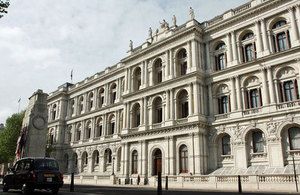
UK condemns Houthi drone attack on Aramco oil facilities in Saudi Arabia.


Drone strike on Saudi Arabia oil facilities: UK statement

placeholder

A Foreign Office spokesperson said:

The UK condemns the reckless drone attack on Aramco oil facilities in Saudi Arabia this morning, for which the Houthis have claimed responsibility.

Threatening civilian areas and commercial infrastructure is dangerous, provocative and completely unacceptable. This escalation also undermines UN-led efforts to end the conflict in Yemen.

We call upon the Houthis to immediately cease such attacks. The UK remains committed to supporting the security of Saudi Arabia and to achieving a political solution to the devastating conflict in Yemen.

Further information

Published 14 September 2019


£95 million to revive historic high streets

  • 69 high streets in England will be revitalised by a £95 million cash injection
  • This is the biggest ever single investment by Government in the UK’s built heritage
  • Projects across the country will transform disused historic buildings into shops, houses and community centres
  • Funding will help traditional businesses adapt to better compete with online outlets

Increasing competition from online outlets is putting high streets across the country under growing pressure. As part of the Government’s drive to help high streets adapt to changing consumer habits, the £95 million funding will provide a welcome boost that will breathe new life into historic buildings and areas in our towns and cities.

The initiative will be funded by combining £40 million from the Department for Digital, Culture Media and Sport’s Heritage High Street Fund with £52 million from the Ministry of Housing, Communities and Local Government’s Future High Street Fund. £3 million will be provided by the National Lottery Heritage Fund to support a cultural programme to engage people in the life and history of their high streets.

The investment builds on the successful Heritage Action Zones programme, run by Historic England, and will turn empty and underused buildings into creative spaces, offices, retail outlets and housing to support wider regeneration in the 69 successful areas by attracting future commercial investment.

Culture Secretary Nicky Morgan said:

Our nation’s heritage is one of our great calling cards to the world, attracting millions of visitors to beautiful historic buildings that sit at the heart of our communities.

It is right that we ensure these buildings are preserved for future generations but it is important that we make them work for the modern world.

This £95 million will help breathe new life into high streets all over England, benefiting businesses, supporting our much-loved buildings and helping to make our communities more attractive places to live, work and visit.

The funding will be used for a variety of projects, including:

  • To complete essential repair works in historic buildings and reveal hidden and forgotten features of buildings by restoring shop-fronts and facades

  • Stimulate commercial investment in high streets by demonstrating how historic sites can be successfully repurposed.

  • Develop education projects and bespoke events to help reposition historic buildings as community hubs at the heart of local towns and villages.

  • Help address the UK wide skills shortage of heritage professionals in expert fields like stonemasonry and conservation by providing local property owners, residents and businesses with the opportunity to train in these areas.

Communities Secretary of State Robert Jenrick said:

I want to make sure the nation’s high streets continue to be at the heart of local communities. Today’s funding, part of the £3.6 billion we have committed to helping towns across the country, will revitalise much-loved historic buildings, helping to reverse the decline of our town centres. Ensuring that prosperity and opportunities are available to everyone in this country, not just those in our biggest cities, is a priority of this Government in our mission to ‘level up’ the regions.

Chancellor of the Exchequer, Sajid Javid, said:

We are doubling funding to nearly £100 million to revitalise our heritage high streets, ensuring they remain at the heart of our communities for years to come. This will help places across the country – from South Norwood to Scarborough – protect their treasured historic buildings and support local economies to thrive.

Historic England’s Chief Executive, Duncan Wilson said:

Our high streets are the beating hearts of our communities. Many have roots that go back hundreds of years. Their historic buildings and distinctive character tell the story of how our towns and cities have changed over time. They are places where people come together to socialise, shop, run businesses and be part of their local community, but now they face an uncertain future.

Through physical improvements and cultural activities, we will work with partners to find new ways to regenerate our high streets. It is a challenge, but with our experience and track record, as well as the knowledge and passion of local councils, businesses and community groups our historic high streets can be thriving social hubs once more.

ENDS

£92 million will be provided by the Government and overseen by Historic England to create 69 new High Street Heritage Action Zones.

£3 million will be provided by the National Lottery Heritage Fund to support a cultural programme to engage people in the life and history of their high streets.

Indicative allocation by region:

London and the South East: £14.3 million

South West: £13.7 million

East of England: £7 million

Midlands: £21.1 million

North East and Yorkshire: £17.2 million

North West: £18.7 million

View the successful 69 locations via Historic England’s Google Map

Successful projects include:

  • In Tottenham £2 million will be used to restore historic shop-fronts and facades in the commercial heart of the High Road with the aim of increasing economic vitality to boost regeneration in the area.
  • In Bedford up to £2 million of funding will be used to reveal the historic features of buildings across the high street, reducing traffic and bringing the wider community back into the area. *Coventry has been awarded £2 million for a project in The Burges, the city’s ancient shopping street. One of the few remaining areas in the city to survive the bombing in the Second World War and the resulting post-war developments. The funding will be used to acquire, restore and regenerate Coventry’s historic buildings to help create a sustainable future for each building.
  • Plymouth has bid for £1.99 million funding for regeneration works, education projects and community events to help boost the local high street’s heritage buildings.
  • Up to £2 million will be given to Stoke-on-Trent to redevelop vacant buildings within the conservation area with a focus on creating residential spaces above shops within the heritage area.
  • Wigan will use up to £1.27 million to restore vacant historic buildings to help support the creation of jobs and increasing footfall in the area.
  • Scarborough will make key repair works to buildings as well as providing local property owners, residents and trade people with the opportunity to gain practical heritage skills with up to £2 million from the Heritage High Streets fund.