UK statement on freedom of thought, conscience, religion or belief at HDIM 2019

Promoting and defending human rights, including freedom of thought, conscience, religion or belief, is a priority for the United Kingdom.

Over the past year, the United Kingdom has stepped up our work, focusing not only on combatting intolerance, but also, crucially, on promoting respect and understanding between communities. On 12 September 2019, Mr Rehman Chishti MP succeeded Lord Ahmad of Wimbledon as the Prime Minister’s Special Envoy for Freedom of Religion or Belief, and Mr Chishti will now lead the UK’s efforts on this fundamental freedom.

The UK has spoken up for the rights of religious minorities across the world, including the over one million Uyghurs detained in so-called “re-education camps” in China, Jehovah’s Witnesses in Russia and the Baha’i in Iran and Yemen.

We have also worked multilaterally with our partners and friends to defend Freedom of Religion or Belief. This includes co-sponsoring the Polish-led UN Resolution creating a new International Day to commemorate the victims of acts of violence based on religion or belief, as well as co-sponsoring an informal UN Security Council meeting in New York on advancing the safety and security of persons belonging to religious minorities in armed conflict.

Working closely with faith and belief leaders has remained a key part of our work. Former Special Envoy Lord Ahmad met the Archbishop of Canterbury; the Chief Rabbi of the United Kingdom; the Grand Mufti Shawki Allam of Egypt; and many others to hear their concerns about freedom of thought, conscience, religion or belief.

The UK also works very closely with individuals and leaders of no religion or belief, such as Humanists and atheists, whose safety is under threat in many parts of the world. Special Envoy Rehman Chishti will continue this work, to promote religious freedom and champion the cause of those being persecuted for their faith or belief.

In December last year, the former Foreign Secretary announced that he had commissioned an independent review on the support that the FCO provides to persecuted Christians globally. The final report of the independent review presented a series of recommendations on measures the UK can take to support persecuted Christians overseas.

The UK Government accepted all of the recommendations, and work has begun to implement them. We hope that the review will inspire other governments, including those with strong track records on human rights, to look at what else they can do to help some of the most vulnerable people around the world.

Our commitment to freedom of thought, conscience, religion or belief, including the right to change or leave your religion, is unwavering, and we look forward to continuing our work to defend this human right, in line with our OSCE commitments.
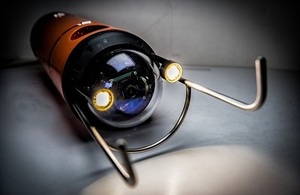


Calling all robots – Sellafield challenges launched

Image of an AVEXIS robot

Robots are already in use at Sellafield. For example the Avexis (pictured) offers the ability to ‘see’ inside a waste silo via cameras attached to its body.

People from across Sellafield Ltd and the supply chain gathered at a robotics and innovation event in West Cumbria today to hear how the development and innovative use of technology is key to the clean-up of Sellafield.

Working alongside the Robotics and Artificial Intelligence for Nuclear hub, one of 4 robotics hubs in the UK, Sellafield Ltd is developing, testing and deploying new robotics systems fit for nuclear environments.

This investment is already making a difference at Sellafield, including robotic systems that are:

There are also plenty of opportunities for the supply chain to bring their innovations to Sellafield.

Three specific opportunities were launched at the robotics event:

  • Deployment techniques to allow remote working at height in high hazardous areas
  • Autonomous removal of Special Nuclear Material packages from a store to a transport container for export
  • Remote inspection of Special Nuclear Material packages

More information on the challenges can be found on the Game Changes website.

Dr Frank Allison from Game Changers said:

The event highlighted the ways in which robotics and artificial intelligence can be used within Sellafield to support decommissioning. There were exhibitions of cutting-edge robotic technology and three new exciting challenges are now open for the supply chain to find solutions to.

It brought together people from a wide variety of organisations and industries and we’re looking forward to nurturing new relationships and paving the way for some really innovative thinking.

Published 19 September 2019


Minister says government must rediscover its ‘revolutionary spirit’ and up the pace on digital transformation

  • Government Digital Service challenged to make online services more ambitious and user-friendly
  • Call for government to go ‘further and faster’ in bringing forward services that anticipate users needs, as seen in the private sector
  • Minister announces creation of Chief Digital Information Officer post to drive transformation across government

Cabinet Office Minister, Oliver Dowden, has said the government must improve the way it uses technology, to make sure people get the best possible services online.

Speaking in front of an audience of technology experts and government officials at the Sprint 19 conference in central London, the Minister said the Government Digital Service (GDS) must go further and faster to bring forward technological advances in its services.

He said:

I remember when GDS was created. I remember the excitement, the pace, the revolutionary spirit centred around making things better for users – and we must always challenge ourselves to continue breaking new ground.

I want to know that in five years’ time, my successors will still be invited around the world to talk about the work you’re doing now – so the challenge is to keep moving forward.

The Minister told the audience that improved online services would free up civil servants’ time and save taxpayer’s money, allowing investments to be made in hospitals, schools and the police.

He also set out an ambition to drive a new wave of digital transformation, in which online services are integrated and data and digital identity are used to proactively help the public – for example by prompting those claiming childcare online to look at information for parents on support in the early years.

And he revealed that the Government is already working to integrate services, data and information around key life events – like having a baby, setting up a business, and what to do when a loved one passes away – in order to support citizens.

During his speech at the Southbank Centre, the Minister also announced that he was creating a powerful new Chief Digital Information Officer role, to lead the government’s digital transformation.

Recruited into the most senior level of the Civil Service as a Permanent Secretary, they will be responsible for delivering cross government strategies and working across different departments to drive more rapid change in how they deliver digital services.


‘No deal’ EU exit advice: further ports will be designated for movement of protected animals and plants

  • Belfast Seaport, Dover, Eurotunnel and Holyhead will be designated to ensure there is sufficient capacity to transport protected animals and plants and their parts or derivatives
  • The move will increase the number of designated ports able to process animal and plant specimens
  • In the event of a no-deal Brexit, anyone wishing to move protected animal and plant specimens between the UK and the EU will need relevant CITES documents

The UK Government has confirmed that an additional four ports (Belfast Seaport, Dover, Eurotunnel and Holyhead) will be designated to handle movements of protected animals or plants to ensure there is enough capacity to transports CITES products in the event of a no-deal Brexit.

In the event of a no-deal Brexit, anyone wishing to bring a specimen of a protected species of animal or plant into the UK or export to the EU will require a CITES document. Such documents must be applied for in advance of travel and inspected and endorsed (stamped) by Border Force at a CITES-designated point of entry or exit.

The Convention on International Trade in Endangered Species of Wild Fauna and Flora (CITES) is an international agreement between governments which aims to ensure international trade in specimens of endangered animals and plants does not threaten their survival. CITES agrees varying degrees of protection to species of animals and plants, whether trading or moving live specimens or their parts, from zoo animals to musical instruments to herbal remedies.

The government has published updated guidance which sets out how people who trade in, or travel with, protected animals or plants and their derivatives, will be affected when the UK leaves the EU.

International Environment Minister, Zac Goldsmith said:

CITES plays a key role in protecting endangered species and we will continue to champion its aim after we leave the EU.

While the Government is seeking a deal, we have stepped up our preparations and will be ready to leave the EU on 31 October, whatever the circumstances.

Part of this is designating further ports, including Eurotunnel and Dover, so that people and businesses can still trade and move CITES specimens with minimal disruption.

More Points of Entry and Exit

Protected animal and plant specimens will need a CITES document to be moved between the UK and the EU and will only be able to travel through designated Points of Entry and Exit (PoE). The government will increase the number of PoE which will be designated for CITES specimens to 29.

Custom offices at Eurotunnel, Dover and Holyhead will be designated and special CITES arrangements have been put in place to help minimise any delays should they occur at these particular locations. Belfast Seaport will also be designated to allow CITES movements between the Republic of Ireland and Northern Ireland over the land border and by sea. Businesses and individuals who are looking to use these routes should familiarise themselves with the arrangements and contact the port prior to moving CITES specimens and items between the UK and EU.

A full list of the locations which will be designated as CITES PoE and how to use them, including the two postal routes, can be accessed through GOV.UK. For all movements of CITES specimens from the UK, you will also need to check the specific requirements with the intended country of import or export on the Global CITES website.

Remember a permit

All CITES specimens that are currently freely moved and traded between the UK and the EU will require CITES documents. This means movement of all CITES specimens between the UK and the EU will need to follow the same processes as those currently in place for movement between the UK and non-EU countries. Applications for CITES documents permitting movement of CITES specimens into and out of the UK will be processed by the Animal and Plant Health Agency (APHA).

For CITES specimens that may also require plant or animal health certification, a CITES document does not replace the need for veterinary or phytosanitary inspection and certification.

Further information

  • Defra, and the UK Government as a whole, is committed to protecting nature and biodiversity and will continue to champion the aims of CITES after Brexit.
  • The Government will increase the number of CITES points of entry and exit (PoE) for CITES specimens from 10 to 29. The full list of locations which will be designated as CITES PoE and how to use them can be accessed here.
  • The species covered by these measures are listed in Annexes A to D of the EU Wildlife Trade Regulations which implement CITES. With amendments, these will become UK law (retained EU law) when we leave the EU. The Species+ database includes details of all CITES-listed species.
  • Details of how to obtain CITES documents such as a permit or import/export notification in the UK are available on GOV.UK, as are current details of fees for CITES permits.
  • CITES permits and notifications must be presented to Border Force for inspection and endorsement.


News story: ‘No deal’ EU exit advice: further ports will be designated for movement of protected animals and plants

Government issues updated advice on moving internationally protected animals and plants, including types of fish, birds and rosewood, in the event of a ‘no deal’ EU exit.