UN Human Rights Council 42 – Statement for the Interactive Dialogue with the Independent Expert on Somalia
The United Kingdom thanks the Independent Expert for his work and strongly supports the extension of his mandate. We welcome the recommendations in his report and emphasise the importance of the Somali government maintaining progress in delivering the commitments they made at the Global Disability Summit, and the recent commitment to develop a National Action Plan to end Sexual Violence in Conflict.
We welcome the progress described in the report. We recognise the positive role of the Ministry of Women and Human Rights Development in championing human rights and commend the publishing of a scorecard outlining results achieved.
We remain deeply concerned about persistent insecurity and its cost in civilian lives; the marginalisation of displaced people, members of minorities and women; the use of children in armed conflict; continuing sexual and gender-based violence; and restrictions on journalists and of freedom of expression. A lack of accountability for perpetrators of violations and abuses persists. We urge the Somali authorities to strengthen the rule of law and bring an end to impunity, including by giving urgent attention to finalising the establishment of a National Human Rights Commission.
Mr President,
We would like to ask the Independent Expert for his assessment of the electoral law, and his view on how the international community can support the Federal Government establish a mechanism within that law to guarantee the representation of women, minority clans, people with disabilities, displaced people and youth.
Published 25 September 2019
UK statement on hate crime at HDIM 2019
We fully align with the statement delivered by France on behalf of the EU and would like to add some comments in our national capacity.
In April this year, the UK marked the first Stephen Lawrence Memorial Day. Stephen Lawrence was 18 when he was murdered in an unprovoked racist attack in London in 1993. His family worked tirelessly to campaign for justice for Stephen, and were instrumental in the government’s decision to launch an inquiry into the response to Stephen’s murder.
Twenty years ago this February, the report of that inquiry (the Macpherson Inquiry) was published.
This is widely recognised as a watershed moment in our journey to fully comprehend and to address racism, discrimination and hate crime in the UK.
Since then we have developed one of the world’s most robust responses to hate crime, including our leadership in recognising the needs of victims of hate crimes.
We put victims at the heart of the hate crime definition adopted by the Government. It is based on the perception of the victim or any other person as being a crime motivated by prejudice or hate.
In the UK we treat all hate crimes with equal seriousness. We are clear that no one should be targeted for hatred because of their race, religion, sexual orientation, disability or transgender identity.
We know that hate crimes can cause lasting physical and emotional damage. They can evoke despair, anger, and anxiety in victims, and spread fear and mistrust in communities, thus weakening the glue that binds our society together. They strike at the heart of our democracy by undermining the fundamental rights of equality and non-discrimination.
The Government’s Hate Crime Action Plan, which we refreshed in 2018, sets out our approach to combatting hate crime. We focus on five key areas: preventing hate crime, increasing reporting, supporting victims, responding in communities and building our understanding.
We also have a strong legal framework in place with criminal penalties for offences such as incitement to racial hatred and for racially or religiously aggravated assault and criminal damage. As part of the Hate Crime Action Plan we have asked the Law Commission to undertake a review of our hate crime legislation to ensure it works as effectively as possible.
We welcome the important role that civil society and voluntary sector organisations play, including through the use of third party reporting services.
The UK is fully committed to engaging with all actors to help build a more inclusive, tolerant and cohesive society, and to ensure that we live up to our OSCE commitments to combat all forms of discrimination.
Tree-planting event celebrates reedbed scheme at Devon beauty spot
The sustainable scheme, which has delivered an impressive 3,800 square metres of reeds at the park just off the A38 is the result of a ground-breaking partnership project between Highways England, Stover Country Park and Devon County Council. Natural England also supported the work.
The reeds act as a filter capturing and filtering water run-off from the A38 and Drumbridges roundabout before it enters the lake. Water can carry pollutants such as oil and metal residue into the lake and this has contributed to the poor water quality and reduced diversity of wildlife in the lake.
The reeds have been planted upstream of the lake to act as a natural barrier and filter pollutants. They will also provide valuable habitat for a range of wildlife. At the same time, the park, which is designated as a Local Nature Reserve and a Site of Special Scientific Interest (SSSI), will be improving sustainable drainage at the site. Planting was completed in April and already many areas of reeds have reached a height of 30cm.
Councillor Mathews, Tina Barrington, Designated Funds Environmental Lead for Highways England, Mark Rands of South West Highways and Kier’s David Olorenshaw.
Highways England Project Manager Darren Painter said:
Our designated funds programme was developed so that we can invest in projects beyond our traditional road build and maintenance, and this is a glowing example of how this funding can have a positive impact on people and communities.
Working with our partners on such a great environmental scheme has been a real pleasure and we’re delighted that the reeds have established so well. The reeds are currently establishing their root systems and we anticipate a full bed of green reeds in the next two years.
The twin reedbed system starts by providing a physical barrier to silted and polluted water, then chemical and biological mechanisms work in combination to break down even more pollutants resulting in clearer water which will help the lake to regenerate and flourish.
It is hoped that by reducing the silt deposits and contamination, white-water lilies, not seen at the lake since 2007, will once again start to cover the lake surface, providing suitable habitat for a variety of dragonflies and damselflies.
The reedbeds themselves will also support a range of birds, insects, reptiles, amphibians and mammals such as water rail, hairy dragonfly, grass snake, Daubenton’s bat and otter.
Rob Ballard, Ranger at Stover Country Park, said:
We are very pleased with how the sustainable drainage system has been developed. Everyone involved took on board the importance of developing a functional system that also enhances the ecological value of the park.
The system is an incredible asset; species such as Emperor and Common Darter dragonflies, heron, kingfisher and roe deer have already been seen in the reedbed ponds and surrounding areas.
Re-establishment of the species rich grassland is under way with various wildflowers such as Purple Loosestrife and Bird’s-foot Trefoil colonising, among others.
Initial water sampling indicates the system is already having an effect by improving the quality of water entering the Lake. As the reeds develop and establish we should see a marked difference in both water quality and species diversity in the park.
Councillor Roger Croad, Devon County Council Cabinet Member with responsibility for Environmental Services, added:
We’re proud to have played a part in this important project which will protect the rich biodiversity that we’re fortunate to have at Stover Country Park.
The completed scheme is incredibly impressive – and will make a huge difference to the water quality in the lake. As a SSSI and designated as an official “Dragonfly Hotspot” by the British Dragonfly Society, wildlife can thrive at the Country Park with the help of ecological schemes like this.
Work at the site started in late November 2018 and was completed at the end of June. To create the reed bed, 6,000 tonnes of soil was removed and four varieties of reed native to the area were planted.
Devon County Council Chairman John Mathews and Michael Whitehead, Principal Environment Advisor for Highways England.
The reedbed was officially opened by Devon County Council Chairman John Mathews and Michael Whitehead, Principal Environment Advisor for Highways England, at a ribbon-cutting event, and this was followed by the planting of four oak trees by Councillor Mathews, Tina Barrington, Designated Funds Environmental Lead for Highways England, Mark Rands of South West Highways and Kier’s David Olorenshaw.
Highways England is committed to a national Biodiversity Plan which is being supported by a national investment programme over the next five years.
The plan recognises road verges and associated land can be managed to provide areas of habitat, relatively free from human access, that may be scarce in the surrounding landscape.
These road verges can also be used to connect fragmented habitats in the wider landscape, enabling plant and animal populations to move and interact, and so become stronger and more resilient.
The Government allocated £675 million of funds to Highways England over a five-year spending period covering 2015 to 2020 – a series of ring-fenced funds designated to address a range of issues including Environment, Cycling, Safety and Integration, Air Quality and Innovation.
The Highways England Environmental Designated Fund of £225m has been set up to improve the environmental performance of the Strategic Road Network. It is to be used for projects that are ‘beyond business as usual’ which will help achieve benefits for one, or preferably a combination of areas including: cultural heritage, biodiversity, landscape, flooding and water quality, carbon emissions and noise pollution.
Elsewhere in the South West, designated funding is also helping Highways England to support Stroud District Canal and the Cotswold Canal Trust in a £4 million project to restore a section of the Cotswold Canal near M5 junction 13, assisting Cornwall Council to deliver a number of cycling, habitat and heritage projects alongside the A30 and supporting Sustrans to deliver a number of cycling initiatives around the new M49 junction scheme at Avonmouth, as well as funding a cultural heritage project to enhance the historic Stoke Park landscape alongside the M32 in Bristol.
For more information please visit the Highways England Designated Funds page.
General enquiries
Members of the public should contact the Highways England customer contact centre on 0300 123 5000.
Media enquiries
Journalists should contact the Highways England press office on 0844 693 1448 and use the menu to speak to the most appropriate press officer.
Scottish Secretary responds to Supreme Court judgement
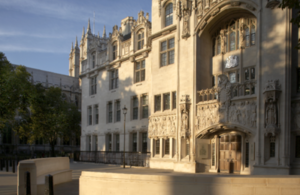
The UK Supreme Court (photo credit UK Supreme Court)
Mr Jack said:
“As the Prime Minister has made clear, we will respect the Supreme Court’s judgment, but we respectfully disagree with the decision of the Court. The UK Government wants a Queen’s Speech to set out its plans on a wide range of domestic issues. We remain determined to honour the result of the EU Referendum and deliver Brexit on 31 October. The Prime Minister is focused on getting a deal at the EU Council next month.”
Published 25 September 2019
Man overboard rescued off Dover ‘was wearing lifejacket with good strobe light’
The alarm was raised through a mayday to HM Coastguard just after 3am on 24th September from the 16m vessel. gale force winds – southerly force 7 – in the area made it a challenging rescue.
Dungeness RNLI lifeboat and the HM Coastguard search and rescue helicopter from Lydd were sent and the man was rescued from the water by the crew just before 3.50am. He was taken to Ashford hospital for treatment.
James Crane, senior maritime operation officer with HM Coastguard said: ‘There is no doubt that in these dreadful weather conditions, this man’s rescue was made more straightforward because he was wearing a life jacket, which was inflated, and the strobe light was in a good working condition making him very visible in the water.
‘It meant the helicopter crew could see him while they were on their way to the search area.’
The boat is currently under tow by Dungeness lifeboat along with Dover RNLI lifeboat back to Dover harbour with a fouled propeller from the perry rescue line the skipper attempted to throw to the crewman when he went overboard. An attempt to launch its tender to assist the man overboard was also made but the weather conditions swept it away and this has been lost.
James added: ‘The skipper also did everything right including contacting us as soon as his crew mate had gone overboard.’