Threatened species receive game-changing funding boost
[unable to retrieve full-text content]International biodiversity receives funding boost one year on from the largest ever Illegal Wildlife Conference held in London
[unable to retrieve full-text content]International biodiversity receives funding boost one year on from the largest ever Illegal Wildlife Conference held in London
Environment Secretary Theresa Villiers has today launched a call for evidence on cat microchipping as part of plans which could help reunite lost cats with their owners, tackle pet theft and identify cats injured or killed on roads.
The government is seeking to find out what the effect of mandatory cat microchipping would be on owners, rescue and rehoming centres and cats themselves. The call for evidence will last for 12 weeks and respondents are being encouraged to respond as soon as possible.
Environment Secretary, Theresa Villiers, said:
Today’s call for evidence on cat microchipping will help the government understand how we can better protect this country’s much-loved cats and kittens.
This government is committed to animal welfare and improving the lives of our companion animals.
Today’s announcement builds on a series of positive actions we have taken to improve welfare standards in this country, including a ban on the third-party sale of puppies and kittens and a commitment to increase maximum sentencing for animal cruelty from six months to five years.
The process of microchipping involves the insertion of a chip, generally around the size of a grain of rice, painlessly under the skin of a pet. The microchip has a unique serial number which can be read by a scanner. When an animal strays or is lost, scanning the microchip means the registered owner can be identified and the pet can be reunited with them.
Although microchipping is a legal requirement for dogs, it is not currently required for cats unless they are travelling under the Pet Travel Scheme. Compulsory dog microchipping was introduced in April 2016 and statistics show that 92% of dogs are now microchipped. As a result of compulsory microchipping, displaced dogs have been reunited with their owners much quicker, reducing the time they spend in rehoming kennels and reducing owner and animal distress.
Cats Protection’s Chief Executive, James Yeates, said:
Cats Protection, the UK’s leading cat welfare charity, welcomes this call for evidence on cat microchipping. Microchipping is an essential part of responsible pet ownership, yet each year we still take in thousands of cats which have not been microchipped. The majority of strays we take in are unchipped and so we are usually unable to trace an owner and the cats have to be rehomed.
Microchipping is a safe and permanent way to give a lost cat the best chance of being returned to their home. People tell us how knowing their cat is microchipped gives them reassurance, and it also ensures owners can be informed in the sad event of their cat being injured or killed on the road.
Compulsory dog microchipping was introduced in England through the Microchipping of Dogs (England) Regulations 2015 (the 2015 Regulations). The aim was to improve the welfare of dogs and help reduce issues related to stray dogs.
Being a girl or teenager in Venezuela these days is rather difficult. Most Venezuelans can barely cover their most basic needs like food, sanitation, education and healthcare. Imagine being a girl or a teenager, stuck in these family dynamics. The humanitarian crisis is affecting women and girls more heavily, as per the latest Women at the Edge report, issued by local NGOs.
Women and girls’ sexual and reproductive rights are at risk too. Teenage pregnancy rates have gone up due to the lack of availability of contraceptives, making Venezuela the country with the third highest rate in Latin America, only comparable to that of Sub-Saharan countries, as per a WHO/UNFPA 2018 report. Children are also dropping out of school massively. Local NGOs have calculated a 30% drop in school attendance, related to the lack of food, transport and money to pay for school supplies and uniforms. We know how this affects girls, preventing them from having a better chance in life and better opportunities to fulfil their potential and achieve their dreams. Hoping to help tackle some of these issues, the UK is funding the project She Plays Safe (SPS), through the British Embassy in Caracas, as part of the #LeaveNoGirlBehind campaign, which advocates for 12 years of quality education for girls.
Through football and rugby clinics, more than 160 young female Venezuelan athletes from low-income communities from across the country, are being trained on effective communication skills, self-esteem and wellbeing, early-pregnancy prevention, career planning, gender equality and female leadership and empowerment. The ultimate goal is to give these girls a real chance to fulfil their life project, despite the harsh conditions in which they are growing, helping them explore the job or study opportunities for women and girls in sports available to them, while reducing the chance of dropping out of school.
About 160 young female Venezuelan athletes from low-income communities are participating in the project
A study of the US Women’s Sport Foundation showed that “athletic participation functions as a developmental resource for many adolescent females in ways that positively influence sexual behaviours while reducing girls’ risk for pregnancy.”
We are proud to work with the Venezuelan NGO Deporte para el Desarrollo (Sports for Development) on this transcendental initiative, and their multidisciplinary team comprised of athletes, psychologists, sociologists and anthropologists, along with other key partners such as UNFPA and local women’s organisations. We hope that our SPS Ambassadors, will develop a greater sense of belonging to their sports academies, and that through advocacy, they become role models for future female athletes’ generations and the wider sports community in Venezuela, helping battle traditional gender stereotypes.
This year’s theme for the International Day of the Girl, which is marked every 11 October, is “Girls Force: Unscripted and Unstoppable”. We would like to think these girls will be just that: unscripted and unstoppable.
Guest blog by Irene Coello, Programmes Manager & Human Rights Adviser, British Embassy Caracas.
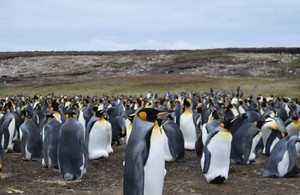
The Falkland Islands Government and the British Embassies in Brazil, Argentina, Uruguay and Chile are delighted to announce the winners of this year’s regional student competition. Participants from the four countries were asked to submit a short video in English, in which they answered the question: “Why would I like to meet my neighbours in the Falkland Islands?”
More than 200 students entered the competition. All entries were reviewed and representatives from the Falkland Islands Government and British Embassies of the four countries selected the winners:
The winners will travel to the Falkland Islands in January, where they will spend a week experiencing the unique character of the Islands including its food and culture, nature and environment and meeting members of the community.
Published 11 October 2019
The latest updates on Asian hornet sightings in the UK in 2019.